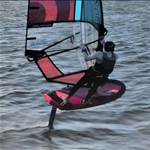
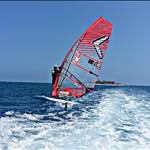
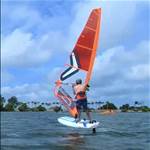
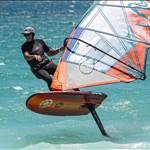
This thread Is epic. Whether you are a fin traditionalist or a foil loyalist you can agree it's great to be able to witness the evolution of the sport.
Select to expand quoteGuru4 said..
This thread Is epic. Whether you are a fin traditionalist or a foil loyalist you can agree it's great to be able to witness the evolution of the sport.
Foiling has taking this sport to another level. I am just waiting for the new 250cm front wings. Not saying that they exist, but the rate of speed foiling is headed it shouldn't take to long. At least I might be able to use my rear wings for the front. 
Select to expand quoteZeroVix said..Guru4 said..
This thread Is epic. Whether you are a fin traditionalist or a foil loyalist you can agree it's great to be able to witness the evolution of the sport.
Foiling has taking this sport to another level. I am just waiting for the new 250cm front wings. Not saying that they exist, but the rate of speed foiling is headed it shouldn't take to long. At least I might be able to use my rear wings for the front.
Don't think we're very far off already. Snapped this screen shot of William Huppert's (Fra330 & LokeFoil head tester/developer) front wing on Day 1 of the Defi. The "regular" 2022 high wind speed front wing you'll find on their website is 310, and has 3 screws and at least towards the center has a wider chord than the one in the pic below This means that the one he was using must be a 2xx sq cm..

If its slalom they're talking about, then id say they'd most likely run a 91cm board or less for foils anyway, and then keep one high wind slalom board. Personally, i understand the desire to reduce baggage and costs, but they are forcing people to go in the direction of foiling by making it 2 boards only in my opinion.
The smaller the front wing the less influence gusts have on lift/controlling board height, and instead the wind energy is put towards forward movement.
Ben Profitt did a livestream with Jordy Vonk. They discussed PWA fin v foil towards the end. Ben put forward a theory that once everyone was up to speed on foils then the racing could become a bit processional. Once they had started and rounded the first gybe, would there be much overtaking? On a fin you have to gybe over chop and swell, on a foil you are above that. Maybe he has a point.
For 2024 the rules are set, but we havent done a full season of slalom with fin v foil yet, at all the venues. I cant help but wonder if they havent jumped the gun.
Select to expand quotePhilUK said..
Ben Profitt did a livestream with Jordy Vonk. They discussed PWA fin v foil towards the end. Ben put forward a theory that once everyone was up to speed on foils then the racing could become a bit processional. Once they had started and rounded the first gybe, would there be much overtaking? On a fin you have to gybe over chop and swell, on a foil you are above that. Maybe he has a point.
For 2024 the rules are set, but we havent done a full season of slalom with fin v foil yet, at all the venues. I cant help but wonder if they havent jumped the gun.
I would argue that it would be less of a procession. Fins have a much narrower ideal speed vmg, a foil can point higher or lower and not lose as much speed as a fin would. So there is a bigger opportunity to sail over or under.
plus on the jibe marks there are a lot more racing lines open to a foil without losing speed. On fins the only line open to everyone is to try and jibe inside the guy infront because it is so much harder to sail underneath and thru the dirty air. i feel the foil just opens up so many more options
I noticed in the first video on Defi (posted by aero) that for one turn there were two buoys, instead of one, marking the turn. Is that new, because of so many competitors, or just something I have not seen before but standard?
Select to expand quoteSandman1221 said..
I noticed in the first video on Defi (posted by aero) that for one turn there were two buoys, instead of one, marking the turn. Is that new, because of so many competitors, or just something I have not seen before but standard?
Jibe mark 1 @ Port la Nouvelle has always been set up like that--to spread out the field (not the top 50, but the next 1,000 or so  )
)
Select to expand quoteDarrylG said..
I would argue that it would be less of a procession. Fins have a much narrower ideal speed vmg, a foil can point higher or lower and not lose as much speed as a fin would. So there is a bigger opportunity to sail over or under.
plus on the jibe marks there are a lot more racing lines open to a foil without losing speed. On fins the only line open to everyone is to try and jibe inside the guy infront because it is so much harder to sail underneath and thru the dirty air. i feel the foil just opens up so many more options
I agree. The "procession" criticism was even more valid against the 9m slalom fin races of the pre-pandemic era; positions hardly changed after the first jibe (and sometimes even just after the start).
Select to expand quoteSandman1221 said..
The smaller the front wing the less influence gusts have on lift/controlling board height, and instead the wind energy is put towards forward movement.
Experience or speculation...?
Select to expand quotebel29 said..Sandman1221 said..
The smaller the front wing the less influence gusts have on lift/controlling board height, and instead the wind energy is put towards forward movement.
Experience or speculation...?
First hand experience going from an AFS F1080 cm2 wing, to F770 cm2 wing, and then to a S670 cm2 wing, in the same wind range with the same foil/stabilizer and board. And those three wings are the same style/shape, just increasingly higher aspects.
Select to expand quoteSandman1221 said..bel29 said..Sandman1221 said..
The smaller the front wing the less influence gusts have on lift/controlling board height, and instead the wind energy is put towards forward movement.
Experience or speculation...?
First hand experience going from an AFS F1080 cm2 wing, to F770 cm2 wing, and then to a S670 cm2 wing, in the same wind range with the same foil/stabilizer and board. And those three wings are the same style/shape, just increasingly higher aspects.
Thx. Personally think it's more function of board speed. Small wing at slower speed is not more stable than bigger wing at same speed. My smallest currently is 400.
Select to expand quotebel29 said..Sandman1221 said..bel29 said..Sandman1221 said..
The smaller the front wing the less influence gusts have on lift/controlling board height, and instead the wind energy is put towards forward movement.
Experience or speculation...?
First hand experience going from an AFS F1080 cm2 wing, to F770 cm2 wing, and then to a S670 cm2 wing, in the same wind range with the same foil/stabilizer and board. And those three wings are the same style/shape, just increasingly higher aspects.
Thx. Personally think it's more function of board speed. Small wing at slower speed is not more stable than bigger wing at same speed. My smallest currently is 400.
Stable is a relative term, for stability in steady winds yes a larger wing will give more stability, but in gusty conditions a smaller wing is more stable in terms of reducing or eliminating the effect of gusts on board height. In 18-25 knots the F1080 wing wants to lift foil out of water when a gust hits the sail, but the S670 wing in the same conditions does not try to lift foil out of the water, gusts just increase forward speed of board.
wondering if the 4 sail limit will push manufacturers and riders more towards fin/foil combo sails?
eg point-7.com/product/f1e-hybrid-022/?v=7516fd43adaa
Select to expand quoteZeroVix said..Guru4 said..
This thread Is epic. Whether you are a fin traditionalist or a foil loyalist you can agree it's great to be able to witness the evolution of the sport.
Foiling has taking this sport to another level. I am just waiting for the new 250cm front wings. Not saying that they exist, but the rate of speed foiling is headed it shouldn't take to long. At least I might be able to use my rear wings for the front.
So I have seen someone modify a SB 330 rear as a front wing!
From Video @ 1:39:00+
Jordy on foils peak speed for 2sec:
Slalom Foiling 3x registered for 2022 31.5kts on 620 (8.9m sail maybe)  34.5kts on 560 (7.8 or 6.9)
 36kts on 420 (6.9 or lower)
Makes my 30kts on 337 feel pedestrian!
Select to expand quoteberowne said..
So I have seen someone modify a SB 330 rear as a front wing!
Berowne how did the SB330 go on the front ?
Select to expand quoteberowne said..
Pozo Slalom... 2009
looks much older than 2009 !! Bjorn was on Severne in 2009 
Select to expand quotetonyk said..berowne said..
So I have seen someone modify a SB 330 rear as a front wing!
Berowne how did the SB330 go on the front ?
Nico G. experimented with this allready in 2018 or '19 with the 255 stab (adapted), however felt it wasn't strong enough to use as a front wing : app. the SB stab's where/are a combination of G10 and carbon fiber.
Select to expand quotebel29 said..Sandman1221 said..bel29 said..Sandman1221 said..
The smaller the front wing the less influence gusts have on lift/controlling board height, and instead the wind energy is put towards forward movement.
Experience or speculation...?
First hand experience going from an AFS F1080 cm2 wing, to F770 cm2 wing, and then to a S670 cm2 wing, in the same wind range with the same foil/stabilizer and board. And those three wings are the same style/shape, just increasingly higher aspects.
Thx. Personally think it's more function of board speed. Small wing at slower speed is not more stable than bigger wing at same speed. My smallest currently is 400.
Regarding sensitivity to wind gusts, I agree with bel29 that board speed is the bigger factor. At a given wind speed, a smaller wing generally means a higher board speed. That means the induced wind component plays a bigger role in the apparent wind relative to the true wind; the same gust (change in true wind) leads to a smaller change in apparent wind.
There are a few other things that come into play which complicate issues, like instability near the stall speed of the wing. Another one is that larger wings make it easier to sail just partly sheeted in, while a smaller wings require more commitment in the same wind. A fully sheeted in sail is less sensitive to changes in the apparent wind angle in gusts, since it is in the flat part of the lift vs. AoA curve (see boardsurfr.blogspot.com/2011/01/sheet-in.html for an example). The partly sheeted in sail is in the steep part of the curve, where small changes in apparent wind direction lead to larger changes in lift. That translates to larger changes in mast foot pressure, and more up/down movement.
Select to expand quoteboardsurfr said..bel29 said..Sandman1221 said..bel29 said..Sandman1221 said..
The smaller the front wing the less influence gusts have on lift/controlling board height, and instead the wind energy is put towards forward movement.
Experience or speculation...?
First hand experience going from an AFS F1080 cm2 wing, to F770 cm2 wing, and then to a S670 cm2 wing, in the same wind range with the same foil/stabilizer and board. And those three wings are the same style/shape, just increasingly higher aspects.
Thx. Personally think it's more function of board speed. Small wing at slower speed is not more stable than bigger wing at same speed. My smallest currently is 400.
Regarding sensitivity to wind gusts, I agree with bel29 that board speed is the bigger factor. At a given wind speed, a smaller wing generally means a higher board speed. That means the induced wind component plays a bigger role in the apparent wind relative to the true wind; the same gust (change in true wind) leads to a smaller change in apparent wind.
There are a few other things that come into play which complicate issues, like instability near the stall speed of the wing. Another one is that larger wings make it easier to sail just partly sheeted in, while a smaller wings require more commitment in the same wind. A fully sheeted in sail is less sensitive to changes in the apparent wind angle in gusts, since it is in the flat part of the lift vs. AoA curve (see boardsurfr.blogspot.com/2011/01/sheet-in.html for an example). The partly sheeted in sail is in the steep part of the curve, where small changes in apparent wind direction lead to larger changes in lift. That translates to larger changes in mast foot pressure, and more up/down movement.
Very good explanation!
The smaller the front wing the less influence gusts have on lift/controlling board height, and instead the wind energy is put towards forward movement, which means faster board speed!
Do these racers adjust their stabilizer size down when they go down in front wing size?
Select to expand quoteazymuth said..
Hard to disagree with Maciek;
I love what he closed with! Windsurfing is so alive!
Select to expand quotethedoor said..
Do these racers adjust their stabilizer size down when they go down in front wing size?
in general yes, but there is some overlap.
as i recall, PWA rules allow them to register three front wings and two stabs; so generally the middle front wing will be able to run with the bigger or smaller stab.
Select to expand quotew100 said..
PWA Slalom Equipment Update
Dear Friends
We hope you are all safe and well.
Further to the recent calendar updates, we wanted to make you aware of some other changes that will impact future events.
Production equipment rules for slalom are always a major talking point and the sport has been evolving at an incredible rate in recent years. We know that both the brands and the riders need long lead times in order to fully test, develop, tune and train on the equipment they will race on and, as such, all decisions about equipment limits have to be made well in advance.
This requires us to make educated predictions about future evolutions - something that has not been helped by the lack of experience of events due to the pandemic, but the PWA Management Board met recently to discuss the situation in order for us to provide you with good advanced notice of future intentions.
The rules for 2023 have already been published and these will not change. We know how important it is for these rules to remain consistent once announced for the reasons mentioned above, so for 2023, we will stick with the 6 sails and 3 boards rule as previously published.
For 2024 though, we will be making some much more significant changes to the limits, changes designed to reduce costs for brands and riders, to reduce equipment loads required at events and to make racing more accessible to new and upcoming sailors looking to join the tour.
The new rules will see limits reduced to 4 sails, and 2 boards. Sails can be any sails from the PWA registered sails list, and boards may be any 2 boards from the PWA registered slalom boards list.
The maximum sail size will also be reduced to 9m2 for 2024.
Foil registration rules will remain the same with 3 front wings and 2 back wings.
Although this may seem like a fairly major departure from the current limits, we are talking about rules that will not come into effect on the race course for about 2 years, giving plenty of time for development and testing, and we believe that this will be well in line with the predicted evolutionary curve that we are on.
We will have more updates for you in the near future about other changes to PWA event standards, designed to make events far easier to put on, and also the registration process for boards, sails and foils for future years, but we have summarised the rules for you below for simplicity.
2022
6 Sails
4 Boards (only 1 over 85cm wide, up to 91cm for men and 100.5cm for women)
1 Foil Set (3 front, 2 rear wings)
2023
6 Sails
3 Boards (only 1 over 85cm wide, up to 91cm for men and 100.5cm for women)
1 Foil Set (3 front, 2 rear wings)
2024
4 Sails
2 Boards (any registered slalom boards, foil or fin, up to 91cm for men and 100.5cm for women)
1 Foil Set (3 front, 2 rear wings)
We look forward to seeing you on the water soon.
Kind regards
The PWA
That's a bold predicton from the pwa organisers. I predict they row back from that, or I think pwa slalom is doomed. 
I was at this year's defi, I missed the first two races due to illness. it's an amazing event, when it's windy. Just an observation but i did not detect much interest in foils, at least not the sort that might suggest 1200 competitors were might give up the sort of sailing they are currently enjoying, to become elite foilers.
In the past the PWA has snubbed this event by organising Costa bravo at the same time.
Lots of straw man arguments put forward as to why this is the future, I unfortunately don't see it yet.
PWA is all about promotion, if the punters don't follow then your doomed.