SA Algal Bloom: A Decade to Recover

In short
More than 100 commercial fishers across Gulf St Vincent, Investigator Strait, Spencer Gulf and Kangaroo Island remain grounded as SA's harmful algal bloom enters its second year.
Industry peak body Seafood Industry South Australia expects recovery will take at least a decade, with fish stocks in Gulf St Vincent described as "extremely poor".
What to watch
The marine heatwave driving the bloom has now receded to neutral, but ecologists warn dinoflagellate counts remain elevated at sites including Moonta and Port Hughes into late April.
South Australia's harmful algal bloom has crossed the one-year mark and the damage to the state's commercial and recreational fishing sectors is only becoming clearer.
Kyri Toumazos, executive director of industry peak body Seafood Industry South Australia, put it plainly: "Without a reoccurrence of an algal bloom outbreak, what we are predicting as an industry is the journey ahead to go back to normality or pre-algal bloom impact; we are looking at least a decade."
Toumazos, who operates Southern Sea Eagles near Port Adelaide - dealing in lobsters and gummy sharks - said financial losses across the sector had already reached tens of millions of dollars.
The affected zone spans four major fisheries: Gulf St Vincent, Investigator Strait, Kangaroo Island and Spencer Gulf have all been hit by the Karenia-species bloom since it first took hold in March 2025.
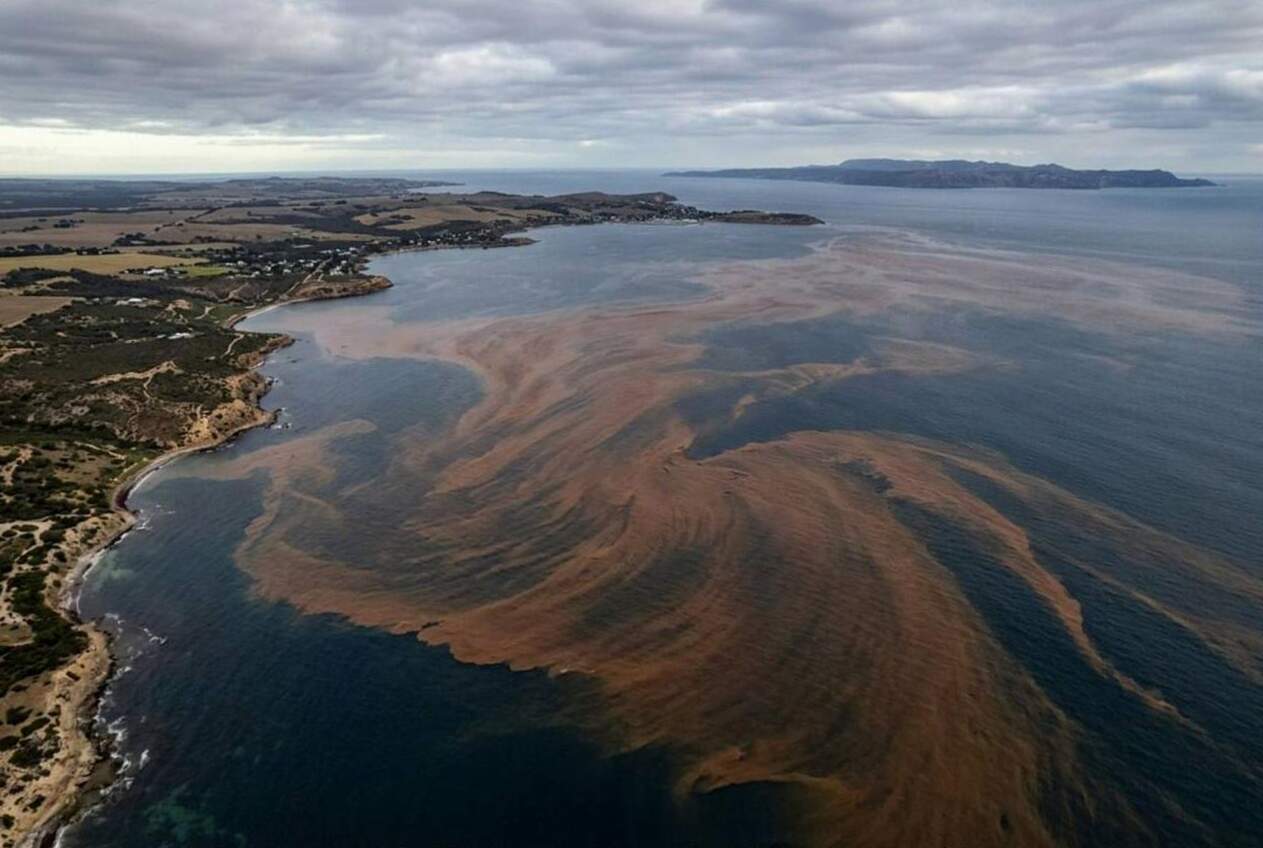
The trigger was a marine heatwave that began building in September 2024, pushing sea surface temperatures approximately 2.5 degrees Celsius above average across southern Australian coastal waters.
Marine heatwaves work like their land-based counterparts - sustained ocean warming suppresses the normal mixing and upwelling that keeps coastal nutrients in check, allowing opportunistic microalgae species like Karenia to bloom rapidly.
According to the latest update from Primary Industries and Regions SA, sea surface temperatures have continued to cool as of late April, with marine heatwave conditions now receded to neutral across the state.
That is the first genuinely positive oceanographic signal in months - but it does not mean fishing can resume.
What the bloom has done to fish stocks
The toll on marine species has been severe.
Karenia species affect fish primarily through gill damage, and at high concentrations the bloom triggers mass mortality events across a wide range of species.
Data from government monitoring shows more than 200 species of marine creatures have died over the course of the event, including over 100 types of fish and sharks.
Recreational target species have taken the biggest hit: flathead, squid, crabs and rock lobsters were among those most affected.
Fish stocks around Gulf St Vincent are described by Toumazos as "extremely poor", with the Marine Scalefish Fishery - focused on calamari, whiting, garfish and other inshore species - facing "enormous" ongoing challenges.
"We are nowhere near the time to start commercial activity."
The news is somewhat better for blue crab and prawn fisheries, where Toumazos says the outlook is more positive.
Divers have found conditions at popular SA sites dramatically altered.
At sites like the Zanoni shipwreck off the Yorke Peninsula, visibility that was once crystal clear has dropped to murky rust.
Grim conditions were also reported at Edithburgh on the Yorke Peninsula, a site popular with shore divers.
Karenia counts as of April 2026
The PIRSA situation update covering the week of April 12 found 21 metropolitan onshore sites recording zero or low levels of Karenia.
Port Hughes Jetty recorded approximately 660 cells of Karenia per litre, while Moonta recorded 35 cells per litre - well below the concentrations that caused mass mortalities earlier in the bloom.
The concern now is a secondary wave: ecologist Faith Coleman of EcoProTem said there had been "quite a bit" of ecological damage despite lower Karenia counts, and noted an increase in other dinoflagellate blooms at this time of year.
"I've seen a few oyster places and things shut down for other species of dinoflagellates that cause problems, and we had that really interesting thing that all of the tuna got killed by a few weeks ago, which is a strange mixture between a diatom and a dinoflagellate," Coleman said.
Coleman added that the likelihood of another bloom was "quite high" until broader issues around ocean acidification and shifting ocean currents are addressed.
The last comparable Karenia event in SA was a localised bloom at Coffin Bay in 2014 - nothing close to the geographic scale of the current event has been recorded in the state before.
Recovery program and fishing restrictions
Temporary reductions on daily bag and boat limits for recreational fishers in the Gulf St Vincent and Kangaroo Island Fishing Zone are in place until June 30, 2026, subject to regular science reviews.
Some restrictions have been lifted for blue swimmer crab and southern garfish in Spencer Gulf, as well as for migratory finfish species across the Gulf St Vincent and Kangaroo Island Fishing Zone - including Australian herring, mulloway, yellowtail kingfish and southern bluefin tuna.
The state government has committed real money to recovery: $4 million is allocated for a restocking program focused on snapper and King George whiting, while a further $3 million goes toward a targeted breeding and conservation program for vulnerable and threatened species.
An additional $5.79 million has been set aside for extra Fisheries Officers, Marine Park Rangers and intensified fish stock monitoring through to June 2027.
Recreational boaters have received some relief too - a 50% discount on registration for boats and light boat trailers registered between December 1, 2025 and December 1, 2026, and free access to boat ramps across SA for 12 months.
Beyond fishing: the tourism and community toll
Holly Wyatt, regional tourism manager at Fleurieu Peninsula Tourism, said current visitation trends were being shaped more by perception and cost-of-living pressures than actual conditions on the ground.
"Locals are ready to welcome visitors to enjoy their Mediterranean lifestyle and charm," she said - a signal of the frustration in coastal communities dealing with the compounding effects of the bloom, a fuel crisis and recent fires.
Toumazos flagged the emotional dimension of the crisis as a growing concern.
"It's also a way of life for people - so we are now seeing the mental burden that it has on people as well," he said.
More than 100 marine scale fishers across SA coastal communities are currently unable to work.
Seafood Industry South Australia is working with the government on a structural adjustment package for impacted fisheries, expected to be finalised in June.
What recreational fishers and boaters should know now
Oyster, cockle, mussel, pipi and scallop harvesting from affected areas remains prohibited - this applies to recreationally collected bivalves even where beaches are otherwise open.
Fish, crabs, prawns, lobsters and squid caught by recreational fishers are safe to eat if cleaned, gutted and cooked thoroughly.
Boats launching from affected areas: conditions at ramps across the Yorke Peninsula, Gulf St Vincent and Investigator Strait remain normal, but check for discoloured or foamy water before entering.
Skin, eye and respiratory irritation can result from contact with bloom-affected water or aerosols in strong onshore conditions - moving away from the beach resolves most symptoms within hours.
People with asthma should carry a reliever and check their management plan before heading to affected coastlines.
Check current recreational bag limits before your session, as restrictions in the Gulf St Vincent and Kangaroo Island Fishing Zone remain in force until at least June 30.
Track the latest South Australian marine conditions via Seabreeze warnings before heading out - wind, swell and tide forecasts remain the other half of any safe day on the water.
Frequently asked questions
Is it safe to swim at SA beaches? Most beaches remain open. Avoid contact with discoloured or foamy water, and rinse off if you do.
Can I eat fish I catch myself? Yes - fish, crabs, prawns, lobsters and squid are safe if gutted and cooked. Do not eat bivalves you collect yourself from affected areas.
When will fishing restrictions lift? Current bag and boat limit reductions are in place until June 30, 2026 at the earliest, subject to science reviews.
Is the bloom getting better? Karenia counts at most sites are at low or zero levels as of mid-April, and the marine heatwave driving the event has receded to neutral - both are positive signs, but recovery of fish stocks will take considerably longer.
Is it safe to dive? Diving is not prohibited, but visibility at affected sites has been significantly reduced. Avoid water that appears discoloured or foamy and follow standard safety protocols.



 Noosa, QLD