SE Australia's coldest April in decades

Quick summary
Goulburn recorded -4.1°C on Saturday 18 April, its coldest April morning since 2008, with Orange, Coonawarra, and Perisher also setting decade-long lows.
Autumn water temperatures in SE Australia are now cold enough to trigger incapacitation within 30-45 minutes of unexpected immersion.
What boaters need to know
Dress for water temperature, not air temperature - and treat boat ramps as potential ice hazards at first light this week.
Inland southeast Australia recorded its coldest April morning in years on Saturday 18 April, as a dry airmass settled over the region following a cold front that crossed on the previous day.
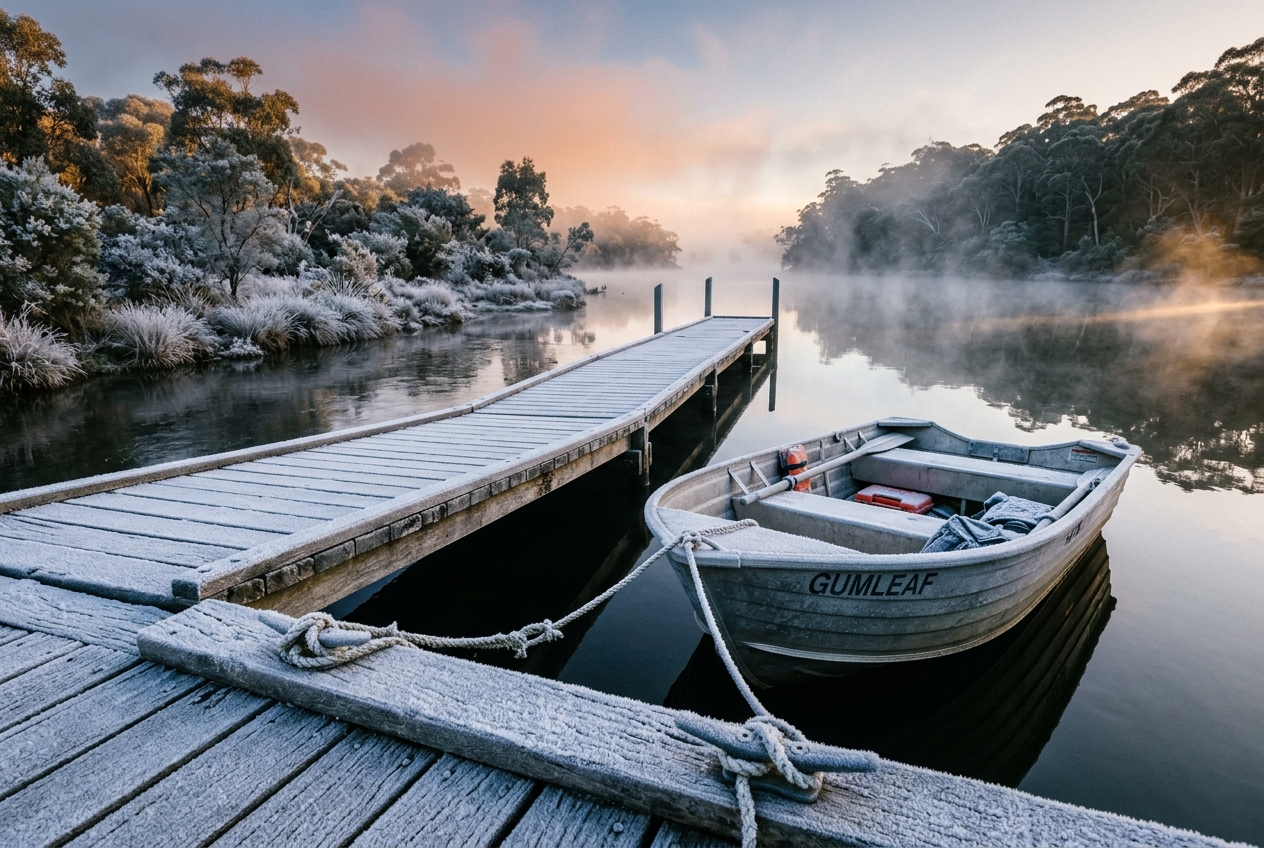
Goulburn dropped to -4.1°C, its lowest April reading since 2008 and coldest overnight minimum since last winter.
Orange, in the central tablelands of NSW, hit -2.3°C, the coldest April reading there since 2008.
Coonawarra in South Australia registered -1.6°C, a low not seen in April since 1999.
The alpine site at Perisher Valley fell to -5.5°C, its coldest April since 2019.
Renmark reached 0.9°C, its coldest April since 2024, while Canberra hit -1.8°C, the coldest April there since 2021.
The mechanism is the reverse of summer conditions: in warmer months, humidity in the lower atmosphere acts as a thermal blanket that blocks overnight cooling and produces persistently mild nights.
Strip that humidity away with a cold, dry airmass from the south and temperatures can plunge well below what any surface forecast suggests.
What sub-zero mornings mean on the water
While the headline temperatures were recorded inland, the cold snap carries immediate consequences for anyone on the water.
Wind chill amplifies the cold well beyond the air temperature: a 15-knot (28 km/h) breeze on a 5°C morning reduces the effective temperature on exposed skin to around 0°C.
Coastal water temperatures in SE Australia trend toward autumn ranges by late April, typically around 19-21°C off the NSW coast, 14-16°C through Bass Strait, and 11-14°C in Tasmanian nearshore waters.
"Cold water carries heat away from the body 25 times more quickly than air at the same temperature."
Tasmania's Marine and Safety Authority documents that figure in its cold water immersion guidance, adding that water below 15°C (59°F) increases the risk of drowning by nearly five times.
Up to 60 percent of cold water immersion fatalities occur in the first 15 minutes, well before core body temperature drops to clinically hypothermic levels, according to MAST.
The most deceptive aspect of autumn boating is this: the water is cold enough to incapacitate, but autumn conditions do not trigger the caution most people associate with winter.
Many recreational boaters have not yet made the seasonal adjustment from summer habits, meaning they may be underdressed and underequipped for the conditions they actually face.
Engines, fish, and the ramp hazard
Ramp hazards arrive at first light. Sub-zero overnight temperatures produce frost and black ice on timber pontoons, metal grating, and wet concrete ramps.
Allow time for the overnight frost to clear before loading trailers at ramp edges, and wear non-slip footwear rather than bare feet or thongs on dock surfaces.
Cold-start engine behaviour changes. Outboard motors running dense, cold air and cold fuel take longer to warm up, and older carburetted two-stroke outboards are particularly prone to stalling at sub-5°C temperatures.
Give your motor a full warm-up at the dock rather than running cold from the start, and carry spare spark plugs if your motor is more than five years old.
Fish move to depth and structure. The rapid temperature drop is likely to push flathead and bream off shallow estuary flats into deeper channel edges and near-bottom structure, where water temperature remains more stable overnight.
Expect slower early sessions, with fish becoming progressively more active as the sun warms the shallows through the morning.
Dress for the water, not the dock
The core principle for autumn boating safety is to dress for water temperature, not the air temperature on the forecast.
For SE Australian coastal waters now running at 14-21°C, a wetsuit or layered thermal base under a waterproof shell provides real protection against unexpected immersion, not just wind chill management.
If you do enter the water, the Heat Escape Lessening Position (H.E.L.P.) extends survival time: draw the knees to the chest and keep arms close to the sides to reduce heat loss from the armpits, chest and groin.
Wearing a correctly fitted PFD is the single most important step, keeping the airway clear and allowing H.E.L.P. to be held without active swimming effort.
What to watch this week
Miskelly noted that the cold airmass was forecast to contract eastward through Sunday and spread north, tracking the NSW-Queensland border before dissipating early in the new week.
The high-pressure system responsible for the radiative cooling event was expected to ease by early this week, with temperatures moderating ahead of the next system.
Check the Seabreeze marine forecast for your region before launching, and the Seabreeze wind forecast for surface and wind-chill conditions.
Common questions
How cold does water need to be before hypothermia is a risk?
Any water below about 21°C (70°F) will eventually cause hypothermia.
At 15°C, incapacitation can begin within 30-45 minutes of immersion without an effective PFD keeping you afloat.
Is it safe to go boating or fishing this week?
Yes, with the right preparation: wear your PFD, dress for the water temperature, and wait until after sunrise for frost to clear from ramps and docks.
What is wind chill and why does it matter on the water?
Wind chill measures the effective temperature felt on exposed skin in moving air.
On open water there is no shelter, so the wind-chill figure on your forecast is the temperature you should plan around.
Will flathead and bream still be biting in cold conditions?
Both species are cold-tolerant and will remain active, but expect them to hold in deeper water near bottom structure until the sun warms the shallows mid-morning.


 Aldgate, SA