A longer fuse also provides a stab set for lift with more leverage, being on a longer section at the back, as opposed to a fuse with less at the rear end.
That being said, with the stab set at neutral, its only the main foil further forward that gives more lift.
Select to expand quotesegler said..
When people say that a long racing fuselage is more powerful, all it means is that the WHERE of the lift is further forward of the strut, thus requiring the rider to weight body and feet further forward.
OK thanks, I've got that. An interesting evolution in the foiling dialect, given the words other meaning, but that's the English language for you.
What do you call a foil that allows you to lift off in very little wind?
Select to expand quoteIan K said..segler said..
When people say that a long racing fuselage is more powerful, all it means is that the WHERE of the lift is further forward of the strut, thus requiring the rider to weight body and feet further forward.
OK thanks, I've got that. An interesting evolution in the foiling dialect, given the words other meaning, but that's the English language for you.
What do you call a foil that allows you to lift off in very little wind?
HIGH LIFT foil.
But a high lift foil could be really unstable or, like we see in the Sup/Surf area recently, more reactive/turny.
Usually a shorter fuse and/or smaller stab lead to this effect.
As i see it a RACE foil isn't necessarily a HIGH lift foil but more of a high STABILITY foil.
Combine a unstable/reacitve foil with huge 8m+ sail and you got some nice moments of bull riding.
Alex
Select to expand quoteIan K said..segler said..
When people say that a long racing fuselage is more powerful, all it means is that the WHERE of the lift is further forward of the strut, thus requiring the rider to weight body and feet further forward.
OK thanks, I've got that. An interesting evolution in the foiling dialect, given the words other meaning, but that's the English language for you.
What do you call a foil that allows you to lift off in very little wind?
Light wind lift/ low stall speed is called a lifty foil, power upwind / downwind etc. Is called a powerful foil. A powerful foil doesnt have to be lifty, but can also lift in very light winds, takes more technique tho and it gets quite a ride when powered up.
Select to expand quotesegler said..
People keep getting this confused.
It is the front wing, and only the front wing, that determines the AMOUNT of lift. What the fuselage accomplishes is to locate WHERE this lift is located.
When people say that a long racing fuselage is more powerful, all it means is that the WHERE of the lift is further forward of the strut, thus requiring the rider to weight body and feet further forward. Simple. You can get the same result by simply moving ANY foil further forward with such things as tracks or power plates.
The reason it feels more powerful is that the rider has to work more to balance this further forward location of lift. Also, using bigger sails for racing adds much more mast base pressure to balance the front wing.
Moving the entire thing forward also has a different effect of making the whole thing a little like a seesaw (seesawy?), I'd prefer extending the fuselage forward over moving the entire foil forward any day. I have tested this extensively with a variety of prototype fuselages and boards..
The position of the frontwing determines the power, the profile and surface area of the wing determines the lift. Mostly anyway.
Interesting discussions on here. When I first got a Glide Large foil I found myself with front foot always well in front of the footstraps as though the lift was too far forward. I had my fuselage modified to bring the foil centre of lift back further (pics below). I also now have the mastfoot at 130cm mark on JP135 most of the time when I started with it at 125cm position. I have contacted Reg at WWA to see if there are any tail extensions for this set up still available, I'm interested to see what difference it would make to stability.
I'm certainly enjoying the cruisey aspect of this foil compared to the original Pinkie AL, cruising around with a small sail in 15-20 knots is an awesome feeling.
Cheers, Mort


Mort, did you ever try a washer in the back of the tail wing before the mods? That's all mine and my mate's needed.
Select to expand quotebludga said..
Mort, did you ever try a washer in the back of the tail wing before the mods? That's all mine and my mate's needed.
Yep, always have the washer in.
Front foot in straps, back foot mostly out of straps now. PS. I'm happy with the foil, interested in seeing effect of extension.
Cheers, Mort
Select to expand quoteMort67 said..bludga said..
Mort, did you ever try a washer in the back of the tail wing before the mods? That's all mine and my mate's needed.
Yep, always have the washer in.
Front foot in straps, back foot mostly out of straps now. PS. I'm happy with the foil, interested in seeing effect of extension.
Cheers, Mort
Ok, no worries.
Talk to Tony K about his findings with the extension.
Select to expand quotebludga said..Mort67 said..bludga said..
Mort, did you ever try a washer in the back of the tail wing before the mods? That's all mine and my mate's needed.
Yep, always have the washer in.
Front foot in straps, back foot mostly out of straps now. PS. I'm happy with the foil, interested in seeing effect of extension.
Cheers, Mort
Ok, no worries.
Talk to Tony K about his findings with the extension.
Contact Adam direct. He did extensive testing before they were made. Good guy too
Select to expand quotebludga said..
Mort, did you ever try a washer in the back of the tail wing before the mods? That's all mine and my mate's needed.
do yo use the washer in the back of the tail wing in all conditions or just the higher winds?
I am loving the glide surf large foil for wind foiling with small wave sails but it does get a bit of a hand full with winds over 20 knots.
I have the small front wing as well which is a bit better when its windy, but it doesn't have the nice cruisy / stable feel of large wing.
I have the surf fuselage and shorter surf mast so realise it's not the ultimate setup for windfoiling but any tips on taming it a bit in the upper windrange would be appreciated.
Cheers wallymullet
Select to expand quotewallymullet said..bludga said..
Mort, did you ever try a washer in the back of the tail wing before the mods? That's all mine and my mate's needed.
do yo use the washer in the back of the tail wing in all conditions or just the higher winds?
I am loving the glide surf large foil for wind foiling with small wave sails but it does get a bit of a hand full with winds over 20 knots.
I have the small front wing as well which is a bit better when its windy, but it doesn't have the nice cruisy / stable feel of large wing.
I have the surf fuselage and shorter surf mast so realise it's not the ultimate setup for windfoiling but any tips on taming it a bit in the upper windrange would be appreciated.
Cheers wallymullet
I don't think you can tame that beast in over 20 knots. Sure you can try, but it ain't gonna be fun unless of course you're a big guy.
I'm only 65 kgs and use the glide large with large tail wing and one washer in the back always, windsurf fuselage. Starboard formula LWR from 2010/2011. The most wind I can handle is gusting in the high teens - definitely not 20 or more. Possibly with a 4m sail but I ain't going down that road. I'm happy to sail in the lighter stuff.
Select to expand quotebludga said..
Mort, did you ever try a washer in the back of the tail wing before the mods? That's all mine and my mate's needed.
I'm not sure if I read your comment correctly the first time. I sail with a washer under the front bolt on the rear wing (large), pitching the wing downwards. Are you suggesting a washer under the rear of the (rear) wing, pitching it slightly upwards? I haven't tried that.
PS I have had some feedback from two users of the extension and will proceed to give it a try, hopefully will find time to call Reg tomorrow.
Cheers,
Mort
Select to expand quoteMort67 said..bludga said..
Mort, did you ever try a washer in the back of the tail wing before the mods? That's all mine and my mate's needed.
I'm not sure if I read your comment correctly the first time. I sail with a washer under the front bolt on the rear wing (large), pitching the wing downwards. Are you suggesting a washer under the rear of the (rear) wing, pitching it slightly upwards? I haven't tried that.
PS I have had some feedback from two users of the extension and will proceed to give it a try, hopefully will find time to call Reg tomorrow.
Cheers,
Mort
If you have the board standing on its foil (so the foil down) aiming the front of the stab down will increase power, aiming the front of the stab up will decrease power. Since the stab is below the fuselage i'd say washer in the back to decrease power and in the front to increase it.
Select to expand quoteWhiteofHeart said..Mort67 said..bludga said..
Mort, did you ever try a washer in the back of the tail wing before the mods? That's all mine and my mate's needed.
I'm not sure if I read your comment correctly the first time. I sail with a washer under the front bolt on the rear wing (large), pitching the wing downwards. Are you suggesting a washer under the rear of the (rear) wing, pitching it slightly upwards? I haven't tried that.
PS I have had some feedback from two users of the extension and will proceed to give it a try, hopefully will find time to call Reg tomorrow.
Cheers,
Mort
If you have the board standing on its foil (so the foil down) aiming the front of the stab down will increase power, aiming the front of the stab up will decrease power. Since the stab is below the fuselage i'd say washer in the back to decrease power and in the front to increase it.
Thanks WoH, I get the principle, but I've only ever seen reference to neutral position (no washer) or washer in front bolt, as you say, increasing "power". Cheers
Yeah if you have too much lift as I did with no washers, you put a washer in the back under the trailing edge of the stab to decrease power. When you eyeball the stab and fuse then, it looks neutral.
TAIL WING ADJUSTMENT
Delivers inverted thrust to balance the main wing and maintain easy control and stability. Foil is perfectly trimmed for average weight sailor (75-80kg) with tail in neutral position.Heavier sailors, especially in light winds or during the learning process might prefer slightly more stabilizing force that a down tilted rear wing provides. Also, this down-angled position increases low-end power and lift of the foil.At the same time lighter sailors, especially in strong wind conditions, may benefit from a drag and lift reduction by reducing the downwards tilt angle of the rear wing. Less down-angle will reduce the differential angle between the two wings and make the foil feel less draggy in the water, resulting in the fastest possible foiling sensation.
Reference -
www.windsurfingperth.com.au/gear/new-gear/hfoils/hfoils/322/2019-neilpryde-glide-wind-detail
No need to eyeball it, when you can actually measure it:
I have a digital pitch gauge actually (see avatar), but I wasn't necessarily chasing a neutral stab, it just so happened that that's what I needed for a good trim on my setup. What I mean is, in my case I don't need to know the actual angle down to a tenth of a degree, and human eyes are very good at judging angles anyway.
Select to expand quotebludga said..
I have a digital pitch gauge actually (see avatar), but I wasn't necessarily chasing a neutral stab, it just so happened that that's what I needed for a good trim on my setup. What I mean is, in my case I don't need to know the actual angle down to a tenth of a degree, and human eyes are very good at judging angles anyway.
Cheers Bludga, I must admit I'm not big on fiddling with set ups too much, but I'll give the neutral/rear washer options more of a try, particularly when there's plenty of wing to get going.
Mort 
PS: In this video Nico is trialling a new JP freeride board with what looks like the Glide Large wing (at about 5:08). I couldn't pick where the washer was 
Select to expand quoteGrantmac said..
Judging by the speed and jump I'm guessing its the medium slim.
Just replayed it a few times - doesn't look like the slim. Actually the large is no slouch - it's much faster than I expected it to be.
Select to expand quotebludga said..Grantmac said..
Judging by the speed and jump I'm guessing its the medium slim.
Just replayed it a few times - doesn't look like the slim. Actually the large is no slouch - it's much faster than I expected it to be.
I've asked the questions on Nico's Youtube channel.
PS. Ordered extension kits and a small rear wing from Reg, time to start experimenting.
Select to expand quoteMort67 said..bludga said..Grantmac said..
Judging by the speed and jump I'm guessing its the medium slim.
Just replayed it a few times - doesn't look like the slim. Actually the large is no slouch - it's much faster than I expected it to be.
I've asked the questions on Nico's Youtube channel.
PS. Ordered extension kits and a small rear wing from Reg, time to start experimenting.
He answered questions on the new video. He was using the medium front wing, not the slim medium.
I got around to trying the NP Glide fuse extensions in the last couple of days. Firstly tried the full kit and small tail with the NP Glide Large and noticed benefits straight away with overall stability, ability to recover from stall when wind dropped and stability when passing through the back of swell (less twitchy).
Having said that, I thought it fair to try Bludga's suggestion on shim location with the standard fuse too (large rear wing), which I have to say was very good advice. It was the best foil session I have had to date for an hour or so in 15-18 knots, and it felt like maybe 80% of the gains from the extension
For comparison I then fitted the rear extension kit, small rear wing and definitely felt further benefit from the longer fuse. I think I'll stick with that setup for now to work on gybes with a nice long carve with the extra stability. I would think that as my skill improves I may go back to the standard setup for tighter carving and maneouvering on the swell. I feel like the improvement curve is ramping up and feeling much more confident. (PS I'll post a small clip in the WIndsurf Tas thread from yesterday).
Thanks to Adam555 for doing the work, Reg for sending it out very quickly and both Bludga and Tonyk for the good advice.
Cheers,
Mort
Select to expand quoteMort67 said..
I got around to trying the NP Glide fuse extensions in the last couple of days. Firstly tried the full kit and small tail with the NP Glide Large and noticed benefits straight away with overall stability, ability to recover from stall when wind dropped and stability when passing through the back of swell (less twitchy).
Having said that, I thought it fair to try Bludga's suggestion on shim location with the standard fuse too (large rear wing), which I have to say was very good advice. It was the best foil session I have had to date for an hour or so in 15-18 knots, and it felt like maybe 80% of the gains from the extension
For comparison I then fitted the rear extension kit, small rear wing and definitely felt further benefit from the longer fuse. I think I'll stick with that setup for now to work on gybes with a nice long carve with the extra stability. I would think that as my skill improves I may go back to the standard setup for tighter carving and maneouvering on the swell. I feel like the improvement curve is ramping up and feeling much more confident. (PS I'll post a small clip in the WIndsurf Tas thread from yesterday).
Thanks to Adam555 for doing the work, Reg for sending it out very quickly and both Bludga and Tonyk for the good advice.
Cheers,
Mort
Good to hear you are seeing benefits from your testing Mort. Don't be shy of trying different settings on boom height and sail mast track position.
Small adjustments to these can change the ride significantly for the better.
The leaning cycle is best part.
This is probably what is driving my enthusiasm more than anything.
Cheers
fly high
Tk
Hi. I bought the pinkie. A bargain. The magazine tests ok, youtube videos ok. And I did the modifications proposed by Adam555. Plain 25x25x2 mm square steel tube for front wing and 25 x2 x2 steel plate for stabilizer. Some rod welding for the nuts, poliurethane foam and fiberglass for fairing with the fuselage. Front wing moved 10 cm front and stabilizer 20 cm back. usd 10 for a 100 cm fuselage. It will rust (I sail in freshwater) so I bought some solid carbon rods to replace the steel and give it a high end touch. Thanks for the solution.
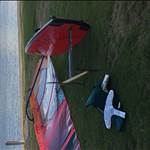
This is my take on the fuse extension on my NP Glide S 2020, following Mort67 idea. 15cm extra at the rear. All in an Al rod 20x20mm and using my wood router and file.
I have sailed very successfully this season 8 times with it. I am not sure if the improvement is due to the extension or my abilities (2nd season). Really want to remove it to see. But definitely more stable longitudinally.
Cheers.


Select to expand quoteisandoval said..
Hi. I bought the pinkie. A bargain. The magazine tests ok, youtube videos ok. And I did the modifications proposed by Adam555. Plain 25x25x2 mm square steel tube for front wing and 25 x2 x2 steel plate for stabilizer. Some rod welding for the nuts, poliurethane foam and fiberglass for fairing with the fuselage. Front wing moved 10 cm front and stabilizer 20 cm back. usd 10 for a 100 cm fuselage. It will rust (I sail in freshwater) so I bought some solid carbon rods to replace the steel and give it a high end touch. Thanks for the solution.
Can you post some photos? Thanks
Select to expand quoteLeStef said..
This is my take on the fuse extension on my NP Glide S 2020, following Mort67 idea. 15cm extra at the rear. All in an Al rod 20x20mm and using my wood router and file.
I have sailed very successfully this season 8 times with it. I am not sure if the improvement is due to the extension or my abilities (2nd season). Really want to remove it to see. But definitely more stable longitudinally.
Cheers.
Looks great - you'll get perhaps the most benefit with the glidefoil though by moving the front wing forward about by about 90mm? From memory ..longer tail slows down the rate of change which makes you feel more in control but front extension shift lift point which I found gave big step change