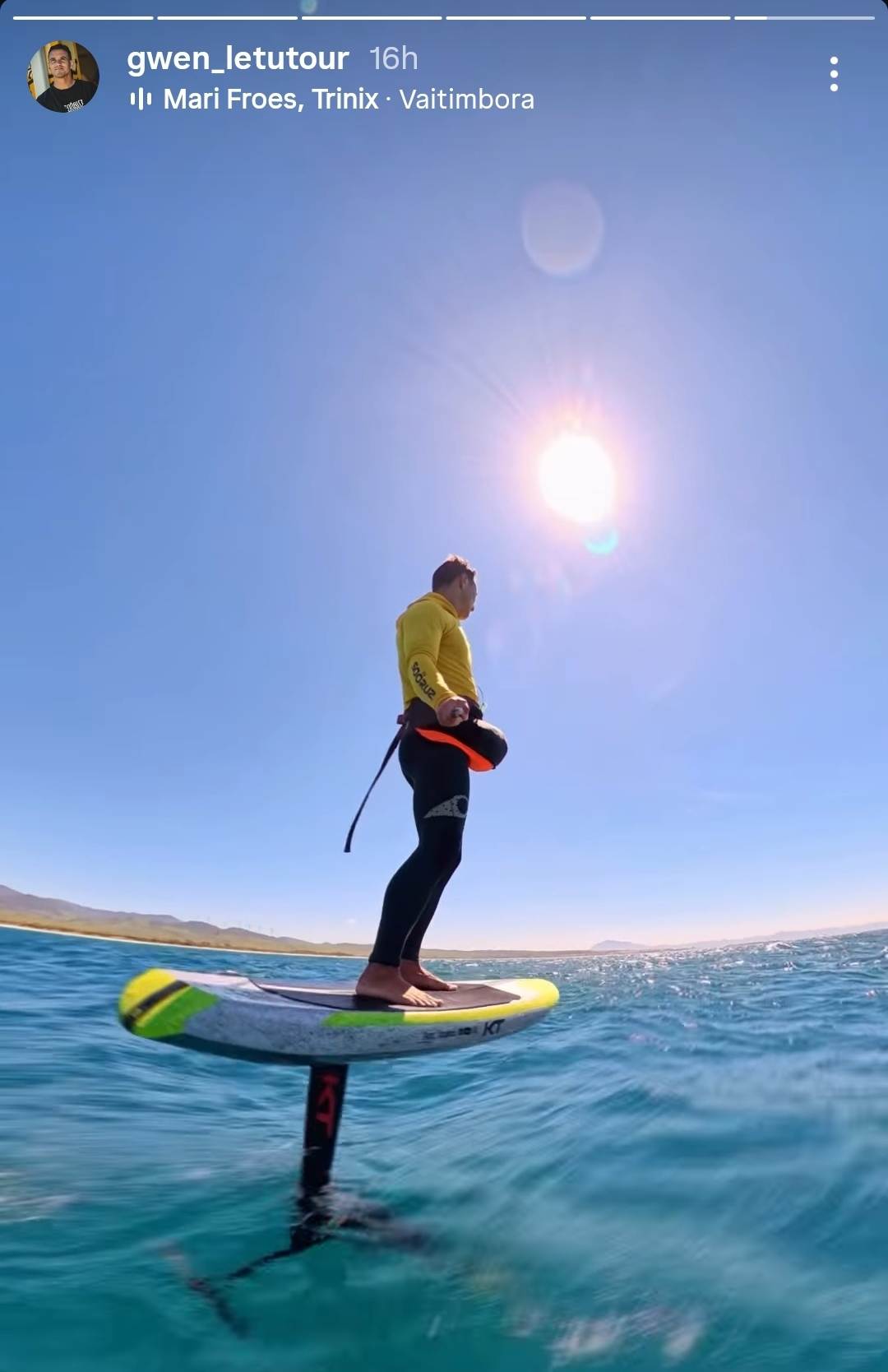
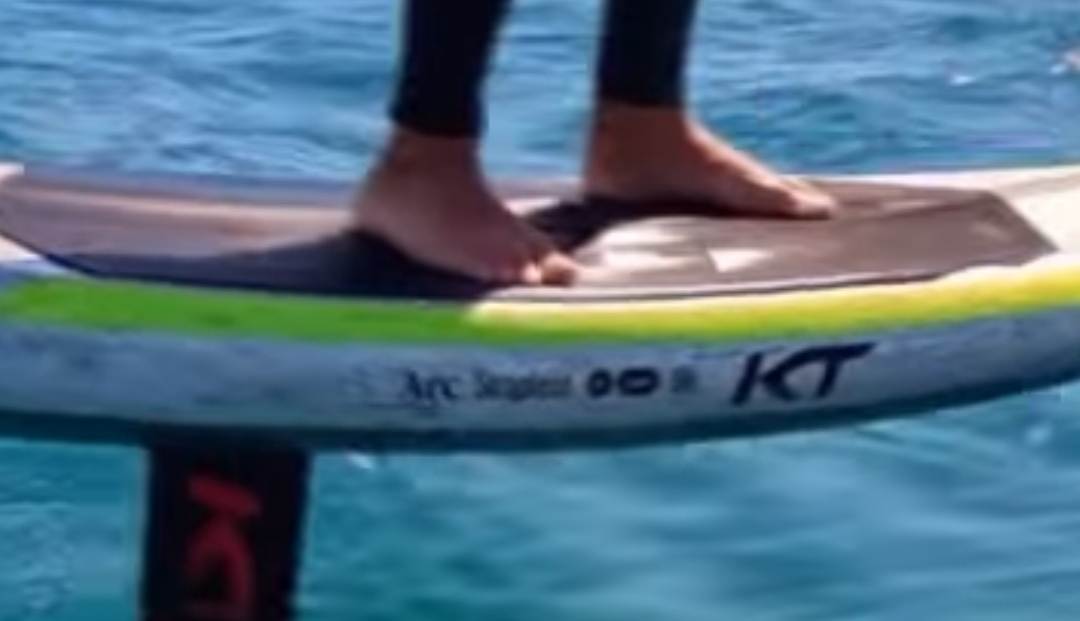
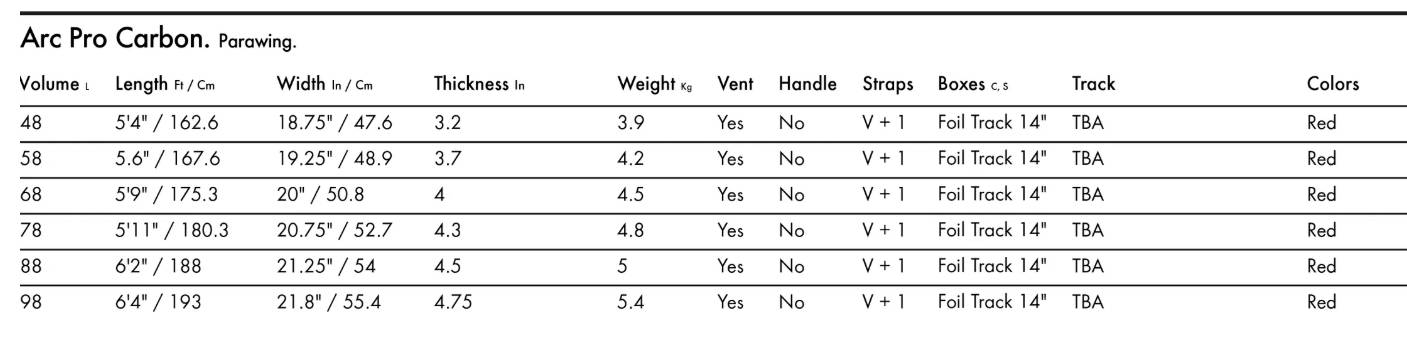
if true looks like the opposite of the Axis Frank mini dart PW specific which has more volume up front and less in tail,this new KT looks like way more volume in tail than the nose,or optical illusion LOl
Thanks for the vid, I'll be curious to hear the design elements that make it better suited for the parawing. I was just ready to pull trigger on the K2 when my dealer said I might want to wait till after the dealer meeting in Spain.
Select to expand quoteShlogger said..
Thanks for the vid, I'll be curious to hear the design elements that make it better suited for the parawing. I was just ready to pull trigger on the K2 when my dealer said I might want to wait till after the dealer meeting in Spain.
I was talking to Bernd Roediger today in Maui and he was using a proto Arc. He said he prefers the extra width over the K2. Wind was barely 12 knots and he was proning into small waves at Hookipa and then deploying a 4m PW. Looking at the board it also seems to have more volume in the nose than the K2, personally I don't think you could go wrong with either board if money is no object.
Been riding the KT SK2 as a custom in 83L for a year now and learned to parawing on it, using the Nomad 830 and in light wind the Atlas 960 foil. Just got a chance to ride the ARC 88L (I am 190lbs). The ARC is incredibly stable, it's literally difficult to fall off the board. It also has a pretty recessed deck and volume moved to nose and tail. Rockerline is very different, the board is super easy to pump, nearly intuitive. It allowed me to ride a smaller parawing than usually would. I am so impressed, I ordered one immediately.
Interesting to see how rocker and width are evolving lately - I think we're starting to see two clear directions:
A. Wing-driven boards
Wingfoiling still favors relatively narrow boards with flatter rockers, since most of the pumping power comes from the wing rather than the board pump-oscillation. That keeps things efficient and fast to release.
Typical "mid-length" shapes still dominate here (roughly 5'8-6'5 length ? 18-21 width), relatively flat bottom, low kick tail.
B. Parawing focused boards.
Lots of discussions about "more volume in the nose", but it looks like there are other relevant trends.With parawing (or more foot-driven pumping), stability becomes more critical - you don't want to be constantly fighting balance. The pumping energy comes more from the rider (foil up/down oscillations), so boards tend to have more rocker in both nose and tail (like a banana).
Dimensions are similar in volume vs wing boards but shift slightly: around 5'6-6'2 length ? 19-22 wide, with a more "banana" rocker - similar to the kind of shapes Ken Adgate has been popularizing, and the new KT Arc.
Curious where this converges. do we end up with two distinct board categories, or a hybrid that does both reasonably well?
What do you guys think ?
I ride a custom board for winging with all the described parawing attributes, a 6'1 x 22, 95 liters being 94 kg.
IMO these "para" boards also work perfectly for winging, esp. if you like to ride smaller wingsizes that you have to pump on foil rather than getting pulled on foil by wing power.
Combine that smaller wing preference with gusty, light and/or choppy conditions and you highly appreciate the 22" width and the stabillity the recessed deck is giving.
Select to expand quoteAlexF said..
I ride a custom board for winging with all the described parawing attributes, a 6'1 x 22, 95 liters being 94 kg.
IMO these "para" boards also work perfectly for winging, esp. if you like to ride smaller wingsizes that you have to pump on foil rather than getting pulled on foil by wing power.
Combine that smaller wing preference with gusty, light and/or choppy conditions and you highly appreciate the 22" width and the stabillity the recessed deck is giving.
I agree. I have a 73 liter Frank 6'x20" that I bought as an all around travel board for wing and parawing. It does both extremely well and the compromise for winging is minimal vs my dedicated 5' 60L board. I have dedicated parawing and wing boards, but I can see myself riding the Frank 85% of the time.
Looks like Big Winds already has the listing up with limited info up and this board ain't cheap!
bigwinds.com/products/kt-arc-pro-carbon-foil-board-2026/
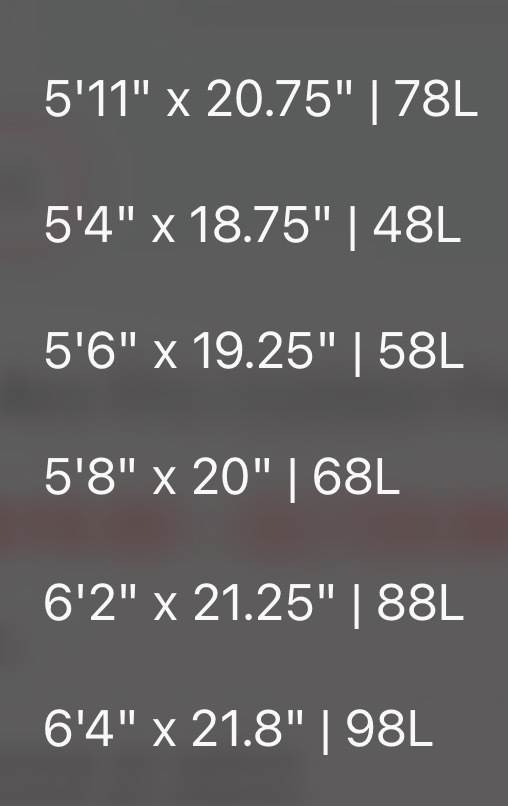
They are disappointingly short in the lower volume sizes.
Not really many options if you want to stay around 6'
After riding the 6,2” super k2 all summer I can’t wait for the 5’11 arc”. I also rode a 70litre wing board often when the wind was 25knots and above. The smaller board felt better but only marginally. The negative was it took away any plan b if the wind dropped. The 78 litre as one board quiver and should be perfect. If the arc is an improvement on the super k it must be one hell of a board!
Select to expand quoteAnyBoard said..
They are disappointingly short in the lower volume sizes.
Not really many options if you want to stay around 6'
It's interesting to so some folks moving to bigger prone boards that offer more length with less thickness for crossover use...wonder if that might become more of a (welcome to me) trend
Select to expand quotekook123 said..AnyBoard said..
They are disappointingly short in the lower volume sizes.
Not really many options if you want to stay around 6'
It's interesting to so some folks moving to bigger prone boards that offer more length with less thickness for crossover use...wonder if that might become more of a (welcome to me) trend
+1
Ordonez's 6'6 x 19 1/2" x 80L Gunboat model from Hydrocraft looks to have some serious crossover potential. A baby Flying Cat!
Select to expand quotesamcclus said..
After riding the 6,2" super k2 all summer I can't wait for the 5'11 arc". I also rode a 70litre wing board often when the wind was 25knots and above. The smaller board felt better but only marginally. The negative was it took away any plan b if the wind dropped. The 78 litre as one board quiver and should be perfect. If the arc is an improvement on the super k it must be one hell of a board!
I learned to parawing on my SK2 83L (custom). Had a chance to ride the ARC here in Maui. The ARC in similar size is much more stable and easier to pump. Really impressive, allows me to ride smaller parawings which is very nice.
The board is up on their website described as "significantly thinner" yet they don't publish the thickness specs? 
ktfoiling.com/boards/arc-pro-carbon/
Select to expand quotewindwaterfoil said..
The board is up on their website described as "significantly thinner" yet they don't publish the thickness specs?
ktfoiling.com/boards/arc-pro-carbon/
It looks thin to me
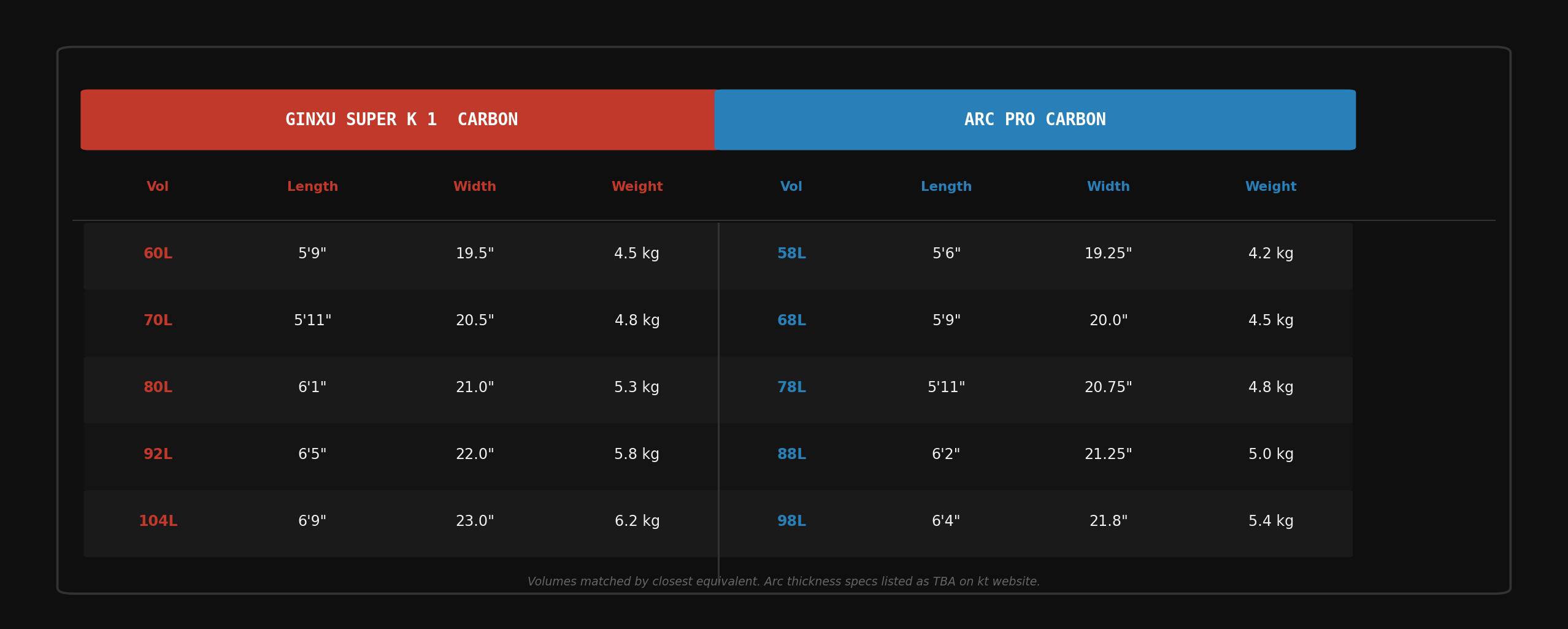 *Disclaimer: produced with Claude by feeding the board page url's. Apologies.. didn't have time to fully double check* If anyone sees an error let me know. The 92L vs 88L data looks correct (have the K1 92 L myself)
Select to expand quoteFoilingaway said..
Can anyone compare to the Super K V1? Dims are not too far off
I used to Ride the v1 in 85L (custom). The ARC has a wider flat bottom throughout, making it significantly more stable when taxiing. The difference is really dramatic. W parawing it is very easy to pump and get on foil. V1 is probably not much worse if you have perfectly flat water. The moment where you add chop the ARC is much better for me because it is easier to maintain the pumping motion on a more stable board. Once in the air the ARC (and SK2) seem to be less impacted by wind and are flying more stable and seem to ride smaller than the v1
interesting that the ARC is 0.3kg heavier than the Super K v2 in the 88/90 size despite not having a handle and being equivalent volume. Arc 88l is spec'd at 5.0kg, Super K2 90l in Pro Carbon at 4.7kg (although my personal board is 5.0kg).
What is the build quality like on these KT boards? Currently own Sunova and Omen which are both very good.
Select to expand quotesunsetsailboards said..
interesting that the ARC is 0.3kg heavier than the Super K v2 in the 88/90 size despite not having a handle and being equivalent volume. Arc 88l is spec'd at 5.0kg, Super K2 90l in Pro Carbon at 4.7kg (although my personal board is 5.0kg).
A sharp bit of positioning from KT.
At a time when moving new boards is tougher than ever, they’re leaning into the parawing momentum and reframing the offer—arguably even nudging toward a new sub-category.
The ARC reads very close to a K2: roughly +1” in width, a touch more banana in the rocker, and about +300 g on the scale. Incremental, not radical. The real question is whether those tweaks translate into a meaningfully different on-water feel—or if this is primarily smart product segmentation (and, likely, healthier margins) dressed as innovation.👍👍👍👍