Select to expand quotesailquik said..
>>>>
But you claim the design doesn't matter as long as it works the way you want: An ugly sail? Does that matter? The graphics designers and marketing poeple will be having fits! 
And in my experience they have overriding control, that's why we get different new stuff each year that's sometimes a step backwards.
If a designer says sorry, there's no improvements yet he gets sacked.
Ugly is only a point of view. If it truly works then thats the path to follow. Look how much automobile design has changed since the 70s. Back then everything NEW looked ugly. Now its the norm.
^^ I think it's generally accepted in the design world and science that there are certain benchmarks, proportions, natural geometries that are inherently beautiful or inherently ugly. A Golden Ratio is pleasing, whereas a squat rhombus is generally "unnatural looking" and odd.
Ugly is definitely not only about opinion - it's demonstrable with math. Good design just turns beautiful math into something intangible and awe inspiring.
Select to expand quotejuicyfruit said..
Fastest sails, or fastest sailors using them? How can we really say unless it's tested?
I suspect if you put Antoine Albeau on any dynamic twisting sail he'll go faster than 99% of sailors on super twisting sails.
I think NP's EVO sails and KA sails use what one could call dynamic twist, whereas Severne uses more radical permanent twist built into the seam shaping.
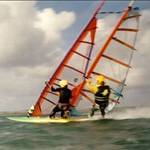
Have a look at this video from last year's PWA world cup
No-one here is suggesting we stop using twisting leech sails. What some people are saying is there is a difference between dynamic twist and permanently loose leech design.
Aeroplanes, birds, sea life, trees...they all use dynamic twist.
Only some designers use permanently radical twist because they don't understand nature and physics adequately
Open your eyes, some designers are using radical built in twist because they understand it is fast and wins races
Select to expand quoteolskool said..
Ugly is only a point of view. If it truly works then thats the path to follow. Look how much automobile design has changed since the 70s. Back then everything NEW looked ugly. Now its the norm.
I recon cars have got a LOT uglier in general, especially those designed to appeal to the US market! 
But I agree with Juicyfruit that functional form usually has it's own appeal.
To me it seems there is indeed a clear design split between various sailmakers. In person I see two routes evolving from knowledge gained since the start of our beloved sport, with smaller differences between the various brands within each given group.
Still differences in feel per brand/designer are massive and in the end, however long we discuss this matter, all will come down to feeling of the rider as we ourselves hold the throttle through extremely subtle and complex impulses sent by our feet, legs, arms, core, head, fingers, which themselves are influenced by the impulses sent to us by the fin, board, rig, waterstate and the invisible factor (apart from the colouring of the water and cloud movement), propelling us. I feel this is also why GPS speed is so addictive. There is not one solution but there are a lot of solutions to go fast.
All I know for a fact is that effortless gliding will always be faster than having to manhandle a sail. So even if you are large and rig large, you want to have a light feeling on your hands.
If you make comparisons to the near past of only a few decades ago, even weighing 100 kilo and being over 6 foot tall, you would have a handful to manhandle a 7.0 in gusts up to 40 knots. In the now on flat water it can be done and even more so, such a sailsize in combination with a large board can be extremely quick for a tall and strong rider (e.g. see post Twan Verseput).
It will be interesting to see which design concept is good for whom and if we can distill some fundamental things on twist needed for various sizes and windstrengths out of all variables at hand.
We need to see twist as part of the overall package: draft depth and placement (and related stability), sleevecurvature, sidebend, battens and batten placement, foil tension and over COE to be felt by the rider depending on the setting he or she chooses.
I agree twist is THE magical word but totally related to the overall feel of the package at hand and this includes the rider and the style of the rider.
The best sailmaker in this day and age is someone with massive software designskills while at the same time being a great listener and observer and ideally a skilled windsurfer him/herself, being able to translate the information thrown at him/her in this package of magic called the software program with which the outcome can be tweaked. No sailmaker with a commercial brain will throw away the secrets within that package.
Just look at F1 as a perfect example with Adrian Newey as a designer that still seems to stand out from the crowd while ALL cars are litterally covered with sensors of all kinds while testing AND within the race itself. Everything is monitored. Still designs differ a lot.
Sure sensors will prove to be a massive help and a renewed test like Roo did in the past with a few super stoked people would be extremely interesting and very welcome, but it can and will never take away that magic and suspense that makes our sport so thrilling.
To top things off. In the end there is one biggest factor and that is fear! We are thrillseekers but everyone, not a single windsurfer excluded will hit the wall somewhere. In the end moving the wall is what makes a true toprider stand out from the rest.
I watched that video very closely. 
The sail are very twisted in the top 3 panels, but they don't seem to be completely flapping. It could partly because this was a downwind slalom, but even then I think they are not much more than 100-110 Deg off the wind.
Its very hard to say that any of those sail didnt have some degree of Dynamic twist. It looks like they all do to some extent.
I was looking at some speed sails last week from a recent event in Europe, and it struck me that some of those sails were SO extremely layed off at the top, that even on a broad reach, the top appears as if it could be just flapping. It was those pictures that prompted my questions.
I could be misinterpreting the pictures though?
Here is one from that set. I thought some looked more extreme than this, but I cant find them now. This one does not seem too extreme, but at a guess I would say the apparent wind was pretty well lined up with the top batten. And that might actually be ideal in this situation. 

An F1 driver will still be THE most important factor for a designer, as without the input of the driver the designer is lost. And then you've got the circuits. They resemble our chosen spot, winddirection on the given spot, windstrength and waterstate.
One always needs to find the right settings and they are related to personal style and preferences in feel from a set, weight, waterstate, goal and windstrength.
Think of our sessions as a formula one circuit.
If you look at riders like Jacques van der Hout who just set the years best speed -fantastically done by the way!!!-, one of their secrets is to trim to perfection for the near perfect conditions they decide to go for. And it pays off because of the talent within the elite group managed by Jacques. He is the motivator to the youngsters and I feel that's great.
Fact of the matter is those guys are huge and I could not sail with their set, even if I were given the set of Jacques himself, perfectly tuned for the conditions at hand. I would always have to tweak the sail. mastfoot setting and fin to my style and weight. So the answer is with dedication, determination, choices on where you want to set the best speeds for you and training, testing, testing, testing, what's best for you. Ideally in a competitive situation so you get one on one info in on your progress which can be directly measured against your friends, on the water opponents.
I applaud all who go fast and think for themselves. Whether you go fast on a lake and beat your friends or go for the ultimate, the technical most challenging conditions at hand like done by Jacques' team. All efforts are fun. And all efforts can be followed through these two great websites leading the GPS world.
I think it's super fun that we can all relate, wherever we sail, at whatever speed. Good or ****ty conditions. We all get the vibe and sparkle when we think about a great windsurfing day at hand.
I wonder if any sail maker has ever used elasticized material in a sail? it could for example be used above the top for battens.
Above each batten you have the elasticized material say 10cm wide running the length of batten to the first luff seam, this would allow a tighter leech less downhaul and in gusty stronger winds the material would stretch and allow the sail to twist evenly without flopping around like the current designs do.
Select to expand quotechoco said..
I wonder if any sail maker has ever used elasticized material in a sail? it could for example be used above the top for battens.
Above each batten you have the elasticized material say 10cm wide running the length of batten to the first luff seam, this would allow a tighter leech less downhaul and in gusty stronger winds the material would stretch and allow the sail to twist evenly without flopping around like the current designs do..
"Abstract:
An adjustable sail head tensioning device for tensioning the head and upper leech of a windsurfing sail. The device allows the head and upper leech to twist off in strong winds; provides more power in light winds; and makes the sail easier to handle in strong winds. The head and upper leech is supported partially by an elastic member. When the sail is unloaded, the elastic tensions the upper leech by pulling the leech into the mast. When the sail is exposed to strong winds, the elastic stretches and permits the upper leech to spill off wind, which makes the sail more controllable"
Though I did not think it was as well thought out as could be.
It was basically a neoprene top panel. The triangle between the top batten and the mast. Your idea would be better (but not as good as mine )
Ezzy's idea never took off and was quickly dropped a couple of decades ago. It would be out of patent now.
Select to expand quotesailquik said..
Here is one from that set. I thought some looked more extreme than this, but I cant find them now. This one does not seem too extreme, but at a guess I would say the apparent wind was pretty well lined up with the top batten. And that might actually be ideal in this situation.
I don't think it's a coincidence that the photo you picked is a Mach 2, the sail that I think must be about the floppiest on the market, and the one I've purchased to try out this style of rig. Will be very interesting to see what I think once I have had the chance to try it.
Select to expand quotePacey said..sailquik said..
Here is one from that set. I thought some looked more extreme than this, but I cant find them now. This one does not seem too extreme, but at a guess I would say the apparent wind was pretty well lined up with the top batten. And that might actually be ideal in this situation.
I don't think it's a coincidence that the photo you picked is a Mach 2, the sail that I think must be about the floppiest on the market, and the one I've purchased to try out this style of rig. Will be very interesting to see what I think once I have had the chance to try it.
Honestly, I actually didnt recognise the brand and model. It was just the only photo from the series that I could find in a quick search. If momory serves me, there were others even more twisted.
Select to expand quotesailquik said..
This one does not seem too extreme, but at a guess I would say the apparent wind was pretty well lined up with the top batten. And that might actually be ideal in this situation.
Seems to be very similar "entry angle" of the sail to the wind all the way up the sail, with the bottom 3/4 a thin cambered section and the top 1/4 set flat.

Select to expand quotePacey said..
Open your eyes, some designers are using radical built in twist because they understand it is fast and wins races
Yeah I opened my eyes ......that's true but one could also argue those sails are designed for radical PWA conditions and heavy strong sailors.
The average sailor I reckon would be faster on a more dynamically twisting sail than a radically floppy leech sail because it acts like a shock absorber.
Same for boards and fins.
Select to expand quotejuicyfruit said..Pacey said..
Open your eyes, some designers are using radical built in twist because they understand it is fast and wins races
Yeah I opened my eyes ......that's true but one could also argue those sails are designed for radical PWA conditions and heavy strong sailors.
The average sailor I reckon would be faster on a more dynamically twisting sail than a radically floppy leech sail because it acts like a shock absorber.
Same for boards and fins.
True, but you are on a GPS and speed sailing forum, which is not really aimed at average sailors beam reaching back and forth. Most on this forum are specifically interested in outright speed on downwind courses, often in lots of wind, so the needs of the average recreational sailor are less of a consideration.
Select to expand quoteTGale said..
Seems to be very similar "entry angle" of the sail to the wind all the way up the sail, with the bottom 3/4 a thin cambered section and the top 1/4 set flat.
Yep, I thought the same thing, similar entry angle all the way up the sail has to be important.
But can't that be achieved without radical twist?
Select to expand quotePacey said..True, but you are on a GPS and speed sailing forum, which is not really aimed at average sailors beam reaching back and forth. Most on this forum are specifically interested in outright speed on downwind courses, often in lots of wind, so the needs of the average recreational sailor are less of a consideration.juicyfruit said..Pacey said..
Open your eyes, some designers are using radical built in twist because they understand it is fast and wins races
Yeah I opened my eyes ......that's true but one could also argue those sails are designed for radical PWA conditions and heavy strong sailors.
The average sailor I reckon would be faster on a more dynamically twisting sail than a radically floppy leech sail because it acts like a shock absorber.
Same for boards and fins.
I suppose, but I wouldn't put myself anywhere near the calibre of PWA slalom racers and 50+ Luderitz legends.....
Select to expand quotejuicyfruit said..I suppose, but I wouldn't put myself anywhere near the calibre of PWA slalom racers and 50+ Luderitz legends.....
Neither would I put my self in that class.
But I think anyone going for 40+ on a broad speed run will benefit from these things.. 
A VERY relevant post from ' Basher' in the who invented the Loose Leech thread, any my reply. Read Bashers point 3 and 4 first. 
www.seabreeze.com.au/forums/Windsurfing/General/Who-is-inventor-of-loose-leech-?page=3
Select to expand quotejuicyfruit said..Pacey said..True, but you are on a GPS and speed sailing forum, which is not really aimed at average sailors beam reaching back and forth. Most on this forum are specifically interested in outright speed on downwind courses, often in lots of wind, so the needs of the average recreational sailor are less of a consideration.juicyfruit said..Pacey said..
Open your eyes, some designers are using radical built in twist because they understand it is fast and wins races
Yeah I opened my eyes ......that's true but one could also argue those sails are designed for radical PWA conditions and heavy strong sailors.
The average sailor I reckon would be faster on a more dynamically twisting sail than a radically floppy leech sail because it acts like a shock absorber.
Same for boards and fins.
I suppose, but I wouldn't put myself anywhere near the calibre of PWA slalom racers and 50+ Luderitz legends.....
I am with you. No one could or in given situations in the now can fight these legends if he is not a giant. Patrik so far being the only exception but he wore weight that could have killed him in a crash ands it only proves the point normal sized and average sailors need dynamic twist.
Focus is indeed on PWA and that's a bigger problem than most over here seem to realize.
Only in very laminar conditions, conditions where you need a lot of glide, or very technical conditions involving slingshotting a very talented lighter rider stands a chance. The focus on large riders going fast on big gear is just a showcase of us moving the wrong way. We need low drag, small kit based on dynamic rigs that can be sailed open and are easy on the hands. It can and will be done.
Select to expand quotedecrepit said..TGale said..
Seems to be very similar "entry angle" of the sail to the wind all the way up the sail, with the bottom 3/4 a thin cambered section and the top 1/4 set flat.
Yep, I thought the same thing, similar entry angle all the way up the sail has to be important.
But can't that be achieved without radical twist?
With less twist then to get the same entry angle in the upper sail more camber is needed, which will shift more power to the upper sail which means the bottom of the sail will need to be less powerful (assuming we are righting-moment limited). Less twist also has the controllability issues in gusts.
Select to expand quotesailquik said..juicyfruit said..I suppose, but I wouldn't put myself anywhere near the calibre of PWA slalom racers and 50+ Luderitz legends.....
Neither would I put my self in that class.
But I think anyone going for 40+ on a broad speed run will benefit from these things..
Yep...so if a sail can do it when needed rather than permanently - that's the holy grail....wind gusts +5 knots, so the sail tip rotates accordingly to account for the decreased apparent wind...permanently twisted to the max and the sail's not taking advantage of the lulls.
Select to expand quotesailquik said..
A VERY relevant post from ' Basher' in the who invented the Loose Leech thread, any my reply. Read Bashers point 3 and 4 first.
www.seabreeze.com.au/forums/Windsurfing/General/Who-is-inventor-of-loose-leech-?page=3
We need sails that can be sailed more open and it can be done. Follow the line of thinking Basher presents and you understand why.
When being listened at a tall rider can choose a large platform, big lifting fin, large sail and a small rider an open water speedboard, small fin (carbon mostly not even needed e.g. tribal symspeed) and small sail. When equally skilled both will stand a chance of winning the day. In the now...well, some brands are slowly getting there. Some other brands...no way you stand a chance as lighter rider.
On a side note...talking tribal sym speed as an example that works for the lighter riders. Chris Lockwood is a great example of a lighter, super technical rider who understands his personal needs and thus the needs of those like him. I applaud him for his efforts.
Select to expand quotejuicyfruit said..sailquik said..juicyfruit said..I suppose, but I wouldn't put myself anywhere near the calibre of PWA slalom racers and 50+ Luderitz legends.....
Neither would I put my self in that class.
But I think anyone going for 40+ on a broad speed run will benefit from these things..
Yep...so if a sail can do it when needed rather than permanently - that's the holy grail....wind gusts +5 knots, so the sail tip rotates accordingly to account for the decreased apparent wind...permanently twisted to the max and the sail's not taking advantage of the lulls.
So right!
Don't forget. A tall rider was tall in the past and had to rig bigger when he/she learned to windsurf. In the now they are leading, win races and sailmakers listen to them. The PWA ensures that the route to follow is based on wider platforms, larger flexing fins and large sails that nearly permanently need to be in a state of getting rid of power in order to keep enough momentum in the lull. Mostly, the gybe where one needs to have the best pumping sail in the market that uses the maximum amount of thrust through the excessive power and weight a rider has to carry through the course. Now how dumb is that for an amateur rider wanting to go fast like the pro's but not being interested in buoys and stuff.
The added size on the wide boards is needed purely because of the balance of the whole set. Speeds shown by some of the monsters are mindblowing as they can power up the sail in a transition or while sailing alongside a bank (Twan Verseput example), but again...it's a rope pulling contest that way.
Think about yourself standing at the other side of the line, looking at Tony. Do you think you stand a chance? We're not into rope pulling, we're into windsurfing but we're playing the leverage game. Simply compare a modern day America's cup foil boat with a windsurfer and you have to realize it's plain dumb.
Yes, the adjustments do serve a purpose, but they don't serve a purpose as in how to grow a sport. When not being 6 foot tall and a youngster, you'd better not go into windsurfing, apart from focussing on freestyle or wave. GPS could prove to be a big help to grow the sport as GPS can and will show lighter and heavier riders can go equally fast. We're not there just yet but in some cases designers are getting very close. In others...forget it.
Select to expand quoteyoyo said..choco said..
I wonder if any sail maker has ever used elasticized material in a sail? it could for example be used above the top for battens.
Above each batten you have the elasticized material say 10cm wide running the length of batten to the first luff seam, this would allow a tighter leech less downhaul and in gusty stronger winds the material would stretch and allow the sail to twist evenly without flopping around like the current designs do..
"Abstract:
An adjustable sail head tensioning device for tensioning the head and upper leech of a windsurfing sail. The device allows the head and upper leech to twist off in strong winds; provides more power in light winds; and makes the sail easier to handle in strong winds. The head and upper leech is supported partially by an elastic member. When the sail is unloaded, the elastic tensions the upper leech by pulling the leech into the mast. When the sail is exposed to strong winds, the elastic stretches and permits the upper leech to spill off wind, which makes the sail more controllable"
Though I did not think it was as well thought out as could be.
It was basically a neoprene top panel. The triangle between the top batten and the mast. Your idea would be better (but not as good as mine )
Ezzy's idea never took off and was quickly dropped a couple of decades ago. It would be out of patent now.
What i meant was elastic material placed in these spots on the sail, the elastic would stretch when loaded and allow the sail to twist without the need for high downhaul and spring back in lighter conditions giving more power

You should take a patent on that quick!
Then wait for the right sort of material to be invented with the correct elasticity and strength. I don't think it exists yet, but it maybe does in a secret back room somewhere?
Select to expand quotechoco said..yoyo said..choco said..
I wonder if any sail maker has ever used elasticized material in a sail? it could for example be used above the top for battens.
Above each batten you have the elasticized material say 10cm wide running the length of batten to the first luff seam, this would allow a tighter leech less downhaul and in gusty stronger winds the material would stretch and allow the sail to twist evenly without flopping around like the current designs do..
"Abstract:
An adjustable sail head tensioning device for tensioning the head and upper leech of a windsurfing sail. The device allows the head and upper leech to twist off in strong winds; provides more power in light winds; and makes the sail easier to handle in strong winds. The head and upper leech is supported partially by an elastic member. When the sail is unloaded, the elastic tensions the upper leech by pulling the leech into the mast. When the sail is exposed to strong winds, the elastic stretches and permits the upper leech to spill off wind, which makes the sail more controllable"
Though I did not think it was as well thought out as could be.
It was basically a neoprene top panel. The triangle between the top batten and the mast. Your idea would be better (but not as good as mine )
Ezzy's idea never took off and was quickly dropped a couple of decades ago. It would be out of patent now.
What i meant was elastic material placed in these spots on the sail, the elastic would stretch when loaded and allow the sail to twist without the need for high downhaul and spring back in lighter conditions giving more power
I know what you ment Choco and I agree your idea is way better than Ezzy's. Had similar thought 20 years ago but came up with a better/simpler solution. But like most of my ideas didn't really make a noticable difference. The guys who were betterthan me still sailed faster on off the shelf kit.
It's already incorporated in sails on the market nowadays and supporting the whole character of the sail. No need for a patent.
Then we need to downscale to the right sizes for the smallest as well as very limited sailmakers do in the now and we're getting even closer.