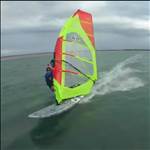
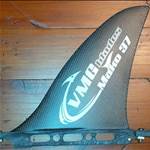
Hardie ,according to Mal the V7 will work in lighter conditions as well.Yesterday the wind backed off in part of the session but I could still pump up on the fin and push and this was the V6.You,ll have to make a trip over here.
quote:
Originally posted by kato
Hardie ,according to Mal the V7 will work in lighter conditions as well.Yesterday the wind backed off in part of the session but I could still pump up on the fin and push and this was the V6.You,ll have to make a trip over here.
hi there speed experts,
i am keen to get into a bit of speed sailing, and am seeking some advice.
firstly, what size / type of sails are recommended? i currently have a 5.4 north trans-am (no cam race) and a sailworks 6.0 retro.
secondly, my wife is getting me a gps for my birthday, I had in mind a foretrex 201, wondering what these are like and what others people use / recommend. is the 201 easy and functional and easy to download info onto your computer? any tips / comments would be most appreciated.
i have a jp freeride but just bought a f2 sputnik 270 wce which goes like the clappers so i'm keen to see what sort of numbers i am getting...
thanks,
andrew
Andrew ,Garmins 201/101 are easy to get and use,but need to be in a bag or box as the waterproofing isn,t up to the job.Warranties havn,t being a problem when they fail. I,ve had 5 die on me.The other one I,ve seen is the Navi which is a little larger than the Garmin but stores more track points and has an SD memory card.Again must be stored in a bag. More info is avaliable at www.GPS-Speedsurfing.com. As for sails I,m baised towards KA Koncepts there just quick. Maybe look for a cammed sail and a good speed fin as you get more experience,but be warned its very addictive.
I agree with Kato -> the Garmins work reasonably well, they have a relatively big screen and are easy to use.
I am also a convert to KA Koncepts (I have 3 of them...) - they are fast, they feel light weight, rig on most constant-curve masts and you might even find some going cheap as the gurus chase 50knots.
Andrew,
As for GPS Units. Ihave both a Garmin 201 and a Navi - I'm up to my fifth Garmin 201 - all replaced under warranty( great service )however you must use an "Aquapac" with this unit. The water-proofing does not live up to claims. I had one unit completely fail and it had never been on the water. Display size is nice feature.
The Navi is a better unit if you can get your hands on it - especially for downloads.
As for your sails, - buy something with cams - No cam sail perform well when running 'square' - (90Deg max) to the wind - but the real speeds come when you are running 110+deg off the wind and cambered sails really perform better in this range - you will find you can also hold greater sail size.
For sailing that requires you to sail back upwind the greater pointing ability of cammed sails is a must.
Next bit of advice - get some really good fins - you won't regret this decision.
- J
thanks for your help fellas,
foretrex sounds like the go.
look forward to reporting some numbers in the near future!
andrew
So whats secret to light wind speed. I allways lose ground when I'm not fully powered. Is there somwthing I can do to unstick the board a little more in lighter air or is there a technique for getting more efficiency.
Des,
P.S. Andrew C, sounds like the Sputnik is working for you?
A coupla things to start, first the laws of physics, you need equipment that is capable of planing for a given wind for starters......... so what winds are you talking about and what equipment? Then you need technique to create apparent wind, creating enough windspeed and momentum to get the board planing, and then there needs to be enough wind to keep the board planing.
Sail size, fin size and board volume and width all play a role. A wider hull needs less speed to plane than a narrower hull, so a 1m wide formula style hull will plane when it is moving a speed of say 10knots, whereas a 60cm wide hull may need 12 knots of speed before it will plane. The sail and fin determine what power can be turned into speed, so both have to compliment the desired outcome. So in 8 knots of wind you may need a 11m sail and 70cm fin to create enough power and drive to propel a board up to planing speed of 10 knots, then hopefully the efficiency of the equipment will create an apparent wind of greater than 8knots say 12knots, which will keep the board planing coz it is travelling 10 knots or more.....
OK someone else's turn.....
hey des,
only limited use so far (finish uni degree in about 4 weeks which should free up some time!) but i pretty much went as quick as i ever have in some great smooth water sailing, so i'm keen to see what sort of numbers i have been getting.
board quite difficult to jump i've found, but smooth water and straight line is tops. gybing not as bad as i expected. a bit of spinout at speed was scary but i am getting the hang of it.
cheers
andrew
quote:
Originally posted by Waiting4wind
So whats secret to light wind speed. I allways lose ground when I'm not fully powered. Is there somwthing I can do to unstick the board a little more in lighter air or is there a technique for getting more efficiency.
Des,
P.S. Andrew C, sounds like the Sputnik is working for you?
Thanks guys. I'm pretty good at getting on the plane and staying there,using slalom gear with adjustable OH with DH set correctly. My speed is pretty good when I'm well powered, ie. pacing against a fast sailor & GPS. But when only half powered, still planing nicely, I'm slow and fall behind. I feel that getting the weight in the harness more seems to help but I'm not sure I'm doing this consistently. May try a seat harness to see if this helps.
When I find my speed is starting to drop of through a light patch I tend to "shimmy" the board a bit.
I do this by leaning weight into harness, then pumping the board more with the front foot more than back foot and more of a sideways motion than a bounce. It feels a bit strange at first but will definitely notice an advantage once you suss it.
I find that I can do this for a fair while as I'm not actually pumping the sail and the board will accelerate quite noticeably.
Hi guys
A big appology to anyone who has posted a GPS Speed on the need4speed database in the last week and it has not yet appeared 'live' on the site.
Our resident web goober took off for a chance to record his own quick runs in a bid to claim back some much needed beach and office cred... no luck so far on either score for him.
Any gps speeds lodged have been stored and will be updated by Monday.
Once again we appologise for the delay but can't get too angry with him for sneaking off to go sailing... I mean we have all done it once or twice haven't we..... ?
Keep the speeds coming
Regards
WindWarrior Australia
'See things from a different angle'
I,ve posted some photos of my 90,s speedboard that I,ve modified. I,m hoping that it might encourage more people to drag out those old speedboards and put them back in the water.This board started out as World cup tri concave speedboard. The rocker line was flatened and the concaves removed. I put too much flat into it and the quickest way to fix this was to install the cutouts.Gained about 5kts in top speed and it loves choppy conditions.Had to put a new mast track in to suit the modern sails.The fin in the board is one of Mals designs, TM45V6 .Goes really well. The paint job was the most important thing,who wants a bright yellow board with those footstraps!! This board has done a 40+ ave. Dust off the old speedboards and have a go
Kato, Well I was thinking the same thing. I made a speed board yonks ago but I think I have too much straight in it, about 1.2 metres from the tail, cutouts looks like a simple solution. Did you have to change the finbox from US to Trim, if so is this difficult ? I have to reglass the bottom anyway, so may reshape, at the moment it has v all the way through and very slight concaves ending b4 the straight. 150 mm of rocker. 9 foot long. I guess I could also shorten it from the back which would also shorten the striaght. The board handles very well but not quick by speed board standards, although I have not really tried in smoking conditions. Will upload a pic.
Hagger ,good to see some else having a go. Yes a bit too much flat
(I had about the same amount).Changing the fin box isn,t that hard.Beg, borrow,steal a router and cut out the old one.Glass in as normal making sure that it is in line with the centerline.This is very important otherwise the board will crab sideways.The cutouts I did at the same time with the router,about 4deg off the centerline.Moving the mast track helped too.Good luck
HI Waiting for Wind,
What length lines are you using? Too short often means you too on top of your board in the lulls which can drop you off the plane quicker than you would like.
Cheers,
Sam.
Hi Sam,
Des here, I've stretched the lines to about 26", use a waist harness. I can get planing quite early and stay there in lulls. It just that my board speed isn't good unless I'm well powered. Maybe it the 10kg I've put back on the last few months?
Thanks Kato for pointing me at this forum and good on ya Hardie for the topic.
A very interesting read for the last hour or so......
I kept thinking "I must reply to that post" and then I would get a bit further down and find that someone else had said pretty much just what I was thinking. Definately some very cluey people here
A few thoughts to add:
Sail floppy at the top? Mega downhaul fast?
Slowboat put it best I think. There is definitly an optimum for every sail and combination of conditions. Too much is just as bad as too little. My total range of downhaul tuning for the 4.4m Koncept up the the 6.6m is about 2.5 cm from one extreme to the other. Maybe less...
The more interesting question is why is the floppy top fast. I think the biggest factor is getting the centre of effort down lower to where you can get the most effient use of it (leverage). For racing and upwind in variable conditions a long boom is better but to keep that power low and under control you want the excess area up top not lifting, just smoothing the flow. In broad conditions on smooth water the apparent wind is very high. The optimum sail will be smaller and fuller at the boom but must still keep the C of E low where you can make best use of it. The choppier it gets, the more advantage you get from more sail area and power as you speed will generally be lower (less apparent wind) and you must plough through the chop with max power.
Another way to look at it. There is a limit to how much power your body weight and stance can hold. Any more sail (power) than that is just useless drag. Optimum effeciency is the aim.
Sail size is also relative to your body size. For me at 74 Kilos a 4.4m sail is pretty much the same as a 5.8m sail for Tony Wynhoven at 107K. We both seem about right with those sizes in 30-35 knots of wind. Someone who is good at 'rithmatic may be able to confirm this. I won't be holding a 5m sail in 50+ knots just 'cause Finian does! 
I recon Hardie got it right about sheeting out to go faster. On a very broad course when you get a gust and you are already holding all the power you can use, sheeting out a little bit takes the load off the fin and allows for less drag. It also, very importantly, puts the direction of the lift closer to the direction of travel = go faster. Also, to sheet in in that situation often just results in a short flight followed by an abrupt halt!
"what are the main differences in fins and what makes a speed fin a speed fin as opposed to another?"
This is simple: A speed fin is faster!
Oh, ok. I guess I could elaborate. Slalom fins are often optimised for speeds in the low to mid 30's and a relitively tight angle (compared with speed sailing). Even though some good ones are capable of 40 knots, they are often past their optimum effeciency range. Too much lift and drag and running close to cavitation. Speed fins are optimised for 35-45 knots speeds and designed to resist cavitiation (and hence a huge drag wall) until well past those speeds. Of course a 'speed' fin will not go as well as a slalom fin in most slalom racing conditions, but they kick arse on a speed course.
Mal Wright has done a huge amount of development in the last couple of years and his latest TM45v7 is very versatile for speed sailing (as long as you have a Starboard Tack course). Compared with the v6 it has a much broader range. The v6 is a bit of a trick to get into top gear in some conditions, but is unbelievibly fast when it is 'switched on'. The aim of the v7 was to get it to 'drop in' or 'switch on' very easily even if it ment a slight loss of top end speed. As it turns out, the difference is astounding! The v7 seems to be almost permanently 'switched on' and the top end does not seem to suffer at all. This fin will work just as well at 35 knots as at 45 knots and will still keep accellerating under high loads.
Assy's are a big advantage on the speed course. The feeling of stability and security is not to be dismissed lightly and the smaller size gives a big lift to drag gain. The latest versions are quite ok upwind in their sweet spot at around 20 knots. Sure, they crab a bit and they must be kept in their best speed range, but this is a small price for the huge benefit downwind.
GPS's: The Foretrex is very well designed for ease of use but suffers from a disappointing lack of precision and limited memory space. The Navi GT-11 is slightly larger and not quite as easy to use when sailing (firmware updates are rapidly overcoming that) but is far more accurate and holds a massive amount more trackpoints in its SD card memory. It is also much easier and faster to download with a simple card reader and best of all it records NMEA data which includes much more information on the number of satellites seen and the actual precision at any given moment.It also records the 'Doppler' speed (basically what you see on the GPS screen) which has the potential to be even more accurate. In short, the speeds are more accurate and can be verified with more confidence.
Phew! I better give my fat thumbs a rest. Just my slant on a few things. Hope it stirs some thoughts.
Andrew D
Wow awesome first post. Ah windsurfing... there is always something new to learn or a slightly different take on that already known. You've certainly provided some food for thought thanks.
Daffy,
nice to see you on this forum - thanks all for the pearls of wisdom.
- Justin H
Hi all,
Just bought a Garmin Foretrex. How do most wear these? If you put it in an aqua pack you cant strap it to your wrist?
Katapult
quote:
Originally posted by Katapult
Hi all,
Just bought a Garmin Foretrex. How do most wear these? If you put it in an aqua pack you cant strap it to your wrist?
Katapult
Regarding the floppy top, I was always confused about this until someone posted a ripper of an explanation on the boards.co.uk website.
Basher wrote:
The reason we might want more twist at the top of the sail is also because it's
thought that apparent wind flows in a different direction at the head of the
sail compared to below the boom. This is because apparent wind is made up of the
day's true wind flow plus the created wind – running in opposite direction to
our forwards board speed. The created wind is the same at the top of the mast as
at board level – because obviously the board and rig travel together. Whereas if
you measure the day's wind at ground level and then climb up a step ladder and
measure it again, then you'll find it's windier higher up. At ground and sea
level the wind flow is slowed by surface frictions whereas at mast tip level the
wind can flow more freely. This tells us the apparent wind flow is more along
the board (from nose to tail) at sea level but more across the board up at the
top batten of the sail. Some sails are cut fuller in the head than others. The
tight leech sail often feels more powerful because the top is effectively
over-sheeted and almost stalled. This over-deflection of the wind can work at
low wind speeds but also can pull you sideways rather than driving you forwards.
It is only really any use at displacement speeds when this sideways power helps
you rail the longboard, or gives you more to pump against etc.
quote:
Originally posted by sailquik
Also, to sheet in in that situation often just results in a short flight followed by an abrupt halt!
Andrew D
nebbian, wind shear is an easy way to justify twist when people ask about it.
More importantly, the twist keeps the centre of effort at the right height. If the COE is too high, you cant make maximum leverage, and you have less available weight to keep the board under control. Thats why we use lots of twist, and why we use lots of downhaul (makes twist and takes camber out of the top of the sail- both reducing power up high and lowering the COE). Its all a balancing act.
The tricky part of sail design and tuning is to put the COE in the right place for the right load. And this changes while you sail...
Wind shear changes from location-location, day-day, so does play a part- but more for how we fine-tune our sails on the day.
quote:
Originally posted by elmo
Daffy
Welcome to the fray, thanks for the knowledge.
Keep up the good work.
Alby
and your age Remember this from my limited sailing time, as we came around one of the marks on the river, we would sheet out for a short distance to the next mark and run a lot of boats down in a very short space of time. Did have the re-action from some of the other crews, "how the hell did they get there so fast"