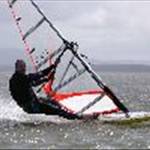
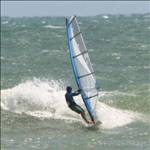
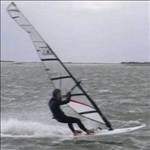
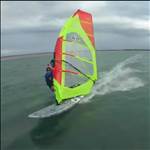
OK, this thread is for speed advice.
The speed guru is not me, but the community of seabreeze windsurfers around Australia. So put your speed questions here, and anyone that feels they can help, can answer!!!
I'll just start off with something on sails, that people have reacted to, questions such as how do you rig a sail to go fast, this is what I put on another thread:
Wanna know what a fast sail looks like, check Martin Van der Meurs, rig when he did 49.4 knots, bottom full, top flat to inverted, almost like an s shape:http://www.naishsails.com/news/news_030107.php
That is from the naish website, so they hold 2 world records.
All the Australian records are held by KA Koncepts, so maybe some of the KA people can talk about their sails.
Neil Pryde have their RS series.
And other brands have theirs, so please all feel free to contirbute.
jeez hardie, you weren't wrong when u said u had been bitten by the speed bug.......
i'm tipping your gonna make the pilgrimage back east to SP this year.
I find that to maintain speed, I:
bend knees a lot
lean right forward,.... lotsa weight on the front foot
try to engage as much of the rail as possible.... really bury it
look where I wanna be in 0.5 sec.... not where I am now
Interesting reading about your weight forward Mark. I've found the last couple of times I've been out I have had problems actually keeping my front foot in the strap when sailing on a starboard tack. What makes it all the more strange is that I've been using the same board for 4 years and this has never happened before. It certainly makes me a bit nervous about trying to go fast for fear of my foot coming out and me coming a major cropper. I guess I'll have to change the angle of the front straps and turn them outwards a bit more. I have bought a couple of new sails recently and so that could possibly be a reason, ie; different sailing position relative to what my old sails were. HOWEVER, I'd love any advice if anyone has suffered a similar situation....?
I'm curious to know also what size fin seems to best rated to what size sails. Is there a general rule of thumb? I only have a 32 or a 34 and I'm guessing for when it's really windy my 32 is probably a little big....?
Otherwise I'll have to buy a new board 
OK this might not be totally about speed, more about how to rig your sail:
Let's say you're underpowered. You want to be planing all the time, but can only get planing in a big gust (for the day), and sometimes drop off the plane.
How much downhaul do you put on, to get max power from the sail?
Watching the fast guys at the races, they always have their sail really floppy at the top. Admittedly they can afford bigger sails, but even so their leech is always really floppy. Last time I was out in low wind, I started with an almost tight leech, then came in and downhauled a bit more, and surprisingly it seemed as if I got a bit more power! Weird hey!
This is something I really don't understand from a physics point of view. How can more downhaul equal more power?
I agree with nebbian, more downhaul can't possibly equal more power, however it can provide better top end speed.
So maybe that's what these racers go for; a larger sail than would normaly be used and then give it heaps of downhaul.
In this scenario the larger sail is what gives them the power and the floppy leech allows the sail to release the flow of air trying to minimize the extra drag created by using a bigger sail than is necassary.
I guess the tactic of going larger with extra downhaul is arguable, best to try it yourself and see how you can handle it.
As for riding position, that photo of Martin Van der Meurs is an excellent example of the speed stance. If it were'nt for the front footstrap, he would fall off the back of that rig!
Less board in water, less drag, go faster! Simple
hi sideshow,
this is one of those long debated theories. not to say i am correct but this is how i understand it.
draft is built into a sail by the sail maker. the correct amount of downhaul is needed for the sail to rig properly. i have tried the experiment loads of times. less downhaul then recommended to get more draft compared to the correct downhaul. less downhaul results in a sail that is slow and heavy. correct downhaul and the sail is fast and controllable.
i have used both north and KA race sails. both require med to max downhaul to set correctly and feel sweet. i use neutral to negative outhaul. using too much outhaul will prevent the head from twisting.
at the end of the day the sails don't perform unless the downhaul is cranked on. because they are designed this way.
a. it bends the mast to allow the sail to set to it's correct shape.
b. tension is needed over the sail.
Sik Rex
sorry I was being a d!ck and trying to be funny but nobody would bite. Disregard my advice
ok here's my 2cents worth.
I get allot of guys saying why so much down haul the winds only light.
Shouldn't you let some off. My answer nope the sail wont work otherwise. I've tried tested allot of different settings.
you may get going slightly quicker with a bagged out sail but you lose speed and acceleration and being able to get though the those lulls. It's surprising the difference in feel it can make to a sail having the correct settings.
Getting the air flow out as quick as possible = more speed.
So for me heaps of downhaul.
shh Ive said to much already.
Gestalt,
I'm sure you're quite right, I guess I've always sailed with the attitude that Matt Pritchard professed in the old Gaastra video, 'Just rig it and sail it', 'as long as it's rigged right'. But I never did listen to his last add on.
I've had a tendancy to give less downhaul than is required (unless it's over 22 knots) and just relied on sheeting in really hard, I just love that 'out of control' feeling (until I crash out that is!)
Finian Maynard I ain't! I'd rather get air to be honest, although there is nothing quite like the feeling when you're REALLY over powered and skipping accross the chop, knowing that at any moment your gear will end up in the 'turtle' position with you wondering what the F@!!k just happend!
finian maynard i am not either. but i wish i was. then i could go sailing every day.
Sail size isn't everything - in fact the fastest guys are usually using the same sized sail as everyone else, sometimes even one size smaller. When sailing 40+ is isn't about the biggest sail you can hold on to, but more about efficiency.
These guys grovel in the water until a slight gust hits so they can get on a plane - once they are there, they use the smaller sail to maintain better efficiency. One of the possible reasons for the increased efficiency is simply that the sail size is smaller so that the rider-control during gusts is easier to maintain. There are lots of other reasons too; ie: less sail means less fin required, so less drag.
One of the many reasons for a flat top section is that the apparent wind at the top of the sail, is higher than at the boom height; so the top of the sail needs to be at a different angle of attack to reduce drag relative to its lift.
Of course this doesn't apply in 10 knots of wind, where bigger is better...
Have to agree with heaps of downhaul, latest experience cranking downhaul another 40 mm, equaled another 3 knots on the GPS. I was wondering though if I was going to tear my sail in half. , now that could be expensive not to mention downright embarassing
quote:
Originally posted by Gestalt
i thought it was funny mark.
but i rarely bottom turn on a speed run.
 one day i'll be able to say THAT and people won't laugh
Well,
I find after much experimenting I have to agree with Vando.
1. The 'right' downhaul on a sail does not adversely affect early planing ability - you need to learn how to pump in these conditions - not enough downhaul makes a sail 'heavy' and the draft moves around heaps making control hard - it also makes pumping harder as the sail feels 'heavier' if there is not enough downhaul.
2. It is possible to put too much downhaul on the sail - this makes the sail excessively "twitchy" - it is either "all on" or "all off" with respect to the power in the sail - this makes it very hard to get on the plane - you always feels like you are underpowered or about to go over the handle bars!!
3. My advice is to rig the correct or recommended level of downhaul and use outhaul to control the power in the sail.
In really windy conditions I might put an extra 1cm of downhaul - but this is about the limit.
With regard to efficiency and speed - I don't necessarily agree with Matthew's comments. In flat water it is easier to hold and extra 0.5m of sail area and often you will need this to be able to bear off to the right angle and also to point back upwind to get back up a course in 1-2 tacks.
Ultimately - you will acheive your peak speeds when you feel 1. Comfortable and 2. Confident with your kit.
- J
Some speedsters suggest always set the downhaul to the specified and only adjust the outhaul,when talking speed race sails they are usually designed to work at the "top end" of the wind and that is how they are designed,its like having a mini and a ferrari you can do any adjustments you like to the mini but its still a mini.My naish sails feel crap in light winds....give them a knot or two more and they"come alive".Peter Heart has a good video called "faster" he believs the kit is only 10% of going faster, but mental approach,control,style and conditions are the main facts.Also some people believe heavier people go faster........this should be a new thread but i believe its the same combination as above light or heavy if you havent got control your going in the water.
quote:
Originally posted by drjukka
With regard to efficiency and speed - I don't necessarily agree with Matthew's comments. In flat water it is easier to hold and extra 0.5m of sail area and often you will need this to be able to bear off to the right angle and also to point back upwind to get back up a course in 1-2 tacks.
A bit late into this topic cause I hate giving speed tips after one Vando came along (at least he being paid back now via Pierre).
Rigging a sail for racing and rigging one for speed are totally different... or more the size you consider. Racers need sail area for the points of sail used, powering out of gybes/start lines and general sailing in dirty air. A big sail that is rigged to twist off in the gust is still quicker than a small sail that is not rigged like that (and can be easier to handle).
I consider sandy point an odd place. So if Chris is reading this does he rig smaller at sandy than he does at his home spot for general blasting and going fast? I already often feel underpowered when bearing off, surely then I shouldn't go smaller.
Oh and matthew if sandy point aint flat water I dont know what is.
Speed sailing to the initiated, looks just like drag racing, just fanging along in a straight line, sh1t anyone can do it and most will go for the occasional blast on flat water and call it speed sailing, well sorry guys it's not, just the same as street racing is not drag racing it's a lot more involved than that.
The starting point for speed sailors is the occasional blast as the base and then from that point tweaking, tuning, training, testing to improve from there.
After a while doing there generally are no huge jumps in performance, consistency improves considerably, but increases in speed are generally in increments of part of a knot (in my case to much dancing and jumping up and down).
To go fast apart from having the right kit (which is a a fair chunk), mind set plays major part.
Speed sailing is about pushing limits
All really good points Elmo. I whimped out too much in a southerly we had here in Sydney on Monday and as a result recorded crap times compared to what I could have done. Although, I was amzed at how easily some other speedsters were sailing and it wasn't till I look closer at their gear that the reasons became more obvious. I use an older style board, circa mid 90's needleish type slalom board. It's a Fanatic Ultra Hawk 275 and the only one of it's type I have ever seen in Australia. Not sure if there are others out there. The other guys boards I looked at were all much shorter than mine but also a lot wider. 2 in particular were an Exocet and the other was a Carbon Art. I'm now of the opinion that the extra length of my board made it a lot harder to handle in the really choppy conditions. I struggled to keep the thing on the water when really cranking. I must admit I almost soiled my wettie a couple of times and it made me back off for fear of a monumental wipeout. I guess it was a bit of self preservation but then again maybe it's time to just take the bit between the teeth and hang on for the ride I think!
I've been against wearing a helmet for fear of it upsetting my balance due to it covering your ears. Is this a misguided opinion on my part?
Also I'd still like to know what size fins people tend to use with what sail sizes.
Cheers all 
Sickem
Wear a helmet, no balance problems whatever, anything else is realistically just an excuse not to wear one due to image issues.
I predominantly use weed fins at my location occasionally bringing out a pointer on a weed free day if sailing across the estuary. If you are cavitating fins when going over chop, go up a size. My recommendations is to play around with them and try out different combinations (Test and Tune)
I also have an old 90's board with square front to back rails so I know here you are coming from. With the chop try moving the mast foot back it will help lift the from of the board.
If you are feeling like you are going to be catapulted constantly you are possibly standing to upright, try lowering your boom this will give you a bit more "bent leg" before you get to the upright tipping over position.
Sick em rex i'm using a similar board to you, a bit newer but it is 272 in length. From sailing with others and my own board v board testing-
narrower old style boards are definately more comfortable from rail to rail at speed through chop, if you are used to using wide boards and step back onto narrower they feel the opposite (some would say nervous) but you just aren't going fast enough or are being heavy footed. In general though the wider board is a bit easier to use.
Following a fellow speedster down our local run (both doing 34 knots) my 52cm wide board was definately having a better time than his 58cm wide board (and gybed better also at the end). That said he could kick my ass back upwind, I had to bear off a fair bit to maintain his speed (my board was pro's downwind only board though).
If you get big gusts yes the nose of the board can get caught by the wind, especially on the upwind run or when big gusts roll through. My own solution is measuring up the nose and rocker entry to a modern board and lopping the nose off mine (still to do waiting for the end of season). The only way I would consider this with an older design is if you are really really happy with the rail design.
Thanks for the helmet advice Elmo. I nearly bought one a while back in Hawaii right after I broke my cheekbone bailing out from a jump and the board landed on my head. But alas, it just didn't do much for me stylewise 
Funnily enough I've only just gotten used to having the mastfoot further foward to counter the bounce I used to get in the chop and it seems to have worked but I'll do some experimenting next time there's a lot of chop and see what happens. Also I do have the boom a lot higher than I used to so I may drop it down a tad and see what difference that makes too.
mkseven, I'm not sure I'd lop the front of my board off but it's an intersting thought.
Any thoughts on my 32cm fin being too big? Should I try to get a 29 or a 30? And if so does anyone have one they are looking to get rid of that will fit a Fanatic box???
Just one thing about mast foot placement, In relation to the older longer needle shapes, the loger water line length, means more swing weight in a longer board, meaning the board will pitch at higher angles when going over chop. The newer shorter designs, have less swing weight, less pitch, and the mastfoot can go further back. There may be a limit to how far you can go back with mastfoot placement without affecting swing weight and pitch of the board. If your board design allows it, and you sail on relatively flat water, then chopping off some of the nose can allow you to go futher back in the mast-track. I reduced my boards nose by 40cm, becuase I broke 20cm off, and thought I'd experiment. My first go at it, left the board nose crashing into chop, particularly into the back of chop, it was scary and dangerous. I took it to Decrepit who built at least 5-8cm of more nose rocker, and on flat water it works, beautifully, I can now place the mastfoot at the very rear of the mastratck, about 3cm further back than I could before. The board is now definitely faster and more stable, less swing weight and pitch, more compact too. But I wouldn't use it in chop any greater than 20-30cm, particularly when going downwind over the back of chop, still not enough rocker.
quote:
Originally posted by mineral1
Oi hardie, its running 17 knots,SW how come your on the net
Mineral