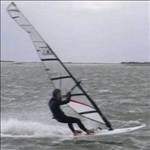
66 Knots, you'd hit the water like a bug on the windscreen. Well, maybe not Antione....
Based on their choice of location at La Palme in Southern France and the use of a foil they seem to be aiming for efficiency in lower wind speeds to break the record rather than sheer grunt in near hurricane force winds they get in Luderitz. I have a feeling the craft they build won't look much like a windsurfer if they are to achieve 66 knots. Good luck to them and a great effort by the Frogs, they have always been speed obsessed.
Select to expand quoteRoo said..
Based on their choice of location at La Palme in Southern France and the use of a foil they seem to be aiming for efficiency in lower wind speeds to break the record rather than sheer grunt in near hurricane force winds they get in Luderitz.
It's not uncommon to have 35+ kn avg days there with the gusts of 60 kn+. I wouldn't call that lower wind speeds. The biggest disadvantage La Palme has is that the beach isn't at an ideal angle to the wind. Normally the angle is around 110 to 115 degrees. If you're lucky it's at 120 to 125.
There are many high 80 and low 90 10 sec avg runs posted at La Palme ( Franqui). Hans Kreisel did back to back 87+ 5x 10 avg days early october. They also do 80+ nautical miles and high 90s max speeds there.
Imagine what would be possible if the beach was at an 140 to 145 degree angle.
Select to expand quoteTheTank said..
Imagine what would be possible if the beach was at an 140 to 145 degree angle.
It would be unsailable as it would be far too rough with massive following chop. Maximum speeds are at around 130-135 degrees.  I was in Luderitz in 2013 and the canal was pretty much un-sailable when the wind was over 140 degrees, (and I spent some time measuring the angle)
The speeds you quite are in KM/H which hardly any of us here is Australia can relate to. We talk Knots. 
80 km/h = 43.2 Kts
87 km/h = 47 kts
90 km/h = 48.6 kts
The 10 sec speeds are quite impressive as they most probably involve bearing away from the shore into increasingly large chop. But the NM speeds are MUCH more impressive as the sailed course would have been very tight. 
Way back in 2012, Tony Wynhoven did a 41.58 kt NM at Lake George, South Australia in no more than 30-32 knots of wind. Spotty also did 40.73 kts NM on the same day. The difference is that the water was quite flat and we could run at any angle we chose (about 130 degrees) off the wind.
An interesting article about the limits of foils in terms of top speed in sailing craft. It states max speed is just over 50kts before cavitation of the foil becomes the limiting factor.
sp80.ch/inside-the-mind-of-xavier-1-what-if-making-boats-fly-is-a-dead-end/
Select to expand quoteJohn340 said..
An interesting article about the limits of foils in terms of top speed in sailing craft. It states max speed is just over 50kts before cavitation of the foil becomes the limiting factor.
sp80.ch/inside-the-mind-of-xavier-1-what-if-making-boats-fly-is-a-dead-end/
Isn't the current record holder Sailrocket 2 a foil boat?
Sail rocket used a blunt foil to create cavitation early,like that it didn't become a problem later. Super cavitation or something. The foil also pulled down holding the craft in the water.
Select to expand quoteTheTank said..
It's not uncommon to have 35+ kn avg days there with the gusts of 60 kn+. I wouldn't call that lower wind speeds. The biggest disadvantage La Palme has is that the beach isn't at an ideal angle to the wind. Normally the angle is around 110 to 115 degrees. If you're lucky it's at 120 to 125.
Imagine what would be possible if the beach was at an 140 to 145 degree angle.
La Palme / Les Coussoules / La Franqui = basically the same beach.
Yes, you need to slingshot due to the wind orientation. You can see the slingshots very nicely in the track on the screen.
Select to expand quotetarquin1 said..
Sail rocket used a blunt foil to create cavitation early,like that it didn't become a problem later. Super cavitation or something. The foil also pulled down holding the craft in the water.
Yes. Supercavitating foil.
This cant be emphasised enough as it was a huge breakthrough that allowed the big jump from being stuck at around 50 knots to blasting though that barrier to high 60's. This was the largest single jump in 500m speedsailing records EVER!
Am I correct in assuming, that the 'steering' fin/foil on the front pod, (the only other part of the boat in the water) was a conventional foil? Even at close to zero angle of attack with, I am also assuming, very low load, it must have been in or very close to the cavitation zone. I wander how much drag it, and the front pod hull, were producing? The fast foilers, like the AC cats, found they went faster with as little as possible of the vertical part of the rudders and foils in the water.
Select to expand quoteTheTank said..Roo said..
Based on their choice of location at La Palme in Southern France and the use of a foil they seem to be aiming for efficiency in lower wind speeds to break the record rather than sheer grunt in near hurricane force winds they get in Luderitz.
It's not uncommon to have 35+ kn avg days there with the gusts of 60 kn+. I wouldn't call that lower wind speeds. The biggest disadvantage La Palme has is that the beach isn't at an ideal angle to the wind. Normally the angle is around 110 to 115 degrees. If you're lucky it's at 120 to 125.
As Roo said, I think they may end up going more for lighter wind efficiency as well. And if that is true, an angle of 120 degrees may be more ideal. The guys with Macquarie Innovation told us that their calculated ideal angle for over 50 knots of speed was around 120 degrees off the wind in around 25-26 knots of true wind. But of course, putting more than 15 knots of speed on top of that increases apparent wind by a LOT, so the ideal angle may well be broader. It looks like Sailrocket 2 did it's record also at more like 120-125 degrees though? SR and MI would have much higher L/D ratios than a typical windsurfer, who is hampered by a lot of form drag (body).
Select to expand quotesailquik said..TheTank said..Roo said..
Based on their choice of location at La Palme in Southern France and the use of a foil they seem to be aiming for efficiency in lower wind speeds to break the record rather than sheer grunt in near hurricane force winds they get in Luderitz.
It's not uncommon to have 35+ kn avg days there with the gusts of 60 kn+. I wouldn't call that lower wind speeds. The biggest disadvantage La Palme has is that the beach isn't at an ideal angle to the wind. Normally the angle is around 110 to 115 degrees. If you're lucky it's at 120 to 125.
As Roo said, I think they may end up going more for lighter wind efficiency as well. And if that is true, an angle of 120 degrees may be more ideal. The guys with Macquarie Innovation told us that their calculated ideal angle for over 50 knots of speed was around 120 degrees off the wind in around 25-26 knots of true wind. But of course, putting more than 15 knots of speed on top of that increases apparent wind by a LOT, so the ideal angle may well be broader. It looks like Sailrocket 2 did it's record also at more like 120-125 degrees though? SR and MI would have much higher L/D ratios than a typical windsurfer, who is hampered by a lot of form drag (body).
Maybe we need a Kathy Freeman suit ?
Nothing is going to hide my body from the wind 
Nah. Fred Heywood tried it, it didnt seem to make much difference, and it was not a great look. 
I searched everywhere for a pic or video, I know they exist, but no luck yet.......
Only way the record will be broken is if they go to a supercav fin or foil setup. To get past the cav inception speed and out the other side they need to be able to load the fin/foil up somehow, Sailrocket mastered this. With our current windsurf/windfoil setup there is no way to get enough loading to do this. Hence my conclusion they will have to develop a radically different craft that no longer resembles windsurfing. All the research they are doing in the windtunnel may help with incremental speed improvements that take them towards 55 knots for the 500m run but not the 65 knots they need to break the record.
Here's the latest video from the wind tunnel, interesting to see the flow vis paint being used 1:21 and also the airflow trail off the sail with the smoke 3:22. There's a lot of separation off the sail in the last third. The endplate effect with the deck is also notable. Also the RS Flight under load at 4:48 is extremely clean aerodynamically along the leach. Conclusions, I think we'll see them using a high aspect ratio rig with tight leech and semi rigid construction for the windfoil setup. Target windspeed 25 knots.
Select to expand quoteRoo said..
Only way the record will be broken is if they go to a supercav fin or foil setup. To get past the cav inception speed and out the other side they need to be able to load the fin/foil up somehow, Sailrocket mastered this. With our current windsurf/windfoil setup there is no way to get enough loading to do this. Hence my conclusion they will have to develop a radically different craft that no longer resembles windsurfing. All the research they are doing in the windtunnel may help with incremental speed improvements that take them towards 55 knots for the 500m run but not the 65 knots they need to break the record.
Here's the latest video from the wind tunnel, interesting to see the flow vis paint being used 1:21 and also the airflow trail off the sail with the smoke 3:22. There's a lot of separation off the sail in the last third. The endplate effect with the deck is also notable. Also the RS Flight under load at 4:48 is extremely clean aerodynamically along the leach. Conclusions, I think we'll see them using a high aspect ratio rig with tight leech and semi rigid construction for the windfoil setup. Target windspeed 25 knots.
FINALLY SCIENCE COMES TO WINDSURFING!
It took long time to make that step but now comes our time!
Now I finally expect great improvements for next years.
What is with video link,dont work?
Try this link for the video.
Double surface sail at 3:56, an old Pryde proto from many years ago.
Now we have tools to push limits and current efficiency forward.
I think the key part to get 66kt is how to reduce water drag using cavitating fins which will probably be at angle to produce lift to lift board out of water and at same time find the way that this new "craft" we can still call windsurf...
I have read multiple times before how supercavitation is required for 55+ knots.
But I want to understand how this works.
I googled a bit and found the links below. Did not find anything on this forum.
My learning style is visual so prefer graphics, pictures and videos over text.
Does anyone have more / better material to explain how this works?
www.naval-technology.com/features/featurethe-allure-of-supercavitating-torpedoes-5838643/
en.wikipedia.org/wiki/Supercavitation
"And to achieve those goals, Antoine Albeau's team is already working hard on the winning combination. Stability, comfort and commitment have been identified as the key words of the adventure, they will allow Antoine to go faster and faster on his board, with minimal effort.
Marc Amerigo tells us more about the initial thoughts on the equipment: "The sail is going to become a semi-rigid wing, which is something I developed when I was at Centrale (French engineering school) for a 50-knot World Record project. This wing is the initial concept for the next development; indeed it performs very well. We have planned some tests starting at the end of June, we will work a lot around Gruissan and Leucate. The next step is Luderitz in October, with already a technical breakthrough approach. ? "
I think Project 66 will change sails for slalom and speed once for ever.
Is there any pictures of that semi rigid wing that Marc Amerigo develoded for 50knots World Project?
If this is going to be done at Luderitz, I'm guessing they'll need to make the end course/slowing down area bigger.
Select to expand quotemark62 said..
If this is going to be done at Luderitz, I'm guessing they'll need to make the end course/slowing down area bigger.
Can't be done. It ends at a road and a escarpment.
For all the slick marketing speak, getting some sort of 'windsurfing' craft to 60 knots plus, actually boils down to one key factor: They have to figure out how to push a supercavitating fin though the 50 knots barrier. All conventional finned and foiling speed craft have hit the wall with conventional fins (non cavitating) at slightly over 50 knots.
First step would be to find a bigger wind tunnel so they can fit the whole rig in it not just the bottom half
Foil,fin must have sharp leading edge to force flow separation at low pressure side.
Select to expand quoteBen1973 said..
First step would be to find a bigger wind tunnel so they can fit the whole rig in it not just the bottom half
There is undoubtably a great deal of very interesting stuff to be learned from such research, but I very much doubt that what can be learned by putting a windsurfer in a wind tunnel will advance the windsurfing record more than a small amount, let alone getting a windsurfer to well over 60 knots.
Select to expand quotened321 said..
I have read multiple times before how supercavitation is required for 55+ knots.
But I want to understand how this works.
I googled a bit and found the links below. Did not find anything on this forum.
My learning style is visual so prefer graphics, pictures and videos over text.
Does anyone have more / better material to explain how this works?
www.naval-technology.com/features/featurethe-allure-of-supercavitating-torpedoes-5838643/
en.wikipedia.org/wiki/Supercavitation
www.seabreeze.com.au/forums/Windsurfing/Gps/Supercavitation?page=1&groupID=4026 .... circa 2008
If all it takes to go 66 knots is "... commitment", then some of us here should be doing 100kn.
People have said SailRocket-2 had supercavitating foils - I'm not sure that is accurate.... they did say they were researching it, I dont ever remember them saying their record runs were done with supercav foils. Does anyone have a link showing that supercav was used ?
I have read it in numerous places.
e.g.: chevaliertaglang.blogspot.com/2012/12/clearing-50-knot-gate-hydrofoil.html
From the official Sailrocket website: "The super powerful and efficient craft was designed with the sole purpose of breaking through sailings "sound barrier". With conventional hydro-foils, at speeds around the low to mid 50 knot range, the pressures involved cause water to boil on contact in a phenomenon called cavitation. This offers a brick wall of drag. Sailrocket 2 was developed to have the power to test radical new foil shapes to overcome this phenomena and prove that sail powered boats could go way beyond conventional limits. She remains the only sailing boat in history to have done this."
And this: "Conditions were building so considering we hadn't discovered the magic to make that foil work I decided to do the ol' switcharoo over to the new ventilated 'wedge' foil. The guys had to go back to the container to collect it..."
And this indicates that the forward mounted rudder is ventilating as well. which is very interesting to say the least!: "So we will digest all this new info. I already have a few things I want to querie. It appears from the masthead camera that the foil is running very close to the ditch created by the ventilating forward mounted rudder. "
etc.
It is interesting, but somewhat understandable, that the Sailrocket syndicate has never released detailed specs, pictures or descriptions of their supercavitating main foil (to my knowledge).
In any case, it is widely stated and agreed that the speed limit for sub-cavitiating foils in somewhere around the 45-55 knots, and this is well demonstrated in practice by numerous craft which have hit the 'brick wall' at around the low 50's. The Tri foiler Longshot syndicate believed thay had reached a cavitation drag limit at around 44-46 knots.They stated that they pulled up at that speed no matter if the wind was 25 knots or 35 knots+.
Windsurfers, Longshot, Hydropter, Maquarrie Innovation and Sailrocket1 experiences and top speeds all reinforce this.
Hmm only an addicted speed junkie could be focussing on this xmas morning and only an equally addicted speed junkie bothering to read it