Hi Gents,
I sail in a lake environment, but it still gets choppy. Wind range 12 to 25knots.
I have just started to water-start, and can now get into the straps. (intermediate strap positions).
Board volume 120L, free-ride.
Just seeking your advice on how to minimize being catapulted.
Its happened 3-4 times so far and it was instantaneous with no warning! My neck is still suffering from it!
Dont know if its relevant but I sail with my harness straps about 250mm apart on the boom. No cam sails.
On the net people advise to sheet-in but it happens so fast there has been no chance to try that.
Also Its not too good for board damage that is caused especially with the current price tags of them.
Your advice would be greatly appreciated!
Thanks
It's part of the apprentiship . Sheet out or pull the mast in or both. It just stops happening after a while ( you get used to the subtle warnings ) Funny thing is I went through this thirty three years ago , stopped sailing for twenty five and now back in for three. Even though my skills and fittness have aged I haven't catapulted once due to wind. I have however flown over the handlebars several times and bent two booms due to shallow water long fin syndrome. And my fair share of those mid carve harness re hook gybes. 
I see people waterstarting with both feet on the board. I think this is a bad idea and was surprised to hear that some instructors are teaching it.
Select to expand quoteDiscus said..
Hi Gents,
I sail in a lake environment, but it still gets choppy. Wind range 12 to 25knots.
I have just started to water-start, and can now get into the straps. (intermediate strap positions).
Board volume 120L, free-ride.
Just seeking your advice on how to minimize being catapulted.
Its happened 3-4 times so far and it was instantaneous with no warning! My neck is still suffering from it!
Dont know if its relevant but I sail with my harness straps about 250mm apart on the boom. No cam sails.
On the net people advise to sheet-in but it happens so fast there has been no chance to try that.
Also Its not too good for board damage that is caused especially with the current price tags of them.
Your advice would be greatly appreciated!
Thanks
The best advice is to get a copy of the DVD "Beginner to Winner". Catapulting is related to technique usually, so proper coaching is the key. Sometimes the tuning of the rig makes a difference too. Guy Cribbs website has a number of good articles for rigging and set up. He also has an article on harness lines that you may find interesting, because many of the current professionals place them close together and have them longer than what was normal in the nineties.
^^^^^
If I'm in the right position with plenty wind I'll put both legs on. Normally I'll drag a leg deep like a rudder to position myself and it slows drifting downwind and helps lift my bulburous weight onto the board. 
Discus, one of the biggest contributors to catapult is reducing mast foot pressure. It's really hard to teach yourself to do something that is counter intuitive. When you feel over powered it is natural to rise up a bit and sheet out. What you need to do is to commit more to the harness and get your weight down low and out. When things do go wrong and your are getting catapulted, try and hold onto the boom, otherwise you can risk hitting the boom with your ribs... ouch. Again, that's not natural... your hands may release and come up with palms out to avoid impact.
Select to expand quoteDiscus said..
Hi Gents,
Just seeking your advice on how to minimize being catapulted.
Its happened 3-4 times so far and it was instantaneous with no warning!
Your advice would be greatly appreciated!
Thanks
Actually you do get a warning, but it can be a subtle warning which becomes more obvious as you get more time on the board.
Experience, as in being catapulted, teaches you every time. Try to remember the feeling just before liftoff, and then you will be more able to avoid it.
The suggestions given above are what you need to do, but if you can feel what's about to happen first, you will be able to avoid it.
We can all still get launched, it will happen to me only when I'm not paying attention, like daydreaming about whatever while being overpowered.
I will water start with both feet in traps if its mega windy. I come up with straight legs and am planning straight away
I tried to learn to water start with one leg on and one leg dragging, but I never felt stable when getting back onto the board, so I always put both legs on as well. Gives me much more stability when I get onto the board, plus my knees are not too good, and this way it helps distribute my weight evenly. Water starting has never been easier now. I think it's personal preference.
As for catapulting, It has happened to me 4 times this season out of 51 sessions of great wind. A couple were from wind gusts, and the other was from getting too close a sailboat passing by. Oops! Catapulting just happens, but like the others say, it lessens when your skills improve.
Prevention is the best policy. Try these 3 simple techniques when sailing
- turn your hips so you face towards to nose of the board
- turn your front foot so the toes face towards the nose of the board
- hang of your boom in your harness
If you do this, then to catapult, you have to overcome your weight and be pulled you over the front of your front foot.
If you sail facing the sail and don't turn your foot or hips towards the nose of the board and not hang in you harness, then you only have to pivot around the side of your front foot. This take much less force and hence you catapult more easily, more often, faster and without warning.
Friends,
Thanks for some great advice.
So far Ive only been catapulted while not in the straps.! and there have been times when Ive been in relaxed mode.
I read some people look out for ripples,wavelets in the water as a warning (looks hard to spot in rough water to me!) ...do you Guys practice this technique and had success with this indicator.
Also, is it a waste of money buying a $1000plus board because its a matter of time before it gets nose smacked and damaged with a catapult..even when we become experienced?
Sheet out! don't be a rock work through the gusts and just time on the water!!!! personally i wont spend $k anymore on a board because i got sick of seeing it dinged up and there are a lot of good second hand boards at half the price which for my skill level are more than acceptable ( i tend to ride larger wave boards too due to chop) for me a RDM mast was my biggest game changer!
The easiest solution is to get planing and get in the foot straps before you hook in to your harness lines.
If you get a gust simply sheet out - happens naturally if you are relying only on your arms to hold the sail.
Just pretend it was a forward loop that went a bit wrong.
Or call it a 'Discus' and claim it is a new freestyle move you are working on.
What the guys said...
In practical terms - your harness lines should not be too short. Suggest 26+.
I just try to overpower the sail when it happens. It stll happens - not very often - then I control where I land.
Having said that, I cracked two boards, one of them I cracked, got it repaired amd cracked it again on the first outing. Repaired it , sold it, the new owner cracked it the next day.
It's just a part of the learning process.
Relax and don't sail worried.
When you catapult when you're in the straps, now that's a ride. You are definitely caught by surprise when you're in the straps, cuz you're usually flying around close to 30 MPH and then you get thrown over board. Only a few times did I catapult and land hooked into the harness lines undeneith the sail in the water. So the sail is on top of you and you are hooked into the harness lines, and have to unhook under water, and swim out from under the sail. I have to say that is very scary, cuz you're just about out of breath the time you break free.
Anytime you sheet in and have mast forward you will catapult.
You will learn with experience where the point of "mast forward" is for you and your rigs.
Discus learning to spot gusts or increases in wind will help to avoid catapults as well as other techniques mentioned, especially if the catapults are often happening when you are not in the straps & planing. As well as wavelets or ripples gusts of wind will usually appear as dark patches on the water that are moving towards you.
Look upwind & forward to try & spot the wind gusts, these dark patches coming towards you. With a bit of practice you will learn which gusts of wind you will get & then can be prepared to avoid a catapult. I'd also practice watching the wind by spending a few minutes standing on land watching the water trying to see where the wind (moving dark patches) is or get up on a high point & look down over the water, the dark patches will stand out.
Select to expand quoteAgrid said..
I see people waterstarting with both feet on the board. I think this is a bad idea and was surprised to hear that some instructors are teaching it.
I do in overpowering winds but I make sure the rig is pulled down over me..At my weight I wouldn't be able to carry as big a sail for the conditions if I didn't!
Select to expand quoteDiscus said..
So far Ive only been catapulted while not in the straps.! and there have been times when Ive been in relaxed mode.
There, you have identified your main problem and the solution. Get into the straps as soon as you can, as soon as the board starts to plane. It is hard to stay balanced if you're not in the straps. I often try to keep my back foot in the strap when I come off the plane so not to get catapulted in the next gust or when going over a wave.
As others have said, you can try unhooking if you're not planing and just bobbing around, especially in very gusty conditions. Hook back in after the gust has hit once you've moved your feet into the straps.
Catapulting is a normal part of windsurfing. Don't get too worried about it. Even the pros do it regularly. When you do get catapulted, aim for slightly downwind of the nose of the board, curl your neck up a bit, hang on tight and enjoy the ride. And you always get a warning. You're just not yet tuned in to the warning signs
I find it amazing how some people on here say that they have only catapulted four times in the season. I had one session this winter in a 40++ kn cold front where I got catapulted about 10 times in the one session. But maybe I'm just a kook.
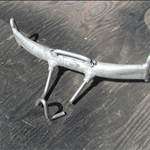
There used to be this thing around called the Deviator. It screws into your mast track in front of your mast foot and it would push the mast away from the nose in a catapult.
But usually if you hang on tight, maybe even sheet in a bit you will avoid the nose.
And btw there are some skilled women sailors on this forum who give good advice so you might have limited you advice by just addressing the "gents" 
Learn to repair basic nose smacks and buy $100 worth of stuff it will last you for many many repairs.
Once you don't care about the nose smacks things will be much more pleasant.
Select to expand quoteholgs said..
There used to be this thing around called the Deviator. It screws into your mast track in front of your mast foot and it would push the mast away from the nose in a catapult.
I had one. It damaged the mast track instead of the nose. You can glue a nose bra onto the board for a better solution
^^ agree 1st part they can damage the track. Not so much the second cos I reckon unseen damage under the nose pad is worse than the alternative
To the Lady windsurfers, my apologies for asking only the Gents for help. It goes with out saying that any advice you may have to offer from your experiences is more than welcome as well.
Fellow windsurfers, how great this is that you are sharing your experiences on this "challenging" subject!
There is a lot of "great" advice here:
1.stance, and longer harness lines, getting into straps ASAP.
2.looking for dark patches in water
3 sheeting out to overt, sheeting-in, if Ive lost the battle, and not letting the boom go.
4.curling the neck back before going over.
5.there is prior-warning but... Im not tuned to it yet.
6.Its part of the learning process doesn't matter how good you are it will happen.
7.some good tips about water starting with both feet in high winds.
8.may as well learn to repair Board damage...its inevitable.
Thank you ALL very much.
Try this,
1. get planning before looking for the straps.
2. round up into the wind slightly before putting your front foot into the strap...weight moves back giving you better resistance to a surprise catapult.
3. turn down wind slightly and with a straight front leg go into the rear strap
4 Smile and blast away from the beach
DONT water start with both feet in the footstraps. Its a bad technique that will stop you from progressing your water starting in strong winds. You will also get pulled over the front a lot more.
Rear foot on the board, placed between the F and R and close to the centerline.
Use the front foot to control the board and or kick underwater.
Push down with the rear foot while using some of the sails power to get you onto the board.
Its even easier to do this technique on 50-60 Lt speed boards
Well I was getting seriously over powered on Wednesday in winds getting close to 30 knots.
In one particular hairy run I could feel I was going to lose it.
I put all my weight thru my harness and pushed my body especially my upper FORWARD - this helped to keep the board down and I managed to get thru the gust.
It's the best technique by far and not just for sailing thru big gusts.
It's also the best technique for sailing into the wind.
When learning I remember knocking the nose off a few carbon slalom boards.
Petermac33,
you mentioned:
"I put all my weight thru my harness and pushed my body especially my upper FORWARD - this helped to keep the board down and I managed to get thru the gust."
How does this technique work? do you mean, you pushed down on the harness to stop getting catapulted and by leaning forward it stopped the board from flying and doing a flip....probably because the mast was too far back and too much of the board was out of the water??
...Doesn't leaning forward assist in catapults especially on a RUN?
Why over complicate it? Sounds like he just needs to tweak his stance and get low. Getting into the footstraps will help even more.
Discus,
Just play around with your gear and try different adjustments, you will find your sweet spot.
I just purchased a dakine Tyrant footstrap for the tail end of my board only. The front footstraps are stock and work well, but I wanted a strap in the rear that was wider and more form fitting, so my back foot will be more anchored in. The tyrant foot strap is serving that purpose well. But because the rear strap is thicker and wider now, I am trying to find the sweet spot position for it. It's all about having fun with your gear and playing around with it, until it feels just right in your hands and feet.
It's pretty darn hard to catapult while in the footstraps. It seems to happen most often while getting going, hooked in but not yet in the straps. Perhaps try getting in the footstraps before hooking in.