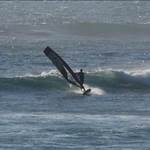
Hi gents
I need advice from the gurus. I've had 4 short days on the foil mostly in VERY gusty winds. I am sailing on the high areas of south africa where the winds are renowned to be super gusty and we've had a heat wave which makes the gusty conditions worse with long spells of 2-5 knots with 20+ gusts coming through.
Now I know the above conditions are not conducive to easy sailing but thats how I learnt 35 odd years ago and went on to master wavesailing and big cape point waves etc but man I am finding foiling extremely uncomfortable. I am absolutely exhausted and sore after a few runs. Is this normal? Its almost like doing a new sport...almost nothing like windsurfing which is perplexing.
I am riding a self-made foil board and a Naish 2019 WF thruster. My back leg is cramping trying to keep the foil level and funnily enough I seem to get my best runs with the sail kind of sheeted out (maybe overpowered?) and unhooked?? I can't sheet in as I seem to then turn into wind and get thrown off. I've had moments when I feel really in control and everything is settled where I get a eureka moment and next minute I am in the drink.
I've ordered a 90 cm mast as I've been on the stock naish 70cm as I've heard a longer mast is more forgiving with more room to move which makes sense.
Just a short clip a friend (Glyn) gave me.
Good on you, Dar. It ain't easy starting off and I was sore for ages when first starting as the stress is on different parts of the body than on a "slapper". The video shows you having plenty of board speed but that baby just doesn't want to lift you. When it does, it just looks overloaded. Not sure the longer mast will help you too much with your current issue but will come in handy in the future. I will leave it to the gurus to sort out the nuts and bolts of your problem. Best of luck!
Thanks Boston.
I must say I was trying to keep the board flat and level there....essentially trying to figure out how sensitive the foil is. One of the kitefoiling learning tips was to first learn to sail the board in the water then gently ease it up higher and higher.....I was trying to do this right here.
I have no problem getting up quickly in a decent gust. I have a problem keeping it up there (smooth and steady).
Select to expand quoteDar said..
Hi gents
I need advice from the gurus. I've had 4 short days on the foil mostly in VERY gusty winds. I am sailing on the high areas of south africa where the winds are renowned to be super gusty and we've had a heat wave which makes the gusty conditions worse with long spells of 2-5 knots with 20+ gusts coming through.
Now I know the above conditions are not conducive to easy sailing but thats how I learnt 35 odd years ago and went on to master wavesailing and big cape point waves etc but man I am finding foiling extremely uncomfortable. I am absolutely exhausted and sore after a few runs. Is this normal? Its almost like doing a new sport...almost nothing like windsurfing which is perplexing.
I am riding a self-made foil board and a Naish 2019 WF thruster. My back leg is cramping trying to keep the foil level and funnily enough I seem to get my best runs with the sail kind of sheeted out (maybe overpowered?) and unhooked?? I can't sheet in as I seem to then turn into wind and get thrown off. I've had moments when I feel really in control and everything is settled where I get a eureka moment and next minute I am in the drink.
I've ordered a 90 cm mast as I've been on the stock naish 70cm as I've heard a longer mast is more forgiving with more room to move which makes sense.
Just a short clip a friend (Glyn) gave me.
Looks like you're doing great for only 4 gusty wind days 
Back leg does cramp as body positioning is different at first compared with wave sailing.
You'll find it easier in 15-18 knots, 20+ is a big call when learning.
Relax and enjoy the learning experience - it does take some time to gain confidence 
Hi there.
You look like you have plenty of speed but also look like you are forcing the foil to rise which is a sign that you have the foil too far back. The WS foil is also quite small so needs a lot of speed or a very light sailor to get it up and foiling. Speed will make things twitchy too.
The sore back leg is also a sign that you are working the back leg hard which is not the best way to be. If you are sailing off your back leg the board will also tend to pivot around the mast and throw you into wind as well as be very twitchy
I would try lowering your boom a little too as this will give you a a bit more control. Not sure if that is your normal windsurfing boom height? (Just go with your rig as you would normally windsurf because its one less thing thats different)
Try moving the foil forward, if you can. If not move your foot straps back so that the foil is further in front of your centre of gravity. You could try going out with no straps to see where different foot positions feel.
I had the Naish WS foil set up and struggled whilst others were progressing well. I changed to the Slingshot with a bigger front wing and everything clicked and progress has been amazing. Small foil needs more wind which equals fast crashes. Bigger wing slows everything down so you stay ups longer and learn faster.
Hope this helps.
Select to expand quoteI had the Naish WS foil set up and struggled whilst others were progressing well. I changed to the Slingshot with a bigger front wing and everything clicked and progress has been amazing. Small foil needs more wind which equals fast crashes. Bigger wing slows everything down so you stay ups longer and learn faster.
Hope this helps.
I was afraid of this.... We can't get hold of slingshot here without importing it so I had to opt for the Naish..... I believe you can use the bigger surf wing which I might have to try.
Ill try going further back with mast and straps in the meantime.
Select to expand quoteazymuth said..
Looks like you're doing great for only 4 gusty wind days
Back leg does cramp as body positioning is different at first compared with wave sailing.
You'll find it easier in 15-18 knots, 20+ is a big call when learning.
Relax and enjoy the learning experience - it does take some time to gain confidence
Thanks Azymuth. I feel like I am doing ok but its so different and expensive to get set up I am stressing about my kit.
Select to expand quoteDar said..azymuth said..
Looks like you're doing great for only 4 gusty wind days
Back leg does cramp as body positioning is different at first compared with wave sailing.
You'll find it easier in 15-18 knots, 20+ is a big call when learning.
Relax and enjoy the learning experience - it does take some time to gain confidence
Thanks Azymuth. I feel like I am doing ok but its so different and expensive to get set up I am stressing about my kit.
I can't quite tell which Naish wing you have 
How big is the wing and how heavy are you?

Select to expand quoteDar said..I had the Naish WS foil set up and struggled whilst others were progressing well. I changed to the Slingshot with a bigger front wing and everything clicked and progress has been amazing. Small foil needs more wind which equals fast crashes. Bigger wing slows everything down so you stay ups longer and learn faster.
Hope this helps.
I was afraid of this.... We can't get hold of slingshot here without importing it so I had to opt for the Naish..... I believe you can use the bigger surf wing which I might have to try.
Ill try going further back with mast and straps in the meantime.
I did have the Surf XL wing front wing which did make a big difference. It slowed things down and got going in less wind. You can also try bringing your sail mast foot back as well. That smooths the ride slightly by having less effect from mast foot pressure. Lots to think about in th early days.
Hi Dar, I'm learning too. There is so much difference when the wind is steady. Seems achievable then. I also do the rounding up crash to windward thing. It happens to me as a result of bending my front arm to depower in a gust or when anxious. The result is standing upright a little more with the sail pulled over to windward too. So you weight the windward rail and carve around up wind. As a result you lose power and crash into windward.
The paradox is that you need to keep the sail away and not bend the front arm, powering through the gust. Sheeting out lifts the nose and the board rises feeling even worse.
Having said that the board seems happier if you do sheet out slightly after lift off, just as you say.
But if you want to survive a gust and (not bail out) try to power through it. Keeping the power on pushes the nose down so you will need to shift weight back a bit. Sheeting out especially by bending the front arm will first lift the nose and the weight the windward rail carving upwind and crashing into windward.
Thats what happens to me. Maybe you are the same.
As far as rounding up while sheeting in, that only happens to me when going really slow and almost stalled. everything goes mushy and squirrels around.
Also it really pays to fiddle with the setup. Getting it right really helps.
Select to expand quoteazymuth said..
I can't quite tell which Naish wing you have
How big is the wing and how heavy are you?
I have the regular 2019 WS Thrust wing at 1200cm2 - I am about 104kg.Select to expand quoteHeliboy999 said..
I did have the Surf XL wing front wing which did make a big difference. It slowed things down and got going in less wind. You can also try bringing your sail mast foot back as well. That smooths the ride slightly by having less effect from mast foot pressure. Lots to think about in th early days.
I will defo try moving things back a bit as well as try get a hold of the XL surf wing.Select to expand quoteHeavy1 said..
Hi Dar, I'm learning too. There is so much difference when the wind is steady. Seems achievable then. I also do the rounding up crash to windward thing. It happens to me as a result of bending my front arm to depower in a gust or when anxious. The result is standing upright a little more with the sail pulled over to windward too. So you weight the windward rail and carve around up wind. As a result you lose power and crash into windward.
The paradox is that you need to keep the sail away and not bend the front arm, powering through the gust. Sheeting out lifts the nose and the board rises feeling even worse.
Having said that the board seems happier if you do sheet out slightly after lift off, just as you say.
But if you want to survive a gust and (not bail out) try to power through it. Keeping the power on pushes the nose down so you will need to shift weight back a bit. Sheeting out especially by bending the front arm will first lift the nose and the weight the windward rail carving upwind and crashing into windward.
Thats what happens to me. Maybe you are the same.
As far as rounding up while sheeting in, that only happens to me when going really slow and almost stalled. everything goes mushy and squirrels around.
Also it really pays to fiddle with the setup. Getting it right really helps.
Thanks Heavy....lots to think and fiddle on but I am really enjoying it I must say.
A few comments from a former (and still) beginner. I have 155 sessions on a foil, but I still feel like a beginner in this really cool sport.
1. Yes, you will get really sore from foiling. You are using muscles you never used before. They will protest until they get stronger. I finally got past that point of soreness. This is normal.
2. Yes, you should stay out of the harness. For foiling, the pressure on the arms is really light compared to finning. I still foil mostly off the harness. Just don't need it unless I am trying to race with a really big sail (8.0+). Yes, staying off the harness can mean more arm pressure and more soreness, but this is minor. Staying off the harness lets you make pitch corrections more quickly and correctly.
3. Gusty conditions are great for finning, but a bugaboo for foiling. When finning, a gust will simply propel you forward. The board is down on the water surface anyway, so a gust simply presses it down a little more. You hardly notice that. When foiling, a gust suddenly propels your speed. Since you are on a lifting airfoil an increase in speed means an increase in lift. Up goes the foil, down goes the rider when you foil out. Obviously you have to correct for the increased pitch. This takes practice and muscle memory. I can survive gusty conditions, but it is not much fun. Staying off the harness is key in gusty conditions. Up and down, up and down, pogo-sticking is what you get with gusty conditions.
This is a whole new sport. Responding to gusts and trim with the sail is a whole new action compared to finning. Fore and aft lean, and sheet-in and sheet-out, is completely different. You have learn this new action. It takes time and practice to develop this new muscle memory.
4. Use the front footstraps, but not the back footstraps at first. In fact, just leave the back footstraps on the beach. The front straps locate your feet and stance for balance--see 5. below. Your back feet can then hunt for the best position until you get things figured out. If you can, mount the front footstraps inboard for better roll control.
5. Until you can confirm that your gear is balanced, you will just fight it. If the wing is too far aft, you will have difficulty getting it to lift at all. If it is too far forward, you will have difficulty controlling the lift.
So, what you want is to get the midpoint of the front wing at the MIDPOINT between front and back foot. You do this by (a) adjusting the position of the wing relative to the foil mast, if you have something like Slingshot where you can adjust this; (b) adjusting the position of the foil mast under the board, if you are using the track-style mount or Power Plate; or (c) adjusting the footstraps fore and aft. Again, the starting point is MIDPOINT. This is key.
Then, set the sail's mast track at 43 inches in front of the leading edge of the foil mast, then fine tune from there until things are balanced.
Sailworks talks about this balancing stuff a lot.
I made a youtube a couple years ago to show this. Since my foil mast is raked forward I had to use a right-angle tool to make the measurements. Most foils have the foil mast at, or nearly at, at 90 degree angle, so you can do this without the tool.
Foil forward if possible. Increase lift on the rear wing. Move the mast track and front straps as far back as possible.
You want almost no rear foot pressure until you are driving hard upwind.
Personally I find the harness really helps with pitch stability and I'm rarely arm sailing unless I'm carving swell.
Your form looks a little off; and I'm not sure if that has to do with the equipment setup or your technique.
To start, you should have your front foot in the strap, and your rear open to move around. But the biggest thing I noticed were your legs. I typically have my rear leg straighter and the front bent a bit for pitch control. For learning, get your rear leg close to lock out and your heel locked down. When you come out of the water, it doesn't hurt to lean forward a little and vary the front leg for control. Practice small hops (go out and then back down again) to understand positioning and pitch control. Try slightly longer flights each time.
As above. Foil stance is straight back leg and slightly bent front.
Wimdsurf stance, old school, is your stance.
You are way overpowered. Smaller sail and foil forwards.
In that wind, you can windsurf easily.
As above. Foil stance is straight back leg and slightly bent front.
Wimdsurf stance, old school, is your stance.
You are way overpowered. Smaller sail and foil forwards.
In that wind, you can windsurf easily.
Head upwind more when that powered!
Looks to me like you are doing very well for 4 days in strong wind.
Smaller foils and big foils in light wind benefit from a little pop to get it onto the foil. Kind of like ollie-ing a skateboard. Once you have reasonable speed bounce on the back foot.
If you are not foiling easily at speed you can also move the mast track back.
If you find you are overfoiling and breaching stepforward with your back foot. Most foils want to overfoil in gusts, in this case your options are turning up wind, stepping back foot forwards or weighting the front foot. If the front footstrap is close to the rail then it is difficult to weight the front foot without railing the board upwind. unless you are running high aspect race foils and cambered race sails inboard straps are best.
Most people as they get better, carry a smaller sail that requires pumping to get the board on the foil, then they dont get super overpowered when going. Having more sail for the initial learning period is good, but stable flight will be harder.
Your rake trim is off. Riding nose low, making the board sticky and unruly. Try angling the mast backward 1 or 2 degrees.
Boom height looks fine.
Video angle isnt the best for spotting the faults, from the back of the rider it is easier to see whats going on.
I would rig a sailsize smaller. In gusty winds rig for the gusts. If you don't have to pump you'll be overpowered when flying.
As for positioning, you want the lifting power under the front foot, so you can "stand on" the power. If you have the power under the back foot you'll always be working and it will be hard to fly steadily. How far forward is not really of an issue, further forward is better for more advanced riders, just slightly front foot biased better for beginners.
Great insight thank you it is much appreciated.
Segler, I used that vid of yours when I designed my board.... thank you.
I have no back straps only front. I must maybe take those off as well for now.
I must say that when the gusts came through on that vid I was planing easily in the water. The last session I had, I gave up, and jumped on my 100L waveboard and was flying so yes I was properly overpowered as I just used the same 4.7m Goya Banzai sail I was using on the foil. I like power in the sail so maybe I need to learn to rig smaller.
Unfortunately up here there is no such thing as a sea breeze so its always 5 to 30 knots when we get wind. I suppose that once I do eventually find some steady wind it will be a breeze (scuse the pun  ).
).
Thanks for all the input gents much appreciated.
Rig at least 1m smaller than you would on a wave board, 1-1.5m on FSW or FS and about 2.5-3m smaller than slalom otherwise it'll just be a battle. If you can waterstart then it's too much for learning.
Dar, the Naish xxl front wing can also be looked at or the new naish jet series wings. The larger wings will offer more lift, enable you to foil at slower speeds and offer more stability. Increasing the stabilizer wing could also help. Lots of great advice provided. IMO getting the foil positioned correctly on your board is the first step to make foiling easy.
Select to expand quoteGrantmac said..
Rig at least 1m smaller than you would on a wave board, 1-1.5m on FSW or FS and about 2.5-3m smaller than slalom otherwise it'll just be a battle. If you can waterstart then it's too much for learning.
I misspoke:
1.5-2m smaller than wave gear. 1m under freestyle.
Been foiling 3 years, have ridden the Naish a fair amount at 190 lbs. To me, you look scary powered. I would never ride that powered up foiling.
That Naish windsurf foil is fine. Not ideal, but works surprising well in lighter wind.
Think 1.5m meters smaller than normal windsurfing and stick to that sail size and learn to get on foil. Then you can sort the trim and feel easier. Being out of control doesn't solve anything.
Also, being in the harness STEADIES your flight altitude. So don't ride unhooked. Your doing fine, just too lit, so your'e getting confused.
I've only foiled for half a season on the Naish 122 with 70 cm mast with standard wing and surf wing. You looked to be going real fast before it flew, I would have been flying and out of control at that speed. I put the tiniest bit of weight on the rear leg to get it to fly, I feel like you might have the wing much too far back. Maybe a smaller sail? Maybe sail a bit further back. I'm sure there is something fishy with your setup rather than your skills.
I was deliberately keeping the board flat and was trying to gently coax it up onto the foil....probably because I was too overpowered and had the foil shoot up and breach all the time. Funny because the other guys were freeriding on 7s and 8s and I was on a 5.8. Yes I was powered in the gusts but I didn't feel like I was totally getting hammered, unlike my other sessions.
Ill keep fiddling....I may just have to drop another set of finboxes further forward to experiment. I suspect the Naish with the short fuselage might just be too far back for the board. I believe the new naish has a longer fus?
I've had more slams in a few months learning to foil in gusty conditions than I've had windsurfing over the past twenty-five years.
Here are some of the things I have learned to survive in gusty conditions:
1) Rig for the gusts;
2) stay out of the harness (save it for steady wind days);
3) experiment with the position of the foil under the board (if you have that option) and use the sail's mast tract to find a balance point;
4) do not use the rear foot strap (fine for low steady winds with bigger sails) and if you feel really overpowered put your front foot in front of the front foot strap to get you back to shore so you can change your sail size down or put a smaller wing on or do both;
5) experiment shifting your weight forward as soon as you feel your board lifting in order to flatten it out thus preventing the foil from breaching;
6) knowing what equipment to use for the conditions takes time and then you have to learn how to tune it so it will all work together properly.
Learning to foil in gusty conditions is a very difficult challenge and can be super challenging and somewhat humiliating.
Despite all the frustration that comes with learning, foiling is really fun and very addicting (because it is challenging and provides a real rush when you start to get long flights).
I feel your pain, Our area lake are gusty too. A few things that have helped me get longer rides.
Use Cam sails if possible for a more constant pressure on the mast foot.
Don't sheet out too much in the gust. Sheeting out too much takes the pressure off the mast foot and throws the fore and aft balance off sharply (especially with no cam sails that will de-power completely)Do #5 Above instead of sheeting out.
And the best help.
Travel to an area with steadier winds as much as possible to learn.
Dumb question, but are you using the Naish WINDSURF fuselage? Do not use the SURF fuselage.
Its the Naish WS fuselage. Foil is maybe slightly behind foot midway position but I can still move the front strap back by about 5cm which I will do.