Hi Team
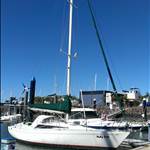
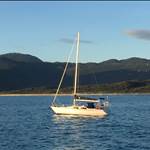
My lovely boat has a state of the art 1986 Furuno 1720 radar fitted. I for the life of me can't get the thing to work. Even with the user manual and the brains trust at the yacht club helping we can't get it function properly. I have spoken to Furuno tech locally who says it might be worth fixing but I'm not sure I want to plunge money into it on the maybe it can be fixed.
I am really not sure what to do as I will be only coastal cruising my boat.
I'll be putting in an AIS system in the future so maybe just go with that.
Do any of you have radar ?
My neighbour has radar on his Cav 37, he disconnected saying it sucked so much power he couldn't
justify its existence.
Nice to have and it has been useful at times, but i'd make AIS a higher priority.
They are just not the same thing. Radar when properly adjusted will find things like waves breaking on the rocks off Bustard Head at night and an approaching line squall, and if it is not ridiculously far up the mast you will see boats at anchor as you come late to a mooring. AIS won't do that, but AIS will do stuff that Radar can't, like displaying your presence to other vessels. And while on the subject, AIS receivers are of very limited use. They tell you if adjacent vessels are a threat, but you can see that anyway. Go for a class B transponder.
Is it an older (analogue) RADAR going into a new (digital) chart plotter? You won't get that combo to work. I have an older Raymarine plotter purely to run the RADAR as it is not compatible with my newer plotter. I actually like it because it does not clutter up the chart I'm using for navigation.
i agree with FreeRadical though. If it comes down to dollars, go the AIS, first, but don't ditch the RADAR. Fix it when more boat dollars become available..
In most Australian states now, if you have radar you must have it operating, which is a reason not to have it but leaving that aside, AIS (transceiver) is brilliant but there are times when there are no substitute for radar.
How much limited vis work do you do?
Depends if you'll be sailing in fog. If yes, radar is wonderful. At one time we arrived at Auckland Harbour and it was a white wall. Thanks to the radar we could see the channel marker posts and follow a dot on the screen which was a local boat who led us in. Couldnt see anything at all!!
I have radar, AIS, forward facing sonar and every other electronic aid known to mankind. So how would I rate radar?
It iis something that is not as necessary these day with the advent of plotters and ais that all integrates, but having a radar that also integrates in the system and overlays the map on the chart plotter just ties everything together. It confirms the location of the ais targets and objects on the chart. Having the ability to overlay the chart also makes it a lot easer to calibrate the radar. As has been said above and the only time I have really had to rely on radar is in fog. Last year while in the Whitsundays we found ourselves in a total white out and we could see an object on a collision course with us. For a while we could not work out if if the object was on the move or stationary as he was traveling extremely slow playing it safe. When we were only about 5 boat lengths away we finally spotted a yacht. We were traveling in company with another yacht who did not have radar, but we could see he was also on a collision course with the yacht so we were able to advise him of the other boat and to change course.
in summery I would only get the old radar going if the cost was not very much. New radar arrays are not that expensive if you already have a compatible plotter, and you will get a lot more functionality . If I was asked of all the electronics I have, which one could I do without if I had to get rid of something, I would have to say the radar.
Select to expand quotelydia said..
How much limited vis work do you do?
That is the question isn't it??
Select to expand quotecisco said..lydia said..
How much limited vis work do you do?
That is the question isn't it??
What I find conflicting about Lydia's post is it seems that you are not required to have a radar unit, but if you do, you are required to operate it. But that style of regulation is not the first of its kind I've come across.
Thanks for your replies.
I'll hold onto it all for now as it's fitted and get it fixed/fiddle with it a bit more down the track.
Trying to drag a 1980's boat and it's systems into the modern era is a challenge.
We get plenty of fog at certain times here so It will surely be of benefit in the future.
The requirements to have it operating if you have one fitted is something to think about. I will have to look into that a bit further.
Cheers
Select to expand quoteCapt_Newmo said..
Thanks for your replies.
I'll hold onto it all for now as it's fitted and get it fixed/fiddle with it a bit more down the track.
Trying to drag a 1980's boat and it's systems into the modern era is a challenge.
We get plenty of fog at certain times here so It will surely be of benefit in the future.
The requirements to have it operating if you have one fitted is something to think about. I will have to look into that a bit further.
Cheers
Who is going to know it's not working? Even if your vessel is in survey they never ask to see your radar working on the annual inspection.
I have radar along with an AIS transponder. I use the AIS overlay on the plotter all the time to check out who's around me; their location, boat type, speed and heading. It's brilliant when other boats have a transponder too - not so much so when boats don't. Enter radar, if you're sailing in bad vis including night sailing, then the radar is great as it'll pick up the boats that don't have an AIS transponder (or have it turned off). I also like the fact that I can verify what the plotter is showing me at night time with the radar overlay on the plotter - great for entering anchorages at night with more certainty when you have headlands and islands verified with that radar overlay. While I don't use it often, when I do, it's gold!
COLREGS Rule 7
Risk of collision
Every vessel shall use all available means appropriate to the prevailing circumstances and conditions to determine if risk of collision exists. If there is any doubt such risk shall be deemed to exist.
Proper use shall be made of radar equipment if fitted and operational, including long-range scanning to obtain early warning of risk of collision and radar plotting or equivalent systematic observation of detected objects.
Assumptions shall not be made on the basis of scanty information, especially scanty radar information.
www.navcen.uscg.gov/?pageName=navRulesFAQ
11. Am I required to have Radar? Radar is not required on vessels under 1600 GT (33 CFR 164.35), however, Rule 7 states that proper use shall be made of radar equipment if fitted and operational. In other words, whoever has one must use it. The Navigation Rules are not meant to discourage the use of any device, rather they expect prudent mariners to avail themselves of all available means appropriate...as to make full appraisal of the situation (Rule 5), e.g. the use of radar. At issue is whether the use of radar is appropriate in the prevailing circumstances and that is a determination made by the Master; and, ultimately decided by a trier of fact.
Should you be in a collision how would a judge/jury rule on your contention that the use of radar was impracticable (due to electrical drain, crew shortages, etc.)? Also, if a collision does occur, then there was obviously a risk of collision beforehand. Could the determination of that risk have been made sooner with the use of radar? It is difficult to answer such questions because the circumstances of each case are different.
More importantly, remember that Rule 7 specifies that assumptions shall not be made on the basis of scanty information, especially scanty radar information.
Select to expand quoteFreeRadical said..
COLREGS Rule 7
Risk of collision
Every vessel shall use all available means appropriate to the prevailing circumstances and conditions to determine if risk of collision exists. If there is any doubt such risk shall be deemed to exist.
Proper use shall be made of radar equipment if fitted and operational, including long-range scanning to obtain early warning of risk of collision and radar plotting or equivalent systematic observation of detected objects.
Assumptions shall not be made on the basis of scanty information, especially scanty radar information.
www.navcen.uscg.gov/?pageName=navRulesFAQ
11. Am I required to have Radar? Radar is not required on vessels under 1600 GT (33 CFR 164.35), however, Rule 7 states that proper use shall be made of radar equipment if fitted and operational. In other words, whoever has one must use it. The Navigation Rules are not meant to discourage the use of any device, rather they expect prudent mariners to avail themselves of all available means appropriate...as to make full appraisal of the situation (Rule 5), e.g. the use of radar. At issue is whether the use of radar is appropriate in the prevailing circumstances and that is a determination made by the Master; and, ultimately decided by a trier of fact.
Should you be in a collision how would a judge/jury rule on your contention that the use of radar was impracticable (due to electrical drain, crew shortages, etc.)? Also, if a collision does occur, then there was obviously a risk of collision beforehand. Could the determination of that risk have been made sooner with the use of radar? It is difficult to answer such questions because the circumstances of each case are different.
More importantly, remember that Rule 7 specifies that assumptions shall not be made on the basis of scanty information, especially scanty radar information.
Hmm, better turn the radar in as a matter of course then. At least the new radar units have a standby mode, if you're worried about batteries. It's not such a drain to switch from standbyby to transmit every now and then to check around you at least...
Select to expand quoteJode5 said..
I have radar, AIS, forward facing sonar and every other electronic aid known to mankind. So how would I rate radar?
It iis something that is not as necessary these day with the advent of plotters and ais that all integrates, but having a radar that also integrates in the system and overlays the map on the chart plotter just ties everything together. It confirms the location of the ais targets and objects on the chart. Having the ability to overlay the chart also makes it a lot easer to calibrate the radar. As has been said above and the only time I have really had to rely on radar is in fog. Last year while in the Whitsundays we found ourselves in a total white out and we could see an object on a collision course with us. For a while we could not work out if if the object was on the move or stationary as he was traveling extremely slow playing it safe. When we were only about 5 boat lengths away we finally spotted a yacht. We were traveling in company with another yacht who did not have radar, but we could see he was also on a collision course with the yacht so we were able to advise him of the other boat and to change course.
in summery I would only get the old radar going if the cost was not very much. New radar arrays are not that expensive if you already have a compatible plotter, and you will get a lot more functionality . If I was asked of all the electronics I have, which one could I do without if I had to get rid of something, I would have to say the radar.
Hey Jode, how do you find the forward facing sonar? It would be interesting to hear your experiences with it and if you think it a worthwhile addition or not?
Select to expand quoteFreeRadical said..
use shall be made of radar equipment if fitted and operational.
operational being the word here maybe FR. I don't see the need to take a broken unit off in order to be compliant with the rules...
symantics now I know 
Select to expand quote2bish said..Jode5 said..
I have radar, AIS, forward facing sonar and every other electronic aid known to mankind. So how would I rate radar?
It iis something that is not as necessary these day with the advent of plotters and ais that all integrates, but having a radar that also integrates in the system and overlays the map on the chart plotter just ties everything together. It confirms the location of the ais targets and objects on the chart. Having the ability to overlay the chart also makes it a lot easer to calibrate the radar. As has been said above and the only time I have really had to rely on radar is in fog. Last year while in the Whitsundays we found ourselves in a total white out and we could see an object on a collision course with us. For a while we could not work out if if the object was on the move or stationary as he was traveling extremely slow playing it safe. When we were only about 5 boat lengths away we finally spotted a yacht. We were traveling in company with another yacht who did not have radar, but we could see he was also on a collision course with the yacht so we were able to advise him of the other boat and to change course.
in summery I would only get the old radar going if the cost was not very much. New radar arrays are not that expensive if you already have a compatible plotter, and you will get a lot more functionality . If I was asked of all the electronics I have, which one could I do without if I had to get rid of something, I would have to say the radar.
Hey Jode, how do you find the forward facing sonar? It would be interesting to hear your experiences with it and if you think it a worthwhile addition or not?
Thanks 2bish, I didn't pick that up in Jode's post, I'm interested also. I know the Volvo played with the concept, but at the speed they travel at it was a washout , too much noise from the flow.
Whats it like Jode? Be a great tool if it had the granularity and range to allow you to take corrective action.
Select to expand quote2bish said..Jode5 said..
I have radar, AIS, forward facing sonar and every other electronic aid known to mankind. So how would I rate radar?
It iis something that is not as necessary these day with the advent of plotters and ais that all integrates, but having a radar that also integrates in the system and overlays the map on the chart plotter just ties everything together. It confirms the location of the ais targets and objects on the chart. Having the ability to overlay the chart also makes it a lot easer to calibrate the radar. As has been said above and the only time I have really had to rely on radar is in fog. Last year while in the Whitsundays we found ourselves in a total white out and we could see an object on a collision course with us. For a while we could not work out if if the object was on the move or stationary as he was traveling extremely slow playing it safe. When we were only about 5 boat lengths away we finally spotted a yacht. We were traveling in company with another yacht who did not have radar, but we could see he was also on a collision course with the yacht so we were able to advise him of the other boat and to change course.
in summery I would only get the old radar going if the cost was not very much. New radar arrays are not that expensive if you already have a compatible plotter, and you will get a lot more functionality . If I was asked of all the electronics I have, which one could I do without if I had to get rid of something, I would have to say the radar.
Hey Jode, how do you find the forward facing sonar? It would be interesting to hear your experiences with it and if you think it a worthwhile addition or not?
Forward facing sonar is like all other nav aids, it has its good and not so good points. If you are in fairly flat bottom it's not much help as the forward sounding is proportionate to the depth and it is not overly accurate at speeds over 3 knots. So if the bottom is on the rise you will basically see the same as your normal sounder.
Where they are good is when you suspect there may be a rock or bommie. Up on the outer reef they are worth their weight in gold especially when the sun is low and there's a bit of wind chop on the water. You just need to travel slow enough to stop or avoid the object.
It's a bit like radar, not necessary but good to have in the right circumstances.
Select to expand quotecisco said..lydia said..
How much limited vis work do you do?
That is the question isn't it??
Over a total of one years cruising I have had two mornings worth of fog, one of which I was at anchor!
Some sage advice in these posts.
As a long time radar operator in the Navy I would also ask, do you know how to use it and what inaccuracies and faults do you need to understand?
The principal use of radar in the past was to know where you are by getting a radar fix. Modern GPS and chartplotters have made that use obsolete. The ability to see other vessels is a marginal use on a yacht. The radar is usually is down below and hard to monitor from the cockpit, and if in pilotage situations where radar is likely to be used unless you monitor it very often it is pretty pointless.
If you are in fog and want to get into a harbour, waiting until the fog clears is a good alternative.
I would spend the money on AIS. However, while AIS is useful and has many advocates on this forum it isn't foolproof. Lots of vessels don't have it turned on including fishers, Navy and lazy merchant ships who don't want you to know where they are. In my view AIS cannot take the place of a 24/7 lookout when in coastal or shipping lane environments.
I get to play with the DIDSON acoustic camera as part of my job. Amazing units but last time I checked they were over $100k with the pan and tilt included. Check out what they can do on their website .
www.soundmetrics.com/Products/DIDSON-Sonars
Good points above, in pre chart plotter days a radar set on a dark night when there weren't many lights about could be pretty bloody helpful, but have found with a plotter at the helm it's almost redundant except in very poor conditions. Currently have neither and in deciding which to go with for a trip north next year I think I will be installing AIS based on overall cost and utility. But if I had a radar on board I'd probably still be fixing it, lots of people I have spoken to have had close calls with fishing boats not wanting to give away their favourite spots and the like. And as much as you plan your passage you never know when you might cop bad weather. Both would be nice but neither replaces a good lookout!
If you are going to invest in Radar don't go past broadband. They say you caan see pelicans on a sand bar, I thought that was a load of codswallop but no, you really can. I even saw a swimmers head in the water. And they start up immediately and they draw very small current not much more than a mobile phone.
Don't know why everyone on this panel is so enamored of AIS. Even in Indonesian waters where transponders are mandatory they are almost useless. The local fishing boats find them great fun. They know when a rally is on and can easily see when to put a net out. "Oh you run over my net, oh you ruin me, oh you must give me compensation"
Sure AIS can tell you where the transmitting boats are, but you can see them anyway, and in poor visibility there are still plenty of boats about that are not transmitting.
AIS is not a parch on high definition Radar for usefulness, particularly if you can overlay the scan on a plotter. Bits of Asia and New Guinea are so badly charted that a Radar overlay is the only reliable way to get your offsets.
I find AIS really useful. I can see boats on AIS that I can't see with my eyes; at night, around corners and anchorages. I found it particularity helpful coming down the east coast and across bass straight. Those big tankers and container boats were way out of eyesight and steaming along quickly, so it was great to be able to sees them on the AIS, check their speed and heading and keep the hell out of their way. I can also see if I know the boats - which is handy to catch up with them or whatever. Also it's just interesting seeing what's out there, I was on the east coast of Tas after Christmas and could see a large yacht on the horizon heading north, it was Wild Oats, also saw a number of other race boats heading back.
I also live in hope that AIS transponders become more common, rather than people just buying receivers. In fact I'd go as far as suggesting that receiver only AIS units should be phased out. If the system is really going to work, then it should work for everyone (safer), so transceivers should be the standard from that point of view.
Select to expand quote2bish said..
I find AIS really useful. I can see boats on AIS that I can't see with my eyes; at night, around corners and anchorages. I found it particularity helpful coming down the east coast and across bass straight. Those big tankers and container boats were way out of eyesight and steaming along quickly, so it was great to be able to sees them on the AIS, check their speed and heading and keep the hell out of their way. I can also see if I know the boats - which is handy to catch up with them or whatever. Also it's just interesting seeing what's out there, I was on the east coast of Tas after Christmas and could see a large yacht on the horizon heading north, it was Wild Oats, also saw a number of other race boats heading back.
I also live in hope that AIS transponders become more common, rather than people just buying receivers. In fact I'd go as far as suggesting that receiver only AIS units should be phased out. If the system is really going to work, then it should work for everyone (safer), so transceivers should be the standard from that point of view.
My thoughts exactly, saves me typing it.
Select to expand quote2bish said..
I find AIS really useful. I can see boats on AIS that I can't see with my eyes; at night, around corners and anchorages. I found it particularity helpful coming down the east coast and across bass straight. Those big tankers and container boats were way out of eyesight and steaming along quickly, so it was great to be able to sees them on the AIS, check their speed and heading and keep the hell out of their way. I can also see if I know the boats - which is handy to catch up with them or whatever. Also it's just interesting seeing what's out there, I was on the east coast of Tas after Christmas and could see a large yacht on the horizon heading north, it was Wild Oats, also saw a number of other race boats heading back.
I also live in hope that AIS transponders become more common, rather than people just buying receivers. In fact I'd go as far as suggesting that receiver only AIS units should be phased out. If the system is really going to work, then it should work for everyone (safer), so transceivers should be the standard from that point of view.
I agree AIS is handy and can provide information of interest. My personal view is it cannot be used as a substitute for keeping a good lookout where a good lookout is needed so is therefore an expensive nice to have.
Fishers won't use it to give away they are in a good spot, Navy won't use it for obvious reasons and many merchantmen won't have it on due to laziness or incompetence. If a boat is way out of sight it isn't a threat, when it is in sight you can take whatever action is necessary. Having a course and speed on a vessel you can't see might be useful but boats change course and until the boat is close enough to see it doesn't really matter where it is going.
It can't provide all the information a yachtie needs to transit busy waterways and with the number of boats not using it it can't be relied on in poor visibility. Even with AIS you must maintain a 24/7 lookout when coastal and in shipping lanes.
The other use of AIS are AIS-SART devices for MOB. Very handy to allow the boat you fell off or others nearby to come back and find you. I believe rescue aircraft are fitted with AIS receivers to help locate both vessels and individuals.
Certainly not a substitute for a PLB, but a worthy compliment.
Select to expand quoteFreeRadical said..
The other use of AIS are AIS-SART devices for MOB. Very handy to allow the boat you fell off or others nearby to come back and find you. I believe rescue aircraft are fitted with AIS receivers to help locate both vessels and individuals.
Certainly not a substitute for a PLB, but a worthy compliment.
^ this. I'm looking at getting one of these to complement the PLB. Really handy for when you've got nil visibility and there's boats in the vicinity, not so much if your solo and 300nm out of a shipping lane, that's when your PLB is king.
I'd rather that local boats can see me directly without waiting on a steer/guidance from SAR.
I use my radar alot. I find that when my Raymarine MFD is supplied with heading data from the tiller pilot compass, the radar features come into their own. Features like radar image chart overlay,,, AIS data and waypoints all displayed on radar screen,, and the MARPA (mini automatic radar plotting aid) which allows you to select and track targets providing you with collision avoidance data.
And then you have the more standard features like a guard zone and timed transmit.
I find my radar data more valuable than AIS especially coastal cruising.
Select to expand quoteJolene said..
I use my radar alot. I find that when my Raymarine MFD is supplied with heading data from the tiller pilot compass, the radar features come into their own. Features like radar image chart overlay,,, AIS data and waypoints all displayed on radar screen,, and the MARPA (mini automatic radar plotting aid) which allows you to select and track targets providing you with collision avoidance data.
And then you have the more standard features like a guard zone and timed transmit.
I find my radar data more valuable than AIS especially coastal cruising.
+1 Jolene,
I have similar setup to you. Several times I have transited Port Phillip heads in fog or dark only because I had Radar to supplement other navigation means.
I wouldn't be without it.
I recently read a suggestion to use your Radar to confirm or otherwise the accuracy of the chart you are currently using. Apparently, in some out of the way areas, the accuracy of charts can be suspect.
regards,
Allan