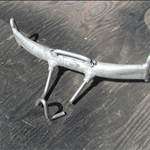
Anyone use these before? I need something removeable, so thinking of using these instead of dynabolts. Just wondering if they work loose or any other problems to be aware of?
ramset.com.au/Product/Detail/312/WERCS-AnkaScrew-Screw-In-Anchors
Any other dynabolt alternative suggestions for something that needs to be removable?
I've used them a heap of times for fixing signage frames to masonry walls. Some have been in for years and no problems as yet. Just be careful not to over tighten them. As they have a really course thread you can strip the hole surprisingly easily

Select to expand quotemitchbat said...
I've used them a heap of times for fixing signage frames to masonry walls. Some have been in for years and no problems as yet. Just be careful not to over tighten them. As they have a really course thread you can strip the hole surprisingly easily
This is due to the type of fastener, as they have a softer thread, and hollow substrates, the powers in a solid substrate don't do that, also worn bits can be the culprit, $ 14 for a 230 mm bit drilling over 100 holes 150 deep, not bad value, especially as the concrete was a very high mpa, and had cured
Thanks Cauncy,
Just got my scanner working this morning, so here's a diagram of what I want to do.
On the right hand side, my driveway is level with the bottom of the pool. The 3m high posts will be supporting 1.8m high x 2m long aluminium slat privacy panels that weigh 40kg each. Potentially there will be kids leaning on the fence when they play in the pool, and regular wind loading of course. So there will be repetitive pulling force, and that's what concerned me about them possibly working loose. The pool and drive are 40 years old.
Suitable application? Anything better that I should use now that you know what I'm doing?
(There will be two fastened to the pool for each post, just can't show that in the side view.)

Should work fine,
Only drama would be the condition of concrete,
Also what's the thickness of the ring beam on the pool , and the distance between fixings on the cleats to the pool
Pool ring beam is 160mm thick, and cleat holes on each side of the post are 175mm apart.
Actually, I had been thinking of these (see pic below), which I guess are the same as the Mungo that you mentioned?
Just wasn't sure if they had the required pulling force? I've used them to hold quite a long swinging gate attached to house brick and I can stand on the gate without the bolt budging, so maybe they are okay. Actually if they are suitable, they'd be my preference, as they don't rely so much on the concrete being in good condition, and can be removed and replaced without damaging the drilled hole.
What do you think, the nylon frame anchors would do the job?
ramset.com.au/Product/Detail/77/RamPlug-Nylon-Frame-Anchors

I'm a builder by trade.
For screw anchors used in concrete I always use lead ones, they will mold into the concrete as you screw in the screw, plastic or nylon ones have a way of pulling out.
The one you show works good for mostly interior walls, sheetrock (wallboard) or plaster.
I have also used the the Ankascrews before with no complaints ,definitely prefer them to the dyna or tap in nylon anchors in light to medium applications,if you can use them in a shear load application all the better , set up a few warehouse pallet racking systems in my day so have drilled a few holes & used most systems ...
Ankascrews/screwbolts are great.
I agree with most of above.
Except in high vibration situations (machinery fixed down to concrete slabs for example), ankascrews can work themselves loose.
Ramset website has most shear/tension capacities for many of its products.
Clarence
Steer clear from nylon as it will perish and can weaken over time with excessive movement, and even check with the Anka & any other structural fixing component (re; corrosion from chlorine, including air-borne particles). Pool areas are known to degrade metals significantly, so best to invest in the right product. I've used them also (albeit many years ago when they first came out - so sure that they've improved) - great product in solid brick & concrete. Maybe also look at chemset as they are the preferred 'structural' fixing method to concrete in most applications.
Just a quick one also - if you're investing $$$ in what is legally called a 'Pool Barrier', make sure that it's up to AS & BCA spec (including the practice notes that came out over the last couple of years - although they may only be Vic specific). I hate to be a killjoy, but if any incidents occur at your pool - you will go through a world of hurt if your pool & area doesn't comply...just saying (from witnessing other's pain).
(edit) Also check that the pool's concrete compound is suitable? Many pools are constructed using fibre reinforcement as opposed to steel, and can also be constructed using aerated concrete for reduced weight - some masonry fixings simply won't bond to them. and can damage the pool instead.
If it needs to be removable and able to be reinstated . A " loxin " is the go , old school but should be still available . The the nut stays in the masonry ,and the bolt could be removed / replaced here you go .http://www.firequip.com.au/files/Technical%20Data%20Sheets/Fasteners/Loxin%20Shield%20Anchor.pdf
Select to expand quoteHarrow said...
Thanks Cauncy,
Just got my scanner working this morning, so here's a diagram of what I want to do.
On the right hand side, my driveway is level with the bottom of the pool. The 3m high posts will be supporting 1.8m high x 2m long aluminium slat privacy panels that weigh 40kg each. Potentially there will be kids leaning on the fence when they play in the pool, and regular wind loading of course. So there will be repetitive pulling force, and that's what concerned me about them possibly working loose. The pool and drive are 40 years old.
Suitable application? Anything better that I should use now that you know what I'm doing?
(There will be two fastened to the pool for each post, just can't show that in the side view.)
160 will be plenty of mass into the side of concrete ringbeam, as steel expands you be better to have say a 14mm hole in cleats and central drill a 10/12 fixing into it with a washer surround, the ones into the floor will be fine
if these panels have any sort of load on them ...... then, heavy fabricated hot dipped steel brackets with welded nuts incorporated in them , so you can bolt / unbolt from them is the go . these brackets should be chemset to the concrete structure .
I wouldn't be happy fixing an expansion type anchor 80mm from the edge of a slab, and definitely not from the edge of a pool ring beam that has all kinds of live loads on it.
I'm not sure why you want it removable? But I would be going for a chemset anchor of some sort in that application.
Unless you don't mind if even just one of the anchors blows the top edge off the pool.
2c 
Select to expand quotekk said...
I wouldn't be happy fixing an expansion type anchor 80mm from the edge of a slab, and definitely not from the edge of a pool ring beam that has all kinds of live loads on it.
I'm not sure why you want it removable? But I would be going for a chemset anchor of some sort in that application.
Unless you don't mind if even just one of the anchors blows the top edge off the pool.
2c
Correct, that's why the pool fixings need that bit of movement as explained
Spent years in bridge construction and mixing steel and concrete( although critical to achieve engineering) is the culprit of most failures/ cosmetic faults
How long is the lever arm? i.e. how tall is the screen above where it attaches to the pool? My opinion is the concrete screws you propose are inadequate. I would use an epoxy system. In my experience those screws sometimes do not work at all because of the hole being drilled slightly too big, concrete not correct or often the heads of the screws twist right off when screwing them in.
I use them for attaching toilet flanges to the slab, brackets to hang pipes from, etc... not a lot of force applied.
The force applied in your case is pulling the screw straight out of the hole, for this I feel these are inadequate. For sheer strength these screws work best.
Rather than find fault in your idea - a suggestion maybe? Would you consider fixing a timber plate (say just 90 to 140x45) to the underside of the concrete ring beam and fix to that? The timber could be screwed & bonded with Sikabond (or similar) to the concrete which would increase the area of load with little chance of 'blowing out the edge' as has been mentioned. A bracket could be fitted to the column that bolts to both the edge of the timber and the underside, eliminating sheer forces...just a suggestion. Using timber & Sikabond would allow a strong, but easy fixing, and also allow some minor natural movement between all the dynamic forces & substrates that are being used.
It's an inexpensive way to avoid future damage, and it's how I'd approach the issue (if I owned a pool). 
The whole fence is already manufactured and sitting in my yard ready to install, so I can't change the fundamental design. Just need to make up my mind about the bolts.
The fence is 1.8 meters high above the pool. Below the pool is 1.2 meters, (thus 3m long posts). I didn't think I'd have a problem with blow out, since the concrete is over 6 inches thick, and those anchor screws are recommended for near edge fixing. But now enough of you have mentioned it to have me thinking about that too now.
Seems the one thing everyone agrees on is an epoxy set system. Guess I can do that with a stainless stud so I don't need to worry about it rusting? I'd do 10mm studs with what, a 13mm or 14mm hole in the cleat for expansion?
It may be 160mm thick, but even though you're not planning on using an expanding fixing - you're talking about a bolt inserted in the middle of an edge beam - so halve the thickness...a bit of differing ground movement between the post base and the pool - can be caused by the settling with water load (remembering that 1,000lts is a tonne of weight!), kids jumping on the edge or pushing on the fence and you'll easily bust out an arc of concrete that only has 75mm to the bolt - either above or below the fixture. Most concrete pools that I've seen are typically constructed using low MPa concrete. Your proposed fixing method doesn't allow for any movement at all, so will no doubt end in engineering failure of one or more of the components (bolt, concrete, post).
Adapting a bracket to an already-made fence so that it suits the application correctly is a very minimal cost against repairing a broken pool edge. If you are considering bolting straight to the edge though - check out the chemset specifications & installation instructions rather than ask what a good clearance is here. My 2 cents.
Might be worth mentioning that my new aluminium fence is replacing a timber one of the exact same dimensions, (but a lot heavier), that has been in place for the last 30 years and was installed in the exact same manner to the edge of the pool with dynabolts, except they are all rusted and I can't get them out, or even undo them. Thus why I was looking at something that can be removed, and thus easily replaced every, say, 10 years.
The only way the bolt can react with the column is if it's fully connected, by this I mean if the hole in cleats is 12 mm and you put a 12 mm bolt/ chemi/ mungo/ dyna etc etc, by having a 14mm hole in the cleat and a 10mm bolt and washer it allows for expansion/ contraction / movement, the ones to the floor don't require it
Select to expand quoteHarrow said..
Might be worth mentioning that my new aluminium fence is replacing a timber one of the exact same dimensions, (but a lot heavier), that has been in place for the last 30 years and was installed in the exact same manner to the edge of the pool with dynabolts, except they are all rusted and I can't get them out, or even undo them. Thus why I was looking at something that can be removed, and thus easily replaced every, say, 10 years.
I would chemset some stainless steel studs in, something like 10mm studs in a 12mm hole and drill a 14mm hole in the cleat on the post, or if you can go for the timber plate that sailhack suggested, it's a really good idea. Even in that case I would use chemsets to hold the ring beam on, avoid the capsules of epoxy though, they are expensive and hard to drill into. there are a few brands of chemsets that use a standard silicon type gun to apply the mix but be ready to the lot in one go.
Most of my experience is with tilt panels and though at times I have to fix to the edge of a panel it's not fun with anything bar 6-8mm fixings (nylocks) The self threading anchors do put outwards pressure on the hole when installing, this will be your enemy.
Ankascrews are fantastic. I will never use dynabolts again.I had an aluminium pool fence posts made with flat flange plates on the base so as I could fix it to the existing concrete.
I had to put little packers under the flanges to ensure the post was vertically level.
I Ankerscrewed 4 holes per flange.
Some of these screws went in and out of the hole half a doz times,
Pulled back down tight every time.
Bought a couple of each, and went around the blind side of the house to test on the side of a suspended slab. Found out a couple of things.
1. Those Ankascrews aren't going to come out, if you can ever get them in!!! (I could only get a few threads in by hand before I felt I was going to break either my socket or my arm, now I understand the reference to rattle guns. Maybe I needed a slightly larger masonry bit, not that it should be very worn, it's only used for DIY around the house?)
2. The nylon frame anchor isn't going to come out anytime soon either, and is a lot easier to put in. Even with only 30mm of a 100mm bolt installed I couldn't lever it out the slightest amount .
I'm going ahead with the nylon frame anchor.
Select to expand quoteHarrow said..
Bought a couple of each, and went around the blind side of the house to test on the side of a suspended slab. Found out a couple of things.
1. Those Ankascrews aren't going to come out, if you can ever get them in!!! (I could only get a few threads in by hand before I felt I was going to break either my socket or my arm, now I understand the reference to rattle guns. Maybe I needed a slightly larger masonry bit, not that it should be very worn, it's only used for DIY around the house?)
2. The nylon frame anchor isn't going to come out anytime soon either, and is a lot easier to put in. Even with only 30mm of a 100mm bolt installed I couldn't lever it out the slightest amount .
I'm going ahead with the nylon frame anchor.
sorry mate but the thought of doing this **** by hand would have me on the blower to blf/cfmeu hahahaha you gan buy a cheap rattle gun from bunnings for few hundgy last i checked
oh hay i know you probably allready know this but just incase can allways get an old coles trolley bar the metal ones and use that as an extender for your socket or whatever you got going on
Or just drive it with a socket and adaptor to your drill (a real 240V one). That is the advantage to nylon inserts, a coach screw with a dab of soap and drive it with the drill, piece of cake compared to driving Ankascrews by hand. (not that I am suggesting anything for this application, just that I'd not do them by hand if could avoid it)
Finished (almost - one panel to go).
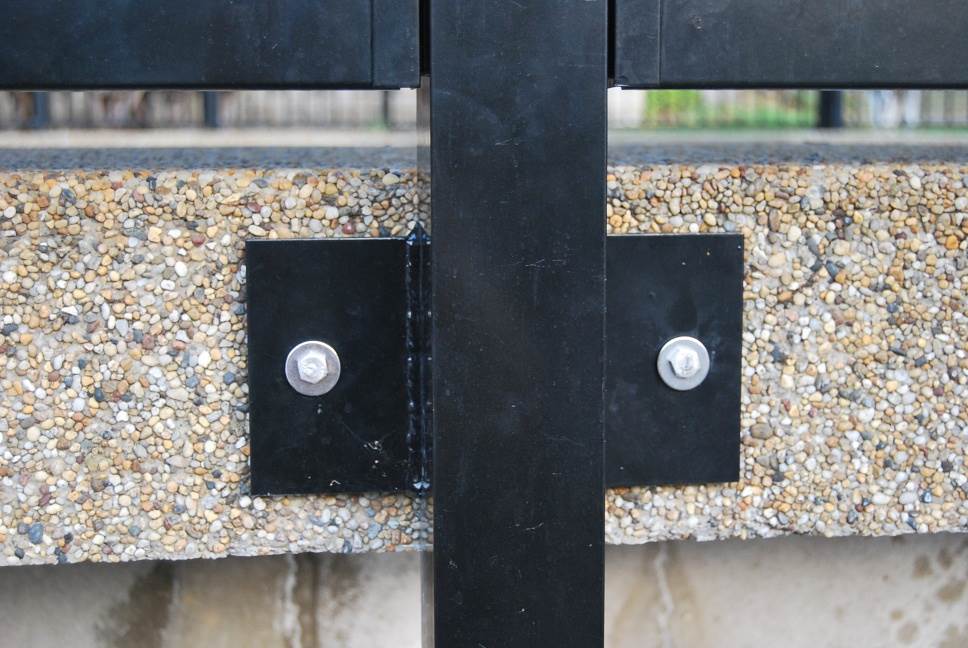
Well here it is. I made some drawings and took them to a local engineering workshop to have made up. It's all in aluminium. Posts are 75mm sq x 3mm thick. Flanges and cleats 10mm thick. All fastened with 100mm stainless steel coach screws set into ramplugs with nylon washers so there's no stainless steel hardware touching the aluminium fencing.