Select to expand quoteThinkaBowtit said..
How do you propose getting the waste to "Maralinga-ish" sites sn? Road? Rail? Hmnn, just a bit risky...
I know it's gone off the mainstream radar, but ****ushima is still alive and pumping crap into the Pacific. Then there's the stories you're not hearing about the problems in the US. Shame the fracking is causing so many earthquakes, not such a stable environment for the aging nuclear reactors.
Why is it risky? Why do people automatically assume that moving nuclear waste is exponentially worse than truck full of glycerine, or even a truck full of fuel....
Containing and transporting radioactive waste is not hard and a hell of lot less potential risk to humans or the environment than any one of the thousands of chemical and fuel trucks that ply our roads and rail every day.
knee jerk and hysteria people...do your research...
Select to expand quoteDawn Patrol said..
I'm on the no camp.
Nuclear waste is not easy to deal with...Not a single permanent storage facility worldwide in operation.
You are correct, but don't say why....Nuclear facilities store their own waste for about 40 years until the heat and radiation reduce to about about one thousandth of what it started at, then they look at packaging it and storing it underground. There are dozens of storage facilities ready to go, but none have any waste to store yet...and 40 years to reduce radioactivity by one thousandth, so yes it is radioactive for many thousands of years, but most of the time it is relatively harmless.
The danger is not in the storage. Its at the facilities themselves....so yeah bring on the better tech for sure...I would not want the old style reactors near me....Select to expand quoteDawn Patrol said..
Australia is not as geologically stable as people believe. We frequently have earthquakes across the country. A leak could destroy groundwater supplies for hundreds of thousands of years.
Spent uranium is generally like a ceramic...ie hard and dry...when encased properly it can't leak...
Typical planned treatments are like this:
Immobilise waste in an insoluble matrix such as borosilicate glass or synthetic rock (fuel pellets are already a very stable ceramic: UO2).
Seal it inside a corrosion-resistant container, such as stainless steel.
Locate it deep underground in a stable rock structure.
Surround containers with an impermeable backfill such as bentonite clay if the repository is wet.
Any earthquake you might get in central Australia won't do much to that arrangement.
I don't want to come across as a Nuclear fan boy, but people just buy hysteria and preconceived views on the issue without looking into the reality. It also pees me off no end when supposed environmentalists refuse to consider nuclear when it could immediately and considerably reduce the relatively massive personal and environmental harm that burning coal and petrochemical fuel does...
Select to expand quoteParadox said..Dawn Patrol said..
I'm on the no camp.
Nuclear waste is not easy to deal with...Not a single permanent storage facility worldwide in operation.
You are correct, but don't say why....Nuclear facilities store their own waste for about 40 years until the heat and radiation reduce to about about one thousandth of what it started at, then they look at packaging it and storing it underground. There are dozens of storage facilities ready to go, but none have any waste to store yet...and 40 years to reduce radioactivity by one thousandth, so yes it is radioactive for many thousands of years, but most of the time it is relatively harmless.
The danger is not in the storage. Its at the facilities themselves....so yeah bring on the better tech for sure...I would not want the old style reactors near me....
So about 40 yrs takes us to about the 1970's. What about the 30+ yrs of waste from before then? If it was easy and problem free to be stored permanently, it would be. Saying things like 1/1000th of the initial radioactivity is not very useful. It is still very dangerous after the 40 yrs. It might be 'relatively harmless' compared to its initial value, but still actually harmful to living beings. Select to expand quoteDawn Patrol said..
Australia is not as geologically stable as people believe. We frequently have earthquakes across the country. A leak could destroy groundwater supplies for hundreds of thousands of years.
Spent uranium is generally like a ceramic...ie hard and dry...when encased properly it can't leak...
Typical planned treatments are like this:
Immobilise waste in an insoluble matrix such as borosilicate glass or synthetic rock (fuel pellets are already a very stable ceramic: UO2).
Seal it inside a corrosion-resistant container, such as stainless steel.
Locate it deep underground in a stable rock structure.
Surround containers with an impermeable backfill such as bentonite clay if the repository is wet.
Any earthquake you might get in central Australia won't do much to that arrangement.
I don't want to come across as a Nuclear fan boy, but people just buy hysteria and preconceived views on the issue without looking into the reality. It also pees me off no end when supposed environmentalists refuse to consider nuclear when it could immediately and considerably reduce the relatively massive personal and environmental harm that burning coal and petrochemical fuel does...
I believe the timeframe for this image is from the late 1800's to some time early 2000's. Basically 100 yrs. These aren't small magnitude earthquakes. I'd hazard a guess they would have little difficulty crushing/warping/fracturing anything we can make. It might not happen in 100 yrs, maybe not 1000, in the next coupla hundred thousand....who knows.
I don't see how there can be any confidence in underground storage over long term geological time scales. Most governments and organisations struggle to see ahead a few years, I don't trust them to manage a time scale that is hard to even wrap the mind around.

My opinion is far from hysteria, I've looked into it a bit and that is what my current thoughts on it are.
I don't disagree that it could solve a lot of problems. It just seems to me that it is making another problem, with no current solution, that also has the potential to be harmful.
Safe waste disposal seems to be the major objection - which ignores completely that Gen IV reactors will use up the nuclear waste.
And Gen V and fusion, who knows what can be achieved if the regulatory roadblocks and hysteria would end and appropriate funding was allocated.
Anyway, great to see young nuclear engineers getting into it.
^^^
Hysteria
If humans were that useless viruses would have killed us off long before the nuclear age.
Select to expand quote Dawn Patrol said..
My opinion is far from hysteria, I've looked into it a bit and that is what my current thoughts on it are.
Do you live in a tent? We can build 40 story buildings to survive any of those earthquakes, building a moderately-sized box to survive them is a relative no brainer.
Select to expand quotesn said..ThinkaBowtit said..
How do you propose getting the waste to "Maralinga-ish" sites sn? Road? Rail? Hmnn, just a bit risky...
Thorium generated power is supposed to be "a lot safer" than uranium, partly because thorium waste has a much shorter half life [or something like that]
Not needing to be stored for umpteen gazillion years like uranium based waste.
IIRC, thorium waste is ok after 150ish years - which we have the technology to handle.
The main reason the nuclear energy industry went for uranium, was that assisted in supplying materials for making A bombs.
As for transporting the stuff - bung it on either rail or truck in the containers designed for carrying nuke waste.
These things were tested by chucking out the back of aircraft, ramming with locomotives, and being blown up.
They passed all the tests.
If you follow the rules and procedures - carrying D.G. is no great deal.
stephen
Thorium was explained to me that when the heat source is no longer applied the thorium returns to its natural form (Not radioactive) Also that Thorium is burnt so hot that apparently nuclear waste could be incinerated in the burn process.
Also India is/was building a Thorium power plant.
I had it explained by my Land lord who was involved in a State run power think tank a few years ago. At the time when i asked other friends in the energy/power field, they knew very little about it but they were pleasantly impressed with its potential.
These days with the technical advancements i really cant see that with wind, solar, and wave/tidal energy why we would need to continue burning fuels/chemicals for power 
The only problem i see with Nuclear is that its controlled by men, who are inevitably lazy and greedy.. 
Interesting that most of you appear to be interstate not SA (lucky buggas) but all heaping pros and cons.
Being a SA and living within 4 hours driving from proposed site, I say bring it on, all the pesimists are screaming end of the world, once its used its shoitless for anything else, so why not store it and make $$$$ from it. Just wished I lived closer my land would be up for option and then grow grain over the top.
This is a far better option than iron ore mining raping the land making it f**king worthless for farming.
Select to expand quoteIan K said.. Dawn Patrol said..
My opinion is far from hysteria, I've looked into it a bit and that is what my current thoughts on it are.
Do you live in a tent? We can build 40 story buildings to survive any of those earthquakes, building a moderately-sized box to survive them is a relative no brainer.
F#cashima 
Select to expand quoteIan K said... Dawn Patrol said..
My opinion is far from hysteria, I've looked into it a bit and that is what my current thoughts on it are.
Do you live in a tent? We can build 40 story buildings to survive any of those earthquakes, building a moderately-sized box to survive them is a relative no brainer.
How many of those buildings will be standing in one hundred thousand years?
Select to expand quoteDawn Patrol said..
Ian K said...
Dawn Patrol said..
My opinion is far from hysteria, I've looked into it a bit and that is what my current thoughts on it are.
Do you live in a tent? We can build 40 story buildings to survive any of those earthquakes, building a moderately-sized box to survive them is a relative no brainer.
How many of those buildings will be standing in one hundred thousand years?
Well we don't specifically design those buildings for a long life, but the issue you raised was earthquake resistance not durability.
Interesting question though, don't know the answer. But one thing's for sure, if people leave the planet, and when the remaining, deserted 40 story steel-framed buildings do decide to come down of their own accord, whether they fail due to shifting foundations, rust, bushfire, termites, overloaded with bat poo, whatever. It will be a vertical collapse with about 2.24 seconds of free fall.
Pity no one will be around to put the video on youtube.
Select to expand quoteHow many of those buildings will be standing in one hundred thousand years?
Ten thousand years is the time it takes for Uranium to decay to its natural state. The Pyramids are 5000 years old and exposed to the elements....
Just saying....
I think the earthquake map reinforces my opinion.
Look at the area that was touted for storage, in the centre of WA with no red dots. And any dots there are 1000km away and about 4-5 Richter, which is a logarithmic scale. That is a nothing quake.
Think about this.
Chernobyl can be walked right up to now and you can spend 10mins there, as long as you don't breathe the dust. The nasty crap is behind a few metres of concrete they dumped on it. So you are literally 20m away from the nastiness.
If we put the same stuff over 1km underground in rock, concrete it in, even a 7ish earthquake MAY only disrupt the concrete and you MAY have some radiation escape but there is nobody there to be affected. And the radiation is 1000m away. Groundwater is a silly argument as it would be placed appropriately. Our water is not contaminated by nickel or copper etc due to mining is it?
If an engineer like IanK says it can be engineered and draws analogy with skyscrapers, I believe him.
Next, radiation has been found to be nowhere near as bad as first thought. The sickness / lethality dosages came from nuking our own people in military testing in the 1940's and 50's.  and some dumb accidents in labs. The graph was extrapolated for lower doses and science now says it is wrong, it is not as bad as we thought. Obviously exposure like Maralinga etc is valid, but smaller ones are not.
If the hysteria about radiation was true, half of Japan and Europe would be totally uninhabitable. I would probably be very sick from spilling Protactinium-234 on me, but I am not. As I said, you can walk up to Chernobyl and feel the building is still hot but you will be fine in there with a 20c woodwork face mask on. 20m from the ground zero reactor - safe.
So I find it hard to believe that we cant use molten salt reactors, thorium, etc and with the miniscule waste left it can't be put thousands of kilometres away, safely.
Usual greenie bad-science based propaganda machine is strong, using 40 y/o old wive's tales as their ammo.
Select to expand quoteMark _australia said...
I think the earthquake map reinforces my opinion.
Look at the area that was touted for storage, in the centre of WA with no red dots. And any dots there are 1000km away and about 4-5 Richter, which is a logarithmic scale. That is a nothing quake.
If an engineer like IanK says it can be engineered and draws analogy with skyscrapers, I believe him.
So I find it hard to believe that we cant use molten salt reactors, thorium, etc and with the miniscule waste left it can't be put thousands of kilometres away, safely.
Usual greenie bad-science based propaganda machine is strong, using 40 y/o old wive's tales as their ammo.
I don't see how that map can show that. It is less than a blink of an eye geologically. And it still shows a large variation of both magnitude and intensity of earthquake. Who knows what will happen over a timescale significantly larger?
I'm glad seabreezes resident engineer says it's safe. Buildings can be earthquake resistant. They aren't guaranteed and only to certain likely quake sizes. If a crack opens up beneath one it'd be interesting to see what happens. But if he says so, lets give him the contract and build something...
As far as those other reactors, if they produce no waste and use old waste, why aren't they doing that? Why even have this discussion? Or are they not currently built? If so, why not?
I just don't think we comprehend the time scales associated with this properly. It's a long bloody time to have something safely burried.
Look at it this way - if a runaway reaction at Chernobyl produced the lump of crap that is still there all hot and angry - let's say it is 200kg of crap - and 25yrs later you can safely be 20m away from it for a while ........... when it is only under a few metres of concrete - how could the same lump of crap NOT be safe under 1km of rock?
Then even if the biggest earthquake ever cracks it all open, nobody cops the radiation as they are 1000km away. Then some men in special suits fill the crack again and she's apples.
Dawn Patrol, your logic is like saying you don't wanna live in Perth because of the seriously nasty chemicals stored in a place in the Wheatbelt.
Select to expand quotelog man said..
we don't need more power.....we've got plenty Seriously? Is that sort of thing going to help improve health, education, standard of living etc etc.
It's not like energy consumption is growing... or anything...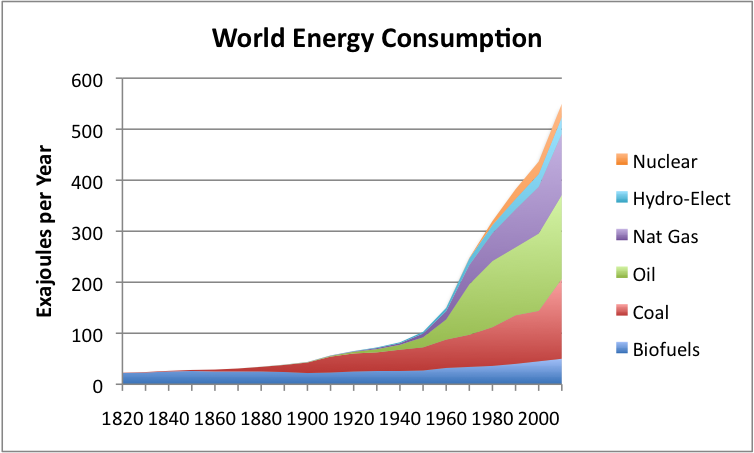
I'm pro-nuclear as part of the mix and on the path to better things. Solar simply won't cut it in Finland (for example).
Select to expand quoteMark _australia said..
I think the earthquake map reinforces my opinion.
Look at the area that was touted for storage, in the centre of WA with no red dots. And any dots there are 1000km away and about 4-5 Richter, which is a logarithmic scale. That is a nothing quake.
Think about this.
Chernobyl can be walked right up to now and you can spend 10mins there, as long as you don't breathe the dust. The nasty crap is behind a few metres of concrete they dumped on it. So you are literally 20m away from the nastiness.
If we put the same stuff over 1km underground in rock, concrete it in, even a 7ish earthquake MAY only disrupt the concrete and you MAY have some radiation escape but there is nobody there to be affected. And the radiation is 1000m away. Groundwater is a silly argument as it would be placed appropriately. Our water is not contaminated by nickel or copper etc due to mining is it?
If an engineer like IanK says it can be engineered and draws analogy with skyscrapers, I believe him.
Next, radiation has been found to be nowhere near as bad as first thought. The sickness / lethality dosages came from nuking our own people in military testing in the 1940's and 50's. and some dumb accidents in labs. The graph was extrapolated for lower doses and science now says it is wrong, it is not as bad as we thought. Obviously exposure like Maralinga etc is valid, but smaller ones are not.
If the hysteria about radiation was true, half of Japan and Europe would be totally uninhabitable. I would probably be very sick from spilling Protactinium-234 on me, but I am not. As I said, you can walk up to Chernobyl and feel the building is still hot but you will be fine in there with a 20c woodwork face mask on. 20m from the ground zero reactor - safe.
So I find it hard to believe that we cant use molten salt reactors, thorium, etc and with the miniscule waste left it can't be put thousands of kilometres away, safely.
Usual greenie bad-science based propaganda machine is strong, using 40 y/o old wive's tales as their ammo.
Really?
en.wikipedia.org/wiki/Craton
A craton (pronunciation: /'kre?t?n/, /'kræt?n/, or /'kre?t?n/;[1][2][3] from Greek: κρ?τος kratos "strength") is an old and stable part of the continental lithosphere. Having often survived cycles of merging and rifting of continents, cratons are generally found in the interiors of tectonic plates. They are characteristically composed of ancient crystalline basement rock, which may be covered by younger sedimentary rock. They have a thick crust and deep lithospheric roots that extend as much as several hundred kilometres into the Earth's mantle.The term craton is used to distinguish the stable portion of the continental crust from regions that are more geologically active and unstable. Cratons can be described as shields, in which the basement rock crops out at the surface, and platforms, in which the basement is overlaid by sediments and sedimentary rock.The word craton was first proposed by the Austrian geologist Leopold Kober in 1921 as Kratogen, referring to stable continental platforms, and orogen as a term for mountain or orogenic belts. Later authors shortened the former term to kraton and then to craton.
" Examples of cratons are the Slave Craton in Canada, the Wyoming Craton in the United States, the Amazonia Craton in South America, the Kaapvaal Craton in South Africa, and the Gawler Craton in South Australia. "
" Cratons have thick lithospheric roots. Mantle tomography shows that cratons are underlain by anomalously cold mantle corresponding to lithosphere more than twice the typical 100 km (60 mi) thickness of mature oceanic or non-cratonic, continental lithosphere.[4] At that depth, craton roots extend into the asthenosphere.[4] Craton lithosphere is distinctly different from oceanic lithosphere because cratons have a neutral or positive buoyancy, and a low intrinsic isopycnic density. This low density offsets density increases due to geothermal contraction and prevents the craton from sinking into the deep mantle. Cratonic lithosphere is much older than oceanic lithosphere—up to 4 billion years versus 180 million years.[5] "
Select to expand quoteDARTH said..
Really?
Yes really, I have seen it done. Obviously not for long when truly close to the reactor..... about 10mins I think it is.
The point being that everyone hears about evil radiation and assumes that Chernobyl is a 100km area that is lethal if you go anywhere near it. Not true.
The reality of the situation is considerably better than a hysterical media report (sounds like many issues dunnit...)
The actual town that all the workers lived in, Pripyat, only 2km away, has tours running thru it. Hardly that dangerous huh....
I am not saying nobody died - but I am saying that long term storage of a lump of crap, much like Chernobyl's lump of crap that is still there - is safe. Only 29yrs later you can be 2km away no problems. Some people are scared of being 1000km away????
Select to expand quoteMark _australia said...
Dawn Patrol, your logic is like saying you don't wanna live in Perth because of the seriously nasty chemicals stored in a place in the Wheatbelt.
My logic is more I don't think anything we don't know and can't guarantee should be done whether it is 100m away or 5000km away. I know bad stuff already happens. I wouldn't mind that stopping. I just don't like the idea of adding another thing and justifiy it by, well there's other bad stuff happening also.
Select to expand quoteDawn Patrol said..
As far as those other reactors, if they produce no waste and use old waste, why aren't they doing that? Why even have this discussion? Or are they not currently built? If so, why not?
These are good points and are validly asked by any sane person. In my opinion it is the key issue at the moment and why education on the actual facts around nuclear fuel and radiation and not myths and preconceptions needs to be had....
I think one of the big issues is that there is such a stigma over nuclear power that few people will fund research and development into the safer, better techs.
If I came along and said I had wanted to build a pilot Thorium or molten salt Nuclear reactor in your town, suburb, wherever....90% of the population would say go get f'd, despite them having no idea what the differences are to current plants.....its the stigma and hysteria around nuclear radiation that is a major impediment.
I blame the Simpsons personally.... 
Select to expand quoteDawn Patrol said..
Mark _australia said...
Dawn Patrol, your logic is like saying you don't wanna live in Perth because of the seriously nasty chemicals stored in a place in the Wheatbelt.
My logic is more I don't think anything we don't know and can't guarantee should be done whether it is 100m away or 5000km away. I know bad stuff already happens. I wouldn't mind that stopping. I just don't like the idea of adding another thing and justifiy it by, well there's other bad stuff happening also.
Sorry I just don't get it:
You trust the science, the engineering, the procedures, training, etc with production of poisonous pesticides near the city, or transport of fuel, or storage of explosives, or allowing people to shoot rockets from the earth to space. I bet you got in an aeroplane once....
But not the science, procedures etc with burying radioactive waste under 500 times more concrete than Chernobyl is under. And 500x further away from you than those other industries.
The experts say we do know and we can guarantee.
But as soon as you say 'radioactive' people scream and say no way.
Basic science counters a LOT of the arguments and people still won't believe it.
(This is not saying nuclear power generation is safe - I am countering the argument that we should not have nuclear power as we can't deal with the waste...)
+1 to Paradox. The good new gee whizz nuclear does not progress as people scream and run. The same crew who go for 99% fat free sugar cubes hahahaha
Has anybody mentioned the fact that there is only a certain amount of Uranium that can be economically mined. Even at current rates of use, it is forecast to run out within this century. Sooner if nuclear generation gets increased.
I like the idea of running the house and car on house sized hydrogen making system . Make it with rain water and solar power . Store it in a tank with a skull and crossbones painted on it !!! .... Bring it on !! 
The CSIRO ran a pilot program nearly 40 years ago of which the criteria was:-
1. It had to be an all mod con stand alone home with an average family living in it for a year and located in Canberra.
2. It had to be off the power grid for the whole of that year.
A shed in the back yard contained a generator that would automaticly start up if the battery levels went below a certain point.
We are talking about Canberra, a place not noted for it's sunshine and we are talking about the technology 40 years ago.
The household ran for the full 12 months without the generator kicking in.
This experiment was documented and filmed by ABC TV and I watched it.
Embarrassing Questions:-
1. What happened to the data?
2. Why was it not acted upon back then, as in applying the technology in the general population?
3. Why is any stand alone household in Australia still on the power grid?
The Unspoken Answer:-
There are too many vested interests involved who would lose $$$$$$$$$$$$$ if the truth were to be known and acted upon.
Nuclear power is inevitable but it is only a stop gap while cold fusion and other technologies are developed to fruition.
Select to expand quotemineral1 said...sn said..
Much like the crew above, pro nuke, and bury the leftovers someplace Maralinga-ish.
But - really would prefer the safer version of nuke power - Thorium instead of Uranium.
So, thorium nuke for baseload, with solar / wind etc for as much as they can supply.
stephen
Exactly. 
Easy to set up, and no where as volatile should something go amiss
Best bit is, Australia has considerable amounts of the stuff.
Biggest issue still here in WA, ol Charlie Court earmarked a spot in a very pristine and frequented kite and windsurf location just North of Perth. Government still has it locked down for 'future development'
Who wants that crap in your own back yard?. 
Breton Bay being set aside for nuclear power predates Court, it goes as far back as the 1950's. Not much chance of a nuclear power station these days but the land still has strategic value, my money is on the next desal plant with a substantial wind farm alongside.
Select to expand quotecisco said..
The CSIRO ran a pilot program nearly 40 years ago of which the criteria was:-
1. It had to be an all mod con stand alone home with an average family living in it for a year and located in Canberra.
2. It had to be off the power grid for the whole of that year.
A shed in the back yard contained a generator that would automaticly start up if the battery levels went below a certain point.
We are talking about Canberra, a place not noted for it's sunshine and we are talking about the technology 40 years ago.
The household ran for the full 12 months without the generator kicking in.
This experiment was documented and filmed by ABC TV and I watched it.
Embarrassing Questions:-
1. What happened to the data?
2. Why was it not acted upon back then, as in applying the technology in the general population?
3. Why is any stand alone household in Australia still on the power grid?
The Unspoken Answer:-
There are too many vested interests involved who would lose $$$$$$$$$$$$$ if the truth were to be known and acted upon.
Nuclear power is inevitable but it is only a stop gap while cold fusion and other technologies are developed to fruition.
what was it...?
Smokers get more radiation from cigarettes than if they visited ****ashima or Chenobyl