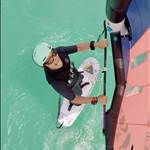
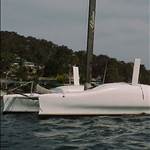
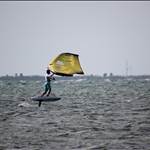
check those foils:
www.youtube.com/@americascup
Advanced boat foils are pretty similar on America's Cup edition in Barcelona, but no wing foil brand released something like that.
I'm conscious the program is different: while AC boards don't need to turn (ruder does it) and lift (flappers impulse the foil up ) their focus is on speed and glide.
why not copying AC foils ? are there physical differences like scale or speed (2-3x faster than wings) ??
Those foils look remarkably like a Code R series and Armstrong DWP but even higher AR. I suppose they have control surfaces though.
Select to expand quoteFranP said..
check those foils:
www.youtube.com/@americascup
Advanced boat foils are pretty similar on America's Cup edition in Barcelona, but no wing foil brand released something like that.
I'm conscious the program is different: while AC boards don't need to turn (ruder does it) and lift (flappers impulse the foil up ) their focus is on speed and glide.
why not copying AC foils ? are there physical differences like scale or speed (2-3x faster than wings) ??
Do we know what their foil sections look like?
Armie Armstrong is best mates with NZ America's cup team so yeah tons of AC design concepts have been implemented in Armstrong foils.
Their desing priority is speed and they struggle to avoid cavitation because of the high speed (ultra low pressure in the foil surface--> boiling water --> attached air & bubbles --> + drag and reduced lift)
Just check at those foil outlines, completely different than ours:

Select to expand quoteFranP said..
Their desing priority is speed and they struggle to avoid cavitation because of the high speed (ultra low pressure in the foil surface--> boiling water --> attached air & bubbles --> increases drag and less lift)
Just check at those foil layouts, completely different than ours:
www.instagram.com/p/C7DsHENrqGq/?utm_source=ig_web_copy_link&igsh=MzRlODBiNWFlZA==
Exactly this!Select to expand quotePiros said..
Armie Armstrong is best mates with NZ America's cup team so yeah tons of AC design concepts have been implemented in Armstrong foils.
And I very strongly suspect this is why the original Armstrong HA foils are considered very high performance but not user friendly. That is exactly the design tradeoff corner the AC, A class catamarans, Moth, etc push in to.
Select to expand quoteFranP said..
Their desing priority is speed and they struggle to avoid cavitation because of the high speed (ultra low pressure in the foil surface--> boiling water --> attached air & bubbles --> + drag and reduced lift)
Just check at those foil outlines, completely different than ours:
Current Levitaz Race Winning Frontwing:

The Starboard x 15 one design foils are very similar outline makes sense since they are designed by Martin Fischer who is an americas cup foil designer
One big difference, the big boat foils operate parallel with the surface, never healed over as in wingfoiling.
Actually the foils on the new AC boats aren't parallel to the surface, visually they're at about 30 degrees! 
Select to expand quoteThatspec said..
One big difference, the big boat foils operate parallel with the surface, never healed over as in wingfoiling.
This is not relevant, related to foil outlines, IMHO.Wingfoil inclination as you pointed (roll tipically when sailing upwind or in surfing) doe not slow down speed (same drag than when sailing flat) and although glide might look lower, the "foil force vector" (pointing up, parallel to the mast) still compensates sailor inclinated force.
www.sail-world.com/photo/346441
Target speeds for the smaller ac40 training boats. Impressive numbers
Sailing-foiling is absolutely idiotic. The foiling moths are effectively controlled by mechanical computers and the AC boats are controlled by actual computers. Kiter/Wingers/SurfFoilers are the only sailers actually controlling the foil with our brains. I could care less what the AC is doing i quit sailboat racing 10 years ago for a reason!