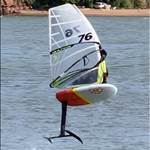
I use Armstrong for winging and like other locals end up reducing angle of attack between foil and stab by 1.5 to 2 degrees which gives more glide, faster but more pitchy - with 232, 205 and 195. Others and downwinders seem to do less. Do we have a local fad and missing something.
I was using them so that I could use different combinations of front wing+stab, and not have to move the base of the mast in the tracks. I've now more foils, and looking to do activities that need highly efficient setups, so am going to have to revise that.
As you say, positive shim reduces stab lift+ induced drag, so the setup becomes more bodyweight sensitive, but more efficient. The other option is to just use smaller stabs. Smaller stabs have an advantage in that they will reduce both parasitic and induced drag.
Ultimately, use the most efficient setup that you can actually control.
Interesting there wasn't too many replies.
My take is that the armstrong and to a lesser extent the uni crew are very focused on tuning the lift out of their setup just because they can. This seems to result in their back foot inside ankle bone being behind the mast and their riding position seesawing the mast and needing to lean back at times to stop dramatic nose diving with speed and turns. I have no idea why a winger would do this and particularly with a MA wing as they will be comparatively inefficient when compared to the HA anyway so if efficiency is your game then just choose a HA wing.
I think for ultimate control of the foil in the most demanding circumstances the rear foot inside ankle bone is best level with the leading edge of the mast. This puts the back foot directly over the mast. This is best achieved by just reducing the size of the stab if the foil is pushing your stance too far forward. Back foot behind the mast looks too pitchy and removes drive in the turns so a little extra stab size can help.
I think a year or two ago it was quite normal to see the best proners with their back foot behind the mast but the tide seems to be turning with some of the best now tuning with their back foot further forward.
Controversial maybe.
Select to expand quotepatronus said..
I use Armstrong for winging and like other locals end up reducing angle of attack between foil and stab by 1.5 to 2 degrees which gives more glide, faster but more pitchy - with 232, 205 and 195. Others and downwinders seem to do less. Do we have a local fad and missing something.
I talked to Armie recently and asked him about shims and he said they were coming soon including mast base plate shims.
Adjusting a foil with tail shims seems to be poorly understood even by some foil manufacturers. Adjusting the stab angle affects how the front / rear balance changes with speed. Ideally you want to adjust it so that the balance remains fairly constant as speed changes. It's different from aeroplanes because the centre of thrust (i.e. wing or rider weight) is way above the centre of drag on the foil.
Most importantly it is not an alternative to moving the foil in the tracks.
This is the only video I've seen that explains this however I think he has it wrong for light vs heavy riders. I think heavier riders need more stab angle because they ride with greater front wing attack angles and therefore experience more drag:
Depends on the foil.
Armstrong HA725 I use my 50cm fuse at stock -1 setting. Any less lift and the foil likes to dive suddenly when hitting speed spikes.
HS1050 I'll run 50cm fuse at 0 or +1 depending on the stab used.
Great advice from KD: kdfoils.myshopify.com/blogs/foil-info/hydrofoil-balance-tuning

Select to expand quoteAnyBoard said..
Interesting there wasn't too many replies.
My take is that the armstrong and to a lesser extent the uni crew are very focused on tuning the lift out of their setup just because they can. This seems to result in their back foot inside ankle bone being behind the mast and their riding position seesawing the mast and needing to lean back at times to stop dramatic nose diving with speed and turns. I have no idea why a winger would do this and particularly with a MA wing as they will be comparatively inefficient when compared to the HA anyway so if efficiency is your game then just choose a HA wing.
I think for ultimate control of the foil in the most demanding circumstances the rear foot inside ankle bone is best level with the leading edge of the mast. This puts the back foot directly over the mast. This is best achieved by just reducing the size of the stab if the foil is pushing your stance too far forward. Back foot behind the mast looks too pitchy and removes drive in the turns so a little extra stab size can help.
I think a year or two ago it was quite normal to see the best proners with their back foot behind the mast but the tide seems to be turning with some of the best now tuning with their back foot further forward.
Controversial maybe.
I'd say it only makes sense to talk about the mast position if you really list all components of your foil - the front wing, fuselage, stabiliser, shims. It would make much more sense to forget about mast placement, and talk about where do you stand in relation to the front wing instead. It's because the fuselages are different, and how far the mast is from the front wing differs a lot.
Here, for example is a perfectly comfortable setup for wing foiling. Well balanced for riding in foot straps at any speed. If the speed increases, the lift does not.

I have to use a diagram to understand the angles for shimming. This is with my current set up.

Select to expand quoteTaavi said..AnyBoard said..
Interesting there wasn't too many replies.
My take is that the armstrong and to a lesser extent the uni crew are very focused on tuning the lift out of their setup just because they can. This seems to result in their back foot inside ankle bone being behind the mast and their riding position seesawing the mast and needing to lean back at times to stop dramatic nose diving with speed and turns. I have no idea why a winger would do this and particularly with a MA wing as they will be comparatively inefficient when compared to the HA anyway so if efficiency is your game then just choose a HA wing.
I think for ultimate control of the foil in the most demanding circumstances the rear foot inside ankle bone is best level with the leading edge of the mast. This puts the back foot directly over the mast. This is best achieved by just reducing the size of the stab if the foil is pushing your stance too far forward. Back foot behind the mast looks too pitchy and removes drive in the turns so a little extra stab size can help.
I think a year or two ago it was quite normal to see the best proners with their back foot behind the mast but the tide seems to be turning with some of the best now tuning with their back foot further forward.
Controversial maybe.
I'd say it only makes sense to talk about the mast position if you really list all components of your foil - the front wing, fuselage, stabiliser, shims. It would make much more sense to forget about mast placement, and talk about where do you stand in relation to the front wing instead. It's because the fuselages are different, and how far the mast is from the front wing differs a lot.
Here, for example is a perfectly comfortable setup for wing foiling. Well balanced for riding in foot straps at any speed. If the speed increases, the lift does not.
The front foil and its angle, along with its distance from the mast, along with the tail, its angle and distance from the mast, all contribute to a turning moment around the mast. This size of this moment also varies with speed. It is this turning moment that is felt through the mast connection to the board so in my opinion controlling this turning moments and rolling the foil over for a turn is best controlled when your foot is on the interface connection IE the mast. Where the front foil is is relative to the rider is just one very small component but at the end of day everything experienced by the rider must come through the mast connection to the board. Yaw, roll, rotation up or down (lift).
Now lift must increase with speed or your foil wouldn't fly at all. I find it hard to comprehend that someone might think their setup's lift and turning moment isn't increasing with speed. Defies the laws that allow us to fly.
Your back strap is not in an ideal position in my experience and opinion to control the foil in the most demanding circumstances. It suggests you need more torque in your setup as it seems your needing to lean back to fly. Each to their own i guess.
Select to expand quoteTaavi said..AnyBoard said..
Interesting there wasn't too many replies.
My take is that the armstrong and to a lesser extent the uni crew are very focused on tuning the lift out of their setup just because they can. This seems to result in their back foot inside ankle bone being behind the mast and their riding position seesawing the mast and needing to lean back at times to stop dramatic nose diving with speed and turns. I have no idea why a winger would do this and particularly with a MA wing as they will be comparatively inefficient when compared to the HA anyway so if efficiency is your game then just choose a HA wing.
I think for ultimate control of the foil in the most demanding circumstances the rear foot inside ankle bone is best level with the leading edge of the mast. This puts the back foot directly over the mast. This is best achieved by just reducing the size of the stab if the foil is pushing your stance too far forward. Back foot behind the mast looks too pitchy and removes drive in the turns so a little extra stab size can help.
I think a year or two ago it was quite normal to see the best proners with their back foot behind the mast but the tide seems to be turning with some of the best now tuning with their back foot further forward.
Controversial maybe.
I'd say it only makes sense to talk about the mast position if you really list all components of your foil - the front wing, fuselage, stabiliser, shims. It would make much more sense to forget about mast placement, and talk about where do you stand in relation to the front wing instead. It's because the fuselages are different, and how far the mast is from the front wing differs a lot.
Here, for example is a perfectly comfortable setup for wing foiling. Well balanced for riding in foot straps at any speed. If the speed increases, the lift does not.
The front foil and its angle, along with its distance from the mast, along with the tail, its angle and distance from the mast, all contribute to a turning moment around the mast. This size of this moment also varies with speed. It is this turning moment that is felt through the mast connection to the board so in my opinion controlling this turning moments and rolling the foil over for a turn is best controlled when your foot is on the interface connection IE the mast. Where the front foil is is relative to the rider is just one very small component but at the end of day everything experienced by the rider must come through the mast connection to the board. Yaw, roll, rotation up or down (lift).
Now lift must increase with speed or your foil wouldn't fly at all. I find it hard to comprehend that someone might think their setup's lift and turning moment isn't increasing with speed. Defies the laws that allow us to fly.
Your back strap is not in an ideal position in my experience and opinion to control the foil in the most demanding circumstances. It suggests you need more torque in your setup as it seems your needing to lean back to fly. Each to their own i guess.Select to expand quotePoida said..
I have to use a diagram to understand the angles for shimming. This is with my current set up.
Nice drawing.
I guess the 1 deg mast plate to board connection is the result of the built in mast angle changes.
This points the foil down further by 1 deg when trying to take off so when the board is still planning and the foil setup is yet to fly the front wing may actually drag down to a degree. Armstrong already had such a low angle of attack when the board is planning so i don't why they did this. Obviously it might be appreciated on touch downs but that is what the board design is for.
Select to expand quoteAnyBoard said..Taavi said..AnyBoard said..
Interesting there wasn't too many replies.
My take is that the armstrong and to a lesser extent the uni crew are very focused on tuning the lift out of their setup just because they can. This seems to result in their back foot inside ankle bone being behind the mast and their riding position seesawing the mast and needing to lean back at times to stop dramatic nose diving with speed and turns. I have no idea why a winger would do this and particularly with a MA wing as they will be comparatively inefficient when compared to the HA anyway so if efficiency is your game then just choose a HA wing.
I think for ultimate control of the foil in the most demanding circumstances the rear foot inside ankle bone is best level with the leading edge of the mast. This puts the back foot directly over the mast. This is best achieved by just reducing the size of the stab if the foil is pushing your stance too far forward. Back foot behind the mast looks too pitchy and removes drive in the turns so a little extra stab size can help.
I think a year or two ago it was quite normal to see the best proners with their back foot behind the mast but the tide seems to be turning with some of the best now tuning with their back foot further forward.
Controversial maybe.
I'd say it only makes sense to talk about the mast position if you really list all components of your foil - the front wing, fuselage, stabiliser, shims. It would make much more sense to forget about mast placement, and talk about where do you stand in relation to the front wing instead. It's because the fuselages are different, and how far the mast is from the front wing differs a lot.
Here, for example is a perfectly comfortable setup for wing foiling. Well balanced for riding in foot straps at any speed. If the speed increases, the lift does not.
The front foil and its angle, along with its distance from the mast, along with the tail, its angle and distance from the mast, all contribute to a turning moment around the mast. This size of this moment also varies with speed. It is this turning moment that is felt through the mast connection to the board so in my opinion controlling this turning moments and rolling the foil over for a turn is best controlled when your foot is on the interface connection IE the mast. Where the front foil is is relative to the rider is just one very small component but at the end of day everything experienced by the rider must come through the mast connection to the board. Yaw, roll, rotation up or down (lift).
Now lift must increase with speed or your foil wouldn't fly at all. I find it hard to comprehend that someone might think their setup's lift and turning moment isn't increasing with speed. Defies the laws that allow us to fly.
Your back strap is not in an ideal position in my experience and opinion to control the foil in the most demanding circumstances. It suggests you need more torque in your setup as it seems your needing to lean back to fly. Each to their own i guess.Poida said..
I have to use a diagram to understand the angles for shimming. This is with my current set up.
Nice drawing.
I guess the 1 deg mast plate to board connection is the result of the built in mast angle changes.
This points the foil down further by 1 deg when trying to take off so when the board is still planning and the foil setup is yet to fly the front wing may actually drag down to a degree. Armstrong already had such a low angle of attack when the board is planning so i don't why they did this. Obviously it might be appreciated on touch downs but that is what the board design is for.
when the board is flat on the water the front foil angle of attack is only 0.5deg, when allowing for the mast angled back, so I guess they were thinking it was less drag to get the board up to velocity for lift off. Then once it lifts off and goes to a level flight the angle of attack goes to 1.5deg, which is their preference for the front foil.
Select to expand quotePoida said..AnyBoard said..Taavi said..AnyBoard said..
Interesting there wasn't too many replies.
My take is that the armstrong and to a lesser extent the uni crew are very focused on tuning the lift out of their setup just because they can. This seems to result in their back foot inside ankle bone being behind the mast and their riding position seesawing the mast and needing to lean back at times to stop dramatic nose diving with speed and turns. I have no idea why a winger would do this and particularly with a MA wing as they will be comparatively inefficient when compared to the HA anyway so if efficiency is your game then just choose a HA wing.
I think for ultimate control of the foil in the most demanding circumstances the rear foot inside ankle bone is best level with the leading edge of the mast. This puts the back foot directly over the mast. This is best achieved by just reducing the size of the stab if the foil is pushing your stance too far forward. Back foot behind the mast looks too pitchy and removes drive in the turns so a little extra stab size can help.
I think a year or two ago it was quite normal to see the best proners with their back foot behind the mast but the tide seems to be turning with some of the best now tuning with their back foot further forward.
Controversial maybe.
I'd say it only makes sense to talk about the mast position if you really list all components of your foil - the front wing, fuselage, stabiliser, shims. It would make much more sense to forget about mast placement, and talk about where do you stand in relation to the front wing instead. It's because the fuselages are different, and how far the mast is from the front wing differs a lot.
Here, for example is a perfectly comfortable setup for wing foiling. Well balanced for riding in foot straps at any speed. If the speed increases, the lift does not.
The front foil and its angle, along with its distance from the mast, along with the tail, its angle and distance from the mast, all contribute to a turning moment around the mast. This size of this moment also varies with speed. It is this turning moment that is felt through the mast connection to the board so in my opinion controlling this turning moments and rolling the foil over for a turn is best controlled when your foot is on the interface connection IE the mast. Where the front foil is is relative to the rider is just one very small component but at the end of day everything experienced by the rider must come through the mast connection to the board. Yaw, roll, rotation up or down (lift).
Now lift must increase with speed or your foil wouldn't fly at all. I find it hard to comprehend that someone might think their setup's lift and turning moment isn't increasing with speed. Defies the laws that allow us to fly.
Your back strap is not in an ideal position in my experience and opinion to control the foil in the most demanding circumstances. It suggests you need more torque in your setup as it seems your needing to lean back to fly. Each to their own i guess.Poida said..
I have to use a diagram to understand the angles for shimming. This is with my current set up.
Nice drawing.
I guess the 1 deg mast plate to board connection is the result of the built in mast angle changes.
This points the foil down further by 1 deg when trying to take off so when the board is still planning and the foil setup is yet to fly the front wing may actually drag down to a degree. Armstrong already had such a low angle of attack when the board is planning so i don't why they did this. Obviously it might be appreciated on touch downs but that is what the board design is for.
when the board is flat on the water the front foil angle of attack is only 0.5deg, when allowing for the mast angled back, so I guess they were thinking it was less drag to get the board up to velocity for lift off. Then once it lifts off and goes to a level flight the angle of attack goes to 1.5deg, which is their preference for the front foil.
Less drag but importantly less lift while the foil is transitioning to flight and it leaves no room for the slightest nose bury. High speed needs less angle and low speed needs more but I guess armstrong are trying to stop the rider flying too early and stall. It would be interesting in a downwind popup to see if it hinders a little. Some DW guys were shimming the other way for easier popup. Maybe just another marketing differentiation from the competitors
Select to expand quoteAnyBoard said..
Your back strap is not in an ideal position in my experience and opinion to control the foil in the most demanding circumstances. It suggests you need more torque in your setup as it seems your needing to lean back to fly. Each to their own i guess.
Sorry, but you missed my point entirely. Where the mast connects to the fuselage also dictates where the mast should be connected to the board. The fuselage designs are different. If the mast is further away from the front wing (the fuselage on the left) it automatically means the mast would need to be connected further back to the board. Different brands have had different ideas over the time where the mast should be connected (onto the fuselage). I did not say anything about which way is better.

Here is an explanation by one brand why they have fuselages that have the mast placed at different distances from the front wing.

It's so baffling to me how people make assumptions and talk about where the mast connects to the board, without looking at the whole setup. Only by looking at everything you can understand why with certain setups you need to place the mast more forward than with others.
Select to expand quoteTaavi said..AnyBoard said..
Your back strap is not in an ideal position in my experience and opinion to control the foil in the most demanding circumstances. It suggests you need more torque in your setup as it seems your needing to lean back to fly. Each to their own i guess.
Sorry, but you missed my point entirely. Where the mast connects to the fuselage also dictates where the mast should be connected to the board. The fuselage designs are different. If the mast is further away from the front wing (the fuselage on the left) it automatically means the mast would need to be connected further back to the board. Different brands have had different ideas over the time where the mast should be connected (onto the fuselage). I did not say anything about which way is better.
Here is an explanation by one brand why they have fuselages that have the mast placed at different distances from the front wing.
It's so baffling to me how people make assumptions and talk about where the mast connects to the board, without looking at the whole setup. Only by looking at everything you can understand why with certain setups you need to place the mast more forward than with others.
The discussion was never about the position of the foil on the board as the position doesn't really mean much other than when the board is still planning. This is important but not being discussed by me.
I covered the distance from the front foil to the mast in the first line of my reply. That is the point. I was talking about the whole setup and the turning moment it creates and how it results in where the back foot ends up in relation to the mast,. Note this is while already foiling being discussed here. The back foot is suggestive of where the riders centre of mass needs to be control the height of the foil but height control is relative easy to control with the back foot too far back or forward even. . It is controlling yaw and roll while controlling height that gets demanding on the rider and this is where it helps in my opinion to tune so your back foot is directly over the mast. You could tune by changing fuse length, stab size, stab angle, front foil size etc. Once you have all this correct for ideal back foot position then you can make sure that the position of this foil on your board is conducive to slogging or pumping up with your weight position on the board for balance matching the positioning of the foil relative to your centre of mass for nice lift.
Now i am not sure of your tangent regarding Axis but moving the foil closer to mast as axis has done reduces the torque (lift) and reduces dramatically the pump potential. It arguably helps the rider overpower foil in lift during a tight turn but i am not so sure this is helpful due to upsetting the pitch easy and thereby efficiency of the foil in the turn.
I don't think you read my post as I wasn't making assumption here as i am giving my point as a mechanical engineer and how all these levers are interacting.
Select to expand quoteAnyBoard said..
Your back strap is not in an ideal position in my experience and opinion to control the foil in the most demanding circumstances. It suggests you need more torque in your setup as it seems your needing to lean back to fly. Each to their own i guess.
AnyBoard said..
The discussion was never about the position of the foil on the board as the position doesn't really mean much other than when the board is still planning. This is important but not being discussed by me.
Strange. You just said above that my back strap is not in an ideal position in your experience,
and also, if I understood you correctly, you said that some guys are tuning lift out of their foils and ride the back foot behind the mast, yet this is not what wingers should do? Well, correct me if I misunderstood you, here is your quote:
"My take is that the armstrong and to a lesser extent the uni crew are very focused on tuning the lift out of their setup just because they can. This seems to result in their back foot inside ankle bone being behind the mast and their riding position seesawing the mast and needing to lean back at times to stop dramatic nose diving with speed and turns. I have no idea why a winger would do this and particularly with a MA wing"
Once more, it's perfectly fine to wing with a setup where the back foot is behind the mast. I am doing just that. Tuning the foil so there is not much lift. Here is the setup (where the back strap is in a wrong place in your opinion), yet it rides marvellously, with good control, and pumping is OK too with a big and heavy board, no swell helping. Putting this big and powerful foil through some pretty demanding circumstances in these turns.

Water is dense, even a small change in stabilizer angle should be noticeable. I've printed up a range for Axis and the sweet spot is often within 0.2 degrees. In reducing lift by shimming your stab you also need to move the mast fwd incrementally to move the center of gravity back to make up for the reduced lift. It's all interconnected so don't expect to just shim and go.
Select to expand quoteHigh speed needs less angle and low speed needs more but I guess armstrong are trying to stop the rider flying too early and stall.
To get take-off need speed and angle of attack. Rider can change AoA through foot pressure but can only build speed his kit allows. Armie thinks when (his) boards have lowest drag the mast need 1 degree to minimise drag of (his) foils, and once you have board speed bit of rear foot pressure and off you go.
Select to expand quoteAnyBoard said..Taavi said..AnyBoard said..
Your back strap is not in an ideal position in my experience and opinion to control the foil in the most demanding circumstances. It suggests you need more torque in your setup as it seems your needing to lean back to fly. Each to their own i guess.
Sorry, but you missed my point entirely. Where the mast connects to the fuselage also dictates where the mast should be connected to the board. The fuselage designs are different. If the mast is further away from the front wing (the fuselage on the left) it automatically means the mast would need to be connected further back to the board. Different brands have had different ideas over the time where the mast should be connected (onto the fuselage). I did not say anything about which way is better.
Here is an explanation by one brand why they have fuselages that have the mast placed at different distances from the front wing.
It's so baffling to me how people make assumptions and talk about where the mast connects to the board, without looking at the whole setup. Only by looking at everything you can understand why with certain setups you need to place the mast more forward than with others.
The discussion was never about the position of the foil on the board as the position doesn't really mean much other than when the board is still planning. This is important but not being discussed by me.
I covered the distance from the front foil to the mast in the first line of my reply. That is the point. I was talking about the whole setup and the turning moment it creates and how it results in where the back foot ends up in relation to the mast,. Note this is while already foiling being discussed here. The back foot is suggestive of where the riders centre of mass needs to be control the height of the foil but height control is relative easy to control with the back foot too far back or forward even. . It is controlling yaw and roll while controlling height that gets demanding on the rider and this is where it helps in my opinion to tune so your back foot is directly over the mast. You could tune by changing fuse length, stab size, stab angle, front foil size etc. Once you have all this correct for ideal back foot position then you can make sure that the position of this foil on your board is conducive to slogging or pumping up with your weight position on the board for balance matching the positioning of the foil relative to your centre of mass for nice lift.
Now i am not sure of your tangent regarding Axis but moving the foil closer to mast as axis has done reduces the torque (lift) and reduces dramatically the pump potential. It arguably helps the rider overpower foil in lift during a tight turn but i am not so sure this is helpful due to upsetting the pitch easy and thereby efficiency of the foil in the turn.
I don't think you read my post as I wasn't making assumption here as i am giving my point as a mechanical engineer and how all these levers are interacting.
A couple of questions:
1. Why is it good to have back foot over mast rather than further back?
2. To get your back foot further forward I guess you want more stab angle to increase front foot pressure?
Select to expand quoteTaavi said..AnyBoard said..
Your back strap is not in an ideal position in my experience and opinion to control the foil in the most demanding circumstances. It suggests you need more torque in your setup as it seems your needing to lean back to fly. Each to their own i guess.
AnyBoard said..
The discussion was never about the position of the foil on the board as the position doesn't really mean much other than when the board is still planning. This is important but not being discussed by me.
Strange. You just said above that my back strap is not in an ideal position in your experience,
and also, if I understood you correctly, you said that some guys are tuning lift out of their foils and ride the back foot behind the mast, yet this is not what wingers should do? Well, correct me if I misunderstood you, here is your quote:
"My take is that the armstrong and to a lesser extent the uni crew are very focused on tuning the lift out of their setup just because they can. This seems to result in their back foot inside ankle bone being behind the mast and their riding position seesawing the mast and needing to lean back at times to stop dramatic nose diving with speed and turns. I have no idea why a winger would do this and particularly with a MA wing"
Once more, it's perfectly fine to wing with a setup where the back foot is behind the mast. I am doing just that. Tuning the foil so there is not much lift. Here is the setup (where the back strap is in a wrong place in your opinion), yet it rides marvellously, with good control, and pumping is OK too with a big and heavy board, no swell helping. Putting this big and powerful foil through some pretty demanding circumstances in these turns.
A totally different example where a winger might want to have the strap further back is for better jumping. Setting up a foil like that (that has lots of lift to begin with) would not make the most sense for relaxed riding in foot straps, but doing so gives loads of pop for jumping.
Yes as already stated it works. But in my opinion is not ideal for when circumstances are most demanding. Most, not all, of the best wing races, prone foilers and wing surfers have their rear foot ankle bone inline with the centre on the mast or up to 50 mm forward and the direction is that it is becoming more of the rule.
If your pumping with your back foot in the strap and in that position then boy your making it hard. Pumping small prone foils around the surf break requires a lot more finesse than wingers get away with.
Wingers are such a diverse group some with big boards, small boards, big foils and some with little foils some HA some MA. If you like to ride big foils and tune the lift out of them then enjoy.
You don't need to take offence because your setup is different to my opinion of ideal for foiling. Winging is just so much less demanding of equipment and tuning than prone so anything works.
Select to expand quotepatronus said..AnyBoard said..Taavi said..AnyBoard said..
Your back strap is not in an ideal position in my experience and opinion to control the foil in the most demanding circumstances. It suggests you need more torque in your setup as it seems your needing to lean back to fly. Each to their own i guess.
Sorry, but you missed my point entirely. Where the mast connects to the fuselage also dictates where the mast should be connected to the board. The fuselage designs are different. If the mast is further away from the front wing (the fuselage on the left) it automatically means the mast would need to be connected further back to the board. Different brands have had different ideas over the time where the mast should be connected (onto the fuselage). I did not say anything about which way is better.
Here is an explanation by one brand why they have fuselages that have the mast placed at different distances from the front wing.
It's so baffling to me how people make assumptions and talk about where the mast connects to the board, without looking at the whole setup. Only by looking at everything you can understand why with certain setups you need to place the mast more forward than with others.
The discussion was never about the position of the foil on the board as the position doesn't really mean much other than when the board is still planning. This is important but not being discussed by me.
I covered the distance from the front foil to the mast in the first line of my reply. That is the point. I was talking about the whole setup and the turning moment it creates and how it results in where the back foot ends up in relation to the mast,. Note this is while already foiling being discussed here. The back foot is suggestive of where the riders centre of mass needs to be control the height of the foil but height control is relative easy to control with the back foot too far back or forward even. . It is controlling yaw and roll while controlling height that gets demanding on the rider and this is where it helps in my opinion to tune so your back foot is directly over the mast. You could tune by changing fuse length, stab size, stab angle, front foil size etc. Once you have all this correct for ideal back foot position then you can make sure that the position of this foil on your board is conducive to slogging or pumping up with your weight position on the board for balance matching the positioning of the foil relative to your centre of mass for nice lift.
Now i am not sure of your tangent regarding Axis but moving the foil closer to mast as axis has done reduces the torque (lift) and reduces dramatically the pump potential. It arguably helps the rider overpower foil in lift during a tight turn but i am not so sure this is helpful due to upsetting the pitch easy and thereby efficiency of the foil in the turn.
I don't think you read my post as I wasn't making assumption here as i am giving my point as a mechanical engineer and how all these levers are interacting.
A couple of questions:
1. Why is it good to have back foot over mast rather than further back?
2. To get your back foot further forward I guess you want more stab angle to increase front foot pressure?
"To get take-off need speed and angle of attack. Rider can change AoA through foot pressure but can only build speed his kit allows. Armie thinks when (his) boards have lowest drag the mast need 1 degree to minimise drag of (his) foils, and once you have board speed bit of rear foot pressure and off you go."
Armie seems like a nice guy but he is a marketing genius after all and should be seen as such. It wasn't much more than a year ago he was telling us that his mast was engineered to flex and enhance performance. The market had already realized their low cost floppy mast made their HA very temperamental in all but the best circumstances under the best pilots. Some brands had stiffened their mast 3 years prior.
1. It was just my experience learning to kite foil way back that the faster you went the more my back foot honed in to be directly above the mast for a safer feeling. Then when prone came along and trying to survive on the first generation foils in critical circumstances the brain again focused my back foot to the mast. I have taken notice of this ever since. Wing and Down wind seems to be the same with the back foot actually forward for pumping and comfort but as soon as the critical section comes the back foot slides back to the mast. A few years ago i wondered how a few of the best proners rode with their back foot so far back but over the last year they seem to be moving forward mostly with less still riding so far back. Don't take my word for it just watch the best proners and wing foilers and particularly when going fast or critical. Check the racers on the world wing foil tour. Jonny heiniken with his super efficient mikes lab foil and his super wide stance but still his back foot is on the mast . It is my observation we will mostly all evolve our tuning there.
2. Yes that is one way. The tuning can be optimized in many ways and i am still intrigued how some would shim the tail instead of making it smaller or why some prefer the longer fuses with the same angle. I think studying surf tow foiling and the results is very insightful as it is arguably the most demanding of the rider, his equipment and tuning. Some are just so pitch stable at speed and others are so unstable it is amazing watching them survive the seesaw tuning.
Note that guys muscling foils around in the very slowest low power circumstances can find help with back foot a little back. Eg progression project proners.
Select to expand quoteAnyBoard said..Taavi said..AnyBoard said..
Your back strap is not in an ideal position in my experience and opinion to control the foil in the most demanding circumstances. It suggests you need more torque in your setup as it seems your needing to lean back to fly. Each to their own i guess.
AnyBoard said..
The discussion was never about the position of the foil on the board as the position doesn't really mean much other than when the board is still planning. This is important but not being discussed by me.
Strange. You just said above that my back strap is not in an ideal position in your experience,
and also, if I understood you correctly, you said that some guys are tuning lift out of their foils and ride the back foot behind the mast, yet this is not what wingers should do? Well, correct me if I misunderstood you, here is your quote:
"My take is that the armstrong and to a lesser extent the uni crew are very focused on tuning the lift out of their setup just because they can. This seems to result in their back foot inside ankle bone being behind the mast and their riding position seesawing the mast and needing to lean back at times to stop dramatic nose diving with speed and turns. I have no idea why a winger would do this and particularly with a MA wing"
Once more, it's perfectly fine to wing with a setup where the back foot is behind the mast. I am doing just that. Tuning the foil so there is not much lift. Here is the setup (where the back strap is in a wrong place in your opinion), yet it rides marvellously, with good control, and pumping is OK too with a big and heavy board, no swell helping. Putting this big and powerful foil through some pretty demanding circumstances in these turns.
A totally different example where a winger might want to have the strap further back is for better jumping. Setting up a foil like that (that has lots of lift to begin with) would not make the most sense for relaxed riding in foot straps, but doing so gives loads of pop for jumping.
Yes as already stated it works. But in my opinion is not ideal for when circumstances are most demanding. Most, not all, of the best wing races, prone foilers and wing surfers have their rear foot ankle bone inline with the centre on the mast or up to 50 mm forward and the direction is that it is becoming more of the rule.
If your pumping with your back foot in the strap and in that position then boy your making it hard. Pumping small prone foils around the surf break requires a lot more finesse than wingers get away with.
Wingers are such a diverse group some with big boards, small boards, big foils and some with little foils some HA some MA. If you like to ride big foils and tune the lift out of them then enjoy.
You don't need to take offence because your setup is different to my opinion of ideal for foiling. Winging is just so much less demanding of equipment and tuning than prone so anything works.
The different fuselages are there for a reason - for giving different riding characteristics. That one in my picture is short, gives super loose and playful feeling (better noticed with much smaller front wings than that 111 cm wide wing of course). And I guess my only point was - it's useful and I'd say inevitable to look at the whole setup and while doing so also consider in which conditions it's used, without assuming it should work the best in some totally different conditions too. And I gave you an example of a setup that works for winging. The question was about winging after all, and not necessarily about maximum control, or about the ease of getting going if you are a beginner. For example, when I am riding with the same foil strapless I use much more narrower stance, and then the back foot would be pretty much above the mast, and yes, the pumping gets more effective then. But my pic was about a setup with foot straps, wide stance, for winging, with lift taken out of the foil, with a really specific fuselage that has the mast connected very close to the front wing. Put all these aspects together and this is the back foot placement you get. Of course prone guys generally do not use that wide stance, and wing racers are using longer fuselages that indeed maximise the control, rather than a loose feel.
Select to expand quotesimonp65 said..
Adjusting a foil with tail shims seems to be poorly understood even by some foil manufacturers. Adjusting the stab angle affects how the front / rear balance changes with speed. Ideally you want to adjust it so that the balance remains fairly constant as speed changes. It's different from aeroplanes because the centre of thrust (i.e. wing or rider weight) is way above the centre of drag on the foil.
Agree with the point, and I think very poorly communicated.
Curious why it is different with aeroplanes? I would imagine the principle of designing stab angle to match intended use and then balancing with weight is similar across a plane and foil.
Select to expand quote
Now lift must increase with speed or your foil wouldn't fly at all. I find it hard to comprehend that someone might think their setup's lift and turning moment isn't increasing with speed. Defies the laws that allow us to fly.
The lift from your foil depends on speed and angle of attack. As a rider you automatically adjust the latter (i.e. the angle of the board relative to the water) as your speed changes. If you're in level flight the lift always matches your weight (+ board, wing, etc). Lift and weight must match or you would touchdown/breach.
As you go faster, you pitch the nose lower so that the lift doesn't exceed your weight. Therefore when foiling at a steady height the lift never really changes. However the drag on the foil does increase with speed. The purpose of the stabiliser is to counteract the increasing tendency of the nose to be pulled down by drag. That's why shimming is used to adjust the setup and minimise balance changes as speed increases.
Ever got a small piece of seaweed on your foil? The extra drag messes up the balance requiring more rear foot pressure. Adjusting the stab and shim is all about compensating for the drag on your foil. A bigger front wing usually creates more drag requiring a larger stab or more shim angle.
Unfortunately, the term "lift" in foiling is often used to refer to front foot pressure not the actual upwards force on the foil. Frequently when people talk about adjusting lift they are actually adjusting the front / rear foot pressure balance.
Select to expand quotecornwallis said..
Curious why it is different with aeroplanes? I would imagine the principle of designing stab angle to match intended use and then balancing with weight is similar across a plane and foil.
The difference is that a plane's centre of thrust (propeller or jet) is almost aligned with the centre of drag on the wings and fuselage. The offset of the centre of thrust is a small percentage of the length of the fuselage and doesn't have much turning moment. If a plane speeds up it only needs a small amount of trim to reduce the angle of attack. There's hardly any additional turning moment from the drag vs the thrust forces.
With wing foiling, the centre of thrust ( the strut on the wing) is probably 4 feet above the board which is 3 feet about the foil fuselage. That's an offset of 7 feet from a fuselage that might only be 2 foot long. This creates a large turning moment because the centres of thrust and drag are so misaligned
Select to expand quotecornwallis said..simonp65 said..
Adjusting a foil with tail shims seems to be poorly understood even by some foil manufacturers. Adjusting the stab angle affects how the front / rear balance changes with speed. Ideally you want to adjust it so that the balance remains fairly constant as speed changes. It's different from aeroplanes because the centre of thrust (i.e. wing or rider weight) is way above the centre of drag on the foil.
Agree with the point, and I think very poorly communicated.
Curious why it is different with aeroplanes? I would imagine the principle of designing stab angle to match intended use and then balancing with weight is similar across a plane and foil.
Airplanes load cargo,pax and fuel so Center of Gravity is within certain limits fore-aft.
But this CG cannot be changed dynamically in flight to adjust to different speeds ,as we do on our foils.*
To control pitch through speed changes airplanes have movable "tailwings" , elevator surfaces and trim tabs or trimmable stabilizer.
Foils are a weird mix of airplane config & hangglider weightshift.This can be very confusing and non intuitive.
The effect of the big height difference between our "engine" and foil mentioned above can easily be felt by riding the same foil setup with a short and then a long mast...long mast will require more downforce on the stab (bigger,shimmed or longer fuse) to feel balanced.
*in flight airplane CG will shift slowly as fuel is burnt.Some planes have trim tanks (A340) to adjust for optimal,minimum drag cruise.
Thanks both those I think I can follow. In effect we have actively movable ballast* and fixed stab trim, where a plane has fixed ballast and movable trim.
*(until you strap in) Select to expand quotesimonp65 said..
The difference is that a plane's centre of thrust (propeller or jet) is almost aligned with the centre of drag on the wings and fuselage. The offset of the centre of thrust is a small percentage of the length of the fuselage and doesn't have much turning moment. If a plane speeds up it only needs a small amount of trim to reduce the angle of attack. There's hardly any additional turning moment from the drag vs the thrust forces.
With wing foiling, the centre of thrust ( the strut on the wing) is probably 4 feet above the board which is 3 feet about the foil fuselage. That's an offset of 7 feet from a fuselage that might only be 2 foot long. This creates a large turning moment because the centres of thrust and drag are so misaligned
What about when riding a wave and the thrust is better aligned with the drag, say prone? Wondering if prone is more sensitive to poor trim because of the lack of wing to compensate for excess drag
Select to expand quotecornwallis said..
What about when riding a wave and the thrust is better aligned with the drag, say prone? Wondering if prone is more sensitive to poor trim because of the lack of wing to compensate for excess drag
I don't think things change that much on a wave as it's effectively a component of your weight providing the thrust force as you head down the wave face.
That's a good point about prone foiling. It may be more sensitive to trim because with a wing you can adjust it to provide some uplift or downforce by changing the angle of the strut relative to the board.
Prone is very technical in so many respects. Firstly when paddling into a wave you have more power than at any other time because you're in the critical part of the wave. So when you put your hands on the rails to jump up ideally you should be so well balanced that the board is just leaving the water as you land on it with your feet. Then where you land should counteract the lift closely so you are in control and even better if your back foot lands directly on the mast. So to achieve the first part your foil will need to be positioned relative to your lying position on the board and relative to the amount of lift that size wave and your setup is about to generate.
you can understand why shimming is a mine field for the proner. Then the next consideration for most proners is that their setup allows them to pump to make connections which can mean that you are sizing your foil slightly larger than you would for just surfing the waves.
So now you have a slightly oversized foil for your weight in the critical part of the wave on take off. You don't want to move the foil so far back in the boxes to make the the jump up perfect because when you land on the board your stance will be too far forward to do great turns. Your back foot will likely be too far forward for performance and need wiggling back. This is one reason proners might take some lift out of the tail. Ie to ride a bigger foil without too much lift and it is the dilemma of the proner.
The above is a massive oversimplification for getting a prone setup good for pumping and surfing and handling the take off. Downwinding setups and their tuning is similar and just as complicated if not more complicated due to the need to size the foil for gliding, pumping, efficiency yet have enough lift in the lowest of power circumstances when paddling up.
On top of that the some of the manufactures design foils that as so temperamental that they provide many shimming and tail options that never get tuned to be rideable by the average user. It is possible to surf some brands just plug and play as long as you select the correct foil for your weight, ability and local waves.
Prone is very technical in so many respects. Firstly when paddling into a wave you have more power than at any other time because you're in the critical part of the wave. So when you put your hands on the rails to jump up ideally you should be so well balanced that the board is just leaving the water as you land on it with your feet. Then where you land should counteract the lift closely so you are in control and even better if your back foot lands directly on the mast. So to achieve the first part your foil will need to be positioned relative to your lying position on the board and relative to the amount of lift that size wave and your setup is about to generate.
you can understand why shimming is a mine field for the proner. Then the next consideration for most proners is that their setup allows them to pump to make connections which can mean that you are sizing your foil slightly larger than you would for just surfing the waves.
So now you have a slightly oversized foil for your weight in the critical part of the wave on take off. You don't want to move the foil so far back in the boxes to make the the jump up perfect because when you land on the board your stance will be too far forward to do great turns. Your back foot will likely be too far forward for performance and need wiggling back. This is one reason proners might take some lift out of the tail. Ie to ride a bigger foil without too much lift and it is the dilemma of the proner.
The above is a massive oversimplification for getting a prone setup good for pumping and surfing and handling the take off. Downwinding setups and their tuning is similar and just as complicated if not more complicated due to the need to size the foil for gliding, pumping, efficiency yet have enough lift in the lowest of power circumstances when paddling up.
On top of that the some of the manufactures design foils that as so temperamental that they provide many shimming and tail options that never get tuned to be rideable by the average user. It is possible to surf some brands just plug and play as long as you select the correct foil for your weight, ability and local waves.
Winging is technical too. Once past the beginner phase and not concerned with getting going any more it's perfectly fine to start fine tuning your setup so that throughout the speed range where you are using it, the foil would feel balanced - not wanting to lift you out of the water when you go at your fastest, and equally importantly - behave well at slower speeds too. You can achieve it by choosing the correct tail that matches you and the entire kit of yours, and shimming it (or in some cases just not shimming it at all, depending on all the details).
When setting up your existing kit, throw out all the advice that you get that only pays attention to one little detail (like where the mast is connected to the board). Always look at the whole system (including the rider) together, and also consider what are the conditions / discipline where this setup is used.
For example, here is Kai Lenny prone foiling, the back foot behind the mast
www.facebook.com/watch/?v=721164465332356
And here am I winging with the same foil in quiet winds. I have tuned it to be just what I explained above - balanced feel throughout the speed range that I can push this foil into. Pumps super well, despite the back foot being further back than the mast, and it's perfectly fine for winging as it is. (If I would like to stand more on top of the mast I would either need to narrow my stance, which would not be good, or I should move the foil further back in the box and shim the tail a lot, and that would kill the speed potential of this foil).
Select to expand quoteTaavi said..
Winging is technical too. Once past the beginner phase and not concerned with getting going any more it's perfectly fine to start fine tuning your setup so that throughout the speed range where you are using it, the foil would feel balanced - not wanting to lift you out of the water when you go at your fastest, and equally importantly - behave well at slower speeds too. You can achieve it by choosing the correct tail that matches you and the entire kit of yours, and shimming it (or in some cases just not shimming it at all, depending on all the details).
When setting up your existing kit, throw out all the advice that you get that only pays attention to one little detail (like where the mast is connected to the board). Always look at the whole system (including the rider) together, and also consider what are the conditions / discipline where this setup is used.
For example, here is Kai Lenny prone foiling, the back foot behind the mast
www.facebook.com/watch/?v=721164465332356
And here am I winging with the same foil in quiet winds. I have tuned it to be just what I explained above - balanced feel throughout the speed range that I can push this foil into. Pumps super well, despite the back foot being further back than the mast, and it's perfectly fine for winging as it is. (If I would like to stand more on top of the mast I would either need to narrow my stance, which would not be good, or I should move the foil further back in the box and shim the tail a lot, and that would kill the speed potential of this foil).
Whatever your current setup is there are always even better foils available somewhere in the world, that would address one or the other criteria better. But when tuning your own setup don't try to maximise just one aspect, tune it to shine in a broader range.
Too funny.
I am sure Kai's setup is ideal for Kai's super wide stance and foot straps he uses to control the extreme pitch instability he utilizes to perform the most progressive surf foiling in the world. I didn't realize that's what you were tuning to do. Congrats to you.