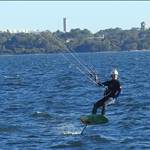
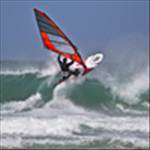
Well I've taken the plunge and started to learn to Wing Foil. I'm 2 sessions in and up and riding in both directions. I have about 13 years of kiting - the last 4 foiling, and prior to that about the same windsurfing. I've got a 5'8" 110L board, a 5m Ozone Wasp V2 and a Moses 950 wing. I'm 55y/o, 82 pies and reasonably fit - well so I thought .
.
It's not the getting up and riding I'm finding that hard - although its certainly a greater challenge than I anticipated, it's the physical side of it. I do a couple of runs - maybe 2 to 3 min worth and then I have to rest for 5 minutes. I can kite on my foil quite happily for 2 to 3 hours without a break but I'm finding winging pretty brutal. I'm assuming winging gets easier, but interested to know how many sessions did it take for the experienced wingers out there (especially in my age bracket) to not feel like they've done 5 rounds with Mike Tyson. Also any technique tips that helped would be appreciated.
Try to relax hands and arms as much as possible,let the wing fly without controlling every little twitch.They self balance really well,i went through the same phase.
Select to expand quotemcrt said..
Try to relax hands and arms as much as possible,let the wing fly without controlling every little twitch.They self balance really well,i went through the same phase.
Great. Thanks for that. That's a really good insight and one I'll keep in mind for my next session - tomorrow hopefully.
Select to expand quoteDukeSilver said..
Well I've taken the plunge and started to learn to Wing Foil. I'm 2 sessions in and up and riding in both directions. I have about 13 years of kiting - the last 4 foiling, and prior to that about the same windsurfing. I've got a 5'8" 110L board, a 5m Ozone Wasp V2 and a Moses 950 wing. I'm 55y/o, 82 pies and reasonably fit - well so I thought.
It's not the getting up and riding I'm finding that hard - although its certainly a greater challenge than I anticipated, it's the physical side of it. I do a couple of runs - maybe 2 to 3 min worth and then I have to rest for 5 minutes. I can kite on my foil quite happily for 2 to 3 hours without a break but I'm finding winging pretty brutal. I'm assuming winging gets easier, but interested to know how many sessions did it take for the experienced wingers out there (especially in my age bracket) to not feel like they've done 5 rounds with Mike Tyson. Also any technique tips that helped would be appreciated.
Sounds pretty normal, I'm similar stats to you and I can prone surf for 2-3 hours a day and I'm fine, but winging hurts, and I think it's riding toeside that does the damage especially in light wind because you twist even more and I have to do to be in position for wave riding. I think if I was only flat water winging I'd be fine because I would just ride switch.
Select to expand quotekobo said..DukeSilver said..
Well I've taken the plunge and started to learn to Wing Foil. I'm 2 sessions in and up and riding in both directions. I have about 13 years of kiting - the last 4 foiling, and prior to that about the same windsurfing. I've got a 5'8" 110L board, a 5m Ozone Wasp V2 and a Moses 950 wing. I'm 55y/o, 82 pies and reasonably fit - well so I thought.
It's not the getting up and riding I'm finding that hard - although its certainly a greater challenge than I anticipated, it's the physical side of it. I do a couple of runs - maybe 2 to 3 min worth and then I have to rest for 5 minutes. I can kite on my foil quite happily for 2 to 3 hours without a break but I'm finding winging pretty brutal. I'm assuming winging gets easier, but interested to know how many sessions did it take for the experienced wingers out there (especially in my age bracket) to not feel like they've done 5 rounds with Mike Tyson. Also any technique tips that helped would be appreciated.
Sounds pretty normal, I'm similar stats to you and I can prone surf for 2-3 hours a day and I'm fine, but winging hurts, and I think it's riding toeside that does the damage especially in light wind because you twist even more and I have to do to be in position for wave riding. I think if I was only flat water winging I'd be fine because I would just ride switch.
Riding toeside is something I'm yet to try on the wing but it looks more awkward than on a kite. My first session was in light wind and was really challenging. My second session was 15 - 20kts and thats where the bulk of my progress happened.
Freeride Winging is more physical than freeride kite foiling.
50km on a kite foil is pretty easy, 50km on a wing requires a massage and a rest day lol..... you learn not to tense so much and relax with the flow.
Not sure how young you are, I am in my 50s I discovered that I need some days of break in between days of leaning.
Kite foiling is the lowest physical effort of all wind sports, winging is one of the highest. No free lunch.
I was in my middle sixties when I started winging. I did not experience as much discomfort as early as you did. I did find I got more tired than I expected. It wasn't until I started sheeting out the wing to reduce the power so that I had just enough power to stay on the hydrofoil that I started to have much longer sessions. Once up on the hydrofoil it required much less power to continue on than I realized. So try sheeting out the wing a bit and having a relaxed grip on the wing. I also found that it was easier if I kept my arms lightly bent rather than straight. I found it less fatiguing. In my mind I thought it should have been the other way and straight arms would be less tiring but that didn't work for me. Of course anytime you do something new your body takes a bit of time to adjust to the new stress so that could just be part of it. Good luck.
I'm in my mid 30's but winging did the same to me. It does get easier over time as others have mentioned before. In the beginning you're wrestling the wing, muscling your way onto foil (bc you don't have the proper technique yet) and you're not relaxing when cruising. Just give it some time, your body will adapt too and start developing the necessary muscles.
Also you may want to watch your stance, often when starting out it's natural to be hunched over which puts a lot more strain on your body overall. You need to make sure you're stacked over the board with the shoulder's back and but in, have your elbows pointed down at the board.
Wait for the gusts before pumping onto foil and let the wing do the work for you. It will get a lot easier to the point you're holding onto the wing without a death grip.
DC
the kook phase is very physical. restarting every few minutes or seconds is hard. I personally embraced the physicality of it all as I came from kite foiling and was wanting more use of my body. Now I am a competent winger riding high aspect foils mostly, and using a harness. I can out wing almost everyone. I can stay out as long as I want. The lower aspect beginner wings have a lot of drag. Once you get to a more slippery HA foil and a smaller board you will notice that the pull of the hand wing is quite easy compared to when you started. You must put your time in on the bigger gear and be completing your jibes both ways before moving to HA or you will continue to hurt. Getting up on smaller gear can be frustrating if you don't have the foundation to do so. And once you are ready, HARNESS, HARNESS, HARNESS!!!!!
When I first started I was surprised how physical it was (57). im not gybing yet(still a novice) but straight lines are easier, I found I relax more, use the hips more, and try to trim the wing rather than over sheeting. I find it hard standing up all the time after falls and failed turn attempts, knees suffer.
I'm trying at 72.
Bad ankles and knees prevent me from being able to jog or run since 2007.
Most days just 1/2 hour, then switch to windfoil, which is much easier.
Only short, wobbly wingfoil flights so far.
Select to expand quoteGrantmac said..
Kite foiling is the lowest physical effort of all wind sports, winging is one of the highest. No free lunch.
No idea about kiting but IMO Windsurfing is way harder and more tiring.
Some things that might help:Try to stay relaxed and straight on the board. a lot of beginners are standing with everything bended and that is tiring.
Look where you wanna go and keep at least the frontarm straight. You can manage the amount of power you need with your back hand. You will find out that you need only very little power to keep going and from that point its flowing instead of fighting.
Mid thirties here, but one thing I noticed when learning is my heart rate was through the roof when learning (using apple watch). I was pushing my maximum many light wind sessions and hovering in the 'extreme' zone quite a bit. A lot of it was the full body pumping trying to get on foil with poor technique and not waiting on gusts, and the other was poor breathing. Focus on your breathing! I will burst exhale on each downward hand wing pump now days and remember to take deep breaths to regulate heart rate when up and riding. It's easy to get distracted when riding and actually not breath enough, as there is a lot going on.
For cross training, I recommend using a suspension strap trainer, like TRX. You can simulate a 'toeside' stance and strengthen those deltoids and back muscles. Overall you will get super fit learning to wing! Just listen to your body and take days off if you feel an overuse injury flaring up. Also grab a massage gun, best ever.
As others have said, try to stay relaxed in both your grip (it only needs to be light, let the wing float a little) and stance. Stay upright - being conscious of pushing your hips forward helps - that is, towards the wing. Once you get the basics down, using a harness will help too.
Thanks for the above tips and insights people. I've tried to give them all a thumbs up but apparently there's a limit to how much gratitude I can show and have to finish my "thumbing" later when SB allows it . Thanks again and I'll definitely be putting your advice to use in my next sessions.
I'm 55 yrs and learned and so can you. As others have said it's largely technique in holding the wing, pumping on the gust, trimming so to not be overpowered. As you become more skilled, you will substitute the physical brute part with knowing when to applying just enough force. Winging in lite winds even for me is one of the hardest workouts. Better winds make it much easier, but not every place is blessed with optimal conditions. This where better technique come into play.
Select to expand quoteMidAtlanticFoil said..
Mid thirties here, but one thing I noticed when learning is my heart rate was through the roof when learning (using apple watch). I was pushing my maximum many light wind sessions and hovering in the 'extreme' zone quite a bit. A lot of it was the full body pumping trying to get on foil with poor technique and not waiting on gusts, and the other was poor breathing. Focus on your breathing! I will burst exhale on each downward hand wing pump now days and remember to take deep breaths to regulate heart rate when up and riding. It's easy to get distracted when riding and actually not breath enough, as there is a lot going on.
For cross training, I recommend using a suspension strap trainer, like TRX. You can simulate a 'toeside' stance and strengthen those deltoids and back muscles. Overall you will get super fit learning to wing! Just listen to your body and take days off if you feel an overuse injury flaring up. Also grab a massage gun, best ever.
Getting fit was, for me, definitely a big motivator in taking up Winging. Kite foiling wasn't cutting it in that regard. I'll look into the TRX Trainer and other cross training options as well. Maybe even Yoga for general flexibility which I'm losing and will be important for winging more effectively I'd imagine. Plus my wife is always bugging me to try Yoga.
BTW - how do you find using the Apple Watch for water sports? I also have one but haven't been game to wear it out on the water. Any apps you can recommend for Winging etc!
My Garmin watch rates the exercise intensity for kite foiling sessions between 1.8 and 2.8 Maintaining. Jumps, lots of tacks and big waves pushes it to the higher end.
Wing foiling ranks 3.0 Impacting to 5.0 Overreaching. Light wind pushes it up to 5.0, which is the maximum, as does waves and tack attempts. Riding the wing in steady winds feels effortless but the Garmin tells me it's around 3.0
My average kite foiling session is 1-1.5 hours and the average wing session is 2-2.5 hours.
The kite sessions are generally shorter because I'm better at it and the speeds are higher. I can do a bit of a coast run and a heap of stuff in an hour. It might take me an hour on the wing to do half the upwind distance I do with a kite.
I do longer sessions on the wing, because it's relatively new, and there's a heap of micro-things to learn. Riding and gybing and stuff is easy. Getting the right combination of speed and trim to get an extended wave glide is quite complicated. Crashing on a wing takes a lot longer to reset and get going than riding a strapped kite foil board.
64 years, 1200 kitefoil hours, 160 wingfoil hours.
I do some dumbbell weight training most mornings, mostly to counter the muscle loss that comes with aging. I kite or wing foil almost every day, or go for a walk with the missus. I am an "exercise" sceptic. I think consistent pleasant activity that is fun is more than good enough to maintain health. I have a low opinion of the claims of the commercial exercise industry. All that go hard/push your limits thing just sets you up to fail.
I wore Apple watches for a while. I gave up after the third one died. It wasn't water problems, they just died. Battery life on an Apple watch is poor, and the touch screen is useless with wet fingers. My Garmin has long battery life and I have been using the same watch constantly since May 2016. That's about 1600 on/in water hours and about 500 paragliding hours.
I don't use any apps as such. I just record the session on the Garmin and download it each night or so. I can view the sessions on the web site and see all the speed and distance figures and stuff. I have it configured to show time and speed and duration on the water.
Most of the numbers displayed in apps are just wrong. You get lots of speed transients and errors and variations, especially with a watch strapped to your wrist under a wettie. It's far better to view the speed graph and eyeball the speed ranges and ignore the stray peaks. You can count the gybes and crashes.
PS If you decide you need more gear get a big foil. It will make it less likely you'll get stuck on the surface when the wind drops a little bit, which it will. There's almost no downside to a big foil except for dropping in to bigger faster waves.
Select to expand quoteDukeSilver said..MidAtlanticFoil said..
Mid thirties here, but one thing I noticed when learning is my heart rate was through the roof when learning (using apple watch). I was pushing my maximum many light wind sessions and hovering in the 'extreme' zone quite a bit. A lot of it was the full body pumping trying to get on foil with poor technique and not waiting on gusts, and the other was poor breathing. Focus on your breathing! I will burst exhale on each downward hand wing pump now days and remember to take deep breaths to regulate heart rate when up and riding. It's easy to get distracted when riding and actually not breath enough, as there is a lot going on.
For cross training, I recommend using a suspension strap trainer, like TRX. You can simulate a 'toeside' stance and strengthen those deltoids and back muscles. Overall you will get super fit learning to wing! Just listen to your body and take days off if you feel an overuse injury flaring up. Also grab a massage gun, best ever.
Getting fit was, for me, definitely a big motivator in taking up Winging. Kite foiling wasn't cutting it in that regard. I'll look into the TRX Trainer and other cross training options as well. Maybe even Yoga for general flexibility which I'm losing and will be important for winging more effectively I'd imagine. Plus my wife is always bugging me to try Yoga.
BTW - how do you find using the Apple Watch for water sports? I also have one but haven't been game to wear it out on the water. Any apps you can recommend for Winging etc!
I took up running after I started winging to help my stamina 
The Apple Watch is great in the water. I use the Waterspeed app. Worth the upgrade to the premium version. Pair it with a Speaqua waterproof speaker for tunes. The watch is great too if you have cellular, as it's nice to have a way to call for help (or a ride).
Im early 50's. lots of pedalling and water sports to stay fit. I take it you're referring to arms/back in terms of tiredness?
I'd say windsurfing without a harness is definitely the most taxing on the body. Windfoiling is easier once the foil is up and going. Thinking about the "slipperiness" of the foil compared to a conventional windsurfing board, there's heaps less resistance on the foil, meaning it's easier to keep going. When you put a harness on, most of us can sail for ages - windsurfing, kiting or foiling.
The thing about wingdinging is that a lot of foilers don't use harnesses (me inclusive). Perhaps kiting means the load is going through the harness to a large extent and you're not using your upper body much? Then you get on the wingding and get taxed because the upper body isn't used to it? I found the first few sessions dinging I got tired after about a half hour, but can get out for hours now with few problems.
From my experience your technique will improve, and TOW will get the muscles fitter.
I also change the way the wing flies from time to time. So I use it a bit like a windsurf sail and have the wing in a vertical position, arms quite locked out and it uses the back a lot. Then will take a less aggressive approach and have the wing slightly more overhead which uses slightly different muscle groups and gives some respite to the tired muscles.
The other thing that plays a big part is wind strength and conditions. Stronger wind and waves will tax me a lot more than pleasant 10-14 knots breezes.
Stick with it. Fitness will increase TOW.
Winging has a weird slow - delayed after burn. A couple of hours later or even the next day ya wondering why you feel so tired. Kiting was a more obvious burn for me.
Heres a cross training tip - wing more.
I went out for my 3rd session today. Unfortunately, there were only a few moments where the wind was strong enough to get me up on the foil but those foiling runs went well and I managed a half decent gybe to toe side on one occasion - but came off the foil soon after.
I kept in mind much of the advice given on this thread and it definitely helped a lot. Focussed on deeper, more effective breathing (with less swearing), a looser grip on the wing and more relaxed arms allowing the wing to fly itself rather than trying to muscle it. I felt far less tired today as a result. Getting up to my feet from a kneeling start is becoming almost second nature on my stronger, left foot forward side, still a bit iffy on the other foot but improving.
I'm really enjoying the challenge of learning something new. I have to admit, kite foiling was starting to get a bit stale for me. Really looking forward to getting good enough to start riding some bumps downwind. Bring on the summer wind.
Created a user just to reiterate the breathing thing! So much going on as a beginner that I keep forgetting to breath! Taking the time to properly catch my breath and recover when I realize I've blown myself up also extends time on the water considerably.
Another thing I finally noticed - I have actually been quite scared through the first handful of sessions while learning to wing. It is my first go at foiling, but I kite, surf, sail, sup, dive, etc etc. Grew up in a place with a school boat instead of a school bus and could swim pretty much before walking. I can't even vaguely remember the last time anything around the water scared me so it took a number of sessions to realize what was going on. Once I did, which happened mid-session, I could deal with it the same as sending a big line snowboarding or mountain biking. The weakness in the arms and legs, and shortness of breath, instantly got much better.
Select to expand quoteSvendson said..
Created a user just to reiterate the breathing thing! So much going on as a beginner that I keep forgetting to breath! Taking the time to properly catch my breath and recover when I realize I've blown myself up also extends time on the water considerably.
Another thing I finally noticed - I have actually been quite scared through the first handful of sessions while learning to wing. It is my first go at foiling, but I kite, surf, sail, sup, dive, etc etc. Grew up in a place with a school boat instead of a school bus and could swim pretty much before walking. I can't even vaguely remember the last time anything around the water scared me so it took a number of sessions to realize what was going on. Once I did, which happened mid-session, I could deal with it the same as sending a big line snowboarding or mountain biking. The weakness in the arms and legs, and shortness of breath, instantly got much better.
Yep, trying something new is definitely a mix of excitement and fear. That's why we are drawn to these things I guess. You won't regret learning a foiling sport. There's no other feeling like it. Hugely addictive.
In addition to everything everyone else said which is 100%, I'll just add that less wind is way more tiring that either enough wind or even too much wind. Unfortunately "less wind" is what feels safe and rightly so. As you get better you will get to the point where 4 fingers is all you need to control the kite on straight runs.
So much good info here already. I'll just pass along what was passed on to me. Stand straight like you are in a phone booth (feet shoulders apart or less). Use the wind to lift your arms not the other way around. Tighten your core. Don't squat like a monkey taking a dump.
"F the wind (stand straight) and don't let the wind F you (pooping monkey)."
Select to expand quoteGoofcat said..
So much good info here already. I'll just pass along what was passed on to me. Stand straight like you are in a phone booth (feet shoulders apart or less). Use the wind to lift your arms not the other way around. Tighten your core. Don't squat like a monkey taking a dump.
"F the wind (stand straight) and don't let the wind F you (pooping monkey)."
Love it . Upright monkey, not crapping monkey.
Select to expand quotecrashflow said..
In addition to everything everyone else said which is 100%, I'll just add that less wind is way more tiring that either enough wind or even too much wind. Unfortunately "less wind" is what feels safe and rightly so. As you get better you will get to the point where 4 fingers is all you need to control the kite on straight runs.
Yep, agreed. More wind is always better for me when learning. Winging actually feels safer to me in stronger rather than lower winds where I feel far less stable. I feel like there will be solid progress on the next 15 - 20kt day.