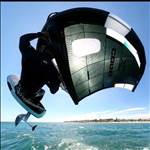
Let's compare a 5 ft board with the mast fully back in the tracks and a 6ft board with the mast fully forward.
Which on has the lower swing weight?
Just wanting to confirm my assessment.
Well what an exciting topic I posted.
I thought this was something to consider when selecting board and swing weight.
Different brands have heir tracks in different positions .
Hey Warick , I was waiting also for some intellectual replies also ,but maybe everyone is like me just thinking we could be shot down here, and not sure what the answer could plausibly be. Haha . Where the hell is "Colas " when he is needed ? 
I have done a highly complex and scientifical experiment by wiggling my phone from the end and from the middle.
Conclusions:
-Dont fool with your phone over hard floors.
-It is more wiggly from the middle.
Select to expand quotejgfoster said..
Hey Warick , I was waiting also for some intellectual replies also ,but maybe everyone is like me just thinking we could be shot down here, and not sure what the answer could plausibly be. Haha . Where the hell is "Colas " when he is needed ?
Thanks for your reply
I was just trying to raise a point that I do not recall being discussed previously even the logic is obvious.
When you say swing weight, do you really mean moment of inertia? or radius of gyration?
For some background, the Olympic Finn sailing class uses the Lamboley test to establish the radius of gyration of boats sailing in the class, as pitching performance in waves is significantly affected by weight distribution. Details are at www.lamboleyetudes.net/finnpendule.pdf for anyone interested in the math.
In general I think there is a good case for having a board with as little nose in front of the mast as possible, but that may leave some scope for maintaining volume by having some reasonable length of board behind the mast. On my boards I try to sail with the mast as far forward in the track as possible and the mast of the Slingshot foils in "A" position on the fuselage
Select to expand quotemcrt said..
I have done a highly complex and scientifical experiment by wiggling my phone from the end and from the middle.
Conclusions:
-Dont fool with your phone over hard floors.
-It is more wiggly from the middle.
Funny as...
Select to expand quotebigtone667 said..mcrt said..
I have done a highly complex and scientifical experiment by wiggling my phone from the end and from the middle.
Conclusions:
-Dont fool with your phone over hard floors.
-It is more wiggly from the middle.
Funny as...
Funny if one has no other level of intellectual contribution to make.
However I do get the relationship.
Select to expand quotewarwickl said..bigtone667 said..mcrt said..
I have done a highly complex and scientifical experiment by wiggling my phone from the end and from the middle.
Conclusions:
-Dont fool with your phone over hard floors.
-It is more wiggly from the middle.
Funny as...
Funny if one has no other level of intellectual contribution to make.
However I do get the relationship.
And i do get your point,distributing the mass on both sides of the balance point makes it easier to pump while maintaining volume.
I think having super shortened,angled tails is not that necessary for pumping anyway.I like the concept.
Off topic:
Just came in from wind foiling with the dolphins
Three of them went under me bellys up checking me out.Cool!.
This is a great topic and one I have spent a lot of time on.
IMO a shorter board can feel bigger or less balanced (probably a better way to phrase it) than a bigger board. Where you mount your foil can make or break a boards feel, especially on bigger boards. This is always my argument against the need to go (too much) smaller.
It is not really as simple as a 5' board mounted aft and a 6' board mounted fore. but the theory for the conversation is right. In the case given assuming the boards were build proportionally, the 6' board would feel more lively, be liftier and technically turn with more ease (and more importantly be able to change turning direction easily), the 5' board would have more directional control and the ability to produce more forward/front weighting with lessor rider input (be more nose heavy).
In generally I try to ride all boards with the foil mounted as far forward as possible until I start to feel that the board loses control or I can not comfortable control the lift when powered. Now there is so many variables that also blend in with this such as stance, riding style and foil type. But I generally spend a lot of time early on with a new board getting this right (or as best I can with any set parameters), Sometimes even spend more than 10 sessions fine tuning it. To tune thing correctly you need to understand what each of the variable do and how they affect your riding. Only then can you really tune them.
First things first. If you have to apply too much back foot pressure when foiling to obtain flight the foil tends to become unsettled. I call this serpenting (your'll find yourself floating around like a snakes head). This is not good, and can easily and quickly turn into a tacco (when you kicked in a "U" with the foil coming towards your head) or foil kick. Generally you will want to ride with a bias amount of front foot or as you get better close to neutral foot pressure.
Next you want to be able to control the boards lift when it is at its maximum power/speed/load without having to move forwards. This is done by positioning or stance.
then ideally you want the board to feel light and balanced. As you move a mounting further forward the board will seemingly become lighter and turn with lessor and lessor input until it gets to a point were it will feel too loose or light and become hard to control the lift without moving forwards.
for stance ideally you want to position so you need minimal or better no movement once you are up flying. Moving around while flying is something to avoid until you are well skilled up.
So working around all these factors as a starter and of coarse use feel and comfort as your guide will help.
I suggest choose a board size you are comfortable on, I like 110ltr at 5'10". I can easily paddle it, and get back on long paddles. A well set up "big" board can sometimes give you an advantage of drive too.
this is just a skim of it all, but a start. If you're new. Start further back in your mount and work your way forward taking into account a lot of the above. Only go 1 cm at a time, and it will all start to make sense.
Hope this helps,
JB
Remember that when you move your mast forward you are increasing the swing weight effect of the rear of the board.
while this is usually the end with most mass. It won't have the same effect as shortening the mast to nose length. It's the distance squared in the Torque equation.
unless you have a very thin nose section, I suppose.
Select to expand quoteJB said..
This is a great topic and one I have spent a lot of time on.
IMO a shorter board can feel bigger or less balanced (probably a better way to phrase it) than a bigger board. Where you mount your foil can make or break a boards feel, especially on bigger boards. This is always my argument against the need to go (too much) smaller.
It is not really as simple as a 5' board mounted aft and a 6' board mounted fore. but the theory for the conversation is right. In the case given assuming the boards were build proportionally, the 6' board would feel more lively, be liftier and technically turn with more ease (and more importantly be able to change turning direction easily), the 5' board would have more directional control and the ability to produce more forward/front weighting with lessor rider input (be more nose heavy).
In generally I try to ride all boards with the foil mounted as far forward as possible until I start to feel that the board loses control or I can not comfortable control the lift when powered. Now there is so many variables that also blend in with this such as stance, riding style and foil type. But I generally spend a lot of time early on with a new board getting this right (or as best I can with any set parameters), Sometimes even spend more than 10 sessions fine tuning it. To tune thing correctly you need to understand what each of the variable do and how they affect your riding. Only then can you really tune them.
First things first. If you have to apply too much back foot pressure when foiling to obtain flight the foil tends to become unsettled. I call this serpenting (your'll find yourself floating around like a snakes head). This is not good, and can easily and quickly turn into a tacco (when you kicked in a "U" with the foil coming towards your head) or foil kick. Generally you will want to ride with a bias amount of front foot or as you get better close to neutral foot pressure.
Next you want to be able to control the boards lift when it is at its maximum power/speed/load without having to move forwards. This is done by positioning or stance.
then ideally you want the board to feel light and balanced. As you move a mounting further forward the board will seemingly become lighter and turn with lessor and lessor input until it gets to a point were it will feel too loose or light and become hard to control the lift without moving forwards.
for stance ideally you want to position so you need minimal or better no movement once you are up flying. Moving around while flying is something to avoid until you are well skilled up.
So working around all these factors as a starter and of coarse use feel and comfort as your guide will help.
I suggest choose a board size you are comfortable on, I like 110ltr at 5'10". I can easily paddle it, and get back on long paddles. A well set up "big" board can sometimes give you an advantage of drive too.
this is just a skim of it all, but a start. If you're new. Start further back in your mount and work your way forward taking into account a lot of the above. Only go 1 cm at a time, and it will all start to make sense.
Hope this helps,
JB
I took your advice and moved the mast forward about 1 cm maybe a bit more.
Result is that it worked as you described.
I'll stay with this for another session then try another 1 cm forward.
Select to expand quoteRAL INN said..
It's the distance squared in the Torque equation.
Yes, that's why centering more the mast foot in the board dramatically reduces the global swing weight.
Armstrong always push them forward. makes a huge difference. Hard to do with some foils as they need so much front foot to keep them down.

Select to expand quotewarwickl said..JB said..
This is a great topic and one I have spent a lot of time on.
IMO a shorter board can feel bigger or less balanced (probably a better way to phrase it) than a bigger board. Where you mount your foil can make or break a boards feel, especially on bigger boards. This is always my argument against the need to go (too much) smaller.
It is not really as simple as a 5' board mounted aft and a 6' board mounted fore. but the theory for the conversation is right. In the case given assuming the boards were build proportionally, the 6' board would feel more lively, be liftier and technically turn with more ease (and more importantly be able to change turning direction easily), the 5' board would have more directional control and the ability to produce more forward/front weighting with lessor rider input (be more nose heavy).
In generally I try to ride all boards with the foil mounted as far forward as possible until I start to feel that the board loses control or I can not comfortable control the lift when powered. Now there is so many variables that also blend in with this such as stance, riding style and foil type. But I generally spend a lot of time early on with a new board getting this right (or as best I can with any set parameters), Sometimes even spend more than 10 sessions fine tuning it. To tune thing correctly you need to understand what each of the variable do and how they affect your riding. Only then can you really tune them.
First things first. If you have to apply too much back foot pressure when foiling to obtain flight the foil tends to become unsettled. I call this serpenting (your'll find yourself floating around like a snakes head). This is not good, and can easily and quickly turn into a tacco (when you kicked in a "U" with the foil coming towards your head) or foil kick. Generally you will want to ride with a bias amount of front foot or as you get better close to neutral foot pressure.
Next you want to be able to control the boards lift when it is at its maximum power/speed/load without having to move forwards. This is done by positioning or stance.
then ideally you want the board to feel light and balanced. As you move a mounting further forward the board will seemingly become lighter and turn with lessor and lessor input until it gets to a point were it will feel too loose or light and become hard to control the lift without moving forwards.
for stance ideally you want to position so you need minimal or better no movement once you are up flying. Moving around while flying is something to avoid until you are well skilled up.
So working around all these factors as a starter and of coarse use feel and comfort as your guide will help.
I suggest choose a board size you are comfortable on, I like 110ltr at 5'10". I can easily paddle it, and get back on long paddles. A well set up "big" board can sometimes give you an advantage of drive too.
this is just a skim of it all, but a start. If you're new. Start further back in your mount and work your way forward taking into account a lot of the above. Only go 1 cm at a time, and it will all start to make sense.
Hope this helps,
JB
I took your advice and moved the mast forward about 1 cm maybe a bit more.
Result is that it worked as you described.
I'll stay with this for another session then try another 1 cm forward.
Great WarwickI, Keep going with this until you find you kind of stall out take offs. You'll feel the board go nose up really fast and serpent/wobble being unstable. From this point assess a few things, where you are standing and how the board balances up. A good trick is to put your board down on its deck (foil up), grab the front wing back about 2-3" and pick it up like this. See how the board hangs. If it hangs level with the ground, consider moving your stance forward first before moving the foil back 1cm (just to see how it feels). If you have clearly gone too far forward and the nose of the board is up in the air, just move your foil straight back than last 1cm. It is not always the answer doing the hand trick, the 1cm every few sessions is far more accurate and you'll learn much much more along the way. But once you work it out, you will be amazed at the difference.
FYI, it is not unusual to find a point and feel you need to go back a cm, but then when you do, you miss the light and lively feel (which you never knew was there), and go back up that last 1cm . Enjoy the experience, you learn lots during this process and it will help your foiling immensely.
Ride safe,
JB
Select to expand quoteJB said..warwickl said..JB said..
This is a great topic and one I have spent a lot of time on.
IMO a shorter board can feel bigger or less balanced (probably a better way to phrase it) than a bigger board. Where you mount your foil can make or break a boards feel, especially on bigger boards. This is always my argument against the need to go (too much) smaller.
It is not really as simple as a 5' board mounted aft and a 6' board mounted fore. but the theory for the conversation is right. In the case given assuming the boards were build proportionally, the 6' board would feel more lively, be liftier and technically turn with more ease (and more importantly be able to change turning direction easily), the 5' board would have more directional control and the ability to produce more forward/front weighting with lessor rider input (be more nose heavy).
In generally I try to ride all boards with the foil mounted as far forward as possible until I start to feel that the board loses control or I can not comfortable control the lift when powered. Now there is so many variables that also blend in with this such as stance, riding style and foil type. But I generally spend a lot of time early on with a new board getting this right (or as best I can with any set parameters), Sometimes even spend more than 10 sessions fine tuning it. To tune thing correctly you need to understand what each of the variable do and how they affect your riding. Only then can you really tune them.
First things first. If you have to apply too much back foot pressure when foiling to obtain flight the foil tends to become unsettled. I call this serpenting (your'll find yourself floating around like a snakes head). This is not good, and can easily and quickly turn into a tacco (when you kicked in a "U" with the foil coming towards your head) or foil kick. Generally you will want to ride with a bias amount of front foot or as you get better close to neutral foot pressure.
Next you want to be able to control the boards lift when it is at its maximum power/speed/load without having to move forwards. This is done by positioning or stance.
then ideally you want the board to feel light and balanced. As you move a mounting further forward the board will seemingly become lighter and turn with lessor and lessor input until it gets to a point were it will feel too loose or light and become hard to control the lift without moving forwards.
for stance ideally you want to position so you need minimal or better no movement once you are up flying. Moving around while flying is something to avoid until you are well skilled up.
So working around all these factors as a starter and of coarse use feel and comfort as your guide will help.
I suggest choose a board size you are comfortable on, I like 110ltr at 5'10". I can easily paddle it, and get back on long paddles. A well set up "big" board can sometimes give you an advantage of drive too.
this is just a skim of it all, but a start. If you're new. Start further back in your mount and work your way forward taking into account a lot of the above. Only go 1 cm at a time, and it will all start to make sense.
Hope this helps,
JB
I took your advice and moved the mast forward about 1 cm maybe a bit more.
Result is that it worked as you described.
I'll stay with this for another session then try another 1 cm forward.
Great WarwickI, Keep going with this until you find you kind of stall out take offs. You'll feel the board go nose up really fast and serpent/wobble being unstable. From this point assess a few things, where you are standing and how the board balances up. A good trick is to put your board down on its deck (foil up), grab the front wing back about 2-3" and pick it up like this. See how the board hangs. If it hangs level with the ground, consider moving your stance forward first before moving the foil back 1cm (just to see how it feels). If you have clearly gone too far forward and the nose of the board is up in the air, just move your foil straight back than last 1cm. It is not always the answer doing the hand trick, the 1cm every few sessions is far more accurate and you'll learn much much more along the way. But once you work it out, you will be amazed at the difference.
FYI, it is not unusual to find a point and feel you need to go back a cm, but then when you do, you miss the light and lively feel (which you never knew was there), and go back up that last 1cm . Enjoy the experience, you learn lots during this process and it will help your foiling immensely.
Ride safe,
JB
JB my mast is now midway in the tracks and board balances level to the ground.
Dave (Kite & Sup) did this test on my board yesterday and gave it the thumbs up.
Select to expand quotewarwickl said..JB said..warwickl said..JB said..
This is a great topic and one I have spent a lot of time on.
IMO a shorter board can feel bigger or less balanced (probably a better way to phrase it) than a bigger board. Where you mount your foil can make or break a boards feel, especially on bigger boards. This is always my argument against the need to go (too much) smaller.
It is not really as simple as a 5' board mounted aft and a 6' board mounted fore. but the theory for the conversation is right. In the case given assuming the boards were build proportionally, the 6' board would feel more lively, be liftier and technically turn with more ease (and more importantly be able to change turning direction easily), the 5' board would have more directional control and the ability to produce more forward/front weighting with lessor rider input (be more nose heavy).
In generally I try to ride all boards with the foil mounted as far forward as possible until I start to feel that the board loses control or I can not comfortable control the lift when powered. Now there is so many variables that also blend in with this such as stance, riding style and foil type. But I generally spend a lot of time early on with a new board getting this right (or as best I can with any set parameters), Sometimes even spend more than 10 sessions fine tuning it. To tune thing correctly you need to understand what each of the variable do and how they affect your riding. Only then can you really tune them.
First things first. If you have to apply too much back foot pressure when foiling to obtain flight the foil tends to become unsettled. I call this serpenting (your'll find yourself floating around like a snakes head). This is not good, and can easily and quickly turn into a tacco (when you kicked in a "U" with the foil coming towards your head) or foil kick. Generally you will want to ride with a bias amount of front foot or as you get better close to neutral foot pressure.
Next you want to be able to control the boards lift when it is at its maximum power/speed/load without having to move forwards. This is done by positioning or stance.
then ideally you want the board to feel light and balanced. As you move a mounting further forward the board will seemingly become lighter and turn with lessor and lessor input until it gets to a point were it will feel too loose or light and become hard to control the lift without moving forwards.
for stance ideally you want to position so you need minimal or better no movement once you are up flying. Moving around while flying is something to avoid until you are well skilled up.
So working around all these factors as a starter and of coarse use feel and comfort as your guide will help.
I suggest choose a board size you are comfortable on, I like 110ltr at 5'10". I can easily paddle it, and get back on long paddles. A well set up "big" board can sometimes give you an advantage of drive too.
this is just a skim of it all, but a start. If you're new. Start further back in your mount and work your way forward taking into account a lot of the above. Only go 1 cm at a time, and it will all start to make sense.
Hope this helps,
JB
I took your advice and moved the mast forward about 1 cm maybe a bit more.
Result is that it worked as you described.
I'll stay with this for another session then try another 1 cm forward.
Great WarwickI, Keep going with this until you find you kind of stall out take offs. You'll feel the board go nose up really fast and serpent/wobble being unstable. From this point assess a few things, where you are standing and how the board balances up. A good trick is to put your board down on its deck (foil up), grab the front wing back about 2-3" and pick it up like this. See how the board hangs. If it hangs level with the ground, consider moving your stance forward first before moving the foil back 1cm (just to see how it feels). If you have clearly gone too far forward and the nose of the board is up in the air, just move your foil straight back than last 1cm. It is not always the answer doing the hand trick, the 1cm every few sessions is far more accurate and you'll learn much much more along the way. But once you work it out, you will be amazed at the difference.
FYI, it is not unusual to find a point and feel you need to go back a cm, but then when you do, you miss the light and lively feel (which you never knew was there), and go back up that last 1cm . Enjoy the experience, you learn lots during this process and it will help your foiling immensely.
Ride safe,
JB
JB my mast is now midway in the tracks and board balances level to the ground.
Dave (Kite & Sup) did this test on my board yesterday and gave it the thumbs up.
Awesome. Now just dial it all in. Remember what you have felt on the way up to there and how certain characteristics changed. This will help you in any further tweaking. Also please remember that whilst Dave is right on with his setting up, it is also very individual too in many cases as we all ride differently. Everything said here is a guide to help you match things to your riding style.
Super stoked it is all balanced up. Yew!!
Speak soon,
JB
Select to expand quoteJB said..warwickl said..JB said..
This is a great topic and one I have spent a lot of time on.
IMO a shorter board can feel bigger or less balanced (probably a better way to phrase it) than a bigger board. Where you mount your foil can make or break a boards feel, especially on bigger boards. This is always my argument against the need to go (too much) smaller.
It is not really as simple as a 5' board mounted aft and a 6' board mounted fore. but the theory for the conversation is right. In the case given assuming the boards were build proportionally, the 6' board would feel more lively, be liftier and technically turn with more ease (and more importantly be able to change turning direction easily), the 5' board would have more directional control and the ability to produce more forward/front weighting with lessor rider input (be more nose heavy).
In generally I try to ride all boards with the foil mounted as far forward as possible until I start to feel that the board loses control or I can not comfortable control the lift when powered. Now there is so many variables that also blend in with this such as stance, riding style and foil type. But I generally spend a lot of time early on with a new board getting this right (or as best I can with any set parameters), Sometimes even spend more than 10 sessions fine tuning it. To tune thing correctly you need to understand what each of the variable do and how they affect your riding. Only then can you really tune them.
First things first. If you have to apply too much back foot pressure when foiling to obtain flight the foil tends to become unsettled. I call this serpenting (your'll find yourself floating around like a snakes head). This is not good, and can easily and quickly turn into a tacco (when you kicked in a "U" with the foil coming towards your head) or foil kick. Generally you will want to ride with a bias amount of front foot or as you get better close to neutral foot pressure.
Next you want to be able to control the boards lift when it is at its maximum power/speed/load without having to move forwards. This is done by positioning or stance.
then ideally you want the board to feel light and balanced. As you move a mounting further forward the board will seemingly become lighter and turn with lessor and lessor input until it gets to a point were it will feel too loose or light and become hard to control the lift without moving forwards.
for stance ideally you want to position so you need minimal or better no movement once you are up flying. Moving around while flying is something to avoid until you are well skilled up.
So working around all these factors as a starter and of coarse use feel and comfort as your guide will help.
I suggest choose a board size you are comfortable on, I like 110ltr at 5'10". I can easily paddle it, and get back on long paddles. A well set up "big" board can sometimes give you an advantage of drive too.
this is just a skim of it all, but a start. If you're new. Start further back in your mount and work your way forward taking into account a lot of the above. Only go 1 cm at a time, and it will all start to make sense.
Hope this helps,
JB
I took your advice and moved the mast forward about 1 cm maybe a bit more.
Result is that it worked as you described.
I'll stay with this for another session then try another 1 cm forward.
Great WarwickI, Keep going with this until you find you kind of stall out take offs. You'll feel the board go nose up really fast and serpent/wobble being unstable. From this point assess a few things, where you are standing and how the board balances up. A good trick is to put your board down on its deck (foil up), grab the front wing back about 2-3" and pick it up like this. See how the board hangs. If it hangs level with the ground, consider moving your stance forward first before moving the foil back 1cm (just to see how it feels). If you have clearly gone too far forward and the nose of the board is up in the air, just move your foil straight back than last 1cm. It is not always the answer doing the hand trick, the 1cm every few sessions is far more accurate and you'll learn much much more along the way. But once you work it out, you will be amazed at the difference.
FYI, it is not unusual to find a point and feel you need to go back a cm, but then when you do, you miss the light and lively feel (which you never knew was there), and go back up that last 1cm . Enjoy the experience, you learn lots during this process and it will help your foiling immensely.
Ride safe,
JB
Hi JB. Where is this 'balance point' on a Naish Jet foil? Is it 2-3" behind the trailing edge of the front wing on the fuselage? So it's better to get a balanced setup of foil + board (i.e. mast track) and then rider adapt to that balanced setup? What about front wing size e.g. a 1650 vs a 1240? Would the balance point 'shift' much? Tks