I thought not, but something is unclear.
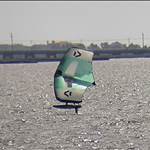
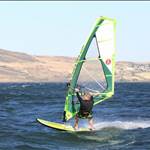
I have been windsurfing for quite some time and I am getting ready to start WINGsurfing ( no foil, for the moment)) this summer on my big Tahe board ( 220 lt) . Before hitting the water, I'm trying to understand the wind dynamics with a wing ( no foil).
Theoretically, the transition should be easy: in windsurfing, we tilt the sail forwards for a downwind turn and backwards for upwind. I thought this would apply to wingsurfing as well, logically.
I am however a bit confused because all the instructional videos and guides on the web seem to tell us just the opposite: push the wing forwards and on the downwind rail side for steering upwind (really!?) and, conversely, push the wing backwards in the upwind rail side to steer downwind.. I have read(or watched) practically everything there is on the Web on tis issue, but the the confusion endures..) Can somebody comment on this?
Thanks
Francone
I windsurf sail is driving the board via the mast foot.
A wing has no connection.
No need to stress over it. As a windsurfer, you'll have no problem feeling how things work once on foil.
Select to expand quoteDWF said..
I windsurf sail is driving the board via the mast foot.
A wing has no connection.
Thanks for the input.
I know this, of course, but my question was why do the instructions in the WEb tell us to push the wing forwards for upwind steering and viceversa for downwind steering, when in windsurfing it is just rhe opposite? Is there a difference or do I misunderstand something?
Yes, eventually, I will understand by practising, but I was just curious.
Since for the moment I am not planning to use a foil , my expectations are not high, in terms of speed : I will be more than happy if I can cruise around on a wing in light winds, without being encumbered by the bulk and the weight of the rig , quite a few extra-pounds I'd like to do away with, if I can. Add to this that with a wing I won't have to waste time rigging and tuning the sail every time. Just hop and go.
THe only hurdle is keeping balance. It is more difficult with a wing, because there is no rig/wishbone you can hold on..But I'll learn eventually.
Francone
With windsurfing, if you are not planing, to go upwind moving the rig backwards moves the Centre of Effort behind the Centre of Lateral Resistance and downwind CoE in front of the CoLR. If you are planing you footsteer by changing the angle of the board to the water (like snowboard/skateboard etc)
Wingfoiling is more akin to planing on a windsurfer where you are directing the board to steer up or down wind, the wing is just to provide the power to move the board.
If you are talking about using a wing with a non foiling board then i think you need to add a stick on centre board to provide lateral resistance otherwise you will always be going down wind. If you add this centre board and not planing it would make sense that you need to move CoE behind the CoLR to get upwind and I am guessing you would do this with where you position your feet on the board and how where you hold the wing.
Winging on a big board and not foiling would be pretty limited imho!
Select to expand quoteFrancone said..
I thought not, but something is unclear.
I have been windsurfing for quite some time and I am getting ready to start WINGsurfing ( no foil, for the moment)) this summer on my big Tahe board ( 220 lt) . Before hitting the water, I'm trying to understand the wind dynamics with a wing ( no foil).
Theoretically, the transition should be easy: in windsurfing, we tilt the sail forwards for a downwind turn and backwards for upwind. I thought this would apply to wingsurfing as well, logically.
I am however a bit confused because all the instructional videos and guides on the web seem to tell us just the opposite: push the wing forwards and on the downwind rail side for steering upwind (really!?) and, conversely, push the wing backwards in the upwind rail side to steer downwind.. I have read(or watched) practically everything there is on the Web on tis issue, but the the confusion endures..) Can somebody comment on this?
Thanks
Francone
If I remember right you are also describing is how longboard windsurfers with centre plates and sails are steered when not planning. You may never have seen or sailed one unless you are old, like me. It always was weird as when the wind picked up, centre plate retracted and the longboard planed then the technique became the opposite to go up and downwind. All to do with where the centres of effort and lateral resistance were lined up.
Yes, in non-foiling mode it works same as non-planing on windsurfing: wing forward - going downwind, wing back - going upwind. Foil in this case works like giant fin: no problem going upwind (if you standing in correct spot on board and holding wing correctly). Novice foilers often stand too much forward and holding wing overhead and upfront. As result they are going downwind.
As a long time windsurfer and I've also done a fair bit of using the wing on a SUP board you can lean the wing forward to go more downwind and leaning (or positioning) the whole wing back will head you more upwind.. Although this kind'a works it's not great and you will find it hard to stay upwind in anything less than perfect condition.. Having a foil underneath even if cruising along on the surface and not up foiling will make a big difference because it not only add a lot of stability it reduces a lot of side slip and makes it much easier to go upwind.

I find my windsurfing background really valuable as I progress. For beginner maneuvers not so much but I now find myself pulling the wing back to heat up and get some more speed and apparent for a Gybe , reaching way out in front to grab the wind and pull me through a tack. Just using that fore aft placement to squeeze out the last little
bit of whatever I'm dooing and make it all just a little more fluid. Again, not a strictly necessary skill but it really ties the room together.
I'm also a long time windsurfer. Time spent on a SUP is useful for learning the wing dynamics. The physics of steering are very different when you are on a foilboard with a wing however (and the foil is flying). Windsurf steering is centre of effort, centre of resistance, shift sail fore and aft, carve the planing board through weight transfer etc. On a wing foil, the physics of flying and steering an airplane are more relevant - controlling pitch, roll and yaw of the foil assembly. As DavidJohn says it is intuitive, going upwind on a wingfoil board is easy, downwind is harder at first but comes with practice. Leaning the wing forward moves you downwind, and aft moves you upwind. Rolling the foil through slight weight transfer to windward or leeward achieves the same result.
Select to expand quotewind driven said..
With windsurfing, if you are not planing, to go upwind moving the rig backwards moves the Centre of Effort behind the Centre of Lateral Resistance and downwind CoE in front of the CoLR. If you are planing you footsteer by changing the angle of the board to the water (like snowboard/skateboard etc)
Wingfoiling is more akin to planing on a windsurfer where you are directing the board to steer up or down wind, the wing is just to provide the power to move the board.
If you are talking about using a wing with a non foiling board then i think you need to add a stick on centre board to provide lateral resistance otherwise you will always be going down wind. If you add this centre board and not planing it would make sense that you need to move CoE behind the CoLR to get upwind and I am guessing you would do this with where you position your feet on the board and how where you hold the wing.
Winging on a big board and not foiling would be pretty limited imho!
Thanks for your comment
I Think I begin to understand now: you mean that with a wing, if you are not on a foil and you do not plane, you still steer the boards exactly the same way as with a sail in windsurfing: wing forwards for downwind and backwards for upwind, right? This is what I thought.
Only when you plane, the steering technique varies somewhat. This would explain the apparent contradiction that puzzled me.
AS to being limited if I use a wing without a foil, this is certainly true , at least for some, if not most, wingsurfers ( or windsurfers) hellbent on speed. In my case, because of my my budget, I have to be a bit minimalist in my expectations, (also because of my age) ..and sacrifice speed to the need of making do with what I have.
Even without the speed afforded by a foil, though, the manoeuverability and the lightness of a wing would already be a big bonus.
Francone
Francone, yes this would be correct but i think only correct if you have something under the board (not just fins) to provide the Lateral Resistance. A foil board with foil can be steered in the same way as a non planing windsurfer but for example a stand up paddleboard without a foil or without a centre board would not really respond to moving the wing in this way as you would continuously be drifting downwind and going sideways. I guess if you could get the stand up paddleboard planing in more breeze you may be able to foot steer but again this would not really be utilising the wing for steering.
I believe your BIC has a centerboard - correct? ... If so, I think it will be fine. Steering will be similar to Windsurfing except you have the 3rd dimension with the wing - the Wing can be flown overhead to de-power as well as flat like a sail.
One think to note regarding Wings vs sails: Although the Wings are much lighter, their weight has to be supported by the wind. Sail weight is supported by the mast so in very light winds the Wing can be cumbersome if there is not enough wind to support it & you are holding it up on your own strength...
Select to expand quotewind driven said..
Francone, yes this would be correct but i think only correct if you have something under the board (not just fins) to provide the Lateral Resistance. A foil board with foil can be steered in the same way as a non planing windsurfer but for example a stand up paddleboard without a foil or without a centre board would not really respond to moving the wing in this way as you would continuously be drifting downwind and going sideways. I guess if you could get the stand up paddleboard planing in more breeze you may be able to foot steer but again this would not really be utilising the wing for steering.
I' m just curious to know how does a wing compare in terms of wind efficiency and, ultimately, speed, to a regular windsurfing sail of the same size, without a foil, like in my case. I do have a retractable ceenterboard on my 220 l Tahe board and a 38 cm rear fin.
Of course, I won't go supersonic, but then, I am no speed buff. I only hope that just doing away with the weight of the rig, together with the more efficent desigh of the wing, as compared to a standard sail, will translate into more power
Thanks
Francone
Because you are only transfering power by hands and not an 2th point (mastfoot) and the wings are more fleexible (spilling power) they have less power as an windsurf rig. The thicker frontstrut compared to a mast als ads drag.
A wing is by far not as efficient as a rig, the only reason that they are so intersting is the lower weight and wider range of movement being not fixxed by a mastfoot.
Without a foil I see except the weight only downtrades by a wing compared to a sail.
Select to expand quoteJeroensurf said..
Because you are only transfering power by hands and not an 2th point (mastfoot) and the wings are more fleexible (spilling power) they have less power as an windsurf rig. The thicker frontstrut compared to a mast als ads drag.
A wing is by far not as efficient as a rig, the only reason that they are so intersting is the lower weight and wider range of movement being not fixxed by a mastfoot.
Without a foil I see except the weight only downtrades by a wing compared to a sail.
So this is all true but the foil is as important - the wind foil isn't going to ALWAYS be faster and better angle than the ding. I was out with a buddy yesterday and we had similar speed and angle. Him on wind foil me on wing. His sail rig had the edge but my foil was smaller/higher aspect. Equaled out in the end.
Francone,
I ended up getting out of foiling a couple years ago when I realized how expensive it was going to be down the line. However I did keep a wing and have used it quite a bit with a skateboard and a Snowskate. I have also played around with it on what sups I could get a hold of. Somewhat counter intuitively very short(7' range) wide boards and low volume HP longboards worked the best. I found you could pivot the short boards quickly through a gybe so you didn't drift downwind in the transition. The longboards which had a lot of tail rocker but low volume rails would edge upwind pretty well. The other higher volume more all around boards I tried were harder to stay upwind with. I would imagine that by now some brands are making considerably stiffer wings that wouldn't taco as quickly when asked to drag along a non foil board. A wing like that would make a huge difference if you are planing to use it off foil. Perhaps a wing designed for racing? I am too out of touch to know which wings would be best, but perhaps some other folks would have some useful recommendations.
Select to expand quoteTooMuchEpoxy said..Jeroensurf said..
Because you are only transfering power by hands and not an 2th point (mastfoot) and the wings are more fleexible (spilling power) they have less power as an windsurf rig. The thicker frontstrut compared to a mast als ads drag.
A wing is by far not as efficient as a rig, the only reason that they are so intersting is the lower weight and wider range of movement being not fixxed by a mastfoot.
Without a foil I see except the weight only downtrades by a wing compared to a sail.
So this is all true but the foil is as important - the wind foil isn't going to ALWAYS be faster and better angle than the ding. I was out with a buddy yesterday and we had similar speed and angle. Him on wind foil me on wing. His sail rig had the edge but my foil was smaller/higher aspect. Equaled out in the end.
Yeah but with an similar foil there is a huge chance he will smoke you. 
I, coming from that route: wavesailing, looking for an lightwind altarnative so went freeride windfoiling and from that into wingfoiling.
I would never go back to a sail while foiling, because wingfoiling is soo much fun, but when it comes to efficiency the sails are very hard to beat and when slogging/not planing without a foil an rig feels for me lighter on the water as the mastfoot ads support/let the rig almost carrying itself. Adding mastfoot presure makes going upwind even without a daggerboard a lot easier as with an wing.
Select to expand quoteSurlygringo said..
Francone,
I ended up getting out of foiling a couple years ago when I realized how expensive it was going to be down the line. However I did keep a wing and have used it quite a bit with a skateboard and a Snowskate. I have also played around with it on what sups I could get a hold of. Somewhat counter intuitively very short(7' range) wide boards and low volume HP longboards worked the best. I found you could pivot the short boards quickly through a gybe so you didn't drift downwind in the transition. The longboards which had a lot of tail rocker but low volume rails would edge upwind pretty well. The other higher volume more all around boards I tried were harder to stay upwind with. I would imagine that by now some brands are making considerably stiffer wings that wouldn't taco as quickly when asked to drag along a non foil board. A wing like that would make a huge difference if you are planing to use it off foil. Perhaps a wing designed for racing? I am too out of touch to know which wings would be best, but perhaps some other folks would have some useful recommendations.
Thanks for your input, Surlygringo .
You mentioned the stiffness.and I 'd like to make a few comments.
If by stiffness ( or lack thereof) you mean the degree of tautness of the canopy fabric, this could affect the wind efficiency of the wing. Whether positively or negatively, though, I am no expert and I can't tell.
For one thing, If I compare my soon-to-be-tried out Slingshot V2 wing with the Duotone, the latter seems to be a lot tauter and stiffer, also because of the batten, while the Slingshot's canopy is visibly much flappier, with more shape and less taut. Indeed, the Slingshot marketing spin presents this design positively, as contributing to the wing's efficiency.. In all likelihood the Duotone designers took the opposite view, if they even put batten to increase the stiffness of the wing..
AS far as I am concerned, going by the windsurfing sails' criteria, I would think that, everything being equal, a flappier wing, with more shaped canopy , like the Slingshot, should pack more power than a taut, stiffer wing like the Duotone, because this is the way we trim windsurfing sails : more shape ( less outhaul) for power and less shape( flatter sails) for less power in stronger winds. If more shape in a windsurfing sail increases its power, I can't see why it shouldn't do the same in a wing...
May be somebody can comment about this.
THanks
Francone