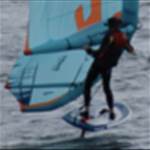
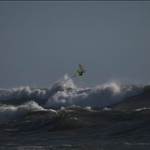
Just posted a video which demonstrates how frequently I am breaching in overpowered conditions. I didn't realize how often it happened until I watched the footage in slow motion. Fortunately, I've been able to mitigate breaching by crouching lower and riding lower on my mast. And, if I notice it happening early enough, I've even had some success riding through the drop-out and bouncing back up, but I have trouble re-engaging the foil and it feels like a knee buckling experiment.
Certainly, I could adjust my gear to help avoid breaching (e.g. a longer mast, a smaller hand-wing, and possibly a smaller stabilizer would help in these conditions). And, there's some good analysis on what to change here: www.seabreeze.com.au/forums/Wing-Foiling/Wind-Wings/Wave-riding-challenges.
I'm just curious if people have specific advice on recovering from a breach - i.e. riding and/or bouncing through it - when it does occur.
Thanks,
-Stuart
If you are powered, try to put weight on the wing and unweight your foil. If you are not powered (luffing) you just need to stay loose, be reactive and anticipate loss of lift. Some foils breach a lot more cleanly (limited ventilation) than others. Most important of all, just practice breaching in easy conditions and it will become second nature.
It looks like your foil is extremely sensitive to tip breaching, is it an older model? Most recent foils will handle tip breaches without ventilating like that. Any foil will ventilate on a flat breach though. Try intentionally breaching the tips by riding powered and carving hard into the wind until the tip comes out. Try some skids, pop an intentional flat breach and skid along the surface, you need to lean back to keep it there.
It also looks like it might help to stand further back on your board to allow better recovery. When you come down, the nose rocker is catching and throwing you over the front. You can stop that happening by leaning back, but having your stance further back will help to keep the nose up. Stance wise, ideally you want your board to splash down and come nose up without having to heavily weight your back foot. A lot of boards have an abrupt kick in the nose rocker that will push water instead of providing lift, so you need the nose up to keep that part of the rocker out of the water as much as possible
as Jonah said, most newer foils are more ventilation resistant. I was also surprised how often I got tip breaches when I was going over some video a few months ago:
Select to expand quoteVelocicraptor said..
If you are powered, try to put weight on the wing and unweight your foil. If you are not powered (luffing) you just need to stay loose, be reactive and anticipate loss of lift. Some foils breach a lot more cleanly (limited ventilation) than others. Most important of all, just practice breaching in easy conditions and it will become second nature.
Using the wing to support my weight makes sense. The challenge for me is bouncing up the correct amount and reconnecting the foil, similar to the recovery after landing a jump. I've had a few attempts where I've over-corrected and immediately breached again - yee-haw =).
I hadn't thought about intentionally practicing breaching; I'll save that for the warmer weather.
Thanks!
-S.
Select to expand quoteJonahL said..
It looks like your foil is extremely sensitive to tip breaching, is it an older model? Most recent foils will handle tip breaches without ventilating like that. Any foil will ventilate on a flat breach though. Try intentionally breaching the tips by riding powered and carving hard into the wind until the tip comes out. Try some skids, pop an intentional flat breach and skid along the surface, you need to lean back to keep it there.
It also looks like it might help to stand further back on your board to allow better recovery. When you come down, the nose rocker is catching and throwing you over the front. You can stop that happening by leaning back, but having your stance further back will help to keep the nose up. Stance wise, ideally you want your board to splash down and come nose up without having to heavily weight your back foot. A lot of boards have an abrupt kick in the nose rocker that will push water instead of providing lift, so you need the nose up to keep that part of the rocker out of the water as much as possible
This is an Armstrong MA800 which was recommended exactly b/c it can handle breaches, or at least can recover from them more easily, supposedly. But, your point about flat breaches might be a clue; I am riding fairly straight when these breaches occur. Also, my stance. Most of these occur when I'm riding switch, and for some reason I am less comfortable with my back foot in the strap. The result is a more centered and narrow stance which is not ideal.
Excited to lean back and try some skids, and hopefully this will teach me about reconnecting the foil.
Thanks!
-S.
Select to expand quotesunsetsailboards said..
as Jonah said, most newer foils are more ventilation resistant. I was also surprised how often I got tip breaches when I was going over some video a few months ago:
?si=uZ1wNndQsJury-vZ
Very cool. I'm starting to believe that the issue has a lot to do with the the angle of the breach. Your tips are breaching during turns as is often the case, I've seen, with the pros. Another significant factor is the fact that I'm way over-powered and overly focussed on my handwing.
Thanks!
-S.
Select to expand quoteBoardMaverick said..Velocicraptor said..
If you are powered, try to put weight on the wing and unweight your foil. If you are not powered (luffing) you just need to stay loose, be reactive and anticipate loss of lift. Some foils breach a lot more cleanly (limited ventilation) than others. Most important of all, just practice breaching in easy conditions and it will become second nature.
Using the wing to support my weight makes sense. The challenge for me is bouncing up the correct amount and reconnecting the foil, similar to the recovery after landing a jump. I've had a few attempts where I've over-corrected and immediately breached again - yee-haw =).
I hadn't thought about intentionally practicing breaching; I'll save that for the warmer weather.
Thanks!
-S.
You can put the wing higher above your head to take some weight off the foil. Once you hit the water sheet in with the back hand to put more power back into the wing. Getting power out of the wing will help to re-engage your foil. If you are using your weighting to re-engage you are going to be shifting around a lot and will risk over compensating (and re-breaching as you noted).
Definitely play around with purposeful breaching, both tips, and foil slides. Even if you watch a video with Cash foil sliding the lip of a wave (the pinnacle of foiling right now) you will see how much he unweights the foil.
Select to expand quoteBoardMaverick said..
Just posted a video which demonstrates how frequently I am breaching in overpowered conditions. I didn't realize how often it happened until I watched the footage in slow motion. Fortunately, I've been able to mitigate breaching by crouching lower and riding lower on my mast. And, if I notice it happening early enough, I've even had some success riding through the drop-out and bouncing back up, but I have trouble re-engaging the foil and it feels like a knee buckling experiment.
Certainly, I could adjust my gear to help avoid breaching (e.g. a longer mast, a smaller hand-wing, and possibly a smaller stabilizer would help in these conditions). And, there's some good analysis on what to change here: www.seabreeze.com.au/forums/Wing-Foiling/Wind-Wings/Wave-riding-challenges.
I'm just curious if people have specific advice on recovering from a breach - i.e. riding and/or bouncing through it - when it does occur.
Thanks,
-Stuart
What size is your mast? or is the chop just massive :-)
Select to expand quoteBoardMaverick said..
Just posted a video which demonstrates how frequently I am breaching in overpowered conditions. I didn't realize how often it happened until I watched the footage in slow motion. Fortunately, I've been able to mitigate breaching by crouching lower and riding lower on my mast. And, if I notice it happening early enough, I've even had some success riding through the drop-out and bouncing back up, but I have trouble re-engaging the foil and it feels like a knee buckling experiment.
Certainly, I could adjust my gear to help avoid breaching (e.g. a longer mast, a smaller hand-wing, and possibly a smaller stabilizer would help in these conditions). And, there's some good analysis on what to change here: www.seabreeze.com.au/forums/Wing-Foiling/Wind-Wings/Wave-riding-challenges.
I'm just curious if people have specific advice on recovering from a breach - i.e. riding and/or bouncing through it - when it does occur.
Thanks,
-Stuart
What size is your mast? or is the chop just massive :-)
That doesn't look fun. You need an 80cm min, preferably at least 85cm mast for those conditions if you want to drive upwind, and/or need to adjust your board angle to match the surface conditions. It just looks like you're plowing straight through the backs of the chop without bending knees and driving board down in anticipation of trough. Also looks like you have way too much power from your wing that is making your feet too heavy on the board to react to the conditions. If I'm that lit, I just pinch really hard upwind, then ride swell flagged out. If I'm breaching like it looks you are due to death grip on wing, I go re-rig or find flatter water.
Select to expand quoteBoardMaverick said..JonahL said..
It looks like your foil is extremely sensitive to tip breaching, is it an older model? Most recent foils will handle tip breaches without ventilating like that. Any foil will ventilate on a flat breach though. Try intentionally breaching the tips by riding powered and carving hard into the wind until the tip comes out. Try some skids, pop an intentional flat breach and skid along the surface, you need to lean back to keep it there.
It also looks like it might help to stand further back on your board to allow better recovery. When you come down, the nose rocker is catching and throwing you over the front. You can stop that happening by leaning back, but having your stance further back will help to keep the nose up. Stance wise, ideally you want your board to splash down and come nose up without having to heavily weight your back foot. A lot of boards have an abrupt kick in the nose rocker that will push water instead of providing lift, so you need the nose up to keep that part of the rocker out of the water as much as possible
This is an Armstrong MA800 which was recommended exactly b/c it can handle breaches, or at least can recover from them more easily, supposedly. But, your point about flat breaches might be a clue; I am riding fairly straight when these breaches occur. Also, my stance. Most of these occur when I'm riding switch, and for some reason I am less comfortable with my back foot in the strap. The result is a more centered and narrow stance which is not ideal.
Excited to lean back and try some skids, and hopefully this will teach me about reconnecting the foil.
Thanks!
-S.
I haven't ridden that foil but have heard it's good on breaches.
One thing about tip breaching that's a bit counterintuitive is that faster is better. The reason is that when you are going slow, the foil is at a higher angle of attack and generates a negative pressure peak near the leading edge that sucks air. Going faster reduces the pressure peak and moves the pressure aft on the foil.
Bigger foils will also breach better than little ones due to reduced wing loading and lower angle of attack.
I have an 800 foil that I can wing along with several inches of wingtip out of the water at 12knots +, but it will still ventilate in a turn at the very bottom end, say 10 knots or so.
Select to expand quoteUisceBeatha said..BoardMaverick said..
Just posted a video which demonstrates how frequently I am breaching in overpowered conditions. I didn't realize how often it happened until I watched the footage in slow motion. Fortunately, I've been able to mitigate breaching by crouching lower and riding lower on my mast. And, if I notice it happening early enough, I've even had some success riding through the drop-out and bouncing back up, but I have trouble re-engaging the foil and it feels like a knee buckling experiment.
Certainly, I could adjust my gear to help avoid breaching (e.g. a longer mast, a smaller hand-wing, and possibly a smaller stabilizer would help in these conditions). And, there's some good analysis on what to change here: www.seabreeze.com.au/forums/Wing-Foiling/Wind-Wings/Wave-riding-challenges.
I'm just curious if people have specific advice on recovering from a breach - i.e. riding and/or bouncing through it - when it does occur.
Thanks,
-Stuart
What size is your mast? or is the chop just massive :-)
Mast is 72cm, chop was bigger, wallet is thin ;)
Select to expand quoteHwy1North said..
That doesn't look fun. You need an 80cm min, preferably at least 85cm mast for those conditions if you want to drive upwind, and/or need to adjust your board angle to match the surface conditions. It just looks like you're plowing straight through the backs of the chop without bending knees and driving board down in anticipation of trough. Also looks like you have way too much power from your wing that is making your feet too heavy on the board to react to the conditions. If I'm that lit, I just pinch really hard upwind, then ride swell flagged out. If I'm breaching like it looks you are due to death grip on wing, I go re-rig or find flatter water.
You are spot on - I was a bit careless with anticipating breaching - I hadn't yet realized how frequently breaching was happening. Additionally, I don't have a lot of experience in conditions that heavy. Sometimes, the waves would kick-up quite suddenly and catch me by surprise. I will try sacrificing my upwind angle a bit in order to match my board angle to the surface conditions, as you recommend. My technique is improving.
And, yes, I clearly could use a smaller wing and taller mast. Unfortunately, my new years resolution was to NOT buy gear in 2025 :/ :( :)
But, I had a blast. I'm always happy being on the water and getting worked. Love the learning process. I hope to put out a video of the highlights that make it all worth it.
Thanks,
-S.
Select to expand quoteJonahL said..BoardMaverick said..JonahL said..
It looks like your foil is extremely sensitive to tip breaching, is it an older model? Most recent foils will handle tip breaches without ventilating like that. Any foil will ventilate on a flat breach though. Try intentionally breaching the tips by riding powered and carving hard into the wind until the tip comes out. Try some skids, pop an intentional flat breach and skid along the surface, you need to lean back to keep it there.
It also looks like it might help to stand further back on your board to allow better recovery. When you come down, the nose rocker is catching and throwing you over the front. You can stop that happening by leaning back, but having your stance further back will help to keep the nose up. Stance wise, ideally you want your board to splash down and come nose up without having to heavily weight your back foot. A lot of boards have an abrupt kick in the nose rocker that will push water instead of providing lift, so you need the nose up to keep that part of the rocker out of the water as much as possible
This is an Armstrong MA800 which was recommended exactly b/c it can handle breaches, or at least can recover from them more easily, supposedly. But, your point about flat breaches might be a clue; I am riding fairly straight when these breaches occur. Also, my stance. Most of these occur when I'm riding switch, and for some reason I am less comfortable with my back foot in the strap. The result is a more centered and narrow stance which is not ideal.
Excited to lean back and try some skids, and hopefully this will teach me about reconnecting the foil.
Thanks!
-S.
I haven't ridden that foil but have heard it's good on breaches.
One thing about tip breaching that's a bit counterintuitive is that faster is better. The reason is that when you are going slow, the foil is at a higher angle of attack and generates a negative pressure peak near the leading edge that sucks air. Going faster reduces the pressure peak and moves the pressure aft on the foil.
Bigger foils will also breach better than little ones due to reduced wing loading and lower angle of attack.
I have an 800 foil that I can wing along with several inches of wingtip out of the water at 12knots +, but it will still ventilate in a turn at the very bottom end, say 10 knots or so.
Interesting observation - that slower is worse for ventilation. I need more time on the water, but will keep that in mind.
Thx,
-S.