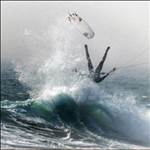
In my early progression of winging in waves and learning different transitions, the incredibly annoying habit of my foil to flip and stab the wing's canopy has been the most frustrating aspect of this sport so far yet I don't read much of others' experience with this. I've had many years of windsurfing and kiting with minimal gear carnage so this is new for me. I may have to invest in a sewing machine if I want to keep progressing and not taking my wings in for repairs every other session! Any others having their foils acting like wing-serial killers?
My 6.4 slingwing was on order when my mate said "here try out my 6.4" on his board coupled with a razor sharp moses rear wing...
I use slingshot foils with less sharp wing edges.
30 seconds into the walk to launch, the wind flips the 6.4 straight onto the rear wing, walked straight back with a really red face and something that sounded like hucking fell  I didn't even get to foil it, grrrr!
I gave him the new 6.4 when it arrived and I patched up the 6.4 that I tore, I used white kite tape and local sail maker Z stitched it for $20.
Timely topic.
Been foiling since Spring including waves and shorebreak.
Yesterday coming back 1m from shore the brand new virgin ride with the Gofoil NL190 (the one with the razor pointy wing tip), the board tips 45 degree,....rip....
So frustrating.
Is it worth considering a long leash for wing...and very short for the board for flat water winging?
Thru surf, maybe the opposite paired with short mast?
The foil will attract your wing like a huge magnet..
Also the wind can't be trusted when leaving your wing down-wind of your board and foil on the beach..
So.. After a crash and your board ends up foil-up on the water grab your wing first before flipping your board..
When leaving your wing downwind of your board on the beach pile some sand on your wing..
One last thing.. When entering the water have a handle on the bottom of your board.. If it doesn't have one have one fitted by a ding repairer.. Handles only cost about $10 plus fitting cost..
I noticed yesterday that my local marine shop sells spinnaker repair tape thats coloured and light/thin..
Select to expand quoteDavidJohn said..
The foil will attract your wing like a huge magnet..
Also the wind can't be trusted when leaving your wing down-wind of your board and foil on the beach..
So.. After a crash and your board ends up foil-up on the water grab your wing first before flipping your board..
When leaving your wing downwind of your board on the beach pile some sand on your wing..
One last thing.. When entering the water have a handle on the bottom of your board.. If it doesn't have one have one fitted by a ding repairer.. Handles only cost about $10 plus fitting cost..
I noticed yesterday that my local marine shop sells spinnaker repair tape thats coloured and light/thin..
Yes, the handle on bottom seems pretty key, especially for boards you can't tuck under your arm. My board is just a touch too wide to carry under my arm so I end up holding it by the fuse or foil through the shallows. Problem is, the rip or shore break grabs the board and spins it, wrapping leashes and then the inevitable kooky result of wing being re-introduced to foil happens. Flagging the wing on its leash is sometimes helpful in the shallows to keep it away but then you have no control over it either. Some wings like to bounce up and down like rabid kangaroos at the end of the leash, so this technique offers random success.
I wouldn't go so far as to call it a technique, but I often end up walking backwards into a shore break. The board is nose towards the beach under my arm with my hand holding the mast up close to the board. This streamlines the board and keeps the foil under control.
With a kite foilboard I might grab the front strap to do the same streamlining thing. I haven't tried that with a wing board because I don't have straps yet.
As I get out a bit deeper I might transfer my hand to the rail saver and hold the board foil down.
I take the waves on the back of my head, or duck under. You can dig your feet in on the bottom and push off as the waves approach.
The wing is in the other hand and I might let it go to the leash if I need both hands for the board.
I always scout out my launch spots early on and have a fairly good idea of what the bottom is like, and the downwind landing options. One spot has a breakwater we can sneak out from behind.
I have been trying winging in stupid strong conditions and the board can become a bit of a missile when the wind catches it. It's been much easier and more fun to go out kite foiling with a tiny kite.
I tried using an extra long board leash but that was useless. The board can do all sorts of silly things without being at the end of the leash. About the only thing that has worked a bit is keeping tight hold of the wing when I fall. Even that can be a bit fraught in a heap of wind.
I've done a heap of kite repairs over the years using spinnaker tape, including full length canopy tears. My shiny new wing committed harakiri on the foil and I got it professionally repaired cause it was new. He just taped and sewed it. There was no cost effective way he could have done an invisible repair with all the glued seams on the panels. I would be inclined to view wing damage as a part of the sport and do my own repairs in future.
Select to expand quoteDavidJohn said..
The foil will attract your wing like a huge magnet..
Also the wind can't be trusted when leaving your wing down-wind of your board and foil on the beach..
So.. After a crash and your board ends up foil-up on the water grab your wing first before flipping your board..
When leaving your wing downwind of your board on the beach pile some sand on your wing..
One last thing.. When entering the water have a handle on the bottom of your board.. If it doesn't have one have one fitted by a ding repairer.. Handles only cost about $10 plus fitting cost..
I noticed yesterday that my local marine shop sells spinnaker repair tape thats coloured and light/thin..
Gonna need some colored tape.