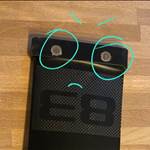
Found this gem in an interview with Adrian. His trench board is using PMI foam.
cacomposites.com/core-materials/pmi-foam-cores/
Water proof core and bonds well with epoxy, unlike XPS. Looks very interesting.
Is it available in board thickness or more for sandwich, a substitute for PVC? It's sold as rohacell.
I wouldn't believe bold claims on the strength of said foam till actually seeing the foam hold the suggested weight and not get squashed.
This one seems to have documentation, but ask yourself why they are not building more objects out of these amazing materials. If they are as good as they are claiming, they would be useful in a multitude of different situations, not just what they currently are using them for.
Select to expand quoteSubsonic said..
why they are not building more objects out of these amazing materials. If they are as good as they are claiming, they would be useful in a multitude of different situations, not just what they currently are using them for.
Cost, availability (in dimensions needed for new uses, as suggested above), lack of awareness in other industries that could benefit...
I see that it's closed cell but there is mention that it will take up moisture via counter defusion. So unsure it'll do what XPS or PVC does. Although perhaps they are talking about aeronautical engineering levels of moisture when our purpose are far more agricultural.
Price is likely to be a factor.
PMI is a little stronger and more rigid. The tradeoff for that is brittle.
Interestingly the elongation at break is same as EPS, so it will fracture at the same sort of bend angles. Its strength then is a little irrelevant, as the limiting factor is the laminate - ie: that skin prevents bending more than the core does. So the force to make a board bend (overcome laminate rigidity) is the same in all boards, then the foam breaks regardless of what it is.
Given the big expense, I'm only seeing the advantage of won't suck water ......... and properly designed and looked after boards have been fine in EPS for decades. Not feeling the vibe for cost v benefit. Except for maybe only on the deck, but hey PVC and SAN (corecell) do that just great.
The laminate thickness on most boards is ridiculously thin, specially on "good boards with good foam", and just like Mark said, that's where the strength comes from. The 'compression tests on these foams are funny as well.
My recollection from my boat and board building days is that it's crisp and nice to shape but has some weird properties. It has internal stress so larger blocks will warp as they are shaped/cut. We used to use it for the bottom sandwich on windsurf boards and those boards would sometimes get some strange pressure dings like the foam sort of collapsed in large areas. It's heat resistant so it can be used with prepreg, I know a shaper who made a sailboard from solid PMI and prepreg carbon in the '80s, he said it was stupidly stiff and awful to ride. There may be newer/better formulations these days, I haven't touched it in 20+ years
I rode the board at Hood River these are the specs. 4-11 x 18.7 x 40 litres . They are finishing the dimensions on the 30 , 50 & 60 litre boards.