The old topic : www.seabreeze.com.au/forums/topic.asp?TOPIC_ID=60914
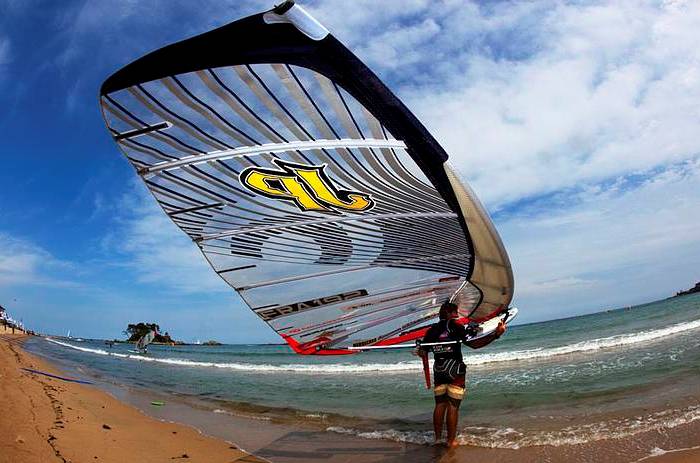
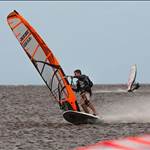
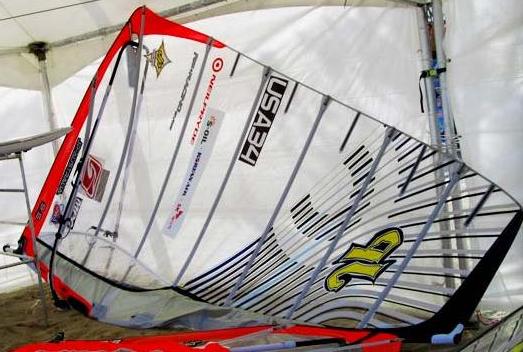
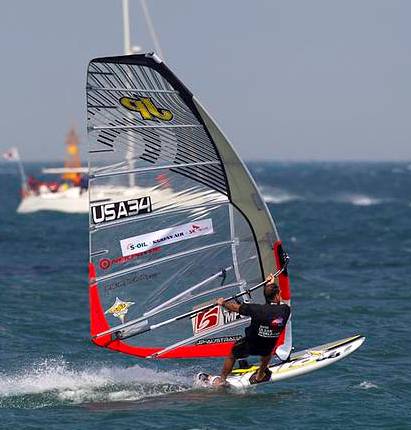
Robby Swift K89 with the new RS Racing EVO III.
The sail will be in Ulsan, Corea, with the team Pryde.
/images/misc/forum-image-missing.gif
might have to get a 6.2 if thats the size they make now,so i have all NP RSR evos II's with the 6.2 III
Ooh, just noticed the wrap around clew. So does that mean their theory for leech twist off from those massive cut outs is now redundant?
You don't think it'll twist now? Why's that? Looks to me like it'll be a more controlled twist with the tack strap playing a role in that.
Sam.

RS Racing Evo II then RS Racing Evo II Ltd and now RS Racing Evo III all within roughly a year...
Quite confusing or frustrating for those who got the Ltd I guess!
I'm hangin' for a 6.2 too!
It looks like the leech is still twisting off the same as evo 2,just above 3rd batten up.
The luff shape appears to have changed a bit - is it even wider around the boom?

Hi Sausage,
Found this interview with Robert Stroj on the Pryde site. Explains it all well.
Sam.
Robert Stroj Interview (NeilPryde Design)
RS:RACING EVOIII and the Integrated Compact Clew
Q. Some of the top NeilPryde Team Riders will be racing on the EVOIII this season. Why?
As with any very new development it’s always a challenge to get all the little details 100% right and it took a longer time to finalize the design than was originally planned. We wanted to make sure that there was plenty of testing before the sail gets introduced to the market.
For those reasons we decided to have only our international team register and use the new RS:RACING EVOIII sails during the 2010 racing season so that we can introduce fully tested sails to the market later this year.
Q. Will there be a difference in the EVOIII sails introduced to the market later in the year from the ones the Team Riders are using now?
The sails introduced to the market will be the same designs as used by the team during the season, but will be introduced in new colors and different graphics.
This is a very similar concept to the current EVOII Limited Edition sails which are exactly the same designs as the regular 2009 EVOII sails, just with new graphics and colors.
Q. What is new with this sail design?
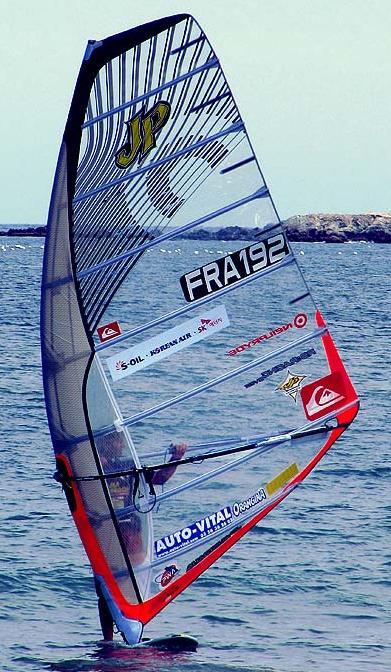
With this sail we introduce the Integrated Compact Clew where, in comparison to the current Dynamic Compact Clew, we have eliminated the cutout at the clew and connected the foot area with the leech by closing the sail behind the boom end.
I have been thinking about this clew concept since my time at ART. After the introduction of the Compact Clew that came out on the RS5 at the end of 2004 I was hoping to be able to take this concept one step further and use all the advantages of the Compact Clew without having to compromise the outline of the sail.
Q. How does it work and what are the advantages?
The real advantage of this concept is that there is a tension connection between the foot edge and lower leech. This helps to keep the foot of the sail from blowing out in gusts and also makes the whole leech twist, harmonically, getting even more out of the advantages already associated with the regular Compact Clew.
In addition, there is the benefit of a cleaner sail outline, when compared to the Dynamic Compact Clew, and therefore better aerodynamics as it is not necessary to have a clew cutout.
In comparison to regular sails with a clew on the back edge of the profile the EVOIII has all the benefits common with the Dynamic Compact Clew: improved lower leech twist and much reduced draft movement due to the lower leech ability to create reflex behind the boom which releases excessive power and effectively locks the draft forward.
After long development (since May 2009) we ended up designing a very simple and precise sliding rail system for sail closure behind the boom. It works similar to a zip but is much stronger and incorporates a batten to support this area as well as evenly distributing the high load coming from the clew grommet.
With this system being very new we decided, like previously mentioned, to ensure it is fully tested prior to introducing new sails to the market.


Re-inventing the wheel!,this concept was done years ago by Monty and Robert but back then they used a special boom end that came apart to fit the clew into position,since then sail design has come a long way you'll see most manufacturers,Gaastra,Simmer are using the same concept on their race sail and i bet there will be a few more following.....any bets on the old cutaway designs making a return
Sausage, I think with this concept tightening the tack strap will have some impact on the lower leech tension. Tightening the tack strap simulates having more luff round in the bottom of the sail and gives it more draft depth down low. With a convensional sail ( no cutout) or with the EvoII type large cutout tightening the strap would have little or no impact on the leech above the boom . In the case of a conventiomal sail you have a rigid structure between the 2 ,the boom, and in the case of the large cutout the leech below and above the boom are quite detatched. With this system though with the leech fully connected and the clew set forward from the leech I beleive tighetening the strap would tighten the leech just above the boom to some degree.
I am interested in how this goes, been done before as people have mentioned but now it is a more user freindly system. Simmer and Gaastra are also doing it.
The talk about aero improvements is interesting. In pure theory, yes having a large cutout is draggy, but in reality you have a boom causing turbulance in this area of the foil anyway so I suspect any real drag reduction would be pretty minimal.
Martin,
Thanks for that explanation - will definately take a closer look next time rigging.
So for lighter winds have tack strap done up as tight as possible, whereas slacken off slightly for higher (overpowered) winds. Is this theory correct?
I do the tack strap right up every time and it is very noticeable how much it tightens the leech up on RS's and Evo 2.
Can,t see the tack strap having an impact on the leech above the boom on an EVO2 with that big stepped clew. The end of the boom batten flexes independant from the clew allowing the leech above the boom to breath, part of the reason why they do it. So if you increase tension along the foot which is what you do when you tighten the tack strap how does that impact this flex? it will still open under load will it not?
I will have to have a play with a my KA race which has a large step and see what happens to the leech above the boom when you tighten the strap. I might be wrong????
Lots of talk about nuts going on here
There is no doubt about it that cranking on the tack strap on the RSSM3/Evo2, tightens the lower leach to some degree. More importantly it keeps the draft low, giving you more control. In the case of the cutaway clew it creates a defined pivot point with the addition of + outhaul to keep the power on in light wind and open the leach up for higher wind and gusts, whilst keeping the draft low and forward ( S ) shape batten.
So nutters crank on the tack strap....in all conditions
Mmmm, was that a bit of a swipe???? Interesting comment as the EvoII has the the lightest lower leech construction I have seen in years and I noticed that they have beefed it up abit for the EvoIII.
Still may play with my sail to see what I can learn, which by the way has 7mil mono, aramid Xply, mark cloth and dacron patches on the lower leech.
Love to Rick, never stop learning!!!
I just had a play with a 5.4 Race. It has a 30cm stepped clew so its reasonably large.
I pulled the tack strap on as hard as I could, way more than I would ever rig it.
There was a very small movement in the leech above the boom and I mean very small. What surprised me a bit was that it tightened (if thats what you would call it) more at batten 5 a bit higher up than I would have expected. I think the stepped clew is a factor in this.
So I will conceed some minor defeat here, it does effect the leech above the boom , JUST.
However I could place 2 fingers on the end of batten 7 and even really small pressure let the batten bend and the leech loosened off again. I still contend that on the water when the sail is loaded and you are hanging your body weight off the boom that the tack strap has little real world impact on the leech above the boom on sails with large stepped clews. The rig is so dynamic with both the batten at the step flexing and the mast flexing and the leech is constantly working.
On the Evo 111 with the enclosed clew I think the tack strap will have more impact on the leech.
The real reason for cranking on the tack strap is still to force more draft into the lower forward section of the sail, that is where you can really see it effecting the sail shape.
Enough from me, now I will go and see if I still have a life.
Just as a boom vang tightens the leech on a sailing boat ...... the same thing applies to a tack strap for a sailboard, but less dramatic. Track strap story now finished ! Go out on the water and try it.