Hey guys, need tome help/advice on why I couldn't sail upwind on Saturday.
I was sailing on Saturday arvo at RQ beach (Manly) and a couple times I pointed too far downwind, so I tried to head upwind to correct, and kind of stalled, and ended up drifting sidways. I ended up tacking, heading back out the other way and then coming back in and made sure this time I didn't point to far down wind to get back to the beach.
Context;
Winds were decent 17-25 or so knots (I guess?)
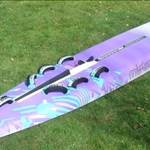
I use a Mistral One Design raceboard (as in my avatar). Centreboard was up when reaching/heading downwind. I put the centreboard DOWN when I started to head upwind. Sailing with an Ezzy 6.5 Superlite.
When I turned upwind, I made 100% sure that I was not heading directly into the wind, and was pointing about 45 degrees, so not too high.
Mast track was about halfway back because for most of the afternoon I was just reaching back and forth across the wind. Was this the problem?
I haven't stalled like that before, so it was new for me. Seemed strange considering it was pretty windy.
Don't beat yourself up about it, if I remember rightly the wind was moving around from S to SSE and even SW at times.
So one minute you heading across the wind and only when you turn around you realise that you were actually heading more downwind and then you struggle to get back to your starting point. esp. at Manly
Cheers Tristan! No beating up going on here Still had a blast!
Have to catch up soon for a sail.
When sailing upwind on race board have the mast track at the front maybe a little back with smaller sails, about 20cm, if you are way overpowered rake the centre board back about ten degrees.
Also use the front two footstraps to tilt the board to leeward so the rail bites and provides added lateral resistance.
45 degrees off the wind would be about as high as you could go I would have thought. Just need to bear off a bit and find the sweet spot, good chance to practice your tacking, or just do as I usually do and sail back to the beach and do the walk of shame.
Select to expand quotebc said..
When sailing upwind on race board have the mast track at the front maybe a little back with smaller sails, about 20cm, if you are way overpowered rake the centre board back about ten degrees.
Thanks Simon, I tried to push the mast track forward but I can't seem to get it to move forward while I'm sailing. I can pull it back no problem though. Is there a trick to it?
Hi Mate, it just comes down to practice but it is essential to get the movement back and forwards in the track down pat on a raceboard. To get it to slide forward (ready for upwind sailing) rake the whole sail backwards a bit, then give in a sudden push forward. That way the pressure on the mast base should automatically slide the base forward. Its the opposite to bring it back (where you will want to try to stand the rig upright to pull it back (ready for a reach).
BTW the basics are:
Upwind: Mast track forward, centreboard down (use front straps)
Reaching: Mast track back, centreboard up (so you can plane) in the back foot straps.
Dead downwind: Mast track forward, centreboard up
Also, reading your post about the stalling (and drifting sideways) I'm guessing thats because everything is too far back for upwind sailing. To go upwind you need to develop the technique of pushing the leeward rail into the water (and raising the windward rail) in the forward straps. If you are stalling, you're pointing to high. If you tip over or get pulled over by the sail, you're pointing too low.
I think the stalling was primarily because having the centreboard down and the sail back in the track puts the coe behind the centreboard which causes spinout. not so much a case of pointing too high but pointing too high for the setup.
moving the rig forward gets the sail balanced with the centreboard.
Select to expand quoteda vecta said..
Hi Mate, it just comes down to practice but it is essential to get the movement back and forwards in the track down pat on a raceboard. To get it to slide forward (ready for upwind sailing) rake the whole sail backwards a bit, then give in a sudden push forward. That way the pressure on the mast base should automatically slide the base forward. Its the opposite to bring it back (where you will want to try to stand the rig upright to pull it back (ready for a reach).
BTW the basics are:
Upwind: Mast track forward, centreboard down (use front straps)
Reaching: Mast track back, centreboard up (so you can plane) in the back foot straps.
Dead downwind: Mast track forward, centreboard up
Thanks da vecta, that's awesome!
AntsC below is a post copied from the gear review section under the 377L thread, it may be helpful
"Might be simpler to describe like this: in-between points of sail in marginal conditions require some 'best' compromise of track/centerboard position. If the blade is down, the track must be forward. If reaching, retract the centerboard before pulling the track back and usually then only if a plane is sustainable with the blade all the way up. BEST sub-planing/all-around setting is generally with the mast track back about 1/4-1/3 from the front. Always better the track is a little too far farward than too far back and the board flat and fast on the water than dragging the tail.
UPWIND: When the blade is fully down, the center of lateral resistance (the centerboard!) is forward which requires a forward mast track position to balance the board and prevent rounding up. The center of effort stays forward, the board flat and fast but the rig raked back for power and control. As the wind increases to the point of being over-powered, over-railing or rounding up then the track can be moved all the way forward for better control. You may find that in marginal conditions the board will point better upwind and rail easier if the track is at that sub-planing/all-around setting suggested above.
REACHING (in PLANING conditions): When the blade is fully retracted, the center of lateral resistance (the fin!) is aft and if you are in the reaching straps then the track can be pulled WAY back but only far as needed to reduce surface area and balance the board. Again, you need to be fully powered-up and on a plane in the straps for this to work at the most aft position(s). Visualize that you are sailing a big slalom board that happens to have a lot of unused length in front of the mast and you'll go just as fast as one! Work towards this position as skills progress and conditions allow. Start out by keeping the mast forward enough to drive the board off the wind and stay flat and fast. Assuming good technique and rig tuning, rule of thumb is have the track far enough forward to keep the foot of the sail along the deck and not drag the tail but far enough back to keep the weather rail up and not drag the clew. Keep your front hand back on the boom and arm straight so the rig is upright and powerful but sheeted in and raked aft over the fin. Think of the centerboard/track interaction as shifting gears from 'upwind' mode to 'reaching' mode. In marginal conditions, it's always better to be spinning a lower gear then lugging a higher gear and keep everything a bit forward. In powered-up conditions you might just skip the middle gears altogether going from upwind mode directly to overdrive as you bear off on a reach.
It's this dynamic versatility and rewarding of good technique that makes raceboards so interesting"