I am on the verge of learning gybe and only thing to prevent me going faster alpha is now proper sail flip.
So short question.
Should we avoid to grab the mast in the process and grab strictly boom to boom ?
or
this doesn't matter much ( and you are living prove that could do fast planing gybes when grabbing the mast every time ?
The question matter for me, at this time I can possibly learn either way, to avoid wrong habits in the future....
boom to boom is the best because it allows you to pull down on the boom while entering the gybe to keep the rail of the board engaged and allows you to pull down on the boom while exiting the gybe to help transfer power through the board and keep you planing.
boom to boom also encourages you to keep the mast away from your body during the transition which is a good thing.
I am still trying to get proper carve jibes, usually I grab the mast if I am in defensive mode, definitely it slows you down, and then the board turns upwind and stops. I call it the hand-brake jibe.
Macro,
Boom to boom - resist grabbing the mast although I know a lot of competent windsurfers who grab the mast still.
(my 2 cents from 2011 thread)
Front straight arm tends to keep your sail and you more upright (and forward) which in turn retains some of the power right into the turn. Leaning back is of course a no no. Three things to remember - commit, commit, commit. On the subject of rig flip I sail in really rough conditions and sometimes it is easier to plane out of the gybe clew first and once you have your feet in a good position to deal with the messed up conditions then flip the rig. If you watch pro slalom races you will see them flipping very late indeed. Of course those guys are pros. In flatter conditions I tend to flip the rig much earlier (board 90degrees to wind /exactly downwind) which gives me good power out of the turn.
PS - I used to gybe with an underhand grip (leading hand) but there was a thread here years ago espousing the benefits of an overhand position. Took me a while to change but an overhand position is the only way to go.
and again in 2012
Start bearing away to build some decent speed. Bend your knees and commit and that means really commit to the turn. Overhand grip if not already and straighten front arm (pushing sail forward and upright) whilst sheeting in back hand as you initiate turn.
As you pass through downwind direction release back hand (even give the sail a little push depending on how strong the wind is) Resist moving all over the board with your feet and don't lean back as this stalls the board very quickly - in fact if you remember to lean forward towards the mast track this keeps the sail nicely powered and keeps the board trimmed nicely.
Also try and find some swell to help you around as plowing into the back of a wave tends to throw everything into disarray.
.
Here are some links from previous threads (enjoy the reading);
www.seabreeze.com.au/forums/Windsurfing/General/Fix-my-gybes/
www.seabreeze.com.au/forums/Windsurfing/General/best-ever-tip-for-gybing/
www.seabreeze.com.au/forums/Windsurfing/General/in-search-of-the-planing-gybe/
www.seabreeze.com.au/forums/Windsurfing/General/Carve-Gybing-2/?page=1
www.seabreeze.com.au/forums/Windsurfing/General/Tips-for-gybing-when-over-powered/
www.seabreeze.com.au/forums/Windsurfing/General/Another-Gybing-Instructional-Vid/
I always use the overhand grip and go boom to boom. Fully powered I think the most important thing is too really try to get your body weight forward in the carving part of the gybe and as Sausage says commit. As soon as you stand on the tail of the board to try to slow things down it all goes bad. I try to get my chest over where the boom joins the mast, 2/3rds through the gybe stand up a bit and flip the sail and finish in a crouched position. One big pump, hook in and away. (hopefully) Harty had a good article of the finer points of gybing in last months windsurf mag.
Boom to boom and strap to strap for a fast alpha on flat water.
Here is a light wind one:
Select to expand quotesausage said..
Macro,
Boom to boom - resist grabbing the mast although I know a lot of competent windsurfers who grab the mast still.
(my 2 cents from 2011 thread)
Front straight arm tends to keep your sail and you more upright (and forward) which in turn retains some of the power right into the turn. Leaning back is of course a no no. Three things to remember - commit, commit, commit. On the subject of rig flip I sail in really rough conditions and sometimes it is easier to plane out of the gybe clew first and once you have your feet in a good position to deal with the messed up conditions then flip the rig. If you watch pro slalom races you will see them flipping very late indeed. Of course those guys are pros. In flatter conditions I tend to flip the rig much earlier (board 90degrees to wind /exactly downwind) which gives me good power out of the turn.
PS - I used to gybe with an underhand grip (leading hand) but there was a thread here years ago espousing the benefits of an overhand position. Took me a while to change but an overhand position is the only way to go.
and again in 2012
Start bearing away to build some decent speed. Bend your knees and commit and that means really commit to the turn. Overhand grip if not already and straighten front arm (pushing sail forward and upright) whilst sheeting in back hand as you initiate turn.
As you pass through downwind direction release back hand (even give the sail a little push depending on how strong the wind is) Resist moving all over the board with your feet and don't lean back as this stalls the board very quickly - in fact if you remember to lean forward towards the mast track this keeps the sail nicely powered and keeps the board trimmed nicely.
Also try and find some swell to help you around as plowing into the back of a wave tends to throw everything into disarray.
.
Here are some links from previous threads (enjoy the reading);
www.seabreeze.com.au/forums/Windsurfing/General/Fix-my-gybes/
www.seabreeze.com.au/forums/Windsurfing/General/best-ever-tip-for-gybing/
www.seabreeze.com.au/forums/Windsurfing/General/in-search-of-the-planing-gybe/
www.seabreeze.com.au/forums/Windsurfing/General/Carve-Gybing-2/?page=1
www.seabreeze.com.au/forums/Windsurfing/General/Tips-for-gybing-when-over-powered/
www.seabreeze.com.au/forums/Windsurfing/General/Another-Gybing-Instructional-Vid/
Please, don't take it personal, just discussing gype mechanics
bearing off to build up board speed is part of the journey towards awesome gypes, but its not the finished product
Bearing off, kills sail power potential, ultimately all board speed should be driven from the sail, more cross wind, too 10 -20 degrees off wind makes for the gype with most potiential
In my experience, the beginner gyping usually is too concerned with the carve in, over carving, hanging onto sail too long, and then flipping way to late
Again, bearing off will help with this as it kills sail, but in terms of great gypes, you need better sail control, then just to kill the sail, you should be getting pulled hard in, and hard out, and with the whole bear off to build board speed, you miss that opportunity
Grapping the mast suggests your not balanced, and not in the right position to transfer the potiential sail power to the board, infact by grapping the mast, your killing the intial pull from the sail
If your having to push the sail, wish is part of it in the beginning, you've stuffed it, created drag, you can still plain out no worries, but it wasn't perfect
The gype is a great part of sailing as it feels like it can continue to be broken down into more and more subtle skills as time goes on
Initial it can just be broken down into three parts, carve, flip, exit
Most people spent too long focusing on the carve, just gently come in, allow yourself time for the flip, and exit
HA, good luck Macro and co.
Select to expand quotesailquik said..
Boom to boom and strap to strap for a fast alpha on flat water.
If you look closely, you actually let go of the rig entirely.
The daffy gype is beautiful,
Marco, you should notice, it wasn't an aggressive carve in, and the flip was focused on maintaining awesome board trim, ha, that truly is awesome board trim while also maintaining a redonkulous high level of skill with sail control, you'll also notice he stayed low, bend knees, not being lazy, making for better driving of the board and heaps better balance on the re gather
ha, without being too rude to the King, its an awesome gype, with so many little subtle skills, but.................its not strap to strap
Select to expand quoteMilsy said...
ha, without being too rude to the King, its an awesome gype, with so many little subtle skills, but.................its not strap to strap
I think you mean it's not a step gybe....
Strap to strap is the gybe he did, I'm sure he can do a step gybe perfectly too.
Hey, its a sweet gype, great guy
But I don't think its actually, technically a strap to strap gype,
Strap to strap is more instantaneous between the two front straps, daffy, takes foot out, places on board, re balance, then places back foot in strap
My example of strap to strap would be, daffy takes front foot out of strap, as that foot is placed on board, the other front foot is now put into front strap, just about instantaneous in good examples
I'm sure he can do that perfectly as well
Macro, I am learning to gybe too (very slowly). May I pass on a few important discoveries?
only grab the mast to recover from a gybe that is going wrong. Grabbing the mast will cause the board to round up and lose speed. In general, the further back on the boom you grab, the better off you will be.
Practice the rig flip and foot changes on dry land until they are automatic.
Practice only the ideal technique - bad habits will come automatically!
When they say have the front arm straight, have the front arm straight! The sail will really pull you into the turn and give you a burst of speed.
Sheeting in hard with the back hand is really important because without it your sail will lose pressure too late and your rig flip will be too late and you will round up into the wind.
Reaching back with an underhand grip after the rig flip encourages you to stay low and you can reach further back.
Resist the urge to stand up straight as you flip the rig.
The choppier it is the more you need to bend the legs and pull down on the boom.
Gybe at every opportunity. Every time you chicken out or jump off you have lost an opportunity to practice.
Select to expand quotesailquik said..
Boom to boom and strap to strap for a fast alpha on flat water.
Here is a light wind one:
That gybe is a work of art.
When I grow up I want to gybe like Daffy.
Select to expand quoteMilsy said..
Hey, its a sweet gype, great guy
But I don't think its actually, technically a strap to strap gype,
Strap to strap is more instantaneous between the two front straps, daffy, takes foot out, places on board, re balance, then places back foot in strap
My example of strap to strap would be, daffy takes front foot out of strap, as that foot is placed on board, the other front foot is now put into front strap, just about instantaneous in good examples
I'm sure he can do that perfectly as well
Yeh thats a beautiful Gybe Andrew and can only dream of matching your alpha's. But Ive got to agree with Miller. Correct me if I'm wrong but, when I think I've jagged a sweet strap to strap gybe.
Ive done this,
Come in powered up just slightly into the breeze. Back foot comes out of strap and straight onto le-ward rail between front and rear strap, pulling up hard on the balls of your feet in the front strap, lifting windward rail going into the turn looking for the consistant arc. As the board flattens and your about to flip your rig your front foot comes out as your new front foot goes in, pulling in on the sail and straight into your harness as back foot goes in, then fully sheeted in on the exit. Takes alot more effort but feels so good when you pull it off sweet!!
Macro - Good Topic!!!
It seems you do what I do re the mast grab, slowing and pointing too much upwind - Gee there are some good pointers above, i just need to practice practice practice like Windxtasy says gybe gybe gybe
Look out Alpha's - Thanks everyone.....
without confusing things,
i'd say it's definitely a strap to strap gybe.
a step gybe is when you step forward up towards the mast with your old back foot. as sausage alluded to in rough water you come out of the gybe clew first which keeps the power on. this also results in a step forward otherwise your body weight is in the wrong postion and you fall forward into the turn on exit. exiting clew first keeps the power on which is why the pwa guys do it and why it's also called a power gybe.
in smooth water or when assisted by a wave the strap to strap gybe is easier. if you try a strap to strap in rough chop chances are you'll stall. strap to strap also allows for an earlier sail flip because the power is dumped from the sail. usually, the issue with strap to strap is you stall the tail and fall backwards because your weight is to far back.
I think what sets the pros apart from us is they have the deft touch and place their feet exactly where the board needs to be balanced depending on water state. whether that's strap to strap or step or something in between.
only common item is place your feet in the centreline of the board with your first foot movement. doing that gives you a balanced, smooth carve so you can forget about the board and focus on the rig.
ha, no, its definitely not strap to strap
sorry, I think maybe because he completes exit without releasing initial front foot, in fact his gone well past the exit without changing straps and pulling down hard, it looks like maybe strap to strap, but his feet don't complete that, he simply doesn't put his new front foot in the strap, he pauses, poses, then straps, back first
great gype, definitely not strap to strap, in fact a lovely looking combo version of strap / carve,
the beauty of the gype appears to be more in the trim and flip, as opposed to hard pull forward exit, more great gliding in between entry and exit, resulting in not much loss of speed with the flip,
I agree with Micky, strap to strap is more about preparing for some grunt on the way out, creating it by taking the flip and exit in one hit
Select to expand quoteMilsy said...
Hey, its a sweet gype, great guy
But I don't think its actually, technically a strap to strap gype,
Strap to strap is more instantaneous between the two front straps, daffy, takes foot out, places on board, re balance, then places back foot in strap
My example of strap to strap would be, daffy takes front foot out of strap, as that foot is placed on board, the other front foot is now put into front strap, just about instantaneous in good examples
I'm sure he can do that perfectly as well
Yep your right on both counts.
Great videos Gestalt, thanks man
AS explained, they look like light wind versions, they flip to late stuffing up a powered exit, we would have flipped and changed straps in one motion
we are concerned with preparation for big pull out of exit, the ones you show have flipped past exit
Select to expand quoteMilsy said..
Great videos Gestalt, thanks man
AS explained, they look like light wind versions, they flip to late stuffing up a powered exit, we would have flipped and changed straps in one motion
we are concerned with preparation for big pull out of exit, the ones you show have flipped past exit
The wind is light... so the boards are wide... so you are travelling slower... so the turn is slower... it is a strap-to-strap for a wide board.
As has been demonstrated, strap-to-strap doesn't mean "move each foot exactly once".
Strap to strap.......its fairly self explanatory
The difference lies in sailing approach as in free ride to slalom and the difference in board speed and sail power
I think you are taking things to literally Milsy.
if we separate out the feet the difference between a strap to strap and a step gybe is specifically about when the feet swap. a strap to strap gybe the feet switch after the rig flip and the step gybe the feet switch before the rig flip. this is regardless of gear and regardless of when you flip the sail whether it be half way through the gybe or at the end of the gybe.
if you watch the Sam Ross strap to strap gybe at 2.50 and onwards he specifically talks about the feet.
Ha, my fault , i thought we could discuss gypes from a slalom, speed point of view, but it appears it's quite the emotive subject for some
I'm coming around tis arvo man, i got four deltas to fit, some screws to cut............thanks slicky
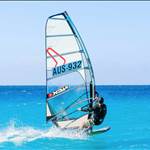
I used to gybe by letting the mast rotate in my hand, until phil mcgain yelled at me while sailing with my to go boom to boom. You can see here in the big AUS 624 stickers as i rotate its slow and sail is congested etc. last gybe at the end the harness lines hook back in. It was amazing the increase in rotation because you can actually throw the sail around if you go boom to boom , which is more helpful in lighter winds.
Also a major advantage was pulling in the power sooner out of the gybe and faster exit.
I notice in nuking winds and rough water many pros on PWA still use the mast to help settle at the end of a gybe.
But that wouldnt be a problem for speed sailors
If you want to know how to gybe , watch Phil Mcgain with his slick tight gybe with heaps exit speed
OK. Milsy is partly correct. I classify slalom gybes in two ways. 'Strap to strap' and 'Step'. Mine is a modified S2S. There is not another generic description of it. It is in the S2S category, as it NOT a 'Step' Gybe.
Truth be told, my step gybe is not as good  so I seldom use it unless using a big sail, overpowered in rough water or when marginally planing (can't plane through). I find that at high speed on flat water, the step gybe has much more tendency to upset the glide and balance of the board as it almost forces you to get your weight very far forward on the board as you step, and then you must drop the rig towards the tail a lot. This results in a rocking of weight from back, to forward, to back again, slowing the glide. In an overpowered situation in rough water, this is not as important as pure control, which is why it is mostly favored by slalom racers.
In the 'pure' strap to strap gybe that Milsy describes, the old front foot goes to the centre of the board between the straps. Your full weight goes onto it as your old back foot is inserted into the new front strap as you sheet in. Then all the load from the sail goes onto your front foot as you put the back foot in. This works well on a wave board or another draggy board with the center of resistance well forward, but on a slippery slalom board the center of resistance is well back towards the fin of you are still planing free. This means that if you try to put the front foot in and transfer all your weight to itas you sheet in, the board will bog down and you won't be able to rake the rig back and keep pressure on the fin to accelerate. So instead, I put the new front foot in the centrer between the straps to drive the board and get the back foot in to maintain that as the board accelerates. Then you can maintain drive as you slip in the front foot.
On a smallish slalom board in flat water at high speed such as in a Alpha situation, most of the best Alphas I have seen are modified 'strap to strap'. This also becasue in a high G turn, you don't have time to do the two stage step then flip, and if you do, you are more likely to upset the board and have a longer pause between power off and power on.
On my 40cm speed board I actually skip the foot on the rail at the start. I start the carve with my foot almost in the opposite front strap and parallel to the rail. As I flip the rig I simply twist my foot a little so it ends up in the other front strap and sail away with both feet more or less in the front straps until I have enough speed to move my new back foot to the center of the board or the back strap. There is very little room for your feet on these boards and they bog down very quickly if you have any weight back so this keeps the weight well forward as the rig flips.
On my wave board I usually do the classic 'strap to strap' that Milsy described.
In any case, you don't want to grab the mast if you possibly avoid it!
Select to expand quotemathew said..
sailquik said..
Boom to boom and strap to strap for a fast alpha on flat water.
If you look closely, you actually let go of the rig entirely.
If the rig is really balanced and leaning into the turn as you let go, it should just rotate and land in your hands. It's a great felling when you get it right!  It helps if you move your old front hand close to the mast just before the flip and give it a little pull across in front or your your face as you let go.
Milsy is right,
This is the GPS speed sailing section, and I approach the conversation from that point of view
Gestalts vid, really light wind with free ride boards and mega small under powered sails............it aint gps sailing
the vid the other guy posted.....not one decent gype on the thing
Daffys gype is awesome because its light, and the trim and sail control past the carve through the turn to the flip is really really good, you may notice in Gestalt vid, there not good, rails catching, and just about stopping their going so slow
From a slalom, gps, powered up and turning fast point of view, strap to strap is about preparing for grunt on the way out, not avoiding it,
not, killing the sail to reduce drag, that sounds more like something that isn't powered sailing, sailing clew first, that's all good if its light and sloooow,
Back in the day when I first learned to survival gybe (ugly but dry), I used to grab the mast as an intermediary stage between alternate sides of the boom. I started getting a lot better over seasons, until I plateaued at carving in confidently but never quite punching out.
Determined to gybe better, I studied the theory then took about a season to un-train myself of some bad habits. Now I go from boom to boom every time. Its much more economical and less disruptive to board trim (which is king in planing out).