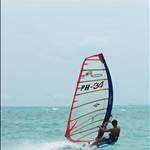
Is there any way to check? I got 26.8kts at the end of a session when I was tired doing 1 run on a borrowed GPS last year.. Can't get over 26.2 in ideal conditions this year.. Hoping mine is underreading..

it might be reading high, ha, at your wieght, you'd feel fast at 26kts, which is a good achievement, plus you dont really bear off yet, so 26kts mainly crosswind is a good start suebe
The only way to make sure it's accurate is to have two or even three GPSes. However the one is probably accurate. It takes a change in sailing style to get above 26-27 knots. As John says this is about the speed you get for back and forth sailing. Everyone thinks they are going 30+ when planing before getting a GPS. However this is often not the case.
Just be thankful you can get out when it's windy. Meanwhile I was stuck at bloody work all day and today is windless. At least it's not raining.
Select to expand quoteMobydisc said..
The only way to make sure it's accurate is to have two or even three GPSes. However the one is probably accurate. It takes a change in sailing style to get above 26-27 knots. As John says this is about the speed you get for back and forth sailing. Everyone thinks they are going 30+ when planing before getting a GPS. However this is often not the case.
Just be thankful you can get out when it's windy. Meanwhile I was stuck at bloody work all day and today is windless. At least it's not raining. Yep I am .  I was thinking of you poor buggers as the b wind hasn't obliged much at the weekends lately..
For speed readings, if it has good satellite coverage it has to be accurate. It's not measuring your speed like a speedo. It doesn't need calibration. It's doing calculations based on the timing signals from the satellites and the higher end ones do tricky stuff counting the wave length of the signal. If the base data is correct then the calculations will be correct.
If you have cloud cover and trees and buildings and solar flares and stuff then the signals will be dodgy and you can get bad calculations. Most GPS identify the bad calculations and leave them out. In the old days our speed would jump from 30kph to 300kph and back again. Most of that would not be an issue when sailing on the sea on a nice windy day.
Higher end GPS measure the quality of the signals received and store it with each reading. I doubt if yours would do that.
Sorry but the GPS never lies! As john said you are doing well. Lots of people can't go that fast. Just bear off downwind, then go deeper again. Try following one of the fast guys then watching the angle that they go.
Sue, was the one you borrowed a "GT"?
It's possible the one you borrowed was reading a bit high if it was only a "cheapy"
I'm not sure if all displays use doppler, trackpoint calculation can easily be 1 to 2 knots high, especially if the satellite signal is a bit iffy.
The other GPS was an older model. Not sure what type. Yes I was thinking maybe it was overreading as I'm doing the same thing and can't seem to get that high again..I uploaded this to prove I bore off for the 26.2kts but it seems to prove i didn't bear off as much as I thought..

Select to expand quoteGorgo said..
For speed readings, if it has good satellite coverage it has to be accurate. It's not measuring your speed like a speedo. It doesn't need calibration. It's doing calculations based on the timing signals from the satellites and the higher end ones do tricky stuff counting the wave length of the signal. If the base data is correct then the calculations will be correct.
If you have cloud cover and trees and buildings and solar flares and stuff then the signals will be dodgy and you can get bad calculations. Most GPS identify the bad calculations and leave them out. In the old days our speed would jump from 30kph to 300kph and back again. Most of that would not be an issue when sailing on the sea on a nice windy day.
Higher end GPS measure the quality of the signals received and store it with each reading. I doubt if yours would do that.
Most of the info here is incorrect for our use case (assuming GT-11/31 and to a lesser extent Garmin's):
- while it isn't like a speedo, it does need calibration of the various algorithm coefficients (as you said, they are calculations - different manufacturers blah blah).
- some of these manufacturer design choices, very much affect the usefulness for windsurfing (aka calculations wont be correct), which is why the GT-31 is recommended.
- Assuming we are talking about "doppler", no timing signals are used for calculating speed... it does indeed calculate wavelength of the signal (sort of... you could call a digitial-PLL as doing that)
- while cloud cover does affect the signal, it doesn't do so significantly compared to other sources of errors (eg: the mass of the earth)
- the GT-11/31 (and some Garmin's) do store the quality of each reading, this is known as dilution of precision (DOP), eg: horizontal/vertical dilution
Select to expand quotesboardcrazy said..
I got 26.8kts at the end of a session when I was tired doing 1 run on a borrowed GPS last year..
Are you certain that the borrowed GPS was displaying your speed in knots? Maybe it was set to show kilometres per hour.
Select to expand quotejh2703 said..
Take it for a drive in your car.
Not much point doing that.
I use my gps to calibrate my car speedo.
Car speedo's can legally be up to 10% slow, and then there's the effect of new/used tyres.
Or just accept Sue that this is your top speed SO FAR - and work on what you will do to go faster - and that's not about posting a million times on seabreeze - or buying new kit - it's about what goes on in your head and what you can translate onto the water
Select to expand quoteBen 555 said..
Or just accept Sue that this is your top speed SO FAR - and work on what you will do to go faster - and that's not about posting a million times on seabreeze - or buying new kit - it's about what goes on in your head and what you can translate onto the water
Or just go to Lake George next Jan-March
I've found that very flat water is the secret to speed, especially for lighter sailors.
Select to expand quotedecrepit said..Ben 555 said..
Or just accept Sue that this is your top speed SO FAR - and work on what you will do to go faster - and that's not about posting a million times on seabreeze - or buying new kit - it's about what goes on in your head and what you can translate onto the water
Or just go to Lake George next Jan-March
I've found that very flat water is the secret to speed, especially for lighter sailors.
Except that it might be very crowded there next year 
Select to expand quotekato said..decrepit said..Ben 555 said..
Or just accept Sue that this is your top speed SO FAR - and work on what you will do to go faster - and that's not about posting a million times on seabreeze - or buying new kit - it's about what goes on in your head and what you can translate onto the water
Or just go to Lake George next Jan-March
I've found that very flat water is the secret to speed, especially for lighter sailors.
Except that it might be very crowded there next year
Only when it's windy! Sue doesn't need 30kts+ to get to 30, I'm sure when it's only 20+ or so there'll be plenty of room.
Select to expand quotekato said..decrepit said..Ben 555 said..
Or just accept Sue that this is your top speed SO FAR - and work on what you will do to go faster - and that's not about posting a million times on seabreeze - or buying new kit - it's about what goes on in your head and what you can translate onto the water
Or just go to Lake George next Jan-March
I've found that very flat water is the secret to speed, especially for lighter sailors.
Except that it might be very crowded there next year
Hey guys Lake george is filling up very fast as have had big sea since the channel has been opened and has been raining heaps here so fresh water from inland is flowing in as well. will do an update sometime with a few pics.
Select to expand quotemathew said..Gorgo said..
For speed readings, if it has good satellite coverage it has to be accurate. It's not measuring your speed like a speedo. It doesn't need calibration. It's doing calculations based on the timing signals from the satellites and the higher end ones do tricky stuff counting the wave length of the signal. If the base data is correct then the calculations will be correct.
If you have cloud cover and trees and buildings and solar flares and stuff then the signals will be dodgy and you can get bad calculations. Most GPS identify the bad calculations and leave them out. In the old days our speed would jump from 30kph to 300kph and back again. Most of that would not be an issue when sailing on the sea on a nice windy day.
Higher end GPS measure the quality of the signals received and store it with each reading. I doubt if yours would do that.
Most of the info here is incorrect for our use case (assuming GT-11/31 and to a lesser extent Garmin's):
- while it isn't like a speedo, it does need calibration of the various algorithm coefficients (as you said, they are calculations - different manufacturers blah blah).
- some of these manufacturer design choices, very much affect the usefulness for windsurfing (aka calculations wont be correct), which is why the GT-31 is recommended.
- Assuming we are talking about "doppler", no timing signals are used for calculating speed... it does indeed calculate wavelength of the signal (sort of... you could call a digitial-PLL as doing that)
- while cloud cover does affect the signal, it doesn't do so significantly compared to other sources of errors (eg: the mass of the earth)
- the GT-11/31 (and some Garmin's) do store the quality of each reading, this is known as dilution of precision (DOP), eg: horizontal/vertical dilution
Why cant you just be cool man!?, ha,,,,,,, some great advice sue, breaking thirty isn't easy for everyone, it took me a couple of yrs, actually a lot of the stronger sailors back home had to earn it, it really only comes a bit easier to the heavywieghts, but they got other challenges, like is an 8m in 20kts going to get them plaining, ha,,,,,,yeah, heaps of the central coast guys are hoping to go to lake george early next year for some fun, all up dates are greatly appreciated jimbob, thank you
Select to expand quoteBen 555 said..
Or just accept Sue that this is your top speed SO FAR - and work on what you will do to go faster - and that's not about posting a million times on seabreeze - or buying new kit - it's about what goes on in your head and what you can translate onto the water
GOLD!!!!
Select to expand quotesick_em_rex said..Ben 555 said..
Or just accept Sue that this is your top speed SO FAR - and work on what you will do to go faster - and that's not about posting a million times on seabreeze - or buying new kit - it's about what goes on in your head and what you can translate onto the water
GOLD!!!!
Need to follow some of the good guys ( except I can't keep up with them grr  ) and see what they do. I haven't had my ideal conditions yet - 20 -25kts with the 4.8m + 95ltre which is what I got the better speed on last year.Wind seems lighter this year so far. Where are our W / Sw fronts?
Hi all! How do I attach a gpx file and have it checked for the true 100mtr. dash on land not on a board? am trying to prove a friend wrong as he told me I can't run 18km/hr cuz so can't he. Let me know pls. anyone there's a buzz on our forum when I posted a 24max run and 23kph 100 mtr. dash ..just want to prove a point even when am turning 49yrs this 20th .. It would be nice if you people can analyze the track. I tried tracking the 'loose' points but don't seem to know how. Reply and I will send you the track immediately. Need to keep these 'critters' shut..
I know it's the wrong thread for running but there's no wind right now so just short distance running for now..Regards, JP
Select to expand quotejp747 said..
Hi all! How do I attach a gpx file and have it checked for the true 100mtr. dash on land not on a board?
If you upload the track to ka72.com, it will then be downloadable by other people for a couple of weeks. Come back here and post the info (location, date, etc) and someone will be able to download and check the 100m speed for you.
Are you trying to run over 18km/h for the full 100m, or just looking for an average speed of over 18km/h? (The latter is quicker to work out.)
Cheers,
Dylan.