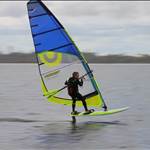
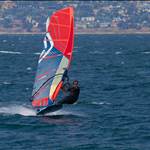
There seems to be endless topics on what gear to use in what wind. It seems there is always disbelief and huge variation in what gear people use in quoted winds. For example one person may claim to plane in 15knots with a 5.8, whereas another person of the same weight only planes in with a 5.8 in 20knots plus.
I reckon some of these differences are techniques related, however have we ever addressed where we source the wind speed from?
For example, 20 knots at a wind station (i.e Seabreeze website readings) equates to approximately 15 knots at sea level, sometimes a little less (personal handheld readings). The wind station readings are taken 10m above sea level. Wind speed drops significantly as it approaches sea level. Plenty of stuff on the web about this.
Therefore if you post or respond to a topic concerning wind speed and what gear, I think it would be great to QUOTE WHERE THAT WIND SPEED IS FROM. This would certainly help all those people who think "how the hell do you plane in 15knots with a 5.8m when Seabreeze has yellow arrows at 15knots!!".
To kick things off:
Weight 85kgs
12-15knots (sea level) 16-20knots (Seabreeze) 6.5m 106lt
15-20knots (sea level) 20-25knots (Seabreeze) 5.8m 85lt/106lt
20-25knots (sea level) 25-30knots (Seabreeze) 4.7m/5.8m 85lt
pretty sure the melville water wind station is only a couple of meterss above the water.
every one has a different view of what 20knots is,1 will call it 25 and another will call it 15.....most of the speedys i know have and occasionally pull out wind meters which usually give a lower reading to what was previously guessed
I cant believe your stats.....I weight less than 80 and i use a 7.0 and im fine for anything up to 25......maybe i just ahve a **** technique or my board is really slow but i wont plane until at least 18 knots on a dead reach
lalalamort,
this is my point exactly. where do you get your 18knots from? If Seabreeze or BOM, then we plane with similar gear in similar conditions. I wont plane my 6.5 till 16-18knots (Seabreeze).
ummm....
seabreeze is bom.
other thing is that you can see what ahd the weather station is on the bom stuff.
also. a lot of us use wind meters.
and it is always about 5 knots stronger on the water than standing on the shore.
i would think that at 85kg on a 105lt board with a 6.5 you shouldn't need more than 13-14 knots to plane.
i think what is also missing from here is the fin size.
if it is tow that you are after, take a leaf out of the freestylers handbooks.
bigish board. small sail. this works much better than little board and big sail.
for eg. at 85kg.
111-115lt board and 5.8 sail (not race sail) should have you planing in 13-14 knots.
other thing, a 5.8m race sail should be used in about 30+ knots.
a 5.8m wave sail is more likely used in 15 knots.
Phil McGain once said "if it's onshore rig 0.5m bigger than you think you should and if it's offshore rig 0.5m smaller than you think". This was for formula sailing, but still holds true to some extent for any gear. Looking into an onshore breeze makes you think its windier than it is and vice versa for offshore.
I suppose my inspiration for this topic came from a couple of weeks ago when I sailed with a guy who was confused about why he couldn't plane in the wind the guy in the shop told him. He was pretty down about it and thought he was doing something wrong.
I explained to him about the differential in wind speed between weather station and sea level (he was referring to weather stations). It suddenly all made sense to him. He was able to peg his quiver against the advice the shop gave, and felt better about his ability.
> if it's onshore rig 0.5m bigger than you think you should
Couldn't agree more. I find many sailors use the numerous gear... in order to sail .5m less in order to make it easier. I'd rather go higher all the time, and work harder at it.
As to wind speed, I agree with the original post - there's something wrong. The guys with the little fancy windspeed machines (that tell them which of the sails to rig) invariably have a higher reading than the local meteo outfit, or my own reading.
It's as if they were reading km/h when it should be knots, or something like that. Or perhaps there's something wrong with those machines. You see them sometimes stand with the thing for an hour, waiting for the wind to pick up, looking discouraged... funny sight.
Other areas for wrong guessing of the wind are onshore versus offshore (clean versus unclean), closeness to da beach, and rising wind versus abating (mostly morning versus end of arvo). Often people quote the wind that was 1 hour ago, and read the chop caused by earlier winds.
As another example: at a comp couple of months ago, we the competitors estimated the wind at about 20 knots - no biggie, was fun. Local sailors around the corner "saw" it at 25 gusting to 40, I need to rig my 4.0m, etc. Discrepancy in the reading there.
I basically pay very little attention to the local wind reading when it comes to selecting sail size, mainly because it's 20+m in the air and isn't affected by the same influences, shore line, dunes etc. In my experience my local wind meter always reads at least 5kts above what it should be, or should I say what it is on the water.
At the end of the day sail selection is a combination of trial, error and experience. Once you've been sailing a while you get a 'feel' for the wind and the general water state, it's intuitive. I always get a giggle out of people with wind meters. Honestly if you've been sailing a few years there's no reason you can't just stand at the water's edge for a minute and say "yep time for the 5.2" etc.
The first few sails of the summer (Hey its December SOON) are always a bit different but the years of experience help to judge what size to rig.
The main measure I use is the sand movement (at the same beach).
ie.
the sand isnt moving, there are people on the beach sunbaking = go home
the sand is just lifting, sunbakers are looking for wind shelter = 5.8
sand is ankle high, only hardcore beachies in shelter / windsurfers on beach = 5.0
sand is calf to knee high - only windsurfers on beach = 4.2
sand is knee high - almost noone left = 4.2 wish I had a 3.7, survival sail.
But this depends on the sand size, at Lancelin its so fine it lifts easily, but then its also more often windy. There the measure might be how many seconds you can leave the window down a crack before the sand is on the dash. Actually the Lancelin thing I notice is when the sand is building up on the down wind side of the car (the window ledges on the outside) - thats 5.0 or smaller. The whole car rocking is 4.2 ;-)
and then there is the always reliable
en.wikipedia.org/wiki/Beaufort_scale
I love this bit
not having a wind meter is fine for those that sail the same beach day in day out.
but move around to several different beaches and you will soon find a meter is worth it's weight in gold. try turning up to a new spot and acurately picking the wind speed when you've never sailed there and don't know what the conditions are indicating.
i can say my meter last time i tested it was accurate.
edit* some meters also do average wind readings. i'd like to see a person pull that off.
I reckon that if the wind reading for Melville Water says it's 20 knots, then it's probably about 20 knots.
Wind meters are all well and good, but it won't tell you what the wind is doing out on the sailing surface (which might be a couple of hundred metres away from the shore). Especially if the wind is sideshore or slightly offshore, your wind meter will always tell you fibs.
I find the good old Mark 1 eyeball seems to work quite well
I could be wrong but I am sure seabreez wind readings are software generated readings based on BOM official readings????
I was told this by a shop owner.... If I am wrong then sorry, but I was misinformed.
Either way if the wind at Meliville is saying 20kts then expect 15......
Cheers GT
I recall an issue of the US 'Windsurfing' mag where they have a 'HotShots' section with a picture of Antoine wavesailing wth a 5.0 in apparently 15knots. I believe this guy is over 100kgs and on a wave board. Is this even possible? I'm 95kg and recond I'd be slugging around with less than 6.5m (rigged full). As I don't wavesail I'd be interested to hear some of you wave guys comment on this one.
I just ask people that have been out. Very accurate.
Right about going to different locations though, can be hard to pick. The noise of the wind rushing through tall trees always gives the impression of another 50%. I remember the first time I went to Kirra, open ocean. On shore rigging up it felt like 40+ knots, the sea looked like nothing but white horses... but it was only about 20kt.
I dont think people really know how strong 15 knots is, i think they think 15 is actually 20, 20 actually 25, i think you can definatly get going in 15 knots with a 5.5 and 90 litre board ,me and my friend do it all the time.

Justin is dead right with the moving around and wind-meters make it easier- somewhere like burrum heads at low tide is a good example with no real visual indicators (cept for the whitecaps a few km's away). I used to be the opposite with just looking at conditions and choosing, but I got caught out a few times at different locations. The wind meter also became a tool for tuning. People hundreds on fins yet they will guess at the windspeed, those in any other sport affected by windage would just laugh.
I find here that my meter reads repeatedly low for what everyone believes the wind strength to be, though I do try to get readings as close as possible to the water and not where the wind is being lifted etc. Most do tend to over-state the wind, I am 95kg- in 30knots i'm hanging on to a 5m yet other smaller folk claim use similar in the same stated wind strength with ease. Last week here many where surprised at the meters reading 28-29knots peak before we hit the water with the speed gear when all were adament it was well over 30 (though the meters don't respond well to that 3 second gust). Yer RQ and the beacons where all reading higher as they are off the ground.
The most valuable thing I find with the wind meter is the average windspeed rather than the peaks- where some will say it's blowing 12knots (peaks) and i'll have a crap time but I know if it is averaging 12knots then all is good and it's worth going out.
For me it's pretty much (average windstrengths, peaks quite a bit higher)-
12 knots: 7.6m race sail on 105L slalom
16 knots: 6.7m race sail on 105L slalom
18 knots: 5.3m wave sail on 86L waveboard
22 knots: 6.7m race sail on 63L speedboard (I think)
26 knots: 5.4 race sail on 63L speedboard
I have one of those wind meter things but never use it.... surplus to requirements really!
You just learn what to rig and how to judge the conditions... very much learn your local spots also, how much white cap there should be for good wind, how much trees usually move etc.
Never needed it, think i used it once just for curiosity.
Bubs
Also on personal wind meters, mine bounces around in the glove box of my car and I highly doubt it is as accurate as something that the BOM would use. But it's all relative, I know if the meter I am using says 15 knots I can use a 5.7, I know if it's reading 25 I should be out on the 5.0. Doesn't really matter what other peoples are saying cause I know the one I am using.
Use the handheld ones as a personal tuning tool and don't get too full on with it all, after all the fun is on the water...not reading its strength.
They make the white caps/chop stand out more and u can see the wind on the surface alot clearer.
I thought it was the other way around as Polarising lets you see through or into the water, non-polarised gives a better showing of the water surface's texture. 
Same deal- the reflection on the water is eliminated therefore you can see surface detail better and whitecaps stand out more. Close up yer you can see through the water and further away reef's/sandbanks stand out more also.
Cant say I really remember what it was like without polarised sunnies but I did catch on pretty quick that it always looks windier than what it is when I went to polarised, and it is still an issue on those marginal days with a choppy high tide.
But surely they don't make it look windier than it is, they make it look as windy as it really is. ?
People aren't given polarised eyes, so our visual response to a given wind strength would recognise the environment including reflection and glare. The closest thing naturally would be a dark overcast day where it tends to look more nasty than what it actually is... is windsurfing better when its sunny 
Surely Justin or someone has a polarised lens for their camera, go take a couple of shots with/without and measure the windstrength if people really care.