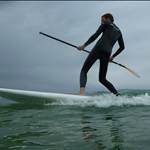
I've just started up again & had to learn the hard way - I found myself in deep water between 2 sandbars & had to learn or suffer the humiliation of being rescued
Select to expand quotemodi said..
I've just started up again & had to learn the hard way - I found myself in deep water between 2 sandbars & had to learn or suffer the humiliation of being rescued
Where was this? Was this Bonbeach by any chance?
Thanks everyone for all the good comments.
I tried to remember all the tips I could and went out for a session this afternoon with the sole aim to waterstart.
To my surprise i did one beach start and three good waterstarts from the shallows out of about twenty attempts, although i think i fluked them when everything just sort of came together correctly.
Using a smaller sail seemed to to make everything more manageable.
I just have to fluke them more often now.
Select to expand quoteJungleman said..
Thanks everyone for all the good comments.
I tried to remember all the tips I could and went out for a session this afternoon with the sole aim to waterstart.
To my surprise i did one beach start and three good waterstarts from the shallows out of about twenty attempts, although i think i fluked them when everything just sort of came together correctly.
Using a smaller sail seemed to to make everything more manageable.
I just have to fluke them more often now.
Yay - good work Jungleman! Bet you felt pretty chuffed when you got up.
Select to expand quoteKA360 said..[/b]Carantoc said..
Trying to interpret what you read about what you have to do into what to actually do is very hard. Especially when there are a 1,007 different ways of doing the same thing.
So :
Ignore everything you have read
Find somebody who can waterstart (anyone who is willing to give up 2 hours will do)
Spend 2 hours with them at the beach / lake / bath
Two people, one rig
Let them show you, then you do it. Keep doing it for 2 hours.
Beachstart in knee deep water
Beachstart in thigh deep water
Beachstart in waist deep water
Beachstart in chest deep water
Beachstart in head deep water
You can now waterstart
Do it again (on your own or with somebody else) the very next day.
You will now be able to waterstart for the rest of your life, no matter how often you do it
If you don't do it again the next day, chances are you will need to start again from the top until you get two days in a row. 100 days not in a row = 2 days in a row
Sanctuary Point is one of the best places to learn to waterstart and only 30 minutes drive for you.This weekends forecast is for solid NE winds both days. I have been teaching my sons buddy from school,so far he has had 4x1 hour session and already planing in the straps.I was planning on showing him beachstarts saturday afternoon ,your welcome to join us,I'll have you doing waterstarts in an hour and you will be an expert by the end of the weekend.
norm , as you can see from your post everyone on this forum wants to help and give addvise , its the same every where you windsurf , the best thing you can do if your a learner is to rock up with gear that isnt suited for learning , you will find everyone will want to help you out and put you on the rite track
it just happens you live in one best places to learn in australia , we had 4 maybe 5 new kids and people who traveled down from sydney and the ACT to sail this weekend, and we have a bunch of guys comeing up from inverlock "VIC" next month
heres a vid of young (gustbuster) alex halank when he was 8 years old , the best thing to do is watch the video then rock up to sanctury point and alex and his dad KA360 will put you on the rite track, if there out sailing his young 7 year old sister elli could be there, these kids are a great inspiration not only for learners
ill send you a PM soon
You need to get hold of a DVD called "The ABCs of Water Starting" by Dasher.
Do yourself a favour and get "The 12 Step Gybe" at the same time.
"12 step gybe"
I often take 12 steps during a gybe, the 12th often into the ocean in a trippy sort of way
I always figured I was taking 11 steps too many
best way i found when teaching people to beach start and water start is 80% of the lift should come from the front hand.
Your back hand acts as a throttle to sheet in and out to control power.
start them off by getting them to hold the rig with front and just slowly pump the back up and down which will show them how the sail angle will affect how much lift is generated. especially important to stop them over sheeting by pulling the back of the sail in.
next ill show them how by angling the sail forward and back will affect the board rotation.
Most learner will try to pull too hard on back hand which over sheet which will stall the whole rig and turn the board up into the wind.
Lastly - get a boyancy vest if you are learning - i still use vests as it makes getting large cammed sails out of the water a lot easier.
roar
I remember when I was learning this. One day it just clicked and up-hauling was over (for the most situations).
Its akin to the feeling of learning to ride a bike on two wheels. Once you get it, you have it!
A good thing to remember is when sailing out and you want to turn around, try to set it up so that when you fall in you are ready to waterstart and you don't have to flip the sail from the water.
use a 5.5m or smaller.
Sail in an onshore wind at a protected beach with a slow gradient
Practice sailing out deeper and deeper
If you can't waterstart, you'll always drift in....
Recovery....
To recover the rig, don't lift it out of the water at all..... if anything hold it close to the water and take it for a swim with the mast across the wind...
After six strong strokes upwind, do a single motion which throws it across your body and over your head. If it doesn't clear, put the mast back on the water and do another four strokes....
Do not lift it out of the water at all... do not lift... the wind will lift it up without needing to get under it....
Getting on
The rig is NOT A LEVER. It will not lift you out of the water.
You have to let the rig come out of the water without getting in its way - you stretch up apologetically until the mast is vertical. When it is upright, then you use the rig to do a pull up by pushing down on it in the direction of the mast foot (the boards buoyancy is what lifts you out)
Sit down on the beach and practice standing up without using your hands. Do something like that motion on the water - aim to bump your head on the boom as you come up
Select to expand quoteginger pom said..
Recovery....
To recover the rig, don't lift it out of the water at all..... if anything hold it close to the water and take it for a swim with the mast across the wind...
After six strong strokes upwind, do a single motion which throws it across your body and over your head. If it doesn't clear, put the mast back on the water and do another four strokes....
Do not lift it out of the water at all... do not lift... the wind will lift it up without needing to get under it....
Getting on
The rig is NOT A LEVER. It will not lift you out of the water.
You have to let the rig come out of the water without getting in its way - you stretch up apologetically until the mast is vertical. When it is upright, then you use the rig to do a pull up by pushing down on it in the direction of the mast foot (the boards buoyancy is what lifts you out)
Sit down on the beach and practice standing up without using your hands. Do something like that motion on the water - aim to bump your head on the boom as you come up
Great way of putting it.
Select to expand quoteRetzy said..
You need to get hold of a DVD called "The ABCs of Water Starting" by Dasher.
This.