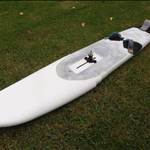
Hey Guys, I worte a thread the other day about how I have water inside my JP Freestyle board due to it being sailed with out the vent plug in ( I was not the person either  ). I contacted JP directly and they suggested the following
JP AUSTRALIA Hi, the best way is to vacuum the water out with a vacuum pump. The foam in the shell is a closed cell foam, nevertheless water finds it's way between the foam and the laminate and has to be extracted as much as possible and dried out.
I wrote - Alsum thanks, when i use a vacuum pump do i just cover up the whole vent hole with the pump or do i need to put a hole in the board to allow air to pull through?
..JP AUSTRALIA No holes, otherwise you will not get the water out. Closed cell foam is used for the deck and bottom sandwich construction, not for the core of the board.
I was wondering if this is a good idea as if there isnt another hole in the board to pull air through will it work? Havent been able to try due to not getting back home til thurs
Select to expand quoteLoginName said..
Hey Guys, I worte a thread the other day about how I have water inside my JP Freestyle board due to it being sailed with out the vent plug in ( I was not the person either ). I contacted JP directly and they suggested the following
hmmmmmmmmmm so you received a reply , I sent a few emails about the construction of there wood boards with no reply , i'm surprised they would give that sort of advise out too someone without any experience, knowing how fragile these boards are (im assuming your board is wood construction ) all I can say is be carefull
If you don't make a secondary hole I would assume the board would implode under the pressure. Then you would have to buy another board...........
Select to expand quotedan berry said..
If you don't make a secondary hole I would assume the board would implode under the pressure. Then you would have to buy another board...........
I thought the same, maybe its a plan by there sales team
Sounds like they haven't a clue. the construction of the shell is immaterial. with only one hole in a sealed enclosure, you can only suck the initial depressurization. May be if the vent is at the lowest point, you could do the process several times, but then the air going back in is going to spread the water around.
In these situations I've always drilled a hole at the end furtherest from the plug, if the plug is in the middle, maybe you need 2 holes, (unless you leave the board standing on the end with the hole, and suck through that rather than the bung).
If you can adjust the pump, go for around 1/4 atmosphere, a full atmosphere may just compress the board.
^^^ +1
sounds like the guy who sweeps up th workshop at the end of the day answered your email.
^ +1.
Vacuum will lower the partial pressure and allow more water to evaporate but if the air is just sitting there stagnant at low pressure it will quickly become saturated with water vapour at which point the evaporation stops. You have to have an air flow. It helps if the inlet is a bit constricted so the low pressure is maintained. Drilling an inlet hole a long way from the suck hole as decrep said will constrict the air flow nicely.
What are you going to use for vacuum, not your mum's hoover?
As Decrepit says, and NotWal is on the money - a hole at either end in your case. If you have a decent flow rate and the two temporary vent holes are a bit larger say, 10mm, ad the evaporated water hits the smaller vent hole(the board should be deck down) the vapour will condense and you will receive water down the the evacuation tube - therefore you will need either a vac pump that can handle water, or a catch pot. Run it for 12-24hrs but monitor closely for the first hr to make sure you are not distorting the board.
It sounds like JP have misunderstood and think you have punctured the board, in which case evacuating via the puncture is the best option but same rules apply with moving dry air through the entire board.
Regards,
A guy that sweeps up a workshop at the end of the day .. ;)