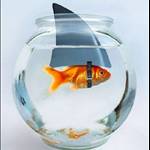
Ha ha ha......Reminds me of a certain WA custom board builder......
Mike the Hammer ha ha ha ha 
So if Dyneema is so much stronger than traditional construction methods for boards, why is it not widely used today? What are the downsides? From watching the vid it would seem to be very resilient to dings. 
But i like how he beats up all boards which are heaps older and looks like they have lived there whole life in the sun and all old and crispy..
I thought epoxy composites lasted more or less forever as long as they have some kind of sun shield like a coat of paint.
As for Dyneema, I've heard that its a pain to work with - difficult to cut and impossible to sand.
 that's great, ive been useing a light weight satin weave over the carbon in the layup&filler coat,so you don't sand down to the carbon
that's great, ive been useing a light weight satin weave over the carbon in the layup&filler coat,so you don't sand down to the carbon
that's great, ive been useing a light weight satin weave over the carbon in the layup&filler coat,so you don't sand down to the carbon
that's great, ive been useing a light weight satin weave over the carbon in the layup&filler coat,so you don't sand down to the carbon
that's great, ive been useing a light weight satin weave over the carbon in the layup&filler coat,so you don't sand down to the carbon
that's great, ive been useing a light weight satin weave over the carbon in the layup&filler coat,so you don't sand down to the carbon
that's great, ive been useing a light weight satin weave over the carbon in the layup&filler coat,so you don't sand down to the carbon
If you wanted a "fluffy sanding layer", use some kevlar... then you wont ever sand through to the carbon... 
thats a useful video. I often encounter furiously flying hammers when I'm sailing. If you put 10 layers of $2/m polyester from spotlight on there it would be hard to break with a hammer. I bet that board is so heavy it breaks roofracks.
Kevlar and dyneema are really great for holding the two pieces of broken board together. Its also good for smashing things over rocks. hmmm I generally sail on water not rocks. Its good for the bottom of whitewater kayaks though.
Carbon cracks really easily but is very stiff and strong for the weight (good where there arent hard point loads like rocks or flying hammers), glass is pretty good allround despite being so unmodern. Using glass and carbon you can make an extremely light board with good structural properties- except when faced with a flying hammer.
Hi Folks,
Another thing to consider is that impact resistance isn't all there is to making a resilient board. I've been sailing a carbon kevlar Mistral twinnie pretty hard for the last 2 years or so, and have been really happy with it's impact resistance. In all that time I never managed to ding it, which is definitely a record for me, because there are always encounters with the reef. However, at the end of the summer season I did have to take a saw to the board and cut out a large soft patch between the footstraps where your gybing foot goes. No big deal really, but it's the first time I've had to repair a board I haven't actually dinged.
Anyone else notice that the carbon kevlar constructions go soft in areas where you repeatedly stand, or was this just an instance where the manufacturer probably should have added extra divinycell?
Cheers, Jens
If I was to use a hammer, I would definitely go for epoxy.
Much more rewarding for those frustrating days...
that dude has a calibrated arm and hammer?
Anyone know where to buy dyneema from? is it expensive?
I do remeber a long while back that the Board mags used to test impact resistance of boards. They dropped a metal object on them from a specific height and measured the resulting indent / damage.
It would be good to see the results of this sort of test on current boards but I'm sure that the suppliers wouldn't appreciate having their boards dented.

Agreed - it is not the fault of carbon or kevlar - it is thin divinycell and/or low density styro
Dyneema and Kevlar are similar polymer fibers. Extremely strong under tension. Almost impossible to cut with normal scissors unless razor sharp. I used Kevlar a lot in the hulls of whitewater Kayaks but always with Vinalester or epoxy resins. Polyester is not strong enough or flexible enough to take advantage of the fiber properties. We only used carbon to add stiffness. It has little puncture resistance in comparison. That is why Kevlar is used in ballistic vests and carbon is not.
Kevlar is very light though and we tried using it on Polyurethane core boards but we always had to use a layer of glass over it to sand.
I think Kevlar and/or Dyneema are often used in the rails and other impact areas of moulded or semi moulded composite windsurfers. Used against a mould there is no need for sanding. Used in a foam composite it is relatively easy to dent if the underlying foam is soft, but very hard to penetrate or tear. Using in combination with carbon adds stiffness. We sometimes used carbon/Kevlar combination weave in lightweight whitewater boats but man was it expensive!! It sure does look cool under a clear gell coat though.
i get all of my boards with timber veneer in the external layup, i like the feel of the boards flex in chop and it's very tough with impact.
i wonder if bamboo is even better.
I reckon Kevlar and Dyneema might be just the thing for the front end of battens.
Springy wave sails need a bit of wind to pop some shape into them and turn them on.
Glass battens have to be fairly thick or they break so they tend to be a bit stiff in the luff end. Dyneema would allow the battens to taper to a thinner more flexible end.
Hi Formula,
I had the same issue, but took at different approach. At 1st I thought I'd get away with drilling holes and re-filling, but when I did that the holes just wouldn't stop dripping water. I figured I'd bever get a dry board unless i took drastic action, so I took out a saw, and cut away the central area between the front and rear straps. Like others I noted that while the carbon kevlar hull was still intact, the polystyrene foam underneath had given way. After the board dried properly i sanded the foam down until it was flat and frirm, and then started filling with layers of divinycell, glass and carbon kevlar. Like others I found I couldn't sand the kevlar, so had to put more glass ontop. Not as pretty as it was, but very, very solid now, with little noticeable weight gain.
Cheers, Jens