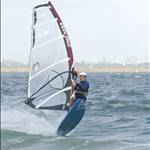
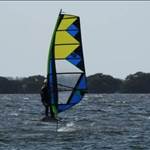
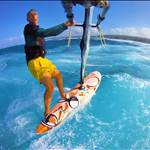
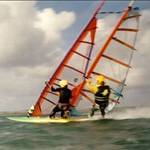
Got out for my first sail in a while today using an 8.0 Ezzy (first time using this sail). The wind was light at 10 - 15 knots, I only got on the plane when the wind got up around 15 knots or I hit a gust and could keep on the plane. Was on my 130 ltr Naish board. I was expecting to be able to get going when the wind dropped down around 12 knots but it was a bit hit and miss. I had the sail rigged for light to medium wind setting.
The sails I have are below with the general wind ranges I use them in with some overlap (have had the sails in stronger winds e.g the 7.1 at 25+ but that wasn't ideal  ). Does this look right or should I be able to get more range out of the sails with better technique? I am an intermediate weighing 70kg.
8.0 Ezzy Cheetah freeride sail - guessing best for 14 - 18ish knots
7.1 - Naish Sprint freeride sail - 15 - 22 knots
6.3 Ezzy Wave = 18 - 25 knots
5.5 Ezzy Wave - 22 - 28 knots.
The 2 wave sails feel way more bitey and aggressive whilst the freeride sails power up smoothly and feel more secure in a way, is that normal?
Thanks heaps
Mast base position matters too. Putting it forward gets you on the plane in lighter wind. I demonstrated the truth of that yesterday for myself. Hard to get up so I moved it forward about 2 cm and things got easy.
Select to expand quoteMr Milk said..
Mast base position matters too. Putting it forward gets you on the plane in lighter wind. I demonstrated the truth of that yesterday for myself. Hard to get up so I moved it forward about 2 cm and things got easy.
Thanks Mr Milk!! Didn't know that one, I will definitely give that a try next time
Does that mean you bring it back when the wind is strong?
Select to expand quoteBluefusionman said..Mr Milk said..
Mast base position matters too. Putting it forward gets you on the plane in lighter wind. I demonstrated the truth of that yesterday for myself. Hard to get up so I moved it forward about 2 cm and things got easy.
Thanks Mr Milk!! Didn't know that one, I will definitely give that a try next time
Does that mean you bring it back when the wind is strong?
Yes and no. It comes back when its easy to plane, but when you get overpowered and the nose starts going up in the air, even tailwalking, you push it forward again if you don't feel like rigging a smaller sail.
Select to expand quoteMr Milk said..Bluefusionman said..Mr Milk said..
Mast base position matters too. Putting it forward gets you on the plane in lighter wind. I demonstrated the truth of that yesterday for myself. Hard to get up so I moved it forward about 2 cm and things got easy.
Thanks Mr Milk!! Didn't know that one, I will definitely give that a try next time
Does that mean you bring it back when the wind is strong?
Yes and no. It comes back when its easy to plane, but when you get overpowered and the nose starts going up in the air, even tailwalking, you push it forward again if you don't feel like rigging a smaller sail.
Great thanks
Select to expand quoteImax1 said..
A big fin will help with light wind planing.
Thanks, was using a 44cm which I thought was overfinned for the 8.0
Select to expand quoteBluefusionman said..Imax1 said..
A big fin will help with light wind planing.
T
Thanks, was using a 44cm which I thought was overfinned for the 8.0
That's not overfinned for an 8m
I am not being critical but there is a big technique factor to it as well.
I am 75kg and on a 104 free wave will plane in
13-16 knots with a 5.5 104L board
16-20 5.0 94L board
20-25 4.5 82L board
25-30 4.0 82L or 74L
30+ 3.5 74L or sit it out
Board gets smaller too of course as the wind goes up. They are all ezzy waves so should be a fair comparison for you.
I see the Pros out using smaller stuff than me so obviously as you keep getting better you can plane on smaller gear!
Tips I would add are long lines, high boom, weight through the mast foot (not your feet), light feet and read the gusts well.
Don't fall into the trap of bigger and bigger sails and fins as there are so many advantages to small gear if you sort your technique
There's also a big perceived wind strength factor to it too. Different stations give different effective wind where people are sailing.
I used to sail on Botany Bay so the Kingsford Smith airport wind gauge was my measure. When it says NE 20-25 I was using a 6m.
Now I sail Jervis Bay. If the stations at Pt Perpendicular and Jervis Bay Airfield say 20-25 I'll be using 5m.
Mast base forward to plane earlier needs a caveat: not on wave or many FSW boards.
If so, you are pushing too much water with nose rocker. Better to have it in same (normal) place and bear away pump like mad and work hard to get it on the plane then it will stay there. Planting the nose with mast base pressure will kill it on a board with lots more rocker.
Select to expand quoteMark _australia said..
Mast base forward to plane earlier needs a caveat: not on wave or many FSW boards.
If so, you are pushing too much water with nose rocker. Better to have it in same (normal) place and bear away pump like mad and work hard to get it on the plane then it will stay there. Planting the nose with mast base pressure will kill it on a board with lots more rocker.
I think you can add freeride, freerace and slalom boards to that, last 15+ years where they have become wider and shorter. Never sailed a freestyle board but doubt they are different. On my boards I only have a maximum 2cm difference in mast foot placement on the largest board, 1cm on the 2 smaller boards. Further back for light winds, moving it forward for more control when maxed out.
The only time I have put the mastfoot forwards for early planing was on my old IMCO longboard with a sliding mast track, last century.
Type "windsurfing early planing video" into google and there are plenty of technique videos, Nico Prien, Ride along with Cookie, Sam Ross etc.
If someone is struggling to get going, without seeing a video, its impossible to give relevant advice to their kit and technique.
Obligatory Jem Hall article that, I think, does a good job
www.windsurf.co.uk/jem-hall-move-on-up-planing-and-getting-in-the-footstraps/
When I was 70ish kg, 14 kts was the province of my Tabou 3s 116, Cheetah 7.0 and 35cm fin. Assuming my 14 kts is the same as yours (ie Mr Milk's comment)
As a lighter weight, I never found any advantage to going less than medium downhaul settings on the Cheetah but did find letting off the outhaul 2-4 cm from the boom setting a big deal.
Select to expand quoteMr Milk said..
Mast base position matters too. Putting it forward gets you on the plane in lighter wind. I demonstrated the truth of that yesterday for myself. Hard to get up so I moved it forward about 2 cm and things got easy.
+2
And at 86 kg I got planing at ~12 knots on relatively flat water on a JP Magic Ride 142 (81 cm wide), 54 cm TrueAmes Sweeper fin, and 9.0 Aerotech Freespeed sail, without pumping. Not an expert, so certainly could get up with less of one or more of the above. But waves will make it harder to get up, unless you drop into the wave trough and follow it, smooth as glass!
Select to expand quoteBluefusionman said..
Got out for my first sail in a while today using an 8.0 Ezzy (first time using this sail). The wind was light at 10 - 15 knots, I only got on the plane when the wind got up around 15 knots or I hit a gust and could keep on the plane. Was on my 130 ltr Naish board. I was expecting to be able to get going when the wind dropped down around 12 knots but it was a bit hit and miss. I had the sail rigged for light to medium wind setting.
The sails I have are below with the general wind ranges I use them in with some overlap (have had the sails in stronger winds e.g the 7.1 at 25+ but that wasn't ideal ). Does this look right or should I be able to get more range out of the sails with better technique? I am an intermediate weighing 70kg.
8.0 Ezzy Cheetah freeride sail - guessing best for 14 - 18ish knots
7.1 - Naish Sprint freeride sail - 15 - 22 knots
6.3 Ezzy Wave = 18 - 25 knots
5.5 Ezzy Wave - 22 - 28 knots.
The 2 wave sails feel way more bitey and aggressive whilst the freeride sails power up smoothly and feel more secure in a way, is that normal?
Thanks heaps
I am exactly your weight, an expert level sailor and not to be critical but your upper range knots figures seem too high. At our weight a 5.5 in real 28 knots is a monster. These are the sail sizes that have been using for a bunch of years, not what is necessarily optimal, mind you, with wind range estimates. Note the overlap between the slalom sails & between slalom sails and B&J:
7.5 - Point-7 ACX - 10-16 knots ---- Big Slalom
6.8/6.5 - Point-7 ACZ/ACX - 14-22 knots ---- Big Slalom/Small Slalom
6.0 - Point-7 ACX - 15-22 knots ---- Small Slalom
5.4 - Point-7 Spy - 15-22 knots ---- RRD FSW 90L
4.7 - Point-7 Spy - 17-25 knots ---- RRD FSW 90L/Starboard FSW 81L
4.2 - Point-7 Spy - 20-28 knots ---- RRD FSW 90L/Starboard FSW 81L
3.7 - Point-7 Salt - 22-30 knots ---- Starboard FSW 81L
Control and efficiency drops like a stone at our weight, and if the wind picks up I am faster with the 6.8/6.5 sail than with the 7.5. When B&J the Spy sails overlap a lot because of their low end range and because you can de-power them very effectively. We don't get many days with winds above (real) 28-30 knots so no idea what the limit of the 3.7 would be. I was out yesterday with idiotic gusts supposedly at 42 knots, and I was not happy.
A bit of a tricky one.... Did you check out my sail quiver calculator? windsurfing.lepicture.com/tips-and-tricks/
It's tricky because of the many factors:
1. Technique
2. Gear type & gear tuning (sail trim + fin + board + settings)
3. Gear knowledge and experience
4. Actual wind speed
5. Water state
6. Type of gusts
Your weight being close to mine I used:
9-14 knots 9.0 + formula
12-16 knots 7.0 + formula (could be a bit smaller board)
13-18 knots can plane with 5.0 + big 106 freestyle board but should be more like 6.x
16-22 knots 5.0-5.5 87L
18-24 knots 4.7 77-87L
22-28 4.2 77L
So it looks like you're off one sail size and then you match my numbers perfectly :)
Reading this thread - and the answers - is very revealing. It just shows how different people look at things differently, depending on what sort of gear they sail, and more importantly, depending on their ability level.
If you are just learning then early planing might be helped by shifting the rig forwards if that allows you to stand further forwards on a big board to help level it.
But with modern shortboard gear, we generally move the mast foot back to help with early planing, and we keep the board level by leaning forwards.
Moving the mast foot back brings it closer to the fin and sets the rig more upright. Levelling the board is best done by shifting sailor weight, and by moving the footsteps if need be.
Beginners also find having a bigger fin is helpful to get going and to avoid spinout, but an oversize fin also slows you down and can make the board a pig to gybe.
These differences in turn make it almost pointless to match board volume and sail size to knots of wind strength.
We don't actually know what windspeed we sail in because that is rarely measured on the water - and the wind reading on the beach is often an under-estimate.
Better to learn to read your local conditions, and to change sail size up or down when it doesn't feel right.
The starting point with sail size is to look at what others are using - and to know whether the forecast says the wind will increase or if it will decrease.
Select to expand quoteBasher said..
Reading this thread - and the answers - is very revealing. It just shows how different people look at things differently, depending on what sort of gear they sail, and more importantly, depending on their ability level.
If you are just learning then early planing might be helped by shifting the rig forwards if that allows you to stand further forwards on a big board to help level it.
But with modern shortboard gear, we generally move the mast foot back to help with early planing, and we keep the board level by leaning forwards.
Moving the mast foot back brings it closer to the fin and sets the rig more upright. Levelling the board is best done by shifting sailor weight, and by moving the footsteps if need be.
Beginners also find having a bigger fin is helpful to get going and to avoid spinout, but an oversize fin also slows you down and can make the board a pig to gybe.
These differences in turn make it almost pointless to match board volume and sail size to knots of wind strength.
We don't actually know what windspeed we sail in because that is rarely measured on the water - and the wind reading on the beach is often an under-estimate.
Better to learn to read your local conditions, and to change sail size up or down when it doesn't feel right.
The starting point with sail size is to look at what others are using - and to know whether the forecast says the wind will increase or if it will decrease.
I am not so sure where you get the impression that peole are giving different answers. The two people closer in weight to the original poster give more or less the same numbers, and those are quite in line with the sail quiver calculator ... Pilot weight, board type and wind speed would seem the most important factors to decide sail size ...
Select to expand quoteBasher said..
Reading this thread - and the answers - is very revealing. It just shows how different people look at things differently, depending on what sort of gear they sail, and more importantly, depending on their ability level.
If you are just learning then early planing might be helped by shifting the rig forwards if that allows you to stand further forwards on a big board to help level it.
But with modern shortboard gear, we generally move the mast foot back to help with early planing, and we keep the board level by leaning forwards.
Moving the mast foot back brings it closer to the fin and sets the rig more upright. Levelling the board is best done by shifting sailor weight, and by moving the footsteps if need be.
Beginners also find having a bigger fin is helpful to get going and to avoid spinout, but an oversize fin also slows you down and can make the board a pig to gybe.
These differences in turn make it almost pointless to match board volume and sail size to knots of wind strength.
We don't actually know what windspeed we sail in because that is rarely measured on the water - and the wind reading on the beach is often an under-estimate.
Better to learn to read your local conditions, and to change sail size up or down when it doesn't feel right.
The starting point with sail size is to look at what others are using - and to know whether the forecast says the wind will increase or if it will decrease.
Thats a good point. Bluefusionman says he is an intermediate, I assume thats planing in the harness & straps ok, water start, but not planing carve gybes. Past the beginner stage. 70kg, uses a Naish 130 with 5.5m wave to 7.1 Freeride and used the 8m for the first time.
For an 8m, I would have the mast foot further back than a 7.1m on the board, but for an intermediate using an 8m Cheetah for the first time it would feel heavier (especially if it was pre 2020). Keeping the mast foot in the same place as the 7.1m might be better, to start with anyway.
I wouldnt move the straps though, and when gybing large boards with 8m sail, a 44cm fin woudn't be the first thing to hold someone back. Using too small a fin and you wont have the speed to enter the gybe,, especially if you have moved the straps forward and increased the waterline when planing. In light winds and 8m, the first thing to get right is the speed into the gybe. Then what hampers you is getting wide board to turn (back foot needs to be on the inside rail), and flipping an 8m sail.
If the board is like a Titan 130, thats 84cm wide and 240cm long, so easy to sail. It should cope with 8m fine. 44cm isnt overly big for the board. If its a much older board, probably a lot narrower. The early planing technique would be slightly different. Most modern wider boards need bearing off a bit to get going.
People's idea of wind speeds varies a lot. Where I sail there is an anemometer on a pole on a hut on a platform in the harbour and its about 6m out of the water so the wind speed at head height is about 10% less than what it says. Portland Harbour, the anemometer is on a pole on a building on the harbour wall, and at least 10m out of the water. So I reckon that is about 20% more than at head height. But others take what the meters give as read.
^^^ also air density, your 20kn has more oomph than ours.
Then also be careful as yanks come here and think their mph is knots. At least we don't have anyone talking Beaufort anymore 
I found this website a few years ago which gives a formula for calculating windspeed at different heights from a known height and speed.
Where I sail there is only a 2m tidal range which makes things easier.
rlsenergy.com/products/wind-power/wind-speed-data/
Select to expand quotePhilUK said..
Type "windsurfing early planing video" into google and there are plenty of technique videos, Nico Prien, Ride along with Cookie, Sam Ross etc.
If someone is struggling to get going, without seeing a video, its impossible to give relevant advice to their kit and technique.
Thanks will do, I like Sam Ross and Nico Prien so will definitely look at sorting my technique out asap
Select to expand quotePaducah said..
Obligatory Jem Hall article that, I think, does a good job
www.windsurf.co.uk/jem-hall-move-on-up-planing-and-getting-in-the-footstraps/
When I was 70ish kg, 14 kts was the province of my Tabou 3s 116, Cheetah 7.0 and 35cm fin. Assuming my 14 kts is the same as yours (ie Mr Milk's comment)
As a lighter weight, I never found any advantage to going less than medium downhaul settings on the Cheetah but did find letting off the outhaul 2-4 cm from the boom setting a big deal.
Thanks mate will have a look at Jem hall and try letting out the outhaul more
Select to expand quotebatstonem said..
I am not being critical but there is a big technique factor to it as well.
I am 75kg and on a 104 free wave will plane in
13-16 knots with a 5.5 104L board
16-20 5.0 94L board
20-25 4.5 82L board
25-30 4.0 82L or 74L
30+ 3.5 74L or sit it out
Board gets smaller too of course as the wind goes up. They are all ezzy waves so should be a fair comparison for you.
I see the Pros out using smaller stuff than me so obviously as you keep getting better you can plane on smaller gear!
Tips I would add are long lines, high boom, weight through the mast foot (not your feet), light feet and read the gusts well.
Don't fall into the trap of bigger and bigger sails and fins as there are so many advantages to small gear if you sort your technique
Thanks mate those ranges are quite a bit off where I am at =, looks like I have plenty more to learn :).
104 is my smallest board and I can't consistently get going on it it feels very small compared to my 130.
Select to expand quoteduzzi said..Bluefusionman said..
Got out for my first sail in a while today using an 8.0 Ezzy (first time using this sail). The wind was light at 10 - 15 knots, I only got on the plane when the wind got up around 15 knots or I hit a gust and could keep on the plane. Was on my 130 ltr Naish board. I was expecting to be able to get going when the wind dropped down around 12 knots but it was a bit hit and miss. I had the sail rigged for light to medium wind setting.
The sails I have are below with the general wind ranges I use them in with some overlap (have had the sails in stronger winds e.g the 7.1 at 25+ but that wasn't ideal ). Does this look right or should I be able to get more range out of the sails with better technique? I am an intermediate weighing 70kg.
8.0 Ezzy Cheetah freeride sail - guessing best for 14 - 18ish knots
7.1 - Naish Sprint freeride sail - 15 - 22 knots
6.3 Ezzy Wave = 18 - 25 knots
5.5 Ezzy Wave - 22 - 28 knots.
The 2 wave sails feel way more bitey and aggressive whilst the freeride sails power up smoothly and feel more secure in a way, is that normal?
Thanks heaps
I am exactly your weight, an expert level sailor and not to be critical but your upper range knots figures seem too high. At our weight a 5.5 in real 28 knots is a monster. These are the sail sizes that have been using for a bunch of years, not what is necessarily optimal, mind you, with wind range estimates. Note the overlap between the slalom sails & between slalom sails and B&J:
7.5 - Point-7 ACX - 10-16 knots ---- Big Slalom
6.8/6.5 - Point-7 ACZ/ACX - 14-22 knots ---- Big Slalom/Small Slalom
6.0 - Point-7 ACX - 15-22 knots ---- Small Slalom
5.4 - Point-7 Spy - 15-22 knots ---- RRD FSW 90L
4.7 - Point-7 Spy - 17-25 knots ---- RRD FSW 90L/Starboard FSW 81L
4.2 - Point-7 Spy - 20-28 knots ---- RRD FSW 90L/Starboard FSW 81L
3.7 - Point-7 Salt - 22-30 knots ---- Starboard FSW 81L
Control and efficiency drops like a stone at our weight, and if the wind picks up I am faster with the 6.8/6.5 sail than with the 7.5. When B&J the Spy sails overlap a lot because of their low end range and because you can de-power them very effectively. We don't get many days with winds above (real) 28-30 knots so no idea what the limit of the 3.7 would be. I was out yesterday with idiotic gusts supposedly at 42 knots, and I was not happy.
Thanks Duzzi, there is a lot for me to aim towards there. I think maybe the wind ranges that I am quoting mustn't be actual knots on the water. We do get blocked in the bay from swell out in the ocean.
Even in saying the above my ranges are way off what you are quoting. Looks like I have some work to do on my technique. I basically ride my 130lt Naish Titan in all wind conditions even though I know this is less than ideal.
I have a 104 Mistral that I am having a hard time transitioning to. I really need to commit to getting on this board and learning the correct technique of riding a smaller board, maybe then I will find myself using smaller sails for the correct wind ranges.
I think maybe my big board makes it to easy for me
Select to expand quoteduzzi said..Bluefusionman said..
Got out for my first sail in a while today using an 8.0 Ezzy (first time using this sail). The wind was light at 10 - 15 knots, I only got on the plane when the wind got up around 15 knots or I hit a gust and could keep on the plane. Was on my 130 ltr Naish board. I was expecting to be able to get going when the wind dropped down around 12 knots but it was a bit hit and miss. I had the sail rigged for light to medium wind setting.
The sails I have are below with the general wind ranges I use them in with some overlap (have had the sails in stronger winds e.g the 7.1 at 25+ but that wasn't ideal ). Does this look right or should I be able to get more range out of the sails with better technique? I am an intermediate weighing 70kg.
8.0 Ezzy Cheetah freeride sail - guessing best for 14 - 18ish knots
7.1 - Naish Sprint freeride sail - 15 - 22 knots
6.3 Ezzy Wave = 18 - 25 knots
5.5 Ezzy Wave - 22 - 28 knots.
The 2 wave sails feel way more bitey and aggressive whilst the freeride sails power up smoothly and feel more secure in a way, is that normal?
Thanks heaps
I am exactly your weight, an expert level sailor and not to be critical but your upper range knots figures seem too high. At our weight a 5.5 in real 28 knots is a monster. These are the sail sizes that have been using for a bunch of years, not what is necessarily optimal, mind you, with wind range estimates. Note the overlap between the slalom sails & between slalom sails and B&J:
7.5 - Point-7 ACX - 10-16 knots ---- Big Slalom
6.8/6.5 - Point-7 ACZ/ACX - 14-22 knots ---- Big Slalom/Small Slalom
6.0 - Point-7 ACX - 15-22 knots ---- Small Slalom
5.4 - Point-7 Spy - 15-22 knots ---- RRD FSW 90L
4.7 - Point-7 Spy - 17-25 knots ---- RRD FSW 90L/Starboard FSW 81L
4.2 - Point-7 Spy - 20-28 knots ---- RRD FSW 90L/Starboard FSW 81L
3.7 - Point-7 Salt - 22-30 knots ---- Starboard FSW 81L
Control and efficiency drops like a stone at our weight, and if the wind picks up I am faster with the 6.8/6.5 sail than with the 7.5. When B&J the Spy sails overlap a lot because of their low end range and because you can de-power them very effectively. We don't get many days with winds above (real) 28-30 knots so no idea what the limit of the 3.7 would be. I was out yesterday with idiotic gusts supposedly at 42 knots, and I was not happy.
Thanks Duzzi, there is a lot for me to aim towards there. I think maybe the wind ranges that I am quoting mustn't be actual knots on the water. We do get blocked in the bay from swell out in the ocean.
Even in saying the above my ranges are way off what you are quoting. Looks like I have some work to do on my technique. I basically ride my 130lt Naish Titan in all wind conditions even though I know this is less than ideal.
I have a 104 Mistral that I am having a hard time transitioning to. I really need to commit to getting on this board and learning the correct technique of riding a smaller board, maybe then I will find myself using smaller sails for the correct wind ranges.
I think maybe my big board makes it to easy for me
Select to expand quoteBluefusionman said..
Got out for my first sail in a while today using an 8.0 Ezzy (first time using this sail). The wind was light at 10 - 15 knots, I only got on the plane when the wind got up around 15 knots or I hit a gust and could keep on the plane. Was on my 130 ltr Naish board. I was expecting to be able to get going when the wind dropped down around 12 knots but it was a bit hit and miss. I had the sail rigged for light to medium wind setting.
The sails I have are below with the general wind ranges I use them in with some overlap (have had the sails in stronger winds e.g the 7.1 at 25+ but that wasn't ideal ). Does this look right or should I be able to get more range out of the sails with better technique? I am an intermediate weighing 70kg.
8.0 Ezzy Cheetah freeride sail - guessing best for 14 - 18ish knots
7.1 - Naish Sprint freeride sail - 15 - 22 knots
6.3 Ezzy Wave = 18 - 25 knots
5.5 Ezzy Wave - 22 - 28 knots.
The 2 wave sails feel way more bitey and aggressive whilst the freeride sails power up smoothly and feel more secure in a way, is that normal?
Thanks heaps
Sails sound big to me, but, as pointed out, what the real wind speed is at your actual venue and on the water can vary a lot and be quite deceiving if taken from a 'nearby' offical anemometer up on a pole somewhere.
Another caveat: I tend to seek out flatfish water and steady winds.
For me at 72-72KG/175cm, its:
6.4m 4 cam Race sail in 15-22 Knots - 87 L slalom board.
5.7m 4 cam Race sail in 20-27 Knots -80L slalom board
5,2m 4 cam Race sail in 25-30 Knots (a few more knots on very flat water speed venues) - 47cm wide (70L) to 40 cm wide (60L) speed board.
4.7m 4 cam Race sail in 30+ to cowering in shelter some where on the shore.  - 40 cm wide speed board.
ON no cam freeride and wave sails I would be on at least 1m to 1,5m smaller in each wind range on usually, an 80L wave board.
Select to expand quoteBluefusionman said..
I was expecting to be able to get going when the wind dropped down around 12 knots but it was a bit hit and miss. I had the sail rigged for light to medium wind setting.
I'm around 64kg and in 12knots I would use a 9.6 or 10.6 sail on a formula board. I think you are simply expecting a little too much from an 8.0 sail. 
Select to expand quoteManuel7 said..
A bit of a tricky one.... Did you check out my sail quiver calculator? windsurfing.lepicture.com/tips-and-tricks/
It's tricky because of the many factors:
1. Technique
2. Gear type & gear tuning (sail trim + fin + board + settings)
3. Gear knowledge and experience
4. Actual wind speed
5. Water state
6. Type of gusts
Your weight being close to mine I used:
9-14 knots 9.0 + formula
12-16 knots 7.0 + formula (could be a bit smaller board)
13-18 knots can plane with 5.0 + big 106 freestyle board but should be more like 6.x
16-22 knots 5.0-5.5 87L
18-24 knots 4.7 77-87L
22-28 4.2 77L
So it looks like you're off one sail size and then you match my numbers perfectly :)
Thanks heaps for that, cool blog, lots of great stuff there.
Select to expand quotesailquik said..Bluefusionman said..
Got out for my first sail in a while today using an 8.0 Ezzy (first time using this sail). The wind was light at 10 - 15 knots, I only got on the plane when the wind got up around 15 knots or I hit a gust and could keep on the plane. Was on my 130 ltr Naish board. I was expecting to be able to get going when the wind dropped down around 12 knots but it was a bit hit and miss. I had the sail rigged for light to medium wind setting.
The sails I have are below with the general wind ranges I use them in with some overlap (have had the sails in stronger winds e.g the 7.1 at 25+ but that wasn't ideal ). Does this look right or should I be able to get more range out of the sails with better technique? I am an intermediate weighing 70kg.
8.0 Ezzy Cheetah freeride sail - guessing best for 14 - 18ish knots
7.1 - Naish Sprint freeride sail - 15 - 22 knots
6.3 Ezzy Wave = 18 - 25 knots
5.5 Ezzy Wave - 22 - 28 knots.
The 2 wave sails feel way more bitey and aggressive whilst the freeride sails power up smoothly and feel more secure in a way, is that normal?
Thanks heaps
Sails sound big to me, but, as pointed out, what the real wind speed is at your actual venue and on the water can vary a lot and be quite deceiving if taken from a 'nearby' offical anemometer up on a pole somewhere.
Another caveat: I tend to seek out flatfish water and steady winds.
For me at 72-72KG/175cm, its:
6.4m 4 cam Race sail in 15-22 Knots - 87 L slalom board.
5.7m 4 cam Race sail in 20-27 Knots -80L slalom board
5,2m 4 cam Race sail in 25-30 Knots (a few more knots on very flat water speed venues) - 47cm wide (70L) to 40 cm wide (60L) speed board.
4.7m 4 cam Race sail in 30+ to cowering in shelter some where on the shore. - 40 cm wide speed board.
ON no cam freeride and wave sails I would be on at least 1m to 1,5m smaller in each wind range on usually, an 80L wave board.
Yes I think it's a good point re the actual windspeed. The weather station is actually about 100m above the sea level so the actual wind on the water may be very different to what is reported