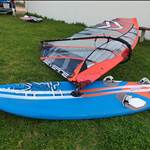
Probably been covered before but what do others use do to repair small dings in boards eg. Fin from another board blown across beach, piecing skin. I've Previously used both 5 min araldite and the putty in the tube that you need to need with fingers then apply. Or is the proper ding repair epoxy that you buy from a surf shop or marine store better.
That's for any input.
If its non structural small holes use selleys or Araldyte porcelane epoxy . Bunnings . When mixed it's a bit thicker than toothpaste and is easy to work with. Or if your in a hurry 5 min Araldyte is good .I would use this before that kneed stuff .
Solarez epoxy works well and easy to use.
First time I used it on holiday when with fin into epoxy/bamboo surfboard. If I was at home I would have filled the area and glassed.
It has fibres in the mix so its strong and you don't have to mix two part ratios. Just do prep (sand, mask and cut small piece of plastic) in the shade then squeeze tube with enough product and cure in sun.
I like solarez too. I found glad wrap pulled tight over the repair site makes for a nicer finish
Any of the methods above work and so does the putty. Ive also used stickers to keep me out on the water.
Suncure UV epoxy fiberfill. Stronger than Solarez.
I agree that the knead-it style things are not the best as they may not seal against the surrounding edge and can still weep water a little unless applied realllly well.
But, caveat:
A fin penetration that is 10mm long near the end yes
A 10cm gash in the middle of a board you jump or sail hard- ohhh no, not just a fill.
One of the perceived advantages of Kneedit, is that it can be applied to a ding on a wet board, so that you can repair a small ding during a session and keep sailing. It's not considered a permanent repair.
I have used PC-11 waterproof epoxy paste for a heap of foil and board repairs.
www.pcepoxy.com/products/permanent-repair/pc-11-paste-epoxy/
It's easy to work with and you can buy it at Bunnings. It sands well, you can smooth it with a wet finger or metho (wear gloves), or cover it with plastic wrap.
It doesn't set super fast. You need to leave it overnight to fully cure.
Solarez is intended for quick repairs in the middle of a session or trip, allowing you to get back on the water quickly. It's a good idea to later replace it with a more permanent repair. It can peel off after a while, especially if you don't sand the repair area first.
A more permanent quick repair is to use a single layer of glass fiber and clear epoxy, for example the 5 minute stuff. I used that for nose ding repairs on trips, thinking I might do a "proper" repair later when back home. But more than a year later, there's no real reason to re-do the repair, except maybe looks. The effort required is really not much more than any of the other methods discussed, but the repair is structurally more sound.
I would caution against using Araldite 5 min Epoxy. I have very poor results with it in the Marine environment for anything but very temporary repairs.
I have had excellent results with Selleys AQUA Kneedit for small ding repairs on surfboards, (polyester, epoxy and ABS skinned) and windsurf boards. Surface preparation (sandpaper etc.) is important for a good result. 
I have had great results with the Polyester resin Solarez set stuff, but have not tried the epoxy version. I will when I find it.
I have never tried it but friends say they have had good results from super glue and baking soda (sodium bicarbonate). Apparently the bicarb acts as a filler and speeds up cure of the super glue.
There's a heap of videos on how to use it. You can sprinkle the bicarb into a hole then wet it out with super glue, and/or apply the glue then sprinkle on the bicarb. It looks like it cures instantly and can be sanded straight away.
I didn't see any scary stories about foam being affected by the glue. I would think you could buy the glue and the bicarb from most local super markets if you needed an emergency repair.
Select to expand quoteGorgo said..
I have never tried it but friends say they have had good results from super glue and baking soda (sodium bicarbonate). Apparently the bicarb acts as a filler and speeds up cure of the super glue.
There's a heap of videos on how to use it. You can sprinkle the bicarb into a hole then wet it out with super glue, and/or apply the glue then sprinkle on the bicarb. It looks like it cures instantly and can be sanded straight away.
I didn't see any scary stories about foam being affected by the glue. I would think you could buy the glue and the bicarb from most local super markets if you needed an emergency repair.
Super glue or Cyanoacrylates eat polystyrene so if the ding is through to the inner foam it will chew it out. There is this special foam safe version -www.frontlinehobbies.com.au/zap-a-gap-foam-safe-cyanoacrylic-20g-pt25 I have not tried it with the baking soda but can say the normal zap a gap and bicarb is a good quick gap filler up to maybe 5mm or so - however its super brittle so only good in a ding not on a corner or rail.
If using Solarez then sticky tape from a tape gun works great. Being sticky you can fill the ding and then pull it tight over the Solarez to give a nice finish.
Select to expand quoteka43 said..
If using Solarez then sticky tape from a tape gun works great. Being sticky you can fill the ding and then pull it tight over the Solarez to give a nice finish.
Great suggestion. Ill start doing it that way from now on.