Tried something that I saw on an instructional video I bought last week (Alan Cadiz - Jibing on Maui), and my gybing success rate has gone from 10% to 50% in just one session!!!
After unhooking your harness and taking your back foot from the strap and initiating the turn - DO NOT let the back hand out. (I was doing this thinking depowering the sail would stop me being pulled in, but it doesn't seem to work that way, with the result being I kept falling to the inside of the turn, just as the video said I would if I did this!)
Instead keep the back hand sheeted in, and keep the front arm extended. This keeps the board driving through the turn. Only sheet out as the board approaches downwind so the wind doesn't pass over the clew.
Hope this is of some help to those of you still battling with your gybing like me.
Regards,
Harrow.
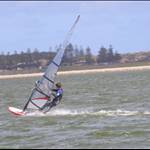
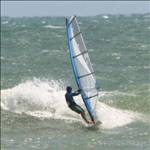
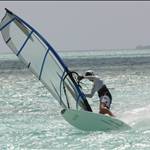
P.S. Found a couple of handy photos showing what I just mentioned:
Keeping back hand sheeted in:
www.seabreeze.com.au/gallery/gallery.asp?imageid=3035
Keeping front arm extended:
www.seabreeze.com.au/gallery/gallery.asp?imageid=3031
Yeah that should help quite a bit thanks. I also sheeted out to stop me falling off but that makes perfect sense not to. The pictures made it much easier to understand to, i was finding it a bit hard to picture in my mind.
cheers
bubs
Tricky, tricky, dam' tricky to remember everything...
If you sheet out like me then as you turn through the wind, the wind catches the sail as it's on the inside of the turn, and tries to turn you back onto your original course. It can get so severe that the tail of the board swings the wrong way, despite digging the rail right in, which can make the whole board dig into the water and submerge. It feels like someone has given the tail of the board a big push -- the wrong way.
The reason I'm sheeting out is because that's what you do for a non-planing clew-first exit, it works well for that, but in a planing gybe you do everything backwards:
That was one of Peter Hart's tricks that I took up. His tip was to slide your back hand back about 300mm as you enter the gybe. This gives you mechanical leverage and encourages you to sheet in not out.
I now welcome the stronger winds for gybing rather than being frightened of them. Not to say I don't stack it from time to time, but the stacks do seem to be a little more controlled.
All we need now is some wind.
Harrow, Nebbian n Combs, top tips,thanks.
Harrow sounds like what happens to me each time, get into turn and fall in, two photo's excellent
Combs yep all we need is squashed air
Looks like its coming
Mineral
i too have been practicing the gybes of late. as always.
i think another really important thing is to remember to place your old back foot at 90 degrees to the rail. helps with the balance.
the best gybing tuition guide i have read and tried is the Simon Hurrey stuff.
the pictures that harrow posted seem to be more of a strap to strap gybe rather than a step gybe. but i could be wrong?http://www.simonhurrey.com/tuition
quote:
Originally posted by Gestalt
the pictures that harrow posted seem to be more of a strap to strap gybe rather than a step gybe. but i could be wrong?


That Alan Cadiz video is the best money I have invested into sailing. I went from crap to duck gybing within weeks. If only I had done that 5 years ago.
I'm sure I always hook in before getting back in the straps.
What does everyone else do?
Maybe it would be quicker to get going again straps first, not sure.
Will have to try that one.
Paul
elmo that vid rocks....
has shown me a couple of mistakes i have been making straight away. cheers.
hi paul,
i was once told by a pro to never hook in until your feet are in the straps. hooking in first leads to a loss of early planing and or catapults. if you hook in first it also means you can't pump the rig affectively when trying to get back onto the plane by not allowing you to easily shift your body weight.
Must admit I'm a Hookerinnerfirsta.
Will give it a go today, may help aleviate my rounding up troubles.
I find it much easier to pump, hooked in and in the straps.
With old thin narrow tailed boards that had all the volume forward this wasn't such a good idea as you just sank the tail. But in the harness and straps I can use my whole body weight to pump sail and fin.
Think I also must hook in before getting in the straps, that's how I got catapaulted last week when a gust hit coming out of a gybe. It probably depends on the gybe, if I've plenty of speed and it's strap to strap, I think it's straps first. but if I have to step forward, then it's probably harness first.
Gave it a try tonight going foot straps first then hook in and for me there was a definite advantage.
When powered up I was finding that when going for the rear strap I was tending to start rounding up.
By going the straps first stopped this happening, I must admit it felt a bit weird hooking in last but it was a huge improvement in coming out of the Gybe and getting back up to speed.
I don't know what it would be like in a lower power situation but powered up a marked improvement for me.
Alby
Yes I was watching what I did today as well, and as I suspected depends on how powered up I am, coming out low powered with feet infront of straps. it's hook in first.
Powered up coming out it's front foot in strap first, hook in then back foot in strap.
I think if I'm well powered up and it's flat water, so I can jam it round flat out, I may just have both feet in before hooking in.
quote:
Originally posted by decrepit
Yes I was watching what I did today as well, and as I suspected depends on how powered up I am, coming out low powered with feet infront of straps. it's hook in first.
Powered up coming out it's front foot in strap first, hook in then back foot in strap.
I think if I'm well powered up and it's flat water, so I can jam it round flat out, I may just have both feet in before hooking in.