Forums > Windsurfing General

Nature Follows, Makes Move to Monofilm.

Reply
Created by evlPanda > 9 months ago, 19 Jul 2010
evlPanda
NSW, 9207 posts
19 Jul 2010 11:10AM
Thumbs Up

For better or worse the bugs have started the move to monofilm:


en.wikipedia.org/wiki/Greta_oto

flipper4444
VIC, 1214 posts
19 Jul 2010 11:21AM
Thumbs Up

great pic

sausage
QLD, 4873 posts
19 Jul 2010 1:56PM
Thumbs Up

Another 50,000 years and evolution will have them sporting x-ply wings

ozpricey
WA, 333 posts
19 Jul 2010 4:09PM
Thumbs Up

Any idea of the species?

grumplestiltskin
WA, 2331 posts
19 Jul 2010 4:15PM
Thumbs Up

ozpricey said...

Any idea of the species?


Neillopheous Pridicus

jermaldan
VIC, 1572 posts
19 Jul 2010 6:44PM
Thumbs Up


lotofwind
NSW, 6451 posts
19 Jul 2010 7:06PM
Thumbs Up

Wow, they really have evolved quickly.
My guess is they wont bother wasting their time trying old school sails and evolve straight to kites.
Only if they want to fly high though, and fast.

" running back into my box"

Haircut
QLD, 6490 posts
19 Jul 2010 7:13PM
Thumbs Up

Butterfly Uses Monofilm

evlPanda
NSW, 9207 posts
19 Jul 2010 8:01PM
Thumbs Up

lotofwind said...

Wow, they really have evolved quickly.
My guess is they wont bother wasting their time trying old school sails and evolve straight to kites.
Only if they want to fly high though, and fast.

" running back into my box"


Actually, there are spiders that spin a web and fly away on up drafts.

Windxtasy
WA, 4017 posts
19 Jul 2010 6:08PM
Thumbs Up

Some of them have very sail shaped wings too


Sail designers could learn a lot from studying butterfly wings.

Mark _australia
WA, 23435 posts
19 Jul 2010 6:39PM
Thumbs Up

evlPanda said...

For better or worse the bugs have started the move to monofilm:


en.wikipedia.org/wiki/Greta_oto


Oh my, it's a Neil Pryde butterfly - lots of mono and bugger all else around the edges for reinforcement

ginger pom
VIC, 1746 posts
19 Jul 2010 8:40PM
Thumbs Up

This is so true.

Leonardo da vinci did some studies of an insect wing that showed it was more efficient than any wing that has been developed - something to do with the texture on the low pressure side.

There's an entire field of study called Bio inspiration where people look at evolved solutions and try to engineer their benefits into human constructions. When I win the lottery, I'm going to study it after my third world tour

Mark _australia
WA, 23435 posts
19 Jul 2010 6:47PM
Thumbs Up

ginger pom said...

This is so true.

Leonardo da vinci did some studies of an insect wing that showed it was more efficient than any wing that has been developed - something to do with the texture on the low pressure side.


Correct me if I'm wrong but we were not flying so good at Leonardo's time on this planet?

Mark _australia
WA, 23435 posts
19 Jul 2010 6:48PM
Thumbs Up

Windxtasy said...

Some of them have very sail shaped wings too


Sail designers could learn a lot from studying butterfly wings.


Top half looks like a sail - bottom half looks like one I've had for a few months!!!

ginger pom
VIC, 1746 posts
19 Jul 2010 9:05PM
Thumbs Up

Mark _australia said...

ginger pom said...

This is so true.

Leonardo da vinci did some studies of an insect wing that showed it was more efficient than any wing that has been developed - something to do with the texture on the low pressure side.


Correct me if I'm wrong but we were not flying so good at Leonardo's time on this planet?


ha ha ..ever since... there was something about it at the da vinci exhibition. This isn't it - but it's interesting


I'll carry on looking

nebbian
WA, 6277 posts
19 Jul 2010 8:09PM
Thumbs Up

Windxtasy said...
Sail designers could learn a lot from studying butterfly wings.


Graphic designers could certainly use some inspiration from nature, however not so much for the engineers. Unfortunately the reynolds numbers are all wrong to make direct comparisons between the two...

I think that insects use vortices instead of laminar flow, which is why bumblebees can stay aloft when by conventional (laminar) physics they don't have the wing area to do so.

Strange things happen when you scale down to the size of an insect.

Chris 249
NSW, 3513 posts
19 Jul 2010 11:11PM
Thumbs Up

Windxtasy said...

Some of them have very sail shaped wings too


Sail designers could learn a lot from studying butterfly wings.


Dunno, a few aerodynamacists have pointed out that they HAVE looked a lot at wings from nature, but the analogies are fairly few because apparent wind angles, wind speeds, purposes etc vary enormously when you go from a wing to a sail.

They also say that aerodynamics is such a complex area that it's rarely simply transferrable from one area to another; after all, the Concorde was very effective but it's got a very different shape to the very efficient pedal and solar-powered planes like Gossamer Condor or Rutan's Voyager

Chris 249
NSW, 3513 posts
19 Jul 2010 11:14PM
Thumbs Up

Windxtasy said...

Some of them have very sail shaped wings too


Sail designers could learn a lot from studying butterfly wings.


It's maybe a fair point in some ways, but on the other hand a few aerodynamicists have pointed out that they HAVE looked a lot at wings from nature, but the analogies are hard to take too far because apparent wind angles, wind speeds, purposes etc vary enormously when you go from a wing to a sail.

They also say that aerodynamics is such a complex area that it's rarely simply transferrable from one area to another; after all, the Concorde was very effective but it's got a very different shape to the very efficient pedal and solar-powered planes like Gossamer Condor or Rutan's Voyager. Even in windsurfers, a longboard sail is quite different in many ways to a speed sail.

By the way, to get the butterfly wings to look like sails from the point of view of the airflow, wouldn't the airflow would have to be flowing across the butterfly rather than along the butterfly?

Windxtasy
WA, 4017 posts
19 Jul 2010 9:25PM
Thumbs Up

The shape of those front wings is very similar to our sails, which have been developed through R & D to arrive at that shape. Perhaps the sails would perform even better if they were closer still to the butterfly shape. Look at that "mast bend curve".
I don't know a lot about aerodynamics but it seems to me at least that sail designers should reconsider orientation of battens to minimise turbulence over the foil so that the battens run more in the direction of the veins in the butterfly wing (red lines) which is the direction of air flow when the sail is raked back rather than the perpendicular to the mast pattern (yellow lines) that we have now.

Gestalt
QLD, 14627 posts
19 Jul 2010 11:41PM
Thumbs Up

neil pryde used to build race sails with an extreme luff curve compared to other manufacturers.

problem was they snapped masts like toothpicks.

less curve allows higher loads to be placed on the luff wthout the mast breaking.

that said, graphically those butterfly wings would work for me.

Bondalucci
VIC, 1579 posts
19 Jul 2010 11:42PM
Thumbs Up


Needs more downhaul!!

Gestalt
QLD, 14627 posts
19 Jul 2010 11:54PM
Thumbs Up

it seriously has to be winter in australia.....

we are having a conversation about how butterfly's look like windsurfers.

evlPanda
NSW, 9207 posts
20 Jul 2010 12:07AM
Thumbs Up

evlPanda
NSW, 9207 posts
20 Jul 2010 12:11AM
Thumbs Up

And, for no other reason but that it is so cool:

Wet Willy
TAS, 2317 posts
20 Jul 2010 5:25AM
Thumbs Up

nebbian said...

Strange things happen when you scale down to the size of an insect.


...so we should downsize? From a 4.5... to a .00045? And the rest will follow?

Please say yes, I could do with some good news

mkseven
QLD, 2315 posts
20 Jul 2010 7:43AM
Thumbs Up

Windxtasy said...

The shape of those front wings is very similar to our sails, which have been developed through R & D to arrive at that shape. Perhaps the sails would perform even better if they were closer still to the butterfly shape. Look at that "mast bend curve".
I don't know a lot about aerodynamics but it seems to me at least that sail designers should reconsider orientation of battens to minimise turbulence over the foil so that the battens run more in the direction of the veins in the butterfly wing (red lines) which is the direction of air flow when the sail is raked back rather than the perpendicular to the mast pattern (yellow lines) that we have now.


battens are angled as much as they can be. The reason they arent to the extent of your red lines is due to batten length. By doing that it softened up the feel of the sail a bit too. This all happened 15 years back with the Gaastra F1 Flow and NP VX Ltd.

Also whether the airflow of a foil stay's attached is dependant on the length of the foil. With the foil length of our sails the seams and material changes wont trip the flow but battens can (just). But then sometimes having a turbulent flow across the foil isn't a bad thing as it can decrease total drag, hence the reason for turbulators on some aircraft wings.

FletcHuz
VIC, 300 posts
20 Jul 2010 9:48AM
Thumbs Up

Windxtasy said...

Some of them have very sail shaped wings too


Sail designers could learn a lot from studying butterfly wings.


Neilpryde - The Fly
Neilpryde - Firefly

jermaldan
VIC, 1572 posts
20 Jul 2010 10:28AM
Thumbs Up

FletcHuz said...

Windxtasy said...

Some of them have very sail shaped wings too


Sail designers could learn a lot from studying butterfly wings.


Neilpryde - The Fly
Neilpryde - Firefly


New range of gear especially for women

Neil Pryde - The Butterfly

Mens version:

Neil Pryde - The Moth

da vecta
QLD, 2515 posts
20 Jul 2010 11:40AM
Thumbs Up

EP - brilliant stuff. That vortex is insane!

nosinkanow
NSW, 441 posts
20 Jul 2010 6:36PM
Thumbs Up

Someone mention X-ply? Dragonfly, fly and bee wings, just to name a small few, have these "veins" in their wings. I guess their purpose is twofold, feed the living wing and for tear resistance...the latter just like X-ply. Interesting though is the kink on the leading edge of the wing.


Windxtasy
WA, 4017 posts
20 Jul 2010 4:48PM
Thumbs Up

nosinkanow said...

Someone mention X-ply? Dragonfly, fly and bee wings, just to name a small few, have these "veins" in their wings. I guess their purpose is twofold, feed the living wing and for tear resistance...the latter just like X-ply. Interesting though is the kink on the leading edge of the wing.


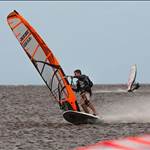
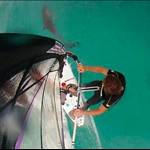
Exquisite!


Subscribe
Reply

Forums > Windsurfing General


"Nature Follows, Makes Move to Monofilm." started by evlPanda