I have a question . As a big guy always trying to get planing quicker , is it best to have a big solid fin or a flexier one ? I know size does matter and im always running big fins with big sails. Just want to get some ides before spending on fins.
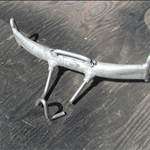
Back in the late 60s George Grenough came up with a very flexi fin and tail for his knee board. They absorbed the "G" forces from his bottom turn and released them as a "flipper" motion as he came out them, flinging him back up the face of the wave. We then tried them on surfboards and if you had the right shape and correct flex, you certainly accelerated out of a bottom turn.
But this is different to slalom fins as the flex vertically not horizontally. However pumping the tail of the board as well as the sail, in theory should generate a force, that lifts the back of the board. Which should help get you on the plane. But if you don't effectively pump the fin, any flex is going to be a loss of lift an an increase in drag.
So I guess my answer is, "in theory it depends."
Go to page two of this forum and there is a thread "Understanding fins by Buscafins".
Jesper gives a good explanation of how the fin flex works.
I did read that article and understand that a flexing fin creates lift once going. My confusion is when pushing through the water releasing the board onto the plane , once I'm up and going its fine.
Select to expand quoteImax1 said..
I have a question . As a big guy always trying to get planing quicker , is it best to have a big solid fin or a flexier one ? I know size does matter and im always running big fins with big sails. Just want to get some ides before spending on fins.
This is my experience ,and doesn't apply to everyone . yes bigger fins give lift .I find the flexi fins you loss lift .but are forgiving when landing on jumps and messing around .
Im 95 kg and use 6.5 and 7.0 most of the time and use 38 - 42 fins .a good all round for me is a 40- 42 ,I use it with a 7.0 I drop to a 36'38'or 40 with the 6.5 . With the 8.5 I use a 48 . 6.0 mtr and below 34 - 30.
Im also on the heavy side .
It would help is you told us your weight and sails and boards you are using ..then we could just recommend one .to cover a few sails
You can never have too many fins ,(12so far )but there is always at least 2 or 3 that are your favourites .
but the answer is yes you need a bigger fin if you are having problems planing or staying on the plane .or sliding sidewards.
tardy.
OK ,I'm 115kg .
90cm ,85cm ,79cm freeride boards. ( 85 and 79 my most used )
9.5 , 8.7 , 7.8 , 6.7 , 5.8 cammed sails , two and three cams not full blown racing stuff.
When using big sails ( 9.5 , 8.7 ), its either a 60cm ( cut down from 70cm formula fin ), ( wide and solid as a rock ), pops me out of the water but feel a lot of drag or
a thin flexy 54 drake fin that's much harder to start but fun when going. In higher winds with smaller sails ill use smaller fins and theres no problems . I never seem to spin out , ok mabee sometimes , but that's just me being slack 
sounds like your sizes are big enough .Then it comes down to the shape and thickness..i have a few fins that look great but are pigs,and feel draggy.
if the 70 has been cut down it will still be very thick from being a 70.
I had a 45 cut it down to a 38 ..it felt draggy i sanded the sides to get a thinner fin ..wow ..what a difference..faster and no drag.you could try that.
since that I have brought many fins .I just hit the closest windsurfing shop and brought 2 secondhand fins .To try what works.it payed off.
i would say buy a decent 52 or 55 .one of the 2nd hand ones was a fanatic ..great fin.
my biggest board is 130 litre @84 wide ,came with a 48 ,perfect.8.5 being my biggest sail...
Select to expand quotedecrepit said..
Back in the late 60s George Grenough came up with a very flexi fin and tail for his knee board. They absorbed the "G" forces from his bottom turn and released them as a "flipper" motion as he came out them, flinging him back up the face of the wave. We then tried them on surfboards and if you had the right shape and correct flex, you certainly accelerated out of a bottom turn.
But this is different to slalom fins as the flex vertically not horizontally. However pumping the tail of the board as well as the sail, in theory should generate a force, that lifts the back of the board. Which should help get you on the plane. But if you don't effectively pump the fin, any flex is going to be a loss of lift an an increase in drag.
So I guess my answer is, "in theory it depends."
George is awesome!
I have been looking at this idea for a while but has it ben incorporated into windsurfing successfully? I'm not into the technical side of sailing at all but do see the benefits of the flipper motion in smooth to choppy water. I'm sure there is some "know it all windsurfer" who will tell me it won't work.
Tanks Tardy.
I was thinking around the 55 mark.
I dont think ill sand down my 60 ( chopped from a 70 formula fin ) as its also very wide ( like a bloody tree trunk ).
My drake 54 i feel is too narrow and thin ( and like a whispy stick )
Im leaning towards putting down some hard earned on a newby.
Still wondering if i should go towards flexy or stiff ?
Any suggestions for a heavy bastard ?
We could use fins that can retract to a smaller size once you're on a plane.
But then again I was shot down about 30 years ago (not here) when I suggested a sail that could become smaller when the wind picked up.
My crazy idea was to install a venetian blind in the middle of the sail that you could open when the wind became too strong.
I know, I know, but at least I was thinking outside of the box,,,,,,,,,,,,, okay, maybe some combustibles were involved at the time. 
Can someone explain the "big fins for big sails" theory to me.
I consider sail size to be wind dependent ie changing size for different wind speeds in order to keep load on the rig constant.
So if load is kept constant, why would a larger fin be required for a larger sail?

Think more in terms of "bigger fins for lighter winds", they help you get up on a plane quicker, but once you're up and cruzing, the bigger fin isn't as important.
IMO of course.

True Ames Fins in Santa Barbara, California, were making Greenough's fins for awhile in G10 material, but I don't think they are anymore, it's been awhile, maybe some other company has picked up the rights to it in the meantime. It was called the "Stage 3".
board width helps with early planing, not having massive fin size, you need the fin size for when you are planing and have the leverage on the rail edge, the further the straps are from the center line of the board the more leverage you have , and the faster you move through the water the more lift is produced by the fin.
fin too big you'll rail up, fin not big enough you'll cavitate
example
im 125kg, and fit
ill use 78cm wide board 7.8m sail with a 44cm fin for when its pump to get planing weather 16 ish knots because ill only be able to acheive 26ish knots at full speed.
but when im fully powered up on the same gear ill use a 38cm fin because the 44 produces too much lift when im going 30 plus knots
for early planing you need a wide board, and because its wide you need a long fin for the leverage youll put on it, and because the wind is light you need an even bigger fin because the fin is producing very little lift at low speeds
my thoughts. ..
Ok, I'm wondering if the relationship is more dependent on the water speed over the fin and not necessarily just sail size.
Select to expand quotePaddles B'mere said..
Can someone explain the "big fins for big sails" theory to me.
I consider sail size to be wind dependent ie changing size for different wind speeds in order to keep load on the rig constant.
So if load is kept constant, why would a larger fin be required for a larger sail?
The load is not kept constant! that is the reason...
Both the quantity but most importantly the vector will not be same.
Thanks for starting the explanation racerX, I appreciate it.
Why is the load not constant? (or at least attempting to be constant) ie smaller sail in higher wind decreasing the load back to being the equal of a larger sail in lighter wind, much like reefing the main or using a smaller heady on a boat. I'm also intrigued by the load vector being different too, can you point me towards a diagram or a link with a diagram to show this.
BTW, I'm not pulling the p!ss with my questions I've an enquiring mind and am genuinely interested in the physics of it all, not just the anecdotal evidence from the pub.
Select to expand quotePaddles B'mere said..
Thanks for starting the explanation racerX, I appreciate it.
Why is the load not constant? (or at least attempting to be constant) ie smaller sail in higher wind decreasing the load back to being the equal of a larger sail in lighter wind, much like reefing the main or using a smaller heady on a boat. I'm also intrigued by the load vector being different too, can you point me towards a diagram or a link with a diagram to show this.
BTW, I'm not pulling the p!ss with my questions I've an enquiring mind and am genuinely interested in the physics of it all, not just the anecdotal evidence from the pub.
The force created by the sail is never aligned with the direction the board is travelling (with the exception of two points of sail 0 & 180 degrees).
Depending on what text you read on the subject, you may have seen a vector diagram, depending on the authors background, it might be described from an aeronautical point of view, i.e. Lift and Drag, or it might be described from a sailing point of view, i.e. in terms of sail drive (forward force) and healing moment etc. Doesn't matter as long you don't mix the concepts.
And while you don't need to do the maths , the following factors affect the ratio of forward sail drive to heeling force, i.e. will affect the force vector created by the sail,
1. the sheeting angle
2. the draft, sail twist, aspect ratio, plan form
3. the size
4. forward speed
5. point of sail
1, 3, 4, 5 are strongly related
Basically anything that will affect the ratio of forward drive to heeling force, but sail size certainly does.
You can demonstrate this effect with an adjustable outhaul, a very full sail on a reach will among other things generate a greater heeling moment versus forward drive.
BTW appreciated the thread on Aluminium Booms, learnt something 
Hope this makes some sense...
This is not exact, but for all practical purposes the rig heeling moment is fairly costant, limited by the sailors weight and righting arm, or how far out they are. Big sails are a bit taller, so their force is a bit higher so it turns out small sails can make a bit more force. Thats also why our sails have a lot of twist, to get the force low, so the force can be greater. So the small sail makes more force, but only a bit more, force is about 300N or 30kg give or take a bit depending mainly on sailor size and a bit on sail size, so why a smaller fin for smaller sails? It is because in strong winds the sail force vector swings forward, giving more thrust, so the board goes faster. Lift goes up with the square of speed, so at 30 knots a given area of fin can make about twice as much lift as it can at 20 knots. Or put in area terms compared to at 20knots, at 30 knots you need half the area and at 40knots a quarter the area. This matches reality where a formula board doing about 20knots uses a 70cm fin, a slalom board at 30 knots uses about 35cm and a speed board at 40 knots uses about 20cm fin. Over to the brains trust to complicate things
Yeah , got it ! But still the original question has not been answered . I really truly understand fin size ! Again , Should a 115kg sailer be using a Flexiy or stiff fin ?
Am I invisible ? Has anybody read my original post ? I'm looking for some honest advice ! Everything is going around in circles . The question was ...... As a heavy 115hg rider IS IT BETTER TO HAVE A FLEXY OR STIFF FIN ? , that's all I want to know , I kinda got a grip on most things , this is one grey area I could need some help ! 
not that I have the answer to the ORIGINAL question,
butt ... I have done a post on fins and here is an excerpt:
"Just found an article in the July 2006 Windsurf Magazine with Gonzalo Costa Hoevel. He calls choosing fins a 3 step system. Step one is about board analysis. Ironically he says to put planing fins on the faster boards and faster fins on the early planing boards. He says the early planers have straighter outlines and need fast fins with some rake, small tip area and less flex or more stiff. The faster boards are "rounder" and he suggests power fins or early planers. These fins have less rake/angle (more straight up n down), more area in the tip and softer flex. The video of the fin above and the formula bent fin for me seem to exhibit a lot of flex.
Step two for Gonzalo is assessing your goal and step three is knowing your fins. He says the softer fin gives more "kick" or "lift". Upright means planing AND upwind control - like a keel. The profile or thickness plays a factor as well. He states "A fin with a thicker foil gives you more power, upwind angle, but sacrifices top speed. A thinner foil gives you better top speed, butt in lighter winds you lose early planing and upwind angle. A fin that has the thickest point of its foil forward creates a smoother, more controlled riding sensation. Moving the foil back gives you more speed, but it's a more technical-riding fin - especially when going upwind." He also mentions that people overlook area of a fin and compares this to only analyzing sails based on luff length !!? "
joewindsurfer.blogspot.com/2012/03/fins.html

have asked similiar questions on iwindsurf forum:
www.iwindsurf.com/forums/viewtopic.php?t=31100&highlight=soft+fin
"Manufacturers are not getting away from G10 except maybe in the larger fin sizes. On the larger fins carbon will be much lighter, not so much on smaller fins. As stated earlier, carbon fins can be made with different flex patterns so smaller riders can get softer fins while larger riders can get stiffer fins. Obviously carbon is much more expensive than G10 but G10 fins will generally outlast carbon unless you are ultra careful. Pro slalom racers will use both G10 & carbon based on conditions.
Coachg"
www.internationalwindsurfing.com/windsurfing_competion_0299v01.htm
Next comes the stiffness. In modern formula boards of the past 4 seasons with wide tails of +78cm at the one-foot-off mark, stiff fins will be the worst thing you can use for control. In the old days (<2005) everyone thought you'd need a stiffer fin in high winds as the soft fins would have too much power. This really isn't the case as usually stiff fins (from the old days) have much less twist and are very bitey under your feet.
A new, modern, soft fin such as a VMG Blade, Kashy, Virus, Ifju, Z fin or others in certain circumstances create a lot of 'vertical lift' under the board which helps keep the nose down and have a better ratio of twist and flex which will help control the board in strong winds. Whereas a lot of guys used to change down to 66cm fins a few years ago, a modern fin will allow you to use even a 70cm in stronger winds than you could imagine.
and still NOT sure there is a decisive answer to the ORIGINAL question
Thanks joe windsurf , I understand what you posted , it makes perfect sense . I suppose my unique position is at 115kg I put a lot more force on a fin. Also a lot more sail power ( it's all relative ) , my quandary is , ...... to get going ..... is it better to have a solid fin to push against , ... Or a flexer more lifting fin to get me up and going ?
Did you read www.kashyfins.com/resources/K_Series-Design-Brief-7_0.pdf?
Considering that Dave Kashy supplied the fins to many of the top formula and PWA racers for many years, it is safe to assume he knows what he is talking about. He states:
"The fins with more tips flex work better in light winds when control is not an issue, and fins with hard tips have more control and thus more speed in overpowered conditions. "
Based on that, you should get a flexible fin to get going earlier. If you start having control problems, switch to a stiffer fin.
www.ifjufins.com/?page_id=44
FORMULA FINS
Sizes: 78, 76, 74, 72, 70, 67 – all fins are cut down to 70 cm
Flex: soft, extra soft, extra extra soft
ALL SOFT !!!
Flexy fins are supposed to get you going earlier - sorry I'm not buying that.
The old carbon Leading Edge fins are seriously the stiffest fins I've ever come across by some margin - and for the same fin size will get you planing before any other fin. The more the fin bends - the more its dumping its power - the less lift the board will produce.
The Techtronic Falcon is a super soft fin - it rocks in overpowering conditions but try and sail it upwind - its totally useless.
Any extra lift created by the flex will be more than offset by the reduced lateral resistance.
A heavier person generally would sail better with a stiffer fin as would lighter sailors who apply most of their weight thru their backfoot.
Sailors who apply equal pressure to both front and back footstraps usually prefer softer fins.
G10 fins seldom work in really wide boards (80cm plus) from my experience.
just out of curiosity, I have sent the question to Select Hydrofoils and True Ames ...
and am still looking ...
www.windsurf.co.uk/slalom-fins-buyers-guide/
Flex: "The next dilemma is the stiffness. With many Brands having a choice of 3-5 stiffness variations, it can be confusing to the un-initiated. As a rule a softer fin is less powerful but more controllable. Heavier riders tend to favour stiffer fins. Most brands will actually give you their recommendations when ordering as there is an optimum stiffness per sized Fin. G10 is still the mostly used material for all Fins. It will outlast the Carbon fin if it in most cases. The issue with G10 is the physical weight. When using a Slalom fin beyond 46cm G10 becomes rather heavy. Add a Deep Tuttle head and it starts to weigh over 1 kilo. The same sized Carbon fin will weigh in at around 650g. Fins up to 44-46cm work fine in G10 but beyond this Carbon gives a better bend curve and lightness."
www.iwindsurf.com/forums/viewtopic.php?t=23381
"Not an expert, but I do have a little experience sailing & racing formula. After doing much research with many fin companies and testing a few fins I came to this conclusion for my 165 lbs. For marginal winds that you are describing I can be active (pump) or inactive (don't pump). If active I need a soft fin as it seems to help the board plane earlier, like kicking your leg to waterstart in marginal conditions. If inactive then the stiffer fin planes earlier because I can press harder on it to get going. Once up and going my GPS beam reaching speeds in flat water are much higher with the stiff fin when the wind is marginal. As it gets choppy my GPS speeds are better with the soft fin.
If I were much heavier I'm guessing I may have a different experience with fins because formula boards only come in one size.
Coachg"
Apologies for sidetracking your question with my question Imax, the best way to get the best answer to any problem is to fully understand the question. Some good info in here. BTW, I cant answer you question with regards to flex on a windsurfer fin. A flexible fin/keel on a yacht usually has a really heavy bulb on the bottom that introduces flex to change the angle of attack of the keel.
Cheers RacerX, I guess the thing I'm struggling to get my head around is that for me, the whole concept of using a smaller sail area in stronger wind is to reduce the heeling moment and also the forward force vector magnitude back to being similar to what you would get with a larger sail in lighter breeze. But I do get it that if you remove the forwards drive component of the force from the rig, a physically larger rig would have a greater sideways slip component which you are now trying to counteract with the fin.
Piv, that has always been my take on fins is that they are just another wing and that water speed will affect the amount of force (lift) that it will contribute to overcome the sideways force of the rig.