Not to re-enter that mare's nest, but here's another option especially well suited to colder climes (no ventilation) which offers a ton of impact protection. It's the Polo Style from Beanie Helmets (beaniehelmets.com/collections/beanie-half-helmets-dot/products/smallest-lightest-dot-open-face-helmet-matte-black-no-peak) and is available both as DOT Certified and AS/NZS. DOT means it's legal for use on motorcycles where helmets are required (a lot of the USA).
Very comfortable and the XXL fits my 7 7/8 head perfectly. It's longer front to back than some - the NP for instance is really too round for me - and well padded although it doesn't offer much adjustment. Not quite as light as the NP but incredibly light for a motorcycle helmet, and very low profile. Fits well backwards too if you like the renegade look but the visor is a nice touch on sunny days and that's how I wear it. Doesn't seem to mind getting wet.

Ahh nice, they have one with ear pads too. The NP and the other helmet I have aren't super comfortable, but those ear pads have saved me a few times.
What type of protection do you seek from a helmet? From other riders it'll work great. From our own gear or falls it may be more of a hindrance and will increase head blow forces unless sailing at higher speeds?
Ear drum protection is very important to me and it helps with chop too!
Dirt windsurfing a helmet is highly recommended because we can't hide under water until our gear settles down!
The most common injury for me is bumping my head against the open tailgate of my van, so a helmet really helps with that
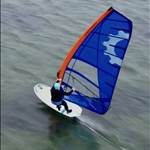
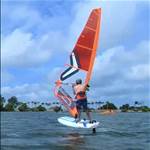
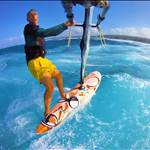
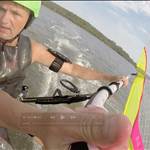
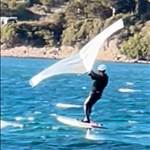
On the water it's mostly a high-speed and/or surf sailing thing. You can't tell because there's no wake but in that pic I'm foiling at 21-22kt. Catapults off foil are unpredictable but getting hammered into the mast isn't all that unusual. The other time I know a helmet has been helpful is in high wind waterstarts where the rig is getting buffeted around. I'd never land-sail without one (Craig Maisonville was killed while skatesailing at a walking pace) but even on water I think a light, low-profile shell is more help than hindrance.
Thanks for clarifying! While I cannot help with foiling, I've hit my head on the mast many times (Edit: also boom to the face), nothing that couldn't be fixed with a bit a thread and a needle  although I usually get by with sterile strips and super glue.
On this one, I hit the side of my head flat on the water and nearly passed out from the impact.
Select to expand quoteManuel7 said..
Thanks for clarifying! While I cannot help with foiling, I've hit my head on the mast many times (Edit: also boom to the face), nothing that couldn't be fixed with a bit a thread and a needle although I usually get by with sterile strips and super glue.
On this one, I hit the side of my head flat on the water and nearly passed out from the impact.
Similarly I hit my sail with the side of my head wearing a helmet at much lower speeds than above and felt like the impact was much greater. I feel like the helmet padding needs to be quite soft as the increased head area makes it harder to break water surface tension.
Additionally the added swing weight of the helmet can hurt your neck.
As a side stat, 370 people get hurt in the bathroom daily in the US. Yet who wears a helmet while taking a shower?
A friend of mine just got "run over" by her husband and got a nice cut on her head. A helmet would help there for sure! It was from a surf board though.
Bravo! you almost passed out! If you actually hit your board or mast, and did pass out, you probably would not be posting on this forum.
We heard the arguments you make about helmets when CA was passing legislation for mandatory motorcycle helmets. Right to the dot: helmets increase your injuries at low speed, and can strain your neck ... false in both instances, and, oh, by the way, they also save your life.
Windsurfing is not motorcycling, but I used a Gath helmet for three decades. I like the idea that I won't find my self passed out and faced down in the water  or stitched up
  gathsports.com
I wear a helmet primarily for protection from the sun. We have the highest recordings of melanoma in the world where I live, apparently.
Select to expand quoteManuel7 said..
Thanks for clarifying! While I cannot help with foiling, I've hit my head on the mast many times (Edit: also boom to the face), nothing that couldn't be fixed with a bit a thread and a needle although I usually get by with sterile strips and super glue.
On this one, I hit the side of my head flat on the water and nearly passed out from the impact.
Similarly I hit my sail with the side of my head wearing a helmet at much lower speeds than above and felt like the impact was much greater. I feel like the helmet padding needs to be quite soft as the increased head area makes it harder to break water surface tension.
Additionally the added swing weight of the helmet can hurt your neck.
As a side stat, 370 people get hurt in the bathroom daily in the US. Yet who wears a helmet while taking a shower?
A friend of mine just got "run over" by her husband and got a nice cut on her head. A helmet would help there for sure! It was from a surf board though.
Sorry Manuel but your assertions are both incorrect and offer miss information. Soft padding does nothing to protect from brain injury as proved by football/rugby head gear. Helmets never increase the risk of injury , head blow forces are not increased by helmets at low or high speed. MIPS is the latest greatest type of 'padding ' for low speed helmets nowadays , its a mesh designed to deflect to help reduce 'brain shift' i.e your brain brushing against your skull which happens at as low as 5km per hour, and always causes permanent tissue damage. Whatever the risk, workplace, bike riding, motorbikes or our own beloved water sports, a helmet is a good idea. Having very nearly lost a good friend to drowning from a very low speed impact stack where he passed out only for the fast and attentive work by a fellow rider to save him in the line up, not sure he would have lived with out that Good Samaritan who's gear took a beating while he attended to my mate.
Hey folks, just sharing my personal experience.
Ultimately, each of us will make the decision they feel comfortable with.
At least helmets are available!
Duzzi, you missed the following sentence Select to expand quoteduzzi said..Manuel7 said..
[...]
Similarly I hit my sail with the side of my head wearing a helmet at much lower speeds than above and felt like the impact was much greater. I feel like the helmet padding needs to be quite soft as the increased head area makes it harder to break water surface tension.
I used a helmet before and had to take it out because of repetitive hits on the water from throwing moves, my head would hurt during and following the sessions due to the increase surface of the helmet. Maybe it was the helmet, just sharing my thoughts.
Also, yes it'll put strain on your neck because the added weight, when you slap on your back your head goes back and hits the water. You will hear your back and neck crack actually, sometimes it feels good 
The most important thing is don't let go and certainly never the front hand until you are clear of trouble.
By keeping the front hand on it'll be impossible for you to hit the mast. If you can't hold it then you'll be ejected far enough from your gear anyway.
I do recommend ear protection 100%, sun protection, rashguard, rib or torso padding, and maybe a lightweight thinner helmet if you feel like it.
In regards to whip lash, look at the Hans device, it's mandatory for some racing. Luckily for us, our sport has much better numbers in terms of injuries than driving to and from our local spot!
I used to also not feel comfortable with the helmets due their weight but I found the WIP helmets are very light and like the quick release system. This helmet 170 gr and even the their hard shell helmet weight is 290 gr. www.forward-wip.com/produit/wiflex/
Select to expand quotepeterowensbabs said..
Sorry Manuel but your assertions are both incorrect and offer miss information. Soft padding does nothing to protect from brain injury as proved by football/rugby head gear. Helmets never increase the risk of injury , head blow forces are not increased by helmets at low or high speed. MIPS is the latest greatest type of 'padding ' for low speed helmets nowadays , its a mesh designed to deflect to help reduce 'brain shift' i.e your brain brushing against your skull which happens at as low as 5km per hour, and always causes permanent tissue damage. Whatever the risk, workplace, bike riding, motorbikes or our own beloved water sports, a helmet is a good idea. Having very nearly lost a good friend to drowning from a very low speed impact stack where he passed out only for the fast and attentive work by a fellow rider to save him in the line up, not sure he would have lived with out that Good Samaritan who's gear took a beating while he attended to my mate.
I've used a bunch of different helmets over the years for speed windsurfing and kiting, including a snowboard helmet at times. Helmets for watersports seem to be improving but still seem to be miles behind the technology in MTB and snow helmets for example. Lots of the good MTB and snow helmet brands (eg Giro) sadly don't seem to make dedicated watersports helmets.
Is anyone aware of any watersports helmets running MIPS? If not, I'm curious to know why not?
Which brand is offering the best safety features/standards in watersports helmets? From what I've see of WIP, Gath, Protec etc, they are all pretty much a basic shell that is miles behind MTB and snow helmets in safety?
GATH all the way. Different models offer different fits for various head shapes. Designed in Margaret River and you can go to the factory in Margies to get one. Support locals and Australian products.
GATH all the way. Different models offer different fits for various head shapes. Designed in Margaret River and you can go to the factory in Margies to get one. Support locals and Australian products.
I have a Gath, it's very comfortable. It has protected my head at least once during an uncontrolled dismount where my head hit the mast.
A mate uses his Giro bike helmet. He says its also very comfortable and seems durable.
Some literature on it. Cerebral damage comes most likely from deceleration. Impact i personally don't care so much about.
In my opinion the test setup is not mimicking the real brain-skull rubbings from rotational jumps gone awry (like the occasional simple "backplouf" under rotated backie with flat torso)
Worst concussion from MTB'ing with helmet, side of the front hit & rapid rotation, brain scrapes inside of your skull. Modern day MIPS should attenuate that.
link.springer.com/article/10.1007/s12283-020-0321-6

So rotational forces are not such a big deal for watersports therefore MIPS is not as relevant as for MTB or snow? What if you're hitting the water at speed? Doesn't the body's momentum as it hits the water mean there are both downward and forwards forces acting on the skull creating a rotational effect?
So which watersports helmet brand is offering the best safety standards/technology? I understand people have various views on the prettiest, most comfortable or local. But which has the highest safety standard? Or if safety is priority, should we run a snow helmet?
Select to expand quoteneedsalt said..
So rotational forces are not such a big deal for watersports therefore MIPS is not as relevant as for MTB or snow? What if you're hitting the water at speed? Doesn't the body's momentum as it hits the water mean there are both downward and forwards forces acting on the skull creating a rotational effect?
So which watersports helmet brand is offering the best safety standards/technology? I understand people have various views on the prettiest, most comfortable or local. But which has the highest safety standard? Or if safety is priority, should we run a snow helmet?
Good point, I looked up MIPS on Google. It seems they are the gold safety standard. I used a MIPS helmet for cycling and they were compulsory for construction work.
My Gath is not a MIPS helmet and while comfortable, it may not give me the protection I need. Looks like my mate who uses a bike helmet is on the right path.
MIPS is important in cycling because helmets don't slide easily across the pavement when you fall at speed. That's a huge component of the rotational forces. When you hit water, the helmet slides much more easily. If you get bonked on the head by a mast, the rotational force is minimal - its the blunt force impact you want to mitigate.
Besides protecting your noggin, helmets are also great for keeping your glasses on. Even with a headstrap I lose glasses without a helmet.
Interesting resource for info on helmet standards and design www.helmetfacts.com/about/. I hope watersports can receive the same focus one day.
I totally get that all the disciplines have different needs and risks. For speedsailing at over 70km/hr (or even much less), deceleration is a far greater concern for me than gear impact. And not necessarily a single critical knock out incident, but cumulative damage from a few minor concussions each season. I'm keen to take advantage of the best standards and technology I can. Helmets slide much more easily across snow than pavement, but snow helmets still include MIPS and other technology that is improving all the time.