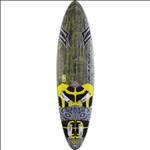
Had a great sail this arvo on Lake Macquarie in what is typically an ugly wind be was surprisingly good.
Long story short in a hurry to get on the water I left the air vent open for the first 15 minutes or so of sailing before coming in and closing it up and going back out.
When I got home I had took the screw completely out and only a few drops of water came out. Its sitting in the garage upside down "drying out".
Does anyone know if I'm likely to cause damage by not completely drying it out?
I don't want to drill a hole in the tail to drain it. I was thinking about leaving it out in the sun tomorrow to dry it out?
I did a few searches for previous forums on this but nothing came up.
Any ideas.
cheers
Do a search on board lady. You need to get some paper towel and roll it up and stick in the vent hole so it works like a candle wick. Place board in a warm windy position but probably not direct sun.
Thanks Dean. I've just pushed a cotton bud down the vent and it came out pretty much dry. I'll check out the board lady site.
It is surprising how little gets in there unless you sink it or have waves coming over the nose.
I'd still bung a wick in it and leave it upside down as long as possible
I'd plump for leaving it right side up, wrap it in black polythene but don't seal it, and leave it in the sun.
Right side up because water vapour is lighter than air.
This time of year l think very little water got in.if we were in summer 40 degree heat might of been different.l have done it a few times.
Especially dont leave it in a hot car with the bung in tight if can make a bit of extra steam pressure.
Hey Belly I don't know if a a cotton bud would be optimal. The paper towel has a large surface area for the water to evaporate from. Twist one end and stick it in so that the paper towel is touching the core.
also suggest - to always keep vent open when not in use afterwards
sound like you were already doing that
AND open vent as soon as off the water ...
Select to expand quoteBelly25 said..
Belly, I don't think you have much to worry about if it's based on my experience. I brought 69L full wood sandwich wave board a few years ago with a defective vent hole. When the factory reamed the vent hole they cracked it. I had one session where the board was full of water. I stopped using it immediately, got the water out and repaired the vent hole. This was 3 years ago, and this board had about 50 sessions +25knot sessions in very choppy water. It's not showing any signs of failing. The prognosis from members on this forum was that it was fked. It's still going. A few years before that, I owned a Starboard 104 S-Type with a similar problem. This board was full of water for about 10 sessions in a row over a period of a year (it had a lot more water in it over a much longer period than my 69L wave board). I fixed the fault and dried out the board. The board is still going.
It's not the end of the world, it may still be saved.
J
Hey there Belly25,
Perhaps try sucking as much water and moisture out of the vent hole with a wet/dry vac. When you have finished with that, try getting hold of a dehumidifier and put the board in a small room inside your house, with the door closed. Keep the dehumidifier on steady for about 2-3 days. That should draw the rest of the excess moisture that the wet/dry vac couldn't pull out.
Good luck!
Select to expand quoteNotWal said..
I'd plump for leaving it right side up, wrap it in black polythene but don't seal it, and leave it in the sun.
Right side up because water vapour is lighter than air.
also very good but I was presuming not much sun this time of year :)
I left the bung very "undone" in a slalom board at Lake George. Sailed for 15 minutes or so, realised, came in and closed.
No appreciable gain in weight. Left it in the sun bottom up with a "wick" of kitchen paper towel in the vent hole. Got about an inch of wet towel and that was it. All good.
Have also used the same method to drain a 14' sup of a lot of water, doh!!!!
Shifu,
Lol, very funny! No I'm from the states, born and raised in So Cal. The dehumidifier method is very popular here for water damage issues, and is a pretty successful tool that is used. Give it a try sometime and see for yourself.
Thanks to everyone who contributed.
I pretty much did a bit of all of the suggestions. Almost no noticeable water came out so I'm now thinking the screw itself saved the board from excessive water coming in, it is a tight fitting screw.
Lesson learnt. Since this has happened heaps of sailors have said just leave the vent closed all the time. Not so sure.
It's best to open the vent screw when your board is not in use. I had a board delaminate on me on a hot day in the sun in a board bag with the vent screw in tact. I learned the hard way. The board got so hot inside, and couldn't adjust for the temp change because the vent screw was still in. Plus the board needs to breath when temps warm and cool throughout the day. Keep in mind that warm air, cold air and altitude change are all forms of pressure changing and when you have a lid on, the pressure cannot release until you remove the lid or in this case, the vent screw.
Here is the trick!!!
When you're rigging up for your session, make it a habit to place your screwdriver in the mast step track. That is your hint to put your vent screw in before you sail. Works every time for me. It becomes part of your mental checklist before sailing.
Select to expand quoteBelly25 said..
Lesson learnt. Since this has happened heaps of sailors have said just leave the vent closed all the time. Not so sure.
If it has had even a little amount of water in it, do not let it closed at all times, it will probably cause delam if in a hot environment.
Keep it open when not in use and just remember to close it tight everytime you go sailing.
Select to expand quoteseanhogan said..
. . . and just remember to close it tight everytime you go sailing.
But, not too tight. If you overtighten it, you will distort the o-ring, and then it won't seal at all. 
Use a light smear of o-ring lube to help it seal - available from hardware stores.
I don't understand how the vent relieves the pressure differential if the majority of the board's structure is based on a solid Styrofoam core. The 'air' is physically trapped within the closed cells of the foamed styrene!
Someone with a good understanding of the physics, please explain.
The blue extruded insulation polystyrene foam is closed cell. The lighter white expanded polystyrene foam that is used in the core of most epoxy sandwich boards is not closed cell. The PVC sandwich foam on the outer layers and the blocks around your fin box and mast track are closed cell.
In the foam in our boards pre formed partly expanded close cell pellets ( beads) are poured into a mould steam is then applied which expands the beads even more and they bond together.
Between the beads are interstitial gaps that form an open network of channels between the bonded beads, and this network of gaps is like a maze that can become filled with liquid water and is then very difficult for the water to find a way out of the maze.
Did the exact same thing a while ago. Initially upside down to pump out any loose water with a wine vacuum pump, then the paper towel wick, then stored right way up for the light water vapour to come out. I estimate I removed a couple of table spoons.
A few years later the board is fine, although I think once you think you might have water in the board, storing with the bung undone is more important than ever. Over time, I guess a little more water vapour comes out every time the board warms up and cools down in storage.
I've now given myself a mental ban on installing the mast base until I have done up the bung screw.

I reckon 90% of boards leak. I've only ever had one board that would hiss when you opened the vent plug. The leaks are usually slow I suppose. Not sure if tightening up the vent screw on a hot board and throwing it in cold water is a good idea. If the hot board has a little bit of positive pressure, depending on how leaky it happens to be, then the cold water is going to have a little less suction.
All boards I've had were a little heavy when retired. You know how it is. You store them up in the rafters until you have a clean up and take them to the tip. Then they're as light as the day they were first launched. In fact the one I threw out the other day was so unexpectedly light I misjudged the final toss and put it straight through the back window of the van.
I believe you Ian , While pimpin (respraying ) boards theres always a few little bubbles coming through the paint , must be tiny pinholes.