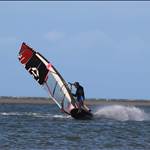
In 2023 I built a board to replace my beloved 145L Slingshot Shred Sled. That original build is labeled "Step Tail" in the drawings below. It was incremental improvement over the sled for my goals. It was slightly harder to uphaul but noticeably better at getting up on foil, more compact, more maneuverable in the air and better stability in gusts.
Fast forward to this summer - stuck in the doldrums and itching for a change - I hacked off the tail at the step, leaving a square transom like the Wizard-style boards. That version is labeled "Square Tail". I knew I'd sacrifice uphaul-ability (and I did), but I was mainly curious about takeoff. Well, takeoff was MUCH harder- almost as draggy as my failed Kalama copy. Slogging speed was noticeably slower, remember any increase in speed increases apparent wind and lift goes up by the square of the speed so even if you plan on pumping free, sailing faster before you pump helps exponentially. It reinforced what I have learned about how much even a little length helps to get going. After just a couple of sessions, it went back into the shed.
Since I was working with a clean square edge, it was straightforward to glue some foam back on. I kept the original outline and length but made the bottom flat, ran the deck parallel to the bottom all the way to the tail with a small radius in the top corner to add volume right at the very end. I think of this detail as "volume on a lever", in other word small changes in the ends make big differences in stability. This latest version labeled "Flat Tail" is by far my Favorite of the three. Uphauls better than the sled, gets up on foil faster than anything I've ridden, flies just like the step tail.
While this is no way a controlled experiment particularly because volume changed and I am not collecting real wind or speed data on the water. But using the same board did limit some of the variables and a lot of the work. So obviously take these finding with a grain of salt but I felt that my experiences are worth sharing.
Now, I realize these boards are WAY too big for most freeride foilers chasing the lowest volume possible. But I bet these concepts can be used to lower your volume required without making it more challenging to get flying. Also keep in mind that when you move the rider forward on the board the swing weight effectively goes down because you are closer to the CG of the board, in other words for a given shape the board has less leverage on you. For beginners or anyone looking to optimize early lift, adding length and volume behind the mast can make a real difference.
Would love to hear if anyone else has played around with tail overhang this way or has any relevant thoughts or experiences.


Select to expand quoteutcminusfour said..
In 2023 I built a board to replace my beloved 145L Slingshot Shred Sled. That original build is labeled "Step Tail" in the drawings below. It was incremental improvement over the sled for my goals. It was slightly harder to uphaul but noticeably better at getting up on foil, more compact, more maneuverable in the air and better stability in gusts.
Fast forward to this summer - stuck in the doldrums and itching for a change - I hacked off the tail at the step, leaving a square transom like the Wizard-style boards. That version is labeled "Square Tail". I knew I'd sacrifice uphaul-ability (and I did), but I was mainly curious about takeoff. Well, takeoff was MUCH harder- almost as draggy as my failed Kalama copy. Slogging speed was noticeably slower, remember any increase in speed increases apparent wind and lift goes up by the square of the speed so even if you plan on pumping free, sailing faster before you pump helps exponentially. It reinforced what I have learned about how much even a little length helps to get going. After just a couple of sessions, it went back into the shed.
Since I was working with a clean square edge, it was straightforward to glue some foam back on. I kept the original outline and length but made the bottom flat, ran the deck parallel to the bottom all the way to the tail with a small radius in the top corner to add volume right at the very end. I think of this detail as "volume on a lever", in other word small changes in the ends make big differences in stability. This latest version labeled "Flat Tail" is by far my Favorite of the three. Uphauls better than the sled, gets up on foil faster than anything I've ridden, flies just like the step tail.
While this is no way a controlled experiment particularly because volume changed and I am not collecting real wind or speed data on the water. But using the same board did limit some of the variables and a lot of the work. So obviously take these finding with a grain of salt but I felt that my experiences are worth sharing.
Now, I realize these boards are WAY too big for most freeride foilers chasing the lowest volume possible. But I bet these concepts can be used to lower your volume required without making it more challenging to get flying. Also keep in mind that when you move the rider forward on the board the swing weight effectively goes down because you are closer to the CG of the board, in other words for a given shape the board has less leverage on you. For beginners or anyone looking to optimize early lift, adding length and volume behind the mast can make a real difference.
Would love to hear if anyone else has played around with tail overhang this way or has any relevant thoughts or experiences.
Nice work, a useful experiment - good to read your conclusions about "free" tail volume 
Have you had any more thoughts in the last couple of years on why your Kalama copy failed - do we need a wide planing area to get on foil to overcome mast base pressure?
All I know is bull's old foilstyler is longer, narrower and flatter than my freestyle 115 and it gets up easier for sure. My guess was it was the water line length
Starboard's slalom foil boards have a small bit of extension and better water flow in the newest versions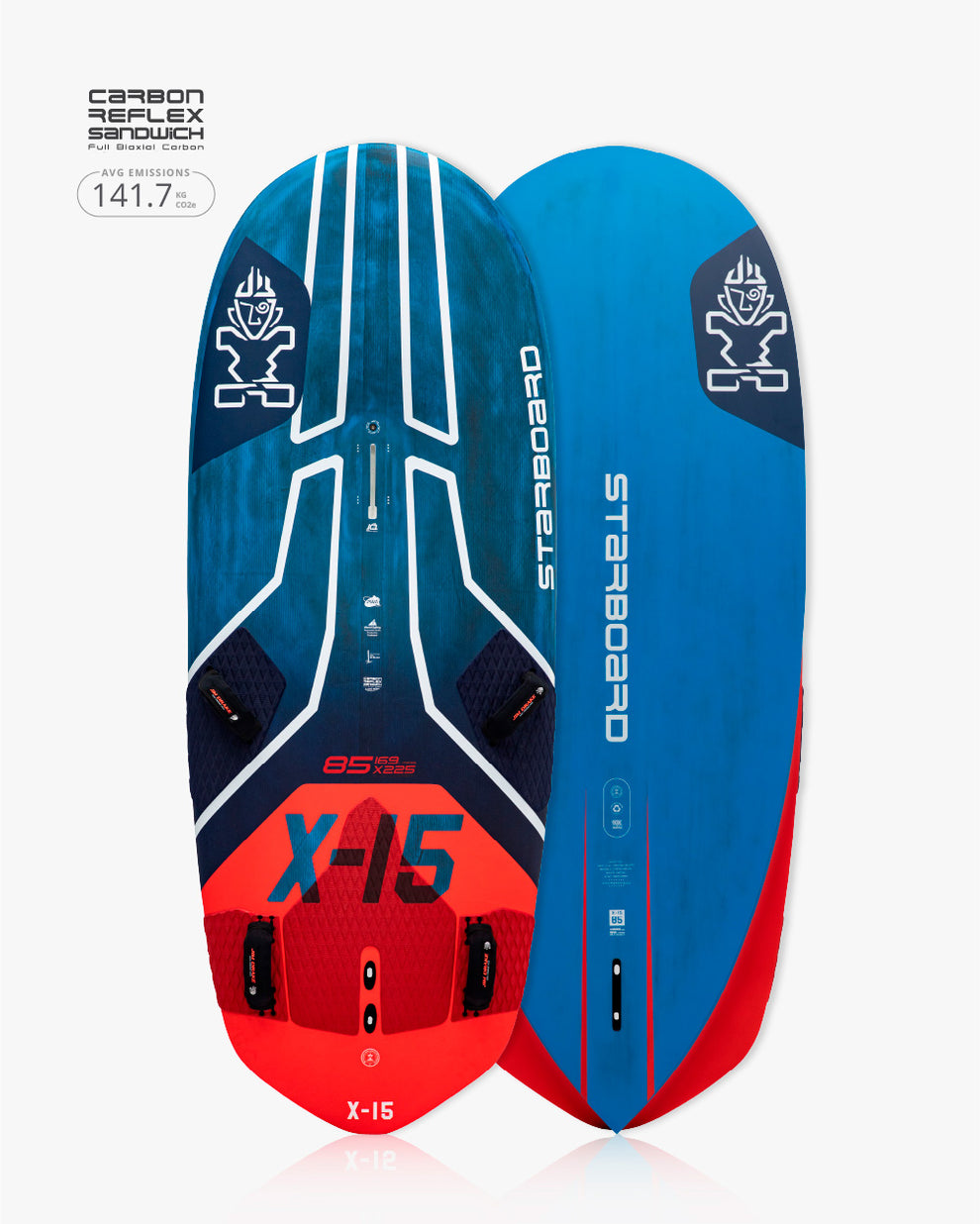
Phantom's newest foil race boards have an extended tail, too
"The board has been extended at the rear to optimize the gliding surface and ensure the best possible takeoff performance. The airflow exit points are also optimized to reduce drag."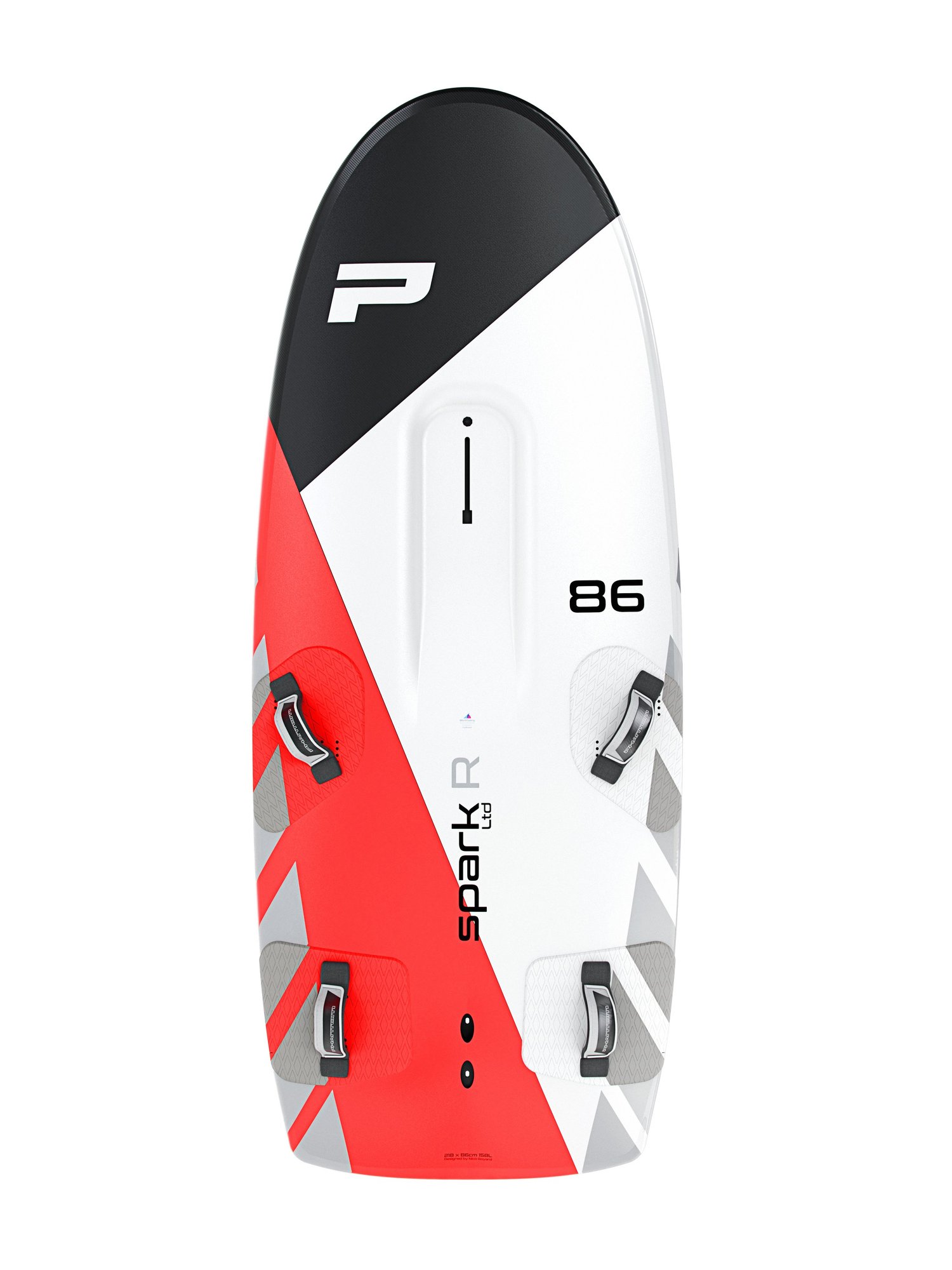
More in the freeride styleFoil type :
Select to expand quoteutcminusfour said..
Now, I realize these boards are WAY too big for most freeride foilers chasing the lowest volume possible. But I bet these concepts can be used to lower your volume required without making it more challenging to get flying. Also keep in mind that when you move the rider forward on the board the swing weight effectively goes down because you are closer to the CG of the board, in other words for a given shape the board has less leverage on you. For beginners or anyone looking to optimize early lift, adding length and volume behind the mast can make a real difference.
Would love to hear if anyone else has played around with tail overhang this way or has any relevant thoughts or experiences.
This Goya Airbolt is my daily ride, 90 litres and I'm 90kg. The tail length and volume distribution allows for a centred stance, higher glide speed and early take-off. Flat bottom with smooth cutouts keeps a straight rocker all the way back too.
Riding strapless now, but this is pretty much where my feet go.
So yep, for minimising volume, this shape works very well.


Select to expand quote
Are you using this straps setting for winDfoil ?
Not that I think you're misusing your gear (that would probably be my choice of setting), but just out of curiosity.
Where do you set your foil mast with these impressive foil rails ?
Select to expand quoteazymuth said..utcminusfour said..
In 2023 I built a board to replace my beloved 145L Slingshot Shred Sled. That original build is labeled "Step Tail" in the drawings below. It was incremental improvement over the sled for my goals. It was slightly harder to uphaul but noticeably better at getting up on foil, more compact, more maneuverable in the air and better stability in gusts.
Fast forward to this summer - stuck in the doldrums and itching for a change - I hacked off the tail at the step, leaving a square transom like the Wizard-style boards. That version is labeled "Square Tail". I knew I'd sacrifice uphaul-ability (and I did), but I was mainly curious about takeoff. Well, takeoff was MUCH harder- almost as draggy as my failed Kalama copy. Slogging speed was noticeably slower, remember any increase in speed increases apparent wind and lift goes up by the square of the speed so even if you plan on pumping free, sailing faster before you pump helps exponentially. It reinforced what I have learned about how much even a little length helps to get going. After just a couple of sessions, it went back into the shed.
Since I was working with a clean square edge, it was straightforward to glue some foam back on. I kept the original outline and length but made the bottom flat, ran the deck parallel to the bottom all the way to the tail with a small radius in the top corner to add volume right at the very end. I think of this detail as "volume on a lever", in other word small changes in the ends make big differences in stability. This latest version labeled "Flat Tail" is by far my Favorite of the three. Uphauls better than the sled, gets up on foil faster than anything I've ridden, flies just like the step tail.
While this is no way a controlled experiment particularly because volume changed and I am not collecting real wind or speed data on the water. But using the same board did limit some of the variables and a lot of the work. So obviously take these finding with a grain of salt but I felt that my experiences are worth sharing.
Now, I realize these boards are WAY too big for most freeride foilers chasing the lowest volume possible. But I bet these concepts can be used to lower your volume required without making it more challenging to get flying. Also keep in mind that when you move the rider forward on the board the swing weight effectively goes down because you are closer to the CG of the board, in other words for a given shape the board has less leverage on you. For beginners or anyone looking to optimize early lift, adding length and volume behind the mast can make a real difference.
Would love to hear if anyone else has played around with tail overhang this way or has any relevant thoughts or experiences.
Nice work, a useful experiment - good to read your conclusions about "free" tail volume
Have you had any more thoughts in the last couple of years on why your Kalama copy failed - do we need a wide planing area to get on foil to overcome mast base pressure?
JJ, I've never stopped thinking about it.
Honestly, I've been drinking from the fire hose - flying by the seat of my pants, trying to keep it as scientific as possible while still keeping it fun.
The Kalama Hull Experiment
The Kalama-style hull I drew up is close to a pin tail, and I've heard that outline shape can cause yaw imbalance that may explain the wild yaw it did. The other thing I am rather sure is that the water channeling up the tail bevels is what created the massive suction.
That said, the board wasn't a total failure. It turned out to be a great beginner wing board. I ended up gifting it (and an old foil) to a young friend. Another friend passed him a wing, and now he's taken the whole setup back to college - teaching the sailing team to foil!
Why It Works for Them, Not Us
It's gotta come down to mast base pressure. In windfoiling, you're constantly driving the back foot to overcome the MBP. There's a brief moment during pumping when you're "onloading" to climb, but otherwise, we're pressing down through the back leg the entire time. In contrast, other foiling sports get pulled up by their power source - sail or paddle - and only down press to change pitch. That difference I think is critical.
My Current Thinking
When you press a shape into the water with your back foot and MBP, you need a planning hull to get to speed.
When you're lifting a shape out of the water, you want minimal flat bottom area and a quick break from surface tension. In that case, planning shapes matter less.
That "flat-bottom suction" effect that the Kalama tail releases for other sports? 100% real for us - no escaping that physics. But for windfoil, we need something that can plane, so while we want enough volume and planning surface it think keeping it as narrow as possible makes sense to combat the surface tension. For this reason, I really like the fore-aft cutouts on the Starboard above. I reckon they're less draggy at low speeds than transverse ones, and I'd like to try something similar - just at a much narrower width for use with smaller sails. Of course, fine-tuning those kinds of details adds a lot of time to the build.
Technique: Crucial with Flatter Hulls
As my hulls have gotten flatter, I've noticed how much technique matters. When you're close to takeoff speed, pumping the back leg, even just a little or even when overpowered, helps unstick the board. Caught the wave but still stuck to the water? Same story - just a little pulse with the rear leg can make all the difference. Add a rolling motion to the pump (especially on wider boards), and it frees up the tail even faster.
The new shape has a con for me
I have noticed on the flat tail that it is harder to track straight, it wants to yaw at low speeds especially trying to catch waves. I believe it's the relationship of the outline shape tapering fast coupled with the long crisp rails and the brutally plumb and thick rails in the tail. Likely a similar issue to the Kalama. I've learned to deal but I would love to design it out.
Foil and Sail Placement
I've been slowly moving the foil and sail closer together over the past handful of years. On my last session with the new Severn R4D 4.0, I was down to 21.75" from sail foot to foil mast the closest yet. It felt super light, playful, and weatherly. As I have grown used to the short distance, I really notice when the sail's too far forward or oversized or the booms too low - the excess sail load moment fights take off. Less sail load moment = less back foot and stab pressure needed so now you have just reduced three of the loads pointing in the wrong direction. It's like a tidy little spiral of gains. Sail base location fore and aft is just one part of the total moment that the foil has to overcome to fly, the details of the sail come into play too (height, area, aspect ratio, height of COE, twist) and I am drinking from the fire hose there too but excited to learn.
Volume in the Tail:
I am a full-sized burger eating American that's getting wobbly with age. I just need more volume in the tail than most people are used to looking at. Every time I make a design change that gives more me leeway with my weight placement and allows me to stay put over the foil the take offs get easier. When it's easier to launch I can rig a smaller sail and use a smaller foil.
Select to expand quoteobenebo said..utcminusfour said..
Now, I realize these boards are WAY too big for most freeride foilers chasing the lowest volume possible. But I bet these concepts can be used to lower your volume required without making it more challenging to get flying. Also keep in mind that when you move the rider forward on the board the swing weight effectively goes down because you are closer to the CG of the board, in other words for a given shape the board has less leverage on you. For beginners or anyone looking to optimize early lift, adding length and volume behind the mast can make a real difference.
Would love to hear if anyone else has played around with tail overhang this way or has any relevant thoughts or experiences.
This Goya Airbolt is my daily ride, 90 litres and I'm 90kg. The tail length and volume distribution allows for a centred stance, higher glide speed and early take-off. Flat bottom with smooth cutouts keeps a straight rocker all the way back too.
Riding strapless now, but this is pretty much where my feet go.
So yep, for minimising volume, this shape works very well.
That board has influenced me!
The Airbolt is a board I'd like to try at some point. Seems like it should work really well but not very popular for some reason.
Select to expand quoteGrantmac said..
The Airbolt is a board I'd like to try at some point. Seems like it should work really well...
Early take off, very stable platform, yet very lively, both while already on the foil, or when the board is still in the water. Well worth a try. 105 litres here in this clip.
Select to expand quoteutcminusfour said..azymuth said..utcminusfour said..
In 2023 I built a board to replace my beloved 145L Slingshot Shred Sled. That original build is labeled "Step Tail" in the drawings below. It was incremental improvement over the sled for my goals. It was slightly harder to uphaul but noticeably better at getting up on foil, more compact, more maneuverable in the air and better stability in gusts.
Fast forward to this summer - stuck in the doldrums and itching for a change - I hacked off the tail at the step, leaving a square transom like the Wizard-style boards. That version is labeled "Square Tail". I knew I'd sacrifice uphaul-ability (and I did), but I was mainly curious about takeoff. Well, takeoff was MUCH harder- almost as draggy as my failed Kalama copy. Slogging speed was noticeably slower, remember any increase in speed increases apparent wind and lift goes up by the square of the speed so even if you plan on pumping free, sailing faster before you pump helps exponentially. It reinforced what I have learned about how much even a little length helps to get going. After just a couple of sessions, it went back into the shed.
Since I was working with a clean square edge, it was straightforward to glue some foam back on. I kept the original outline and length but made the bottom flat, ran the deck parallel to the bottom all the way to the tail with a small radius in the top corner to add volume right at the very end. I think of this detail as "volume on a lever", in other word small changes in the ends make big differences in stability. This latest version labeled "Flat Tail" is by far my Favorite of the three. Uphauls better than the sled, gets up on foil faster than anything I've ridden, flies just like the step tail.
While this is no way a controlled experiment particularly because volume changed and I am not collecting real wind or speed data on the water. But using the same board did limit some of the variables and a lot of the work. So obviously take these finding with a grain of salt but I felt that my experiences are worth sharing.
Now, I realize these boards are WAY too big for most freeride foilers chasing the lowest volume possible. But I bet these concepts can be used to lower your volume required without making it more challenging to get flying. Also keep in mind that when you move the rider forward on the board the swing weight effectively goes down because you are closer to the CG of the board, in other words for a given shape the board has less leverage on you. For beginners or anyone looking to optimize early lift, adding length and volume behind the mast can make a real difference.
Would love to hear if anyone else has played around with tail overhang this way or has any relevant thoughts or experiences.
Nice work, a useful experiment - good to read your conclusions about "free" tail volume
Have you had any more thoughts in the last couple of years on why your Kalama copy failed - do we need a wide planing area to get on foil to overcome mast base pressure?
JJ, I've never stopped thinking about it.
Honestly, I've been drinking from the fire hose - flying by the seat of my pants, trying to keep it as scientific as possible while still keeping it fun.
The Kalama Hull Experiment
The Kalama-style hull I drew up is close to a pin tail, and I've heard that outline shape can cause yaw imbalance that may explain the wild yaw it did. The other thing I am rather sure is that the water channeling up the tail bevels is what created the massive suction.
That said, the board wasn't a total failure. It turned out to be a great beginner wing board. I ended up gifting it (and an old foil) to a young friend. Another friend passed him a wing, and now he's taken the whole setup back to college - teaching the sailing team to foil!
Why It Works for Them, Not Us
It's gotta come down to mast base pressure. In windfoiling, you're constantly driving the back foot to overcome the MBP. There's a brief moment during pumping when you're "onloading" to climb, but otherwise, we're pressing down through the back leg the entire time. In contrast, other foiling sports get pulled up by their power source - sail or paddle - and only down press to change pitch. That difference I think is critical.
My Current Thinking
When you press a shape into the water with your back foot and MBP, you need a planning hull to get to speed.
When you're lifting a shape out of the water, you want minimal flat bottom area and a quick break from surface tension. In that case, planning shapes matter less.
That "flat-bottom suction" effect that the Kalama tail releases for other sports? 100% real for us - no escaping that physics. But for windfoil, we need something that can plane, so while we want enough volume and planning surface it think keeping it as narrow as possible makes sense to combat the surface tension. For this reason, I really like the fore-aft cutouts on the Starboard above. I reckon they're less draggy at low speeds than transverse ones, and I'd like to try something similar - just at a much narrower width for use with smaller sails. Of course, fine-tuning those kinds of details adds a lot of time to the build.
Technique: Crucial with Flatter Hulls
As my hulls have gotten flatter, I've noticed how much technique matters. When you're close to takeoff speed, pumping the back leg, even just a little or even when overpowered, helps unstick the board. Caught the wave but still stuck to the water? Same story - just a little pulse with the rear leg can make all the difference. Add a rolling motion to the pump (especially on wider boards), and it frees up the tail even faster.
The new shape has a con for me
I have noticed on the flat tail that it is harder to track straight, it wants to yaw at low speeds especially trying to catch waves. I believe it's the relationship of the outline shape tapering fast coupled with the long crisp rails and the brutally plumb and thick rails in the tail. Likely a similar issue to the Kalama. I've learned to deal but I would love to design it out.
Foil and Sail Placement
I've been slowly moving the foil and sail closer together over the past handful of years. On my last session with the new Severn R4D 4.0, I was down to 21.75" from sail foot to foil mast the closest yet. It felt super light, playful, and weatherly. As I have grown used to the short distance, I really notice when the sail's too far forward or oversized or the booms too low - the excess sail load moment fights take off. Less sail load moment = less back foot and stab pressure needed so now you have just reduced three of the loads pointing in the wrong direction. It's like a tidy little spiral of gains. Sail base location fore and aft is just one part of the total moment that the foil has to overcome to fly, the details of the sail come into play too (height, area, aspect ratio, height of COE, twist) and I am drinking from the fire hose there too but excited to learn.
Volume in the Tail:
I am a full-sized burger eating American that's getting wobbly with age. I just need more volume in the tail than most people are used to looking at. Every time I make a design change that gives more me leeway with my weight placement and allows me to stay put over the foil the take offs get easier. When it's easier to launch I can rig a smaller sail and use a smaller foil.
Cheers David - really appreciate the detailed info - awesome to have a legit naval architect thinking and experimenting with our freeride windfoil issues
I found your paragraph particularly interesting as I tend to keep a reasonable distance between foil mast and mast base.
I find I need the spacing to brace in stronger winds
"As I have grown used to the short distance, I really notice when the sail's too far forward or oversized or the booms too low - the excess sail load moment fights take off. Less sail load moment = less back foot and stab pressure needed so now you have just reduced three of the loads pointing in the wrong direction. It's like a tidy little spiral of gains. Sail base location fore and aft is just one part of the total moment that the foil has to overcome to fly, the details of the sail come into play too (height, area, aspect ratio, height of COE, twist) and I am drinking from the fire hose there too but excited to learn"
Select to expand quote6u1d0 said..
Are you using this straps setting for winDfoil ?
Not that I think you're misusing your gear (that would probably be my choice of setting), but just out of curiosity.
Where do you set your foil mast with these impressive foil rails ?
This is for winDfoil, never winged, but it is promoted as a potential "All-in-one" board.
I ride strapless, but those strap positions represent roughly where my feet are, depending on foil and sail. As you can see, shifted forward to make the most of the buoyancy of a small board.
Front of foil mast (at just a fraction behind midpoint in the tracks) is directly under the rear screw of the back strap pictured. In reality my back foot would usually be behind the back strap placement there, putting it directly above the foil mast. Front of foil mast to sail is 75cm.
Select to expand quoteazymuth said..utcminusfour said..azymuth said..utcminusfour said..
In 2023 I built a board to replace my beloved 145L Slingshot Shred Sled. That original build is labeled "Step Tail" in the drawings below. It was incremental improvement over the sled for my goals. It was slightly harder to uphaul but noticeably better at getting up on foil, more compact, more maneuverable in the air and better stability in gusts.
Fast forward to this summer - stuck in the doldrums and itching for a change - I hacked off the tail at the step, leaving a square transom like the Wizard-style boards. That version is labeled "Square Tail". I knew I'd sacrifice uphaul-ability (and I did), but I was mainly curious about takeoff. Well, takeoff was MUCH harder- almost as draggy as my failed Kalama copy. Slogging speed was noticeably slower, remember any increase in speed increases apparent wind and lift goes up by the square of the speed so even if you plan on pumping free, sailing faster before you pump helps exponentially. It reinforced what I have learned about how much even a little length helps to get going. After just a couple of sessions, it went back into the shed.
Since I was working with a clean square edge, it was straightforward to glue some foam back on. I kept the original outline and length but made the bottom flat, ran the deck parallel to the bottom all the way to the tail with a small radius in the top corner to add volume right at the very end. I think of this detail as "volume on a lever", in other word small changes in the ends make big differences in stability. This latest version labeled "Flat Tail" is by far my Favorite of the three. Uphauls better than the sled, gets up on foil faster than anything I've ridden, flies just like the step tail.
While this is no way a controlled experiment particularly because volume changed and I am not collecting real wind or speed data on the water. But using the same board did limit some of the variables and a lot of the work. So obviously take these finding with a grain of salt but I felt that my experiences are worth sharing.
Now, I realize these boards are WAY too big for most freeride foilers chasing the lowest volume possible. But I bet these concepts can be used to lower your volume required without making it more challenging to get flying. Also keep in mind that when you move the rider forward on the board the swing weight effectively goes down because you are closer to the CG of the board, in other words for a given shape the board has less leverage on you. For beginners or anyone looking to optimize early lift, adding length and volume behind the mast can make a real difference.
Would love to hear if anyone else has played around with tail overhang this way or has any relevant thoughts or experiences.
Nice work, a useful experiment - good to read your conclusions about "free" tail volume
Have you had any more thoughts in the last couple of years on why your Kalama copy failed - do we need a wide planing area to get on foil to overcome mast base pressure?
JJ, I've never stopped thinking about it.
Honestly, I've been drinking from the fire hose - flying by the seat of my pants, trying to keep it as scientific as possible while still keeping it fun.
The Kalama Hull Experiment
The Kalama-style hull I drew up is close to a pin tail, and I've heard that outline shape can cause yaw imbalance that may explain the wild yaw it did. The other thing I am rather sure is that the water channeling up the tail bevels is what created the massive suction.
That said, the board wasn't a total failure. It turned out to be a great beginner wing board. I ended up gifting it (and an old foil) to a young friend. Another friend passed him a wing, and now he's taken the whole setup back to college - teaching the sailing team to foil!
Why It Works for Them, Not Us
It's gotta come down to mast base pressure. In windfoiling, you're constantly driving the back foot to overcome the MBP. There's a brief moment during pumping when you're "onloading" to climb, but otherwise, we're pressing down through the back leg the entire time. In contrast, other foiling sports get pulled up by their power source - sail or paddle - and only down press to change pitch. That difference I think is critical.
My Current Thinking
When you press a shape into the water with your back foot and MBP, you need a planning hull to get to speed.
When you're lifting a shape out of the water, you want minimal flat bottom area and a quick break from surface tension. In that case, planning shapes matter less.
That "flat-bottom suction" effect that the Kalama tail releases for other sports? 100% real for us - no escaping that physics. But for windfoil, we need something that can plane, so while we want enough volume and planning surface it think keeping it as narrow as possible makes sense to combat the surface tension. For this reason, I really like the fore-aft cutouts on the Starboard above. I reckon they're less draggy at low speeds than transverse ones, and I'd like to try something similar - just at a much narrower width for use with smaller sails. Of course, fine-tuning those kinds of details adds a lot of time to the build.
Technique: Crucial with Flatter Hulls
As my hulls have gotten flatter, I've noticed how much technique matters. When you're close to takeoff speed, pumping the back leg, even just a little or even when overpowered, helps unstick the board. Caught the wave but still stuck to the water? Same story - just a little pulse with the rear leg can make all the difference. Add a rolling motion to the pump (especially on wider boards), and it frees up the tail even faster.
The new shape has a con for me
I have noticed on the flat tail that it is harder to track straight, it wants to yaw at low speeds especially trying to catch waves. I believe it's the relationship of the outline shape tapering fast coupled with the long crisp rails and the brutally plumb and thick rails in the tail. Likely a similar issue to the Kalama. I've learned to deal but I would love to design it out.
Foil and Sail Placement
I've been slowly moving the foil and sail closer together over the past handful of years. On my last session with the new Severn R4D 4.0, I was down to 21.75" from sail foot to foil mast the closest yet. It felt super light, playful, and weatherly. As I have grown used to the short distance, I really notice when the sail's too far forward or oversized or the booms too low - the excess sail load moment fights take off. Less sail load moment = less back foot and stab pressure needed so now you have just reduced three of the loads pointing in the wrong direction. It's like a tidy little spiral of gains. Sail base location fore and aft is just one part of the total moment that the foil has to overcome to fly, the details of the sail come into play too (height, area, aspect ratio, height of COE, twist) and I am drinking from the fire hose there too but excited to learn.
Volume in the Tail:
I am a full-sized burger eating American that's getting wobbly with age. I just need more volume in the tail than most people are used to looking at. Every time I make a design change that gives more me leeway with my weight placement and allows me to stay put over the foil the take offs get easier. When it's easier to launch I can rig a smaller sail and use a smaller foil.
Cheers David - really appreciate the detailed info - awesome to have a legit naval architect thinking and experimenting with our freeride windfoil issues
I found your paragraph particularly interesting as I tend to keep a reasonable distance between foil mast and mast base.
I find I need the spacing to brace in stronger winds
"As I have grown used to the short distance, I really notice when the sail's too far forward or oversized or the booms too low - the excess sail load moment fights take off. Less sail load moment = less back foot and stab pressure needed so now you have just reduced three of the loads pointing in the wrong direction. It's like a tidy little spiral of gains. Sail base location fore and aft is just one part of the total moment that the foil has to overcome to fly, the details of the sail come into play too (height, area, aspect ratio, height of COE, twist) and I am drinking from the fire hose there too but excited to learn"
We have always had a different view about that spacing because or goals are different, and we are both right. My reasoning to try it years ago was that I want to control pitch with my weight not the sail load because I often flag the sail out for wave riding. If you are tuned to use MBP when you drop into a fast wave and shut the sail off it's tough to surf without over-foiling. When alternating between sailing and surfing on the same wave it helps that there is less of a pitch adjustment needed when you switch the sail on and off. You love sailing fast deep downwind and banking turns on the waves and riding them as you pass them under sail. I love surfing downwind without the sail and making 5 turns on the same wave and then falling back to a bigger one behind me. You are reaching for 30 knots, and I am content with low 20's because that's all need to keep up with 3' at 9 seconds. I started down the path for that reason and because Balz was doing it but have since realized all the other benefits I mentioned above. I bet for your goals and style you are doing what's right for you.
Select to expand quoteazymuth said..utcminusfour said..azymuth said..utcminusfour said..
In 2023 I built a board to replace my beloved 145L Slingshot Shred Sled. That original build is labeled "Step Tail" in the drawings below. It was incremental improvement over the sled for my goals. It was slightly harder to uphaul but noticeably better at getting up on foil, more compact, more maneuverable in the air and better stability in gusts.
Fast forward to this summer - stuck in the doldrums and itching for a change - I hacked off the tail at the step, leaving a square transom like the Wizard-style boards. That version is labeled "Square Tail". I knew I'd sacrifice uphaul-ability (and I did), but I was mainly curious about takeoff. Well, takeoff was MUCH harder- almost as draggy as my failed Kalama copy. Slogging speed was noticeably slower, remember any increase in speed increases apparent wind and lift goes up by the square of the speed so even if you plan on pumping free, sailing faster before you pump helps exponentially. It reinforced what I have learned about how much even a little length helps to get going. After just a couple of sessions, it went back into the shed.
Since I was working with a clean square edge, it was straightforward to glue some foam back on. I kept the original outline and length but made the bottom flat, ran the deck parallel to the bottom all the way to the tail with a small radius in the top corner to add volume right at the very end. I think of this detail as "volume on a lever", in other word small changes in the ends make big differences in stability. This latest version labeled "Flat Tail" is by far my Favorite of the three. Uphauls better than the sled, gets up on foil faster than anything I've ridden, flies just like the step tail.
While this is no way a controlled experiment particularly because volume changed and I am not collecting real wind or speed data on the water. But using the same board did limit some of the variables and a lot of the work. So obviously take these finding with a grain of salt but I felt that my experiences are worth sharing.
Now, I realize these boards are WAY too big for most freeride foilers chasing the lowest volume possible. But I bet these concepts can be used to lower your volume required without making it more challenging to get flying. Also keep in mind that when you move the rider forward on the board the swing weight effectively goes down because you are closer to the CG of the board, in other words for a given shape the board has less leverage on you. For beginners or anyone looking to optimize early lift, adding length and volume behind the mast can make a real difference.
Would love to hear if anyone else has played around with tail overhang this way or has any relevant thoughts or experiences.
Nice work, a useful experiment - good to read your conclusions about "free" tail volume
Have you had any more thoughts in the last couple of years on why your Kalama copy failed - do we need a wide planing area to get on foil to overcome mast base pressure?
JJ, I've never stopped thinking about it.
Honestly, I've been drinking from the fire hose - flying by the seat of my pants, trying to keep it as scientific as possible while still keeping it fun.
The Kalama Hull Experiment
The Kalama-style hull I drew up is close to a pin tail, and I've heard that outline shape can cause yaw imbalance that may explain the wild yaw it did. The other thing I am rather sure is that the water channeling up the tail bevels is what created the massive suction.
That said, the board wasn't a total failure. It turned out to be a great beginner wing board. I ended up gifting it (and an old foil) to a young friend. Another friend passed him a wing, and now he's taken the whole setup back to college - teaching the sailing team to foil!
Why It Works for Them, Not Us
It's gotta come down to mast base pressure. In windfoiling, you're constantly driving the back foot to overcome the MBP. There's a brief moment during pumping when you're "onloading" to climb, but otherwise, we're pressing down through the back leg the entire time. In contrast, other foiling sports get pulled up by their power source - sail or paddle - and only down press to change pitch. That difference I think is critical.
My Current Thinking
When you press a shape into the water with your back foot and MBP, you need a planning hull to get to speed.
When you're lifting a shape out of the water, you want minimal flat bottom area and a quick break from surface tension. In that case, planning shapes matter less.
That "flat-bottom suction" effect that the Kalama tail releases for other sports? 100% real for us - no escaping that physics. But for windfoil, we need something that can plane, so while we want enough volume and planning surface it think keeping it as narrow as possible makes sense to combat the surface tension. For this reason, I really like the fore-aft cutouts on the Starboard above. I reckon they're less draggy at low speeds than transverse ones, and I'd like to try something similar - just at a much narrower width for use with smaller sails. Of course, fine-tuning those kinds of details adds a lot of time to the build.
Technique: Crucial with Flatter Hulls
As my hulls have gotten flatter, I've noticed how much technique matters. When you're close to takeoff speed, pumping the back leg, even just a little or even when overpowered, helps unstick the board. Caught the wave but still stuck to the water? Same story - just a little pulse with the rear leg can make all the difference. Add a rolling motion to the pump (especially on wider boards), and it frees up the tail even faster.
The new shape has a con for me
I have noticed on the flat tail that it is harder to track straight, it wants to yaw at low speeds especially trying to catch waves. I believe it's the relationship of the outline shape tapering fast coupled with the long crisp rails and the brutally plumb and thick rails in the tail. Likely a similar issue to the Kalama. I've learned to deal but I would love to design it out.
Foil and Sail Placement
I've been slowly moving the foil and sail closer together over the past handful of years. On my last session with the new Severn R4D 4.0, I was down to 21.75" from sail foot to foil mast the closest yet. It felt super light, playful, and weatherly. As I have grown used to the short distance, I really notice when the sail's too far forward or oversized or the booms too low - the excess sail load moment fights take off. Less sail load moment = less back foot and stab pressure needed so now you have just reduced three of the loads pointing in the wrong direction. It's like a tidy little spiral of gains. Sail base location fore and aft is just one part of the total moment that the foil has to overcome to fly, the details of the sail come into play too (height, area, aspect ratio, height of COE, twist) and I am drinking from the fire hose there too but excited to learn.
Volume in the Tail:
I am a full-sized burger eating American that's getting wobbly with age. I just need more volume in the tail than most people are used to looking at. Every time I make a design change that gives more me leeway with my weight placement and allows me to stay put over the foil the take offs get easier. When it's easier to launch I can rig a smaller sail and use a smaller foil.
Cheers David - really appreciate the detailed info - awesome to have a legit naval architect thinking and experimenting with our freeride windfoil issues
I found your paragraph particularly interesting as I tend to keep a reasonable distance between foil mast and mast base.
I find I need the spacing to brace in stronger winds
"As I have grown used to the short distance, I really notice when the sail's too far forward or oversized or the booms too low - the excess sail load moment fights take off. Less sail load moment = less back foot and stab pressure needed so now you have just reduced three of the loads pointing in the wrong direction. It's like a tidy little spiral of gains. Sail base location fore and aft is just one part of the total moment that the foil has to overcome to fly, the details of the sail come into play too (height, area, aspect ratio, height of COE, twist) and I am drinking from the fire hose there too but excited to learn"
We have always had a different view about that spacing because or goals are different, and we are both right. My reasoning to try it years ago was that I want to control pitch with my weight not the sail load because I often flag the sail out for wave riding. If you are tuned to use MBP when you drop into a fast wave and shut the sail off it's tough to surf without over-foiling. When alternating between sailing and surfing on the same wave it helps that there is less of a pitch adjustment needed when you switch the sail on and off. You love sailing fast deep downwind and banking turns on the waves and riding them as you pass them under sail. I love surfing downwind without the sail and making 5 turns on the same wave and then falling back to a bigger one behind me. You are reaching for 30 knots, and I am content with low 20's because that's all need to keep up with 3' at 9 seconds. I started down the path for that reason and because Balz was doing it but have since realized all the other benefits I mentioned above. I bet for your goals and style you are doing what's right for you.
I've tried both and have currently settled on a longer distance between sail mast base and foil mast base. I find the extra mast base pressure helps when gybing on a wave face. I can control over foiling by simply tilting the mast forward.
I had a Sea Breezer PM me and asked me some questions as he's thinking about building a board, in the convo a point came up that I hadn't mentioned here yet.
Shifting volume aft also brings the board's CG closer to the front wing and balances the seesaw. The downwinders place the front wing under the CG, they test it by picking up the board by the front wing and move the foil till it hangs level. I kept my foil where I always do and tried this on square stern it hung nose-down. When I did this with the long, flat tail it hangs level. This coupled with sail close to the foil makes for good pitch stability without giving up agility by locking things in with a long fuse.