I recently switched from a SS i84 to a i76 and had a decent amount of time on both.
I didn't notice as big of a "cruising" speed difference between the two as I would expect. I probably cruise around 12-13 knots on the i76, and was closer to 11 knots on the i84. By cruising, I mean fairly upright stance, front foot in strap, comfortable enough to easily ride with one hand. I did notice a big difference in maneuverability as expected.
I've noticed when I try to push my speed higher, it's definitely possible but just doesn't feel "locked in." Basically I get a bit more outboard with the back foot, and weight the front foot, harness and front arm more. Doing so I can squeeze out 18-19 knot bursts, maybe bump average up to 14-15 knots. But it doesn't really feel right, it feels like I'm pushing the foil and if definitely feels a little more squirrelly and sensitive. I've had some epic catapults trying to get new top speeds.
Note that I'm 65kg, great for light wind but bad for Vmax. I also use not super powerful Goya Fringes. Previous I had big Goya Nexus for light wind and loved that sail, so stable. I'm curious if a Nexus would help with speed/stability
anyone have similar experience with slingshot infinity foils? wondering if there are other technique tips I'm missing out on that would help me feel more comfortable at higher speeds
Not sure I can offer much, but at 75 kg my main wing is a kite 600 while the stock 1220 is relegated for days when only 9 meter and racefoils bother rigging.
You're a small sailor on a foil designed for big sailors in light wind. I honestly don't think its going to gain you any low end over the I76 but it will lose a lot.
Select to expand quotewindserf said..
I recently switched from a SS i84 to a i76 and had a decent amount of time on both.
I didn't notice as big of a "cruising" speed difference between the two as I would expect. I probably cruise around 12-13 knots on the i76, and was closer to 11 knots on the i84. By cruising, I mean fairly upright stance, front foot in strap, comfortable enough to easily ride with one hand. I did notice a big difference in maneuverability as expected.
I've noticed when I try to push my speed higher, it's definitely possible but just doesn't feel "locked in." Basically I get a bit more outboard with the back foot, and weight the front foot, harness and front arm more. Doing so I can squeeze out 18-19 knot bursts, maybe bump average up to 14-15 knots. But it doesn't really feel right, it feels like I'm pushing the foil and if definitely feels a little more squirrelly and sensitive. I've had some epic catapults trying to get new top speeds.
Note that I'm 65kg, great for light wind but bad for Vmax. I also use not super powerful Goya Fringes. Previous I had big Goya Nexus for light wind and loved that sail, so stable. I'm curious if a Nexus would help with speed/stability
anyone have similar experience with slingshot infinity foils? wondering if there are other technique tips I'm missing out on that would help me feel more comfortable at higher speeds
I have spent a lot more time on the i76 than the 84 (I am 75kg currently and trending up). The key to getting top speed out of the 76 is making sure you can hold down the extra lift this speed creates.
From what I remember I needed to move the 76 (B) back about one inch in the tracks relative to 84 (C) (if the mast track and footstraps don't change). If you are using a fin box then I would recommend moving your front strap forward and most in board and if you cannot do that scoot the mast base forward a bit.
I keep harping on about the benefit of compact geometry (short distance from sail mast to foil mast and front foot closer to the sail mast) but one of those benefits is being able to hold down a well powered up foil and carry a bit more sail.
But you are correct in saying that the 76 isn't way faster than the 84 and your point about sail power/size needed to hit top speed is relevant as well.
If you really want to push the speed envelope you should look at the 65 or warpspeed, but i suggest you master the 76 first. It is a great wing.
I'm not sure about wider spaced geometry having less wind tolerance at the top end.
With windsurfing, wide space is used in slalom and Formula, and speed.
Narrow geo is for freestyle and waves, where more maneuverability is desired.
I agree that compact geometry is far less critical of mast base pressure allowing for a wider range of sail power. The FoilX started that trend which everyone else seems to be following now for everything except race boards.
I'll try it.
But why not with course race boards? They are ridden with sail power, unlike freeride or tricksters.
Select to expand quoteGrantmac said..
I agree that compact geometry is far less critical of mast base pressure allowing for a wider range of sail power. The FoilX started that trend which everyone else seems to be following now for everything except race boards.
Slingshot freestyle was the first board I saw with compact geometry. Not sure when foil x came out.
Select to expand quotethedoor said..Grantmac said..
I agree that compact geometry is far less critical of mast base pressure allowing for a wider range of sail power. The FoilX started that trend which everyone else seems to be following now for everything except race boards.
Slingshot freestyle was the first board I saw with compact geometry. Not sure when foil x came out.
I believe the FoilX is even more rearward for the track. Also it was released first from what I remember.
That's why the Supercruiser foil doesn't balance well on other boards.
I'm wondering when we see a mast base basically next to the front straps?
Select to expand quotethedoor said..windserf said..
I recently switched from a SS i84 to a i76 and had a decent amount of time on both.
I didn't notice as big of a "cruising" speed difference between the two as I would expect. I probably cruise around 12-13 knots on the i76, and was closer to 11 knots on the i84. By cruising, I mean fairly upright stance, front foot in strap, comfortable enough to easily ride with one hand. I did notice a big difference in maneuverability as expected.
I've noticed when I try to push my speed higher, it's definitely possible but just doesn't feel "locked in." Basically I get a bit more outboard with the back foot, and weight the front foot, harness and front arm more. Doing so I can squeeze out 18-19 knot bursts, maybe bump average up to 14-15 knots. But it doesn't really feel right, it feels like I'm pushing the foil and if definitely feels a little more squirrelly and sensitive. I've had some epic catapults trying to get new top speeds.
Note that I'm 65kg, great for light wind but bad for Vmax. I also use not super powerful Goya Fringes. Previous I had big Goya Nexus for light wind and loved that sail, so stable. I'm curious if a Nexus would help with speed/stability
anyone have similar experience with slingshot infinity foils? wondering if there are other technique tips I'm missing out on that would help me feel more comfortable at higher speeds
I have spent a lot more time on the i76 than the 84 (I am 75kg currently and trending up). The key to getting top speed out of the 76 is making sure you can hold down the extra lift this speed creates.
From what I remember I needed to move the 76 (B) back about one inch in the tracks relative to 84 (C) (if the mast track and footstraps don't change). If you are using a fin box then I would recommend moving your front strap forward and most in board and if you cannot do that scoot the mast base forward a bit.
I keep harping on about the benefit of compact geometry (short distance from sail mast to foil mast and front foot closer to the sail mast) but one of those benefits is being able to hold down a well powered up foil and carry a bit more sail.
But you are correct in saying that the 76 isn't way faster than the 84 and your point about sail power/size needed to hit top speed is relevant as well.
If you really want to push the speed envelope you should look at the 65 or warpspeed, but i suggest you master the 76 first. It is a great wing.
With the fin, when you want "tame the power beast" you ALSO lower the boom.
Generally speaking, the rear the mast placement, the lower the boom and the aft the footstraps (remembering to balance the harness lines length and placement). Off course each session has its set up.
Select to expand quoteGrantmac said..
I agree that compact geometry is far less critical of mast base pressure allowing for a wider range of sail power. The FoilX started that trend which everyone else seems to be following now for everything except race boards.
Balz was the first one I heard talking about a bringing the sail back.
Maybe, back track is for freestylers who like to sheet in and out while windsurfing. This allows more tricks.
Old school guys might use more distance...for lock and load longer runs?
Wfmhats your preferred distance from mast track to center of front straps?
I use 22" stance, 21.5 from center of front strap to center of mast base.
Windsurfing waves, 18"
Windsurfing freeride, 21.5"
Windsurfing slalom, 23.5"
I like to run the center of the front strap about 12 inches from sail mast base
The key to compact geometry is a wide stance and being able to get that front foot close to mast base.
But I recommend that people get their gybes down first with mid range geometry eg about 20 in front foot to mast base
Get a smaller higher aspect wing if you want to go faster, the AFS Wind95 with F800 wing probably was not the easiest foil to learn on because it is so responsive to rider input, but it feels as fast as freeride windsurfing, except now I can get up in 8-10 knots and go out in the Gulf of Mexico and cruise over the 2-3' swells, and that is what I wanted. All the rest is icing on the cake!

There's no right or wrong with the way your gear is set up your preference is going to change as you get more ride time. I think people focus too much on micro adjustments without giving it time to soak in before making a new micro adjustment. This is when they should be working on there technique as this will help you feel more comfortable at higher speeds.
To the OP (windserf) "it feels like I'm pushing the foil and if definitely feels a little more squirrelly and sensitive" Your on the right track keep pushing as this will make you faster and confident as you learn to drive the wing instead of riding the wing. This helps with controlling a wing that is overpowered as most sailing conditions don't always let you ride a ideal front wing.
Sheet in and hold on the crashing will pass 
The board in the picture is some Quatro proto the mast is way back.
***Disclaimer***
I'm still just in the learning stage as I just finished my second season here in the SF bay area.
Thank you, theDoor.
Now I have a goal.
And Gwarm foils at some lonely spots, so his advice is not to be taken lightly.
Select to expand quoteGwarn said..
I'm still just in the learning stage as I just finished my second season here in the SF bay area.
Yeah, me too
I'm 71.
And most guys I foil with have quadruple the hours.
But I'm catching up. By the time they are 90, I will have half their hours.
Select to expand quotethedoor said..windserf said..
I recently switched from a SS i84 to a i76 and had a decent amount of time on both.
I didn't notice as big of a "cruising" speed difference between the two as I would expect. I probably cruise around 12-13 knots on the i76, and was closer to 11 knots on the i84. By cruising, I mean fairly upright stance, front foot in strap, comfortable enough to easily ride with one hand. I did notice a big difference in maneuverability as expected.
I've noticed when I try to push my speed higher, it's definitely possible but just doesn't feel "locked in." Basically I get a bit more outboard with the back foot, and weight the front foot, harness and front arm more. Doing so I can squeeze out 18-19 knot bursts, maybe bump average up to 14-15 knots. But it doesn't really feel right, it feels like I'm pushing the foil and if definitely feels a little more squirrelly and sensitive. I've had some epic catapults trying to get new top speeds.
Note that I'm 65kg, great for light wind but bad for Vmax. I also use not super powerful Goya Fringes. Previous I had big Goya Nexus for light wind and loved that sail, so stable. I'm curious if a Nexus would help with speed/stability
anyone have similar experience with slingshot infinity foils? wondering if there are other technique tips I'm missing out on that would help me feel more comfortable at higher speeds
I have spent a lot more time on the i76 than the 84 (I am 75kg currently and trending up). The key to getting top speed out of the 76 is making sure you can hold down the extra lift this speed creates.
From what I remember I needed to move the 76 (B) back about one inch in the tracks relative to 84 (C) (if the mast track and footstraps don't change). If you are using a fin box then I would recommend moving your front strap forward and most in board and if you cannot do that scoot the mast base forward a bit.
I keep harping on about the benefit of compact geometry (short distance from sail mast to foil mast and front foot closer to the sail mast) but one of those benefits is being able to hold down a well powered up foil and carry a bit more sail.
But you are correct in saying that the 76 isn't way faster than the 84 and your point about sail power/size needed to hit top speed is relevant as well.
If you really want to push the speed envelope you should look at the 65 or warpspeed, but i suggest you master the 76 first. It is a great wing.
Here's my take on speed and stance. First, to achieve speed you need to be able to handle gusts and translate that power into speed. I know of only two ways to handle a gust -- (a) to avoid a breach you see the gust coming and luff the sail and then feather it through the gust (not helpful for speed) or (b) you see the gust and when it hits you sheet in and transfer all that power from your back arm FORWARD into your front leg, which pushes hard into the board to counteract the new or extra lift from the foil. If it's a really big gust you can also head upwind some to help cut or lessen some of the force from the gust. It's the power from your front leg going down into the board that does two things -- (1) as mentioned above it is translated into speed and (2) it is crucial to controlling your foiling height by counteracting the increased lift from the foil. When the gust has past you let out or release your back arm some, which decreases the power through your front leg and you once again find a balance point by shifting your body weight since lift from the foil has now decreased. If you simply try and luff the sail as soon as to feel the increased lift from the gust you are unintentionally decreasing the sail's mast's downward pressure on the foil and you will most likely immediately pop up and breach. If you have a windsurfing background you have to basically unlearn your response to a gust, which is to sheet in and drive the force BACK through your legs (you might even lift on your front leg to get more of the board out of the water to decrease planning surface for a little more speed).
If you stand facing forward with your legs apart and your hands out in front like you're holding a boom (mimic your foiling stance) and pull in hard with your back arm you will feel your body twist a little forcing you to lean forward driving the force from your arm through your butt into your front leg.
Select to expand quotethedoor said..Grantmac said..
I agree that compact geometry is far less critical of mast base pressure allowing for a wider range of sail power. The FoilX started that trend which everyone else seems to be following now for everything except race boards.
Slingshot freestyle was the first board I saw with compact geometry. Not sure when foil x came out.
fwiw, Horue Femto came out in 2017.: 146-166cm depending on model.
Select to expand quotePaducah said..thedoor said..Grantmac said..
I agree that compact geometry is far less critical of mast base pressure allowing for a wider range of sail power. The FoilX started that trend which everyone else seems to be following now for everything except race boards.
Slingshot freestyle was the first board I saw with compact geometry. Not sure when foil x came out.
fwiw, Horue Femto came out in 2017.: 146-166cm depending on model.
Not familiar with that board, although the brand is well respected.
Compact geometry is not about board length (if that is what the 146-166cm refers too). It is about the proximity of the mast track to the foil mast and footstrap placement (centered and close to mast track).
Select to expand quotethedoor said..
Not familiar with that board, although the brand is well respected.
Compact geometry is not about board length (if that is what the 146-166cm refers too). It is about the proximity of the mast track to the foil mast and footstrap placement (centered and close to mast track).
When the board is only 146 cm long, there's not much place else to put the track but close to everything else.  We can also put the RRD Pocket Rocket in this category. Not knocking/promoting any board, just that there have been several brands going down this road.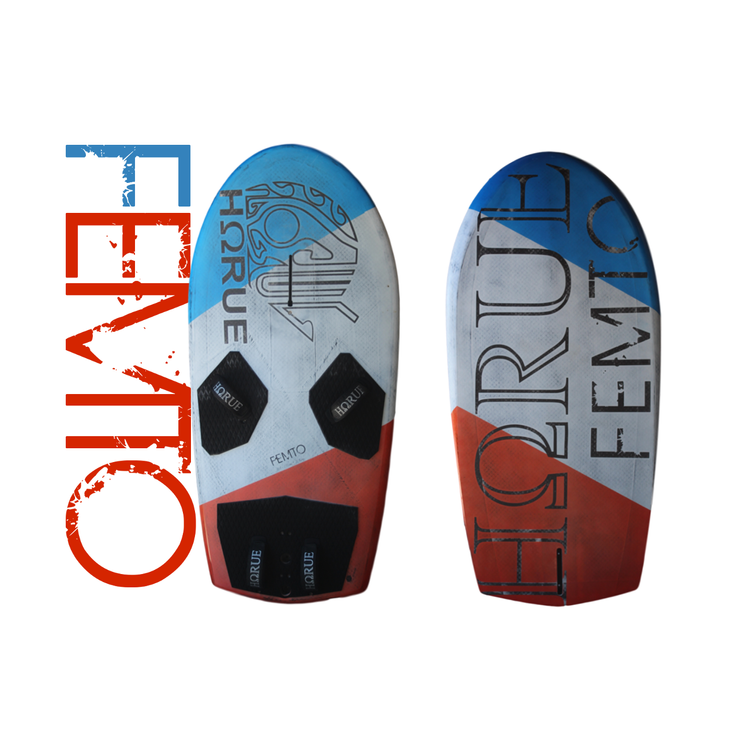
I don't think the mast track is actually that far back on the Horue boards, definitely not as far as some that have come since like the FoilX and latest Slingshot.
Select to expand quotePaducah said..thedoor said..
Not familiar with that board, although the brand is well respected.
Compact geometry is not about board length (if that is what the 146-166cm refers too). It is about the proximity of the mast track to the foil mast and footstrap placement (centered and close to mast track).
When the board is only 146 cm long, there's not much place else to put the track but close to everything else. We can also put the RRD Pocket Rocket in this category. Not knocking/promoting any board, just that there have been several brands going down this road.
Pocket Rocket thread from about a year ago: www.seabreeze.com.au/forums/Windsurfing/Foiling/RRD-Pocket-Rocket?page=1
Damn that is a high aspect wing, cool looking board too.
Its also how people set up their gear. Ideally a board would allow flexibility in geometry so people can set it up as they like it and according to skill level. Foil tracks and mast tracks (obviously) provide options.
I assumed this was the 86 liter 1480 long. Take this with a grain of salt but it is useful info for this discusion.

He didn't look like he was up to his ankles in the video so it might be one of the larger ones. Even so, there's just a 10% difference in the shorter vs longer ones so the numbers aren't going to change greatly.
Thanks for doing that, utcminusfour.
I had the XXLW wing for a while. Amazing in light air but I could never figure out how to turn it. It may be that it foiled so slowly that I was tip stalling in the turns. I could foil alongside friends with Moses 1100 with as much as a meter less sail.