Hi all, I am wondering if it is recommended to place a thin sheet of foam/rubber between a foil adapter (US track) and the board?
I preordered a Fanatic skywing which I am planning to use with my Slingshot hover glide windsurf foil along with the US track adapter. I noticed the fanatic foil adapters have a thin layer of rubber or foam on them to provide some protection to the board. The slingshot adapters do not have this and am wondering if it is required?
Seems like a sensible thing to do and wouldn't be very hard. Obviously the layer of material would need to be thin enough not to deform under load.
This is the Slingshot adapter with aluminium as the mating surface.


Select to expand quoteowain said..
Hi all, I am wondering if it is recommended to place a thin sheet of foam/rubber between a foil adapter (US track) and the board?
I preordered a Fanatic skywing which I am planning to use with my Slingshot hover glide windsurf foil along with the US track adapter. I noticed the fanatic foil adapters have a thin layer of rubber or foam on them to provide some protection to the board. The slingshot adapters do not have this and am wondering if it is required?
I've just got the Fanatic Sky Wing too and added two lines of Gorilla Clear tape to the adapter. Ideally it could do with something thicker.

@simonp123 nice and simple, I like it. The main thing I was concerned about were the edges as they are not rounded and thought maybe movement of the foil will press them into the board causing damage...
I was thinking something like boom grip as if I remember correctly it is really thin foam about the perfect widith.
The problem with putting anything between the plate and the board is the potential for movement, up and down through the layer. If the plate moves, it is possible to loosen the respective screws. Just be aware of that.
Select to expand quoteowain said..
Hi all, I am wondering if it is recommended to place a thin sheet of foam/rubber between a foil adapter (US track) and the board?
I preordered a Fanatic skywing which I am planning to use with my Slingshot hover glide windsurf foil along with the US track adapter. I noticed the fanatic foil adapters have a thin layer of rubber or foam on them to provide some protection to the board. The slingshot adapters do not have this and am wondering if it is required?
Seems like a sensible thing to do and wouldn't be very hard. Obviously the layer of material would need to be thin enough not to deform under load.
This is the Slingshot adapter with aluminium as the mating surface.
owain said: "... if it is recommended to place a thin sheet of foam/rubber between a foil adapter (US track) and the board?"
I might be totally wrong, but this is an absolutely No-Go for me for several reasons!
You want to have your foilfin totally locked in and zero wobble between that and your board!
Otherwise you have no clear control of your flying and it will be like a fluffy sensation and uncertainty will prevail on where you are heading (up, down, left, right...). Its like if your steering wheel on your car is connected using a couple of rubber bands down to your front wheels.
And actually be addin any distance between your pedestal and your board, then it will actually enable it to be torn to the sides (from the strong sideway pressures when windfoiling) to pressure only on its pedestal edge towards your board surface, which actually is what you wrote yourself that you wanted to avoid.
By having the pedestal mounted hard and straight onto your board, then its distributing perfectly the tensions down into your board, where it is built to absorb and distribute those tensions the best. Through the finbox out into the stringers and out into the board honeycomb or otherwise construction you have further out. The bolts into the finbox are on both sides of the foil mast helping on this, not just the ones on the leeward side. Use the most extreme bolt holes if you can, as the torque is the the lowest possible.
All above just my own personal humble opinion of course...
Select to expand quoteCyber said..owain said..
Hi all, I am wondering if it is recommended to place a thin sheet of foam/rubber between a foil adapter (US track) and the board?
I preordered a Fanatic skywing which I am planning to use with my Slingshot hover glide windsurf foil along with the US track adapter. I noticed the fanatic foil adapters have a thin layer of rubber or foam on them to provide some protection to the board. The slingshot adapters do not have this and am wondering if it is required?
Seems like a sensible thing to do and wouldn't be very hard. Obviously the layer of material would need to be thin enough not to deform under load.
This is the Slingshot adapter with aluminium as the mating surface.
owain said: "... if it is recommended to place a thin sheet of foam/rubber between a foil adapter (US track) and the board?"
I might be totally wrong, but this is an absolutely No-Go for me for several reasons!
You want to have your foilfin totally locked in and zero wobble between that and your board!
Otherwise you have no clear control of your flying and it will be like a fluffy sensation and uncertainty will prevail on where you are heading (up, down, left, right...). Its like if your steering wheel on your car is connected using a couple of rubber bands down to your front wheels.
And actually be addin any distance between your pedestal and your board, then it will actually enable it to be torn to the sides (from the strong sideway pressures when windfoiling) to pressure only on its pedestal edge towards your board surface, which actually is what you wrote yourself that you wanted to avoid.
By having the pedestal mounted hard and straight onto your board, then its distributing perfectly the tensions down into your board, where it is built to absorb and distribute those tensions the best. Through the finbox out into the stringers and out into the board honeycomb or otherwise construction you have further out. The bolts into the finbox are on both sides of the foil mast helping on this, not just the ones on the leeward side. Use the most extreme bolt holes if you can, as the torque is the the lowest possible.
All above just my own personal humble opinion of course...
You missed the "thin" part. Anyway, car suspensions do have rubber parts - they are called bushings. Athin, hard EVA pad isn't going to cause any issue.
The Chinook power plate which has been used numerous times with no ill effect uses an approx .5mm foam pad 
Select to expand quotePaducah said..Cyber said..owain said..
Hi all, I am wondering if it is recommended to place a thin sheet of foam/rubber between a foil adapter (US track) and the board?
I preordered a Fanatic skywing which I am planning to use with my Slingshot hover glide windsurf foil along with the US track adapter. I noticed the fanatic foil adapters have a thin layer of rubber or foam on them to provide some protection to the board. The slingshot adapters do not have this and am wondering if it is required?
Seems like a sensible thing to do and wouldn't be very hard. Obviously the layer of material would need to be thin enough not to deform under load.
This is the Slingshot adapter with aluminium as the mating surface.
owain said: "... if it is recommended to place a thin sheet of foam/rubber between a foil adapter (US track) and the board?"
I might be totally wrong, but this is an absolutely No-Go for me for several reasons!
You want to have your foilfin totally locked in and zero wobble between that and your board!
Otherwise you have no clear control of your flying and it will be like a fluffy sensation and uncertainty will prevail on where you are heading (up, down, left, right...). Its like if your steering wheel on your car is connected using a couple of rubber bands down to your front wheels.
And actually be addin any distance between your pedestal and your board, then it will actually enable it to be torn to the sides (from the strong sideway pressures when windfoiling) to pressure only on its pedestal edge towards your board surface, which actually is what you wrote yourself that you wanted to avoid.
By having the pedestal mounted hard and straight onto your board, then its distributing perfectly the tensions down into your board, where it is built to absorb and distribute those tensions the best. Through the finbox out into the stringers and out into the board honeycomb or otherwise construction you have further out. The bolts into the finbox are on both sides of the foil mast helping on this, not just the ones on the leeward side. Use the most extreme bolt holes if you can, as the torque is the the lowest possible.
All above just my own personal humble opinion of course...
You missed the "thin" part. Anyway, car suspensions do have rubber parts - they are called bushings. Athin, hard EVA pad isn't going to cause any issue.
The Chinook power plate which has been used numerous times with no ill effect uses an approx .5mm foam pad
Sorry Paducah, I said steering and not suspension... ;o)
Rack and pinion system was imposed by law exactly to avoid the fluffiness and lack of control.
I am also surprised you now bring up the Chinook power plate as example, while the original poster questioned about the Slingshot pedestal.
Two very different things!
Reason being that the Slingshot pedestal is used to be directly mounted into the dual track mount finbox type! That is always a fully flat horizontal plane! No foam or other stuff wanted or needed here at all for perfect contact and control. And that is the model owain asked about.
You however now bring a Chinook powerplate up, while that is a hybrid converter plate if you will. Which purpose is to be used on 'normal windsurf boards that have a tuttle mount fin box. And many of these boards have a v-shaped bottom right away from the edge of their tuttle finbox.
As this "powerplate" is only screwed into the center of the tuttle finbox, then when under tension during usage in the water, your entire foilfin with mast and all will bend sligtly under stress from one side and then to the other when you jibe around. Hence why Chinook themselves even write: "Be certain to tighten the fin bolt hard enough to compress the foam. Check & tighten as needed. If your board has a big V-bottom, add extra foam to outer plate edges to add lateral stiffness."
And please note, this foam is NOT under the area that is actually directly attached with screws to your old windsurfbord! The foam is out on the outer sides! Where your windsurfboard is v-shaped and therefore not in a flat horizontal plane.
Anyway, that last sentence is in all honesty total bs from Chinook. As no foam is ever going to be able to 'stiff' any power of that kind enforced in the tuttle fin mount system here.
And you attach then this Chinook powerplate to your foilfin's pedestal common 4-Hole plate, which is the standard used on most kite and windsurf foils today. So very different purpose and setup versus the OPs situation and question...
Select to expand quoteowain said..
@simonp123 nice and simple, I like it. The main thing I was concerned about were the edges as they are not rounded and thought maybe movement of the foil will press them into the board causing damage...
I was thinking something like boom grip as if I remember correctly it is really thin foam about the perfect widith.
I am running 1 layer of boom grip because there is a bit of vee either side if the box and to protect the bottom of the board a bit.
Select to expand quoteCyber said..
Sorry Paducah, I said steering and not suspension... ;o)
Rack and pinion system was imposed by law exactly to avoid the fluffiness and lack of control....
www.summitracing.com/parts/fla-fr1600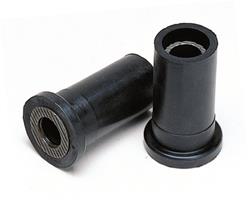 "Bushing, Rack and Pinion, Rubber with Steel Core, Black, Ford, 2 Required, Each"
Select to expand quotePaducah said..Cyber said..
Sorry Paducah, I said steering and not suspension... ;o)
Rack and pinion system was imposed by law exactly to avoid the fluffiness and lack of control....
www.summitracing.com/parts/fla-fr1600"Bushing, Rack and Pinion, Rubber with Steel Core, Black, Ford, 2 Required, Each"
Honestly dont understand why you keep going on with your bushings. They are for reducing friction between two surfaces sliding against each other. But you dont want any movements in your foil fin versus your windfoil board!
You want it all as stiff and firmly fixed together as possible. Why are you paying big $ for getting a stiff foil wing and stiff foil mast?
Just to waste it all then by adding your rubber or foam in between your board's fin box and your foil mast pedestal.
I also pointed out that the Chinook model you then came with, does exactly not have any foam or tape between the hard parts that are the critical parts to make it firmly fixed together (the top of the tuttlebox head)
We just had a recent long thread discussing how to eliminate foil wing wobble when mounted onto the fuselage.
Why bother if you then would allow wobble between your foil pedestal mount into your board finbox?
@Cyber, makes total sense no to loose any rigidity through the connection. I have noted many in depth threads on this exact point...
Hopefully the board arrives in the country soon and I can do a test fit 
Select to expand quoteCyber said..Paducah said..Cyber said..
Sorry Paducah, I said steering and not suspension... ;o)
Rack and pinion system was imposed by law exactly to avoid the fluffiness and lack of control....
www.summitracing.com/parts/fla-fr1600"Bushing, Rack and Pinion, Rubber with Steel Core, Black, Ford, 2 Required, Each"
Honestly dont understand why you keep going on with your bushings. They are for reducing friction between two surfaces sliding against each other. But you dont want any movements in your foil fin versus your windfoil board!
You want it all as stiff and firmly fixed together as possible. Why are you paying big $ for getting a stiff foil wing and stiff foil mast?
Just to waste it all then by adding your rubber or foam in between your board's fin box and your foil mast pedestal.
I also pointed out that the Chinook model you then came with, does exactly not have any foam or tape between the hard parts that are the critical parts to make it firmly fixed together (the top of the tuttlebox head)
We just had a recent long thread discussing how to eliminate foil wing wobble when mounted onto the fuselage.
Why bother if you then would allow wobble between your foil pedestal mount into your board finbox?
You insisted that rubber doesn't exist as a steering component. It does. It's there to absorb vibrations and provide some compliance. www.bluestar.com/get_informed/article/the-purpose-of-control-arms-bushings-ball-joints/ Instead of car parts, let's use something close to home like the multi cm thick rubber RDM/SDM adapters (or the urethane straps and bushings of the Streamlined head) many of us use without significant issue.
The range of motion very thin hard foam/rubber compressed by the mounting screws is almost nil. If you want to see flex, while your board is upside down, twist your fuselage from side to side.
A few have already said they do use something like this and have noticed no unwanted behaviours. I'll leave it at that.
The Power Plate can afford to use the foam strips because, unlike any other system out there, it offers a whopping 60 square inches of surface to spread the loads.
Select to expand quotePaducah said..Cyber said..Paducah said..Cyber said..
Sorry Paducah, I said steering and not suspension... ;o)
Rack and pinion system was imposed by law exactly to avoid the fluffiness and lack of control....
www.summitracing.com/parts/fla-fr1600"Bushing, Rack and Pinion, Rubber with Steel Core, Black, Ford, 2 Required, Each"
Honestly dont understand why you keep going on with your bushings. They are for reducing friction between two surfaces sliding against each other. But you dont want any movements in your foil fin versus your windfoil board!
You want it all as stiff and firmly fixed together as possible. Why are you paying big $ for getting a stiff foil wing and stiff foil mast?
Just to waste it all then by adding your rubber or foam in between your board's fin box and your foil mast pedestal.
I also pointed out that the Chinook model you then came with, does exactly not have any foam or tape between the hard parts that are the critical parts to make it firmly fixed together (the top of the tuttlebox head)
We just had a recent long thread discussing how to eliminate foil wing wobble when mounted onto the fuselage.
Why bother if you then would allow wobble between your foil pedestal mount into your board finbox?
You insisted that rubber doesn't exist as a steering component. It does. It's there to absorb vibrations and provide some compliance. www.bluestar.com/get_informed/article/the-purpose-of-control-arms-bushings-ball-joints/ Instead of car parts, let's use something close to home like the multi cm thick rubber RDM/SDM adapters (or the urethane straps and bushings of the Streamlined head) many of us use without significant issue.
The range of motion very thin hard foam/rubber compressed by the mounting screws is almost nil. If you want to see flex, while your board is upside down, twist your fuselage from side to side.
A few have already said they do use something like this and have noticed no unwanted behaviours. I'll leave it at that.
Control arms are suspension. Not steering...
In automotive suspension, a control arm, also known as an A-arm, is a hinged suspension link between the chassis and the suspension upright or hub that carries the wheel. The inboard (chassis) end of a control arm is attached by a single pivot, usually a rubber bushing.
But yeah you are totally correct Paducah,
I even totally forgot about the rubber tires that you put onto your wheel rims. How stupid can I be !
And the rubber in your seat. The rubber you put in your steering wheel. It is just everywhere in "steering".
But obviously, some folks just want to misunderstand and focus on the extremes that are non-relevant.
Select to expand quoteCyber said..
Control arms are suspension. Not steering...
In automotive suspension, a control arm, also known as an A-arm, is a hinged suspension link between the chassis and the suspension upright or hub that carries the wheel. The inboard (chassis) end of a control arm is attached by a single pivot, usually a rubber bushing.
I don't know why you are going on about A-arms. I posted a pic and the link for rack and pinion bushings.
"When installing your rack and pinion, make sure you have the right bushings. Flaming River rack and pinion bushings are impact-absorbing rubber bushings that give you firm vibration absorption. They ensure stability and steering response."
If you can't be bothered to properly read my post, my part of the conversation is over. I wish you the best. I would, however, suggest that you remove all the EVA deck pads on your boards, because, you know.... wobble.
Screw that thing down good and proper straight onto the board. No need to put any material in between.
I use the pedalstool on the twin tracks for wing dinging with the i99 and i84 never had an issue.
I'm using a Sky Wing 5'4" w/ a Slingshot foil.... no padding needed. There is no wear on the board on the mounting tracks on any of my boards.... do make sure both surfaces are clean... compressing sand b/w the two is bad.