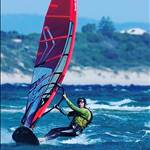
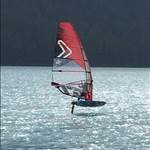
In his flight club Balz talks about how he now shims his mast for positive (nose up) inclination of the board, instead of shimming the stab which he no longer does, making him faster.
Are there rules of thumb for shimming the mast rake? Degrees the same as otherwise on the stab, or unrelated? I run my stab with 1.5 degrees shim.
I would like to understand the dynamics of increasing mast rake vs stab incidence (I get the point of stab incidence, but have yet to try shimming for more mast rake.
while on this topic: are there mast rake shims commercially available for Sabfoil Kraken?
Nose up rake helps a ton with heavy chop, keeping the board from sticking on it, but it hurts early takeoff. It would be interesting to see that video. I've only modfied rake on the race setups, and only bother when it's no longer "light wind" and the chop starts to become a big factor.
Hard to disagree with Balz on anything but shimming (front of the) mast cannot be equivalent to shimming stab (by increasing its angle). Dynamics are completely different. The first has no effect on relative angle of attack of the stab and - once in flight - only affects nose trim of the board (which can be very useful, as Greg said to deal with choppy conditions, and when banking into the jibe). When not in flight, shimming the mast reduces the angle of attack of the front wing hence making take-off relatively harder. Conversely, shimming the stab increases the angle of attack of the stab so will help with lift off, and with foiling at extreme angles - but at the margin creates more drag so compromises top speed. Everything's a trade off.
Ps: good to see some more Belgians on here ;)
Select to expand quotebel29 said..
Hard to disagree with Balz on anything but shimming (front of the) mast cannot be equivalent to shimming stab (by increasing its angle). Dynamics are completely different. The first has no effect on relative angle of attack of the stab and - once in flight - only affects nose trim of the board (which can be very useful, as Greg said to deal with choppy conditions, and when banking into the jibe). When not in flight, shimming the mast reduces the angle of attack of the front wing hence making take-off relatively harder. Conversely, shimming the stab increases the angle of attack of the stab so will help with lift off, and with foiling at extreme angles - but at the margin creates more drag so compromises top speed. Everything's a trade off.
Ps: good to see some more Belgians on here ;)
Freaks can be so good sometime that being wrong doesn't stop them from performing like a freak.
Edit no idea if he is wrong lol I do see his point about shimming the stab affecting speed and yours about impacting front wing angle at take off, but I guess he probably just sinks the tail more to get an appropriate takeoff angle? I vaugely remember hearing racers having huge cut outs to do the same thing
Bel 29 is correct in saying the mast rake does not affect the foil the same way as increasing the stab angle does. Foil mast rake makes touchdowns less severe so you are less likely to catapult when travelling at high speed, hence the slalom foil riders running around 3* or more of mast rake angle in high winds. The mast rake angle can affect how the board reacts in wind, which in some cases can give lift but its board lift and not foil lift. Extra stab allows you to get more foil lift which can be turned into pointing higher upwind in course racing but yes adds drag. Its all about VMG in course racing whereas slalom is about speed vs control.
Select to expand quotebel29 said..
Hard to disagree with Balz on anything but shimming (front of the) mast cannot be equivalent to shimming stab (by increasing its angle). Dynamics are completely different. The first has no effect on relative angle of attack of the stab and - once in flight - only affects nose trim of the board (which can be very useful, as Greg said to deal with choppy conditions, and when banking into the jibe). When not in flight, shimming the mast reduces the angle of attack of the front wing hence making take-off relatively harder. Conversely, shimming the stab increases the angle of attack of the stab so will help with lift off, and with foiling at extreme angles - but at the margin creates more drag so compromises top speed. Everything's a trade off.
Ps: good to see some more Belgians on here ;)
That was also my thinking: increasing mast rake induces negative angle of attack when the board is still on the water and would create like downforce instead of lifting, so Isuppose he compensates that by effectively pumping and sinking the tail.
anyway, someone tried it on freeride/freestyle type boards with small sails? Not a racer myself.
@bel29: where do you sail? Me mostlyt the Veerse Meer and always on the Netherlands. Freeride foiling is what I aspire
I do shim the rake and the stab. Not the same goal. Shimming the stab increases the stab 'volumes', (stab surface multiplied with distance from center of lift of the foil). It increases longitudinal stability (but require more forward down force to lock up the balance), so it does degrade lift (more than many think it is).
Shimming the rake is required when you get to higher speed : you need to reduce angle of attack of the foil (otherwise you overfoil). So to keep the board in a reasonable pitch attitude, you need to rake the board nose up.
So depending on your foil / board pairing, and your usual average speed, you can adjust the rake to your confort.
Racers do it very precisely and have to adjust depending on conditions as they always try to get the max speed of the day.
For myself as I freeFoil with small wave sail, I aim to get confort at my favored speed for carving which is probably just slightly over 20kt. With my board and foil, I end up shimming 1,5 degrees nose up rake. You could design your board directly including this if you're making your own board and have very good design skills. But lets be realistic : it is always a guess and try process, so rake shimming is just another adjustment you have to figure out for yourself, with your understanding of the physics and your feeling. Don't listen too much to 'expert' recipe (if not explained) : make your own.
Select to expand quote6u1d0 said..
I do shim the rake and the stab. Not the same goal. Shimming the stab increases the stab 'volumes', (stab surface multiplied with distance from center of lift of the foil). It increases longitudinal stability (but require more forward down force to lock up the balance), so it does degrade lift (more than many think it is).
Shimming the rake is required when you get to higher speed : you need to reduce angle of attack of the foil (otherwise you overfoil). So to keep the board in a reasonable pitch attitude, you need to rake the board nose up.
So depending on your foil / board pairing, and your usual average speed, you can adjust the rake to your confort.
Racers do it very precisely and have to adjust depending on conditions as they always try to get the max speed of the day.
For myself as I freeFoil with small wave sail, I aim to get confort at my favored speed for carving which is probably just slightly over 20kt. With my board and foil, I end up shimming 1,5 degrees nose up rake. You could design your board directly including this if you're making your own board and have very good design skills. But lets be realistic : it is always a guess and try process, so rake shimming is just another adjustment you have to figure out for yourself, with your understanding of the physics and your feeling. Don't listen too much to 'expert' recipe (if not explained) : make your own.
Thx. interesting.
Are there shims available for Sabfoil Kraken baseplate (not tuttle). I can't seem to fin any
How far apart are the bolts on the Kraken? I 3D printed a couple of mast shims for my Fanatic/Duotone mast. Off chance it's the same.
Just to throw a small wrench/spanner into the works. If I increase the rake of a 95cm mast by 1 degree, it moves the fuselage back relative to the box by 1.66 cm*. When I first did the calc, I presumed it would reduce the lifting force of the foil because it would seem to be similar to moving the footstraps and mastbase forward thus requiring more stab angle to compensate.
I think (open to correction) it's actually the other way around** because it's the board that moves back relative to the wing since the wing has to operate at a similar angle of attack. Increasing the rake rotates everything above the wing back, thus requiring less stab angle. The effective isn't the full amount since the angle of attack will need to be slightly less but that's a second order effect.
Guesstimating, increasing the rake a degree would be like moving your front straps back almost a hole.
*according to ChatGPT since I haven't done any trig since Robbie Naish won his first world championship.
** as a thought experiment, think about increasing the rake to absurd amounts say 45-60 and even 90 degrees and you see that the front straps and the whole board moving behind the center of lift.
Select to expand quoteTomDW said..
@bel29: where do you sail? Me mostlyt the Veerse Meer and always on the Netherlands. Freeride foiling is what I aspire
East coast USA  but used to sail on all those spots in Zeeland, and of course Belgian and Opal (Fr) coast
Select to expand quoteTomDW said..6u1d0 said..
I do shim the rake and the stab. Not the same goal. Shimming the stab increases the stab 'volumes', (stab surface multiplied with distance from center of lift of the foil). It increases longitudinal stability (but require more forward down force to lock up the balance), so it does degrade lift (more than many think it is).
Shimming the rake is required when you get to higher speed : you need to reduce angle of attack of the foil (otherwise you overfoil). So to keep the board in a reasonable pitch attitude, you need to rake the board nose up.
So depending on your foil / board pairing, and your usual average speed, you can adjust the rake to your confort.
Racers do it very precisely and have to adjust depending on conditions as they always try to get the max speed of the day.
For myself as I freeFoil with small wave sail, I aim to get confort at my favored speed for carving which is probably just slightly over 20kt. With my board and foil, I end up shimming 1,5 degrees nose up rake. You could design your board directly including this if you're making your own board and have very good design skills. But lets be realistic : it is always a guess and try process, so rake shimming is just another adjustment you have to figure out for yourself, with your understanding of the physics and your feeling. Don't listen too much to 'expert' recipe (if not explained) : make your own.
Thx. interesting.
Are there shims available for Sabfoil Kraken baseplate (not tuttle). I can't seem to fin any
I use these ones for my Sabfoil Kraken baseplate
en.windlounge.de/products/foilmast-shim-plate
Select to expand quotePaducah said..
Just to throw a small wrench/spanner into the works.
why we love foiling 
Select to expand quotePaducah said..
Just to throw a small wrench/spanner into the works. If I increase the rake of a 95cm mast by 1 degree, it moves the fuselage back relative to the box by 1.66 cm*. When I first did the calc, I presumed it would reduce the lifting force of the foil because it would seem to be similar to moving the footstraps and mastbase forward thus requiring more stab angle to compensate.
I think (open to correction) it's actually the other way around** because it's the board that moves back relative to the wing since the wing has to operate at a similar angle of attack. Increasing the rake rotates everything above the wing back, thus requiring less stab angle. The effective isn't the full amount since the angle of attack will need to be slightly less but that's a second order effect.
Guesstimating, increasing the rake a degree would be like moving your front straps back almost a hole.
*according to ChatGPT since I haven't done any trig since Robbie Naish won his first world championship.
** as a thought experiment, think about increasing the rake to absurd amounts say 45-60 and even 90 degrees and you see that the front straps and the whole board moving behind the center of lift.
Wow, interesting thoughts. Along that rationale, increasing mast rake would allow some reduction in stab Shimming thereby reducing drag.
After watching Balz' video i wanted to see if a rake of the foilmast would be helpful in our 1/2m chopp with cross waves from other surfers/boats. I exptected harder to lift up because the rake creates a downward vector of the foil wings according to the board.
I started with a 1 degree shim under the base plate. Printed one in ASA and one in TPU. If someone wants the STL contact me.
Last week i had a 5 hour session with my predator and 4.4 sail. As expected it took much more pumping to get off. The base plate itself has more drag than the Kraken DT and the shim adds some more.
I do not feel any benefit from the shim foiling in the chop. Somewhat disappointing


Theorically, the best setting should be that your foil is at zero lift AOA when your board is in buoyancy mode. It is then generating minimum drag. zero lift AOA is negative (nose down).
If you feel a significant difficulty to get flying, it is probably over tuned down. If you're aiming very high speed it might be a necessary trade off, but if you're just as me looking for the 20' your setup may be already tuned by default. One can be lucky.
All foil don't have the same fuselage angle toward baseplate or DTT head. And all board don't have the same buoyancy line in regard to hull. Even within the same brand and model there are production discrepencies.
Not even mentioning rider's habit regarding weight distribution and footstraps, weight of sail etc...
Select to expand quotepowersloshin said..
He's making the same mistake I almost did. I typed out a bunch of words saying essentially the same thing but realized that I was looking at the wrong frame of reference. It's the board that actually rotates, not the fuselage. The wing operates under a pretty restricted angle of attack.
Second thought experiment - the reason racers shim is that increases the board angle (for better touch down behaviour) which suggests the fuse under the water is not what is changing by a large amount. If it was the fuse angle that was changing from the shim, it would be mostly useless to shim up if what we want is the board to be more nose up when it touches down.
Select to expand quotePaducah said..
but realized that I was looking at the wrong frame of reference. It's the board that actually rotates, not the fuselage. The wing operates under a pretty restricted angle of attack.
Yes and no.
The fuselage isn't a completly fixed reference. Only at a constant speed with a specific weightload (rider & equipement). For those that can claim different cruizing speed depending on condition (ie top racers), the fuselage angle can change significantly. From my guess, AOA range can be from 1 or 2 up to up to something like 12? up (my rough guess of what is the stall angle of the foil, but of course only designer can give you the exact value of stall angle, wich by the way is a fixed value whatever the speed).
So indeed if you draw the figure, the mast tilt forward by the same angle when you accelerate. At very low speed it can be quite nose up and the weight is moving back, and that makes recovery from this attitude can be tricky.
But shimming usually change by a couple of degrees the board pitch, and the goal is more to manage higher speed. Low speed (when you get behind the best glide AOA bump) is so clumsy you should always try to pass forward. I don't know the english vocabulary for this effect (in french 'second r?gime') but at a certain AOA profile drag start to increase thus you need more trust force to maintain flight when speed decrease (AOA increases) whereas when you get ahead, drag decreases when speed increases (AOA decreases). Up to a ceratin point of course when drag from speed becomes the major factor.