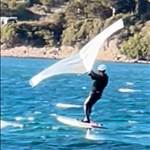
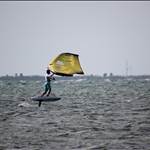
Anybody listen to Robbie on Windsurf TV and have some thoughts on what he meant? He implied that like the early windsurf gear, windfoil boards and foils would be changing a lot in the coming years. He also said that winging was the big thing in Maui. He said kids have no interest in windsurfing or kiting - all they want to do is wingfoil.
I think a lot of what Robbie saiid has been taken out of context. What I took away from the interview was: 1) foils needed to change for wind foiling to advance regarding speed in particular; 2) wind foiling was hard in high winds; 3)wing foiling was fun in both light and high winds; 4) most kids didn't have the patience or fortitude to learn windsurfing; and 5) wing foiling had the most potential since it appeals to most people wanting to get on the water.
He also said F@#K golf!! I loved that part.
The bit I could relate to is when he said Slalom racing was more fun when it was wave slalom with beach starts with raked fins, etc, and more about feel than equipment.
Have many fond memories of competing in the old wave slalom comps in the 80's 
Select to expand quotedejavu said..I think a lot of what Robbie saiid has been taken out of context. What I took away from the interview was: 2) wind foiling was hard in high winds
Maybe windfoiling in high winds is hard at first, but I reckon it's worth putting the time in to get comfortable.
Carving downwind on big lumps is superfun on freeride foils and even the river has chunky 1m+ windswells when the wind cranks in over 25 knots.
Hard is okay anyway - what's so great about something being easy to learn? 
He rather said something along the lines of that "he still isn't entirely convinced that foiling by balancing on that single point in the rear of the board is the best way to do it".
and that (..Looking at the america cup boats) "there must be a better way to triangulate the "... forces... or something along the lines.
The headline of this post isn't matching his statement. He never mentioned boards. He spoke about the concept of foiling as now adopted by us windsurfers, windfoilers.
Select to expand quoteMProject04 said..
He rather said something along the lines of that "he still isn't entirely convinced that foiling by balancing on that single point in the rear of the board is the best way to do it".
and that (..Looking at the america cup boats) "there must be a better way to triangulate the "... forces... or something along the lines.
The headline of this post isn't matching his statement. He never mentioned boards. He spoke about the concept of foiling as now adopted by us windsurfers, windfoilers.
Doesn't the concept of foiling as now adopted include the board and foil? If balancing on that single point is not the best way presumably the board design will have to change.
Select to expand quoteMProject04 said..
He rather said something along the lines of that "he still isn't entirely convinced that foiling by balancing on that single point in the rear of the board is the best way to do it".
and that (..Looking at the america cup boats) "there must be a better way to triangulate the "... forces... or something along the lines.
The headline of this post isn't matching his statement. He never mentioned boards. He spoke about the concept of foiling as now adopted by us windsurfers, windfoilers.
Maybe quote him properly next time.
Anyways maybe he was thinkng of something like the moth that has a self leveling foil up front.
The interview was excellent. He is very considered and respectfull with his comments.
Select to expand quoteazymuth said..dejavu said..I think a lot of what Robbie saiid has been taken out of context. What I took away from the interview was: 2) wind foiling was hard in high winds
Maybe windfoiling in high winds is hard at first, but I reckon it's worth putting the time in to get comfortable.
Carving downwind on big lumps is superfun on freeride foils and even the river has chunky 1m+ windswells when the wind cranks in over 25 knots.
Hard is okay anyway - what's so great about something being easy to learn?
It is hard, at least for me. You have to have the right equipment and be willing to fine tune that equipment for the conditions. In windsurfing I rigged for the lulls (rigged big) with foiling I rig for the gusts. You have to be stubborn and determined and be willing to take some hard crashes -- it is a lot of fun but I've found myself on the edge many times (part of the fun). You also obviously need some time on the water and most people would rather do something they know and can have fun at rather than basically spend their time getting crushed -- yes, it will pay off big time but you've got to hang in there until it does and that isn't easy.
For those interested here's Robbie hitting some good speeds high wind wing foiling:
Haven't tried winging yet so I'm not quite sure what I'm seeing. I do like the foot switch before the gybe which he does a couple of times. What's happening at 7:22? Is that Robbie overpowered? It's not often you see the GOAT looking awkward.
Saw a video of Robbie with his first foil and board crusing around using one hand sometimes and no harness, he looked in good shape but had a layer of cold water protection! In the wing video he has lost the cold water protection, is a lot leaner, I assume that is due to the physical demands of winging w/o a harness. I talked to a young gun at a local kite shop, he had started winging, asked him how hard it was physically, he said initially it was exhausting. Come on, no harness, getting up and then holding the wing non stop, way too much exercise for me! With windfoiling I can go for mile long runs back and forth, up and down, all around, and not get too tired.
Impressive drone video. I wonder how they were able to have the drone lock on with such a constant distance from him. I assume it was a feature of the drone that automatically held a constant distance rather than being controlled manually from a distant observer. However, it appears there was a vertical override that was used during his jumps. Am I right or do you think someone was manually controlling the drone the entire time? If it was all controlled manually by a drone pilot, wow, I'm very impressed with that person's skills.
This is the first time I've watched wing foiling and wondered if maybe I should give this a try some day.
Select to expand quoteShipmate said..
Impressive drone video. I wonder how they were able to have the drone lock on with such a constant distance from him. I assume it was a feature of the drone that automatically held a constant distance rather than being controlled manually from a distant observer. However, it appears there was a vertical override that was used during his jumps. Am I right or do you think someone was manually controlling the drone the entire time? If it was all controlled manually by a drone pilot, wow, I'm very impressed with that person's skills.
This is the first time I've watched wing foiling and wondered if maybe I should give this a try some day.
I think it's filmed with the new GoPro 360 on a boom that's attached the wing and the editing program makes the boom invisible.
Select to expand quoteSandman1221 said..
Saw a video of Robbie with his first foil and board crusing around using one hand sometimes and no harness, he looked in good shape but had a layer of cold water protection! In the wing video he has lost the cold water protection, is a lot leaner, I assume that is due to the physical demands of winging w/o a harness. I talked to a young gun at a local kite shop, he had started winging, asked him how hard it was physically, he said initially it was exhausting. Come on, no harness, getting up and then holding the wing non stop, way too much exercise for me! With windfoiling I can go for mile long runs back and forth, up and down, all around, and not get too tired.
Winging is far less demanding than windfoiling. I regularly windfoil over 100km a session, took a lot of practice and sailing twice or trice weekly to get to that point of endurance. After those kind of sessions I'm still tired.
For winging, my first session I was tired after an hour, the second after 3 hours and the third I could go all day, ~7 hours with half an hour break, and did it lauching.. (and was flying through jibes, that definately helps with endurance ofcourse). Its more of a muscle memory thing than that its really hard on the body. Also, you really dont need a harness, the wing is very light (I always have a harness windfoiling and hook in whenever I can). Its just in the beginning I was too cramped so I got tired quickly. 3 sessions of winging allowed me to relax my arms and just hang from the wing with outstretched arms, very very light & easy.
Select to expand quoteWhiteofHeart said..Sandman1221 said..
Saw a video of Robbie with his first foil and board crusing around using one hand sometimes and no harness, he looked in good shape but had a layer of cold water protection! In the wing video he has lost the cold water protection, is a lot leaner, I assume that is due to the physical demands of winging w/o a harness. I talked to a young gun at a local kite shop, he had started winging, asked him how hard it was physically, he said initially it was exhausting. Come on, no harness, getting up and then holding the wing non stop, way too much exercise for me! With windfoiling I can go for mile long runs back and forth, up and down, all around, and not get too tired.
Winging is far less demanding than windfoiling. I regularly windfoil over 100km a session, took a lot of practice and sailing twice or trice weekly to get to that point of endurance. After those kind of sessions I'm still tired.
For winging, my first session I was tired after an hour, the second after 3 hours and the third I could go all day, ~7 hours with half an hour break, and did it lauching.. (and was flying through jibes, that definately helps with endurance ofcourse). Its more of a muscle memory thing than that its really hard on the body. Also, you really dont need a harness, the wing is very light (I always have a harness windfoiling and hook in whenever I can). Its just in the beginning I was too cramped so I got tired quickly. 3 sessions of winging allowed me to relax my arms and just hang from the wing with outstretched arms, very very light & easy.
With windfoiling I just hook in and cruise as long as the water/wind allow, really takes minimal effort just leaning back against the harness line and making slight adjustments to the board and sail. Now if I do not hook in from non foiling up to foiling and stay unhooked in the air it takes a lot more energy in gusty conditions but not too bad because I am not holding the full weight of the sail, just the wind pressure against it. So while I have not tried winging, I think it has to take a similar amount of energy to get up and stay in the air if you use a similair weight board/foil and your same body/weight. So you say you just relax your arms and hang from the wing, well I can hang from a tree branch in calm conditions and I know I will get tired holding up 190 lbs with my hands! Yes the foil lifts you and the board off the water but your body weight just does not go away. I think you are just trying to get people to wing.
Select to expand quoteSandman1221 said..WhiteofHeart said..Sandman1221 said..
Saw a video of Robbie with his first foil and board crusing around using one hand sometimes and no harness, he looked in good shape but had a layer of cold water protection! In the wing video he has lost the cold water protection, is a lot leaner, I assume that is due to the physical demands of winging w/o a harness. I talked to a young gun at a local kite shop, he had started winging, asked him how hard it was physically, he said initially it was exhausting. Come on, no harness, getting up and then holding the wing non stop, way too much exercise for me! With windfoiling I can go for mile long runs back and forth, up and down, all around, and not get too tired.
Winging is far less demanding than windfoiling. I regularly windfoil over 100km a session, took a lot of practice and sailing twice or trice weekly to get to that point of endurance. After those kind of sessions I'm still tired.
For winging, my first session I was tired after an hour, the second after 3 hours and the third I could go all day, ~7 hours with half an hour break, and did it lauching.. (and was flying through jibes, that definately helps with endurance ofcourse). Its more of a muscle memory thing than that its really hard on the body. Also, you really dont need a harness, the wing is very light (I always have a harness windfoiling and hook in whenever I can). Its just in the beginning I was too cramped so I got tired quickly. 3 sessions of winging allowed me to relax my arms and just hang from the wing with outstretched arms, very very light & easy.
With windfoiling I just hook in and cruise as long as the water/wind allow, really takes minimal effort just leaning back against the harness line and making slight adjustments to the board and sail. Now if I do not hook in from non foiling up to foiling and stay unhooked in the air it takes a lot more energy in gusty conditions but not too bad because I am not holding the full weight of the sail, just the wind pressure against it. So while I have not tried winging, I think it has to take a similar amount of energy to get up and stay in the air if you use a similair weight board/foil and your same body/weight. So you say you just relax your arms and hang from the wing, well I can hang from a tree branch in calm conditions and I know I will get tired holding up 190 lbs with my hands! Yes the foil lifts you and the board off the water but your body weight just does not go away. I think you are just trying to get people to wing.
Tbh I dont like winging because its too slow for me (same reason I cannot appreciate big surfwings like the slingshot infinity foils for windsfoiling), but really, the effort is minimal. Far less tiring than windfoiling unhooked. I think its because the wing only uses the necessary power. A light / well constructed wing opens up in the gusts and lets all the excess power out. So it will not weigh anything, just enough to lift its own weight and keep you going.
Select to expand quoteWhiteofHeart said..Sandman1221 said..WhiteofHeart said..Sandman1221 said..
Saw a video of Robbie with his first foil and board crusing around using one hand sometimes and no harness, he looked in good shape but had a layer of cold water protection! In the wing video he has lost the cold water protection, is a lot leaner, I assume that is due to the physical demands of winging w/o a harness. I talked to a young gun at a local kite shop, he had started winging, asked him how hard it was physically, he said initially it was exhausting. Come on, no harness, getting up and then holding the wing non stop, way too much exercise for me! With windfoiling I can go for mile long runs back and forth, up and down, all around, and not get too tired.
Winging is far less demanding than windfoiling. I regularly windfoil over 100km a session, took a lot of practice and sailing twice or trice weekly to get to that point of endurance. After those kind of sessions I'm still tired.
For winging, my first session I was tired after an hour, the second after 3 hours and the third I could go all day, ~7 hours with half an hour break, and did it lauching.. (and was flying through jibes, that definately helps with endurance ofcourse). Its more of a muscle memory thing than that its really hard on the body. Also, you really dont need a harness, the wing is very light (I always have a harness windfoiling and hook in whenever I can). Its just in the beginning I was too cramped so I got tired quickly. 3 sessions of winging allowed me to relax my arms and just hang from the wing with outstretched arms, very very light & easy.
With windfoiling I just hook in and cruise as long as the water/wind allow, really takes minimal effort just leaning back against the harness line and making slight adjustments to the board and sail. Now if I do not hook in from non foiling up to foiling and stay unhooked in the air it takes a lot more energy in gusty conditions but not too bad because I am not holding the full weight of the sail, just the wind pressure against it. So while I have not tried winging, I think it has to take a similar amount of energy to get up and stay in the air if you use a similair weight board/foil and your same body/weight. So you say you just relax your arms and hang from the wing, well I can hang from a tree branch in calm conditions and I know I will get tired holding up 190 lbs with my hands! Yes the foil lifts you and the board off the water but your body weight just does not go away. I think you are just trying to get people to wing.
Tbh I dont like winging because its too slow for me (same reason I cannot appreciate big surfwings like the slingshot infinity foils for windsfoiling), but really, the effort is minimal. Far less tiring than windfoiling unhooked. I think its because the wing only uses the necessary power. A light / well constructed wing opens up in the gusts and lets all the excess power out. So it will not weigh anything, just enough to lift its own weight and keep you going.
Well I have only had the AFS foil and really like how fast it is, so your experience with the big wings and wing is helpful, thanks. When I watched some of the videos for both it looked like they were going relatively slow, but did not know for sure.
Select to expand quoteWhiteofHeart said..Sandman1221 said..WhiteofHeart said..Sandman1221 said..
Saw a video of Robbie with his first foil and board crusing around using one hand sometimes and no harness, he looked in good shape but had a layer of cold water protection! In the wing video he has lost the cold water protection, is a lot leaner, I assume that is due to the physical demands of winging w/o a harness. I talked to a young gun at a local kite shop, he had started winging, asked him how hard it was physically, he said initially it was exhausting. Come on, no harness, getting up and then holding the wing non stop, way too much exercise for me! With windfoiling I can go for mile long runs back and forth, up and down, all around, and not get too tired.
Winging is far less demanding than windfoiling. I regularly windfoil over 100km a session, took a lot of practice and sailing twice or trice weekly to get to that point of endurance. After those kind of sessions I'm still tired.
For winging, my first session I was tired after an hour, the second after 3 hours and the third I could go all day, ~7 hours with half an hour break, and did it lauching.. (and was flying through jibes, that definately helps with endurance ofcourse). Its more of a muscle memory thing than that its really hard on the body. Also, you really dont need a harness, the wing is very light (I always have a harness windfoiling and hook in whenever I can). Its just in the beginning I was too cramped so I got tired quickly. 3 sessions of winging allowed me to relax my arms and just hang from the wing with outstretched arms, very very light & easy.
With windfoiling I just hook in and cruise as long as the water/wind allow, really takes minimal effort just leaning back against the harness line and making slight adjustments to the board and sail. Now if I do not hook in from non foiling up to foiling and stay unhooked in the air it takes a lot more energy in gusty conditions but not too bad because I am not holding the full weight of the sail, just the wind pressure against it. So while I have not tried winging, I think it has to take a similar amount of energy to get up and stay in the air if you use a similair weight board/foil and your same body/weight. So you say you just relax your arms and hang from the wing, well I can hang from a tree branch in calm conditions and I know I will get tired holding up 190 lbs with my hands! Yes the foil lifts you and the board off the water but your body weight just does not go away. I think you are just trying to get people to wing.
Tbh I dont like winging because its too slow for me (same reason I cannot appreciate big surfwings like the slingshot infinity foils for windsfoiling), but really, the effort is minimal. Far less tiring than windfoiling unhooked. I think its because the wing only uses the necessary power. A light / well constructed wing opens up in the gusts and lets all the excess power out. So it will not weigh anything, just enough to lift its own weight and keep you going.
I think there is something about speed, esp in flat water, that get's all windsurfer's juices flowing. What do you think about beginners? Starting on smaller faster foil versus larger slower foils? I believe that people should learn to windfoil on something in the middle (eg i76 or similar) as this will provide the best of rate of progression.
Select to expand quoteWhiteofHeart said..
Winging is far less demanding than windfoiling.
+1 on that. Ever since my wife started winging, she's usually out for 3+ hour sessions without a break. That includes frequent falls since she's always working on something new, like foiling through tacks. I usually get tired before her, regardless whether I'm windfoiling or windsurfing. Only when she gets a new wing from a different brand does she complain about being sore the next day - apparently, there's a lot of difference in the wings from different manufacturers (Slingshot, Duotone, and F-One).
Women are just plain ornery tougher than us old farts.
My g/f outrides me by over 25 miles, windsurfers 2.5 hours to my 1.5, windfoils 2.5 hours to my one.
She can stay in the water for 4 hours to my one surfing.
Nothing new there.
Select to expand quoteSandman1221 said..
WhiteofHeart said..
Tbh I dont like winging because its too slow for me (same reason I cannot appreciate big surfwings like the slingshot infinity foils for windsfoiling), but really, the effort is minimal. Far less tiring than windfoiling unhooked. I think its because the wing only uses the necessary power. A light / well constructed wing opens up in the gusts and lets all the excess power out. So it will not weigh anything, just enough to lift its own weight and keep you going.
I was thinking winging slower than windfoiling until I saw this guy who is an excellent windsurfer. Last weekend, we were windfoiling, on a light windy day(10-12 mph) with our big foils and having fun but this guy on 6.0 wing was non-stop wingfoiling all day and looked faster than us. I was on i99 the other friend was on supercruiser, both slower foil but still wing foil was faster in these conditions. I was impressed and took notes from him after the session. Following, I decided that I will get a wing and give it a try on my set up.
I've talked to some of their reps and they don't seem to be online w WWF style wind foiling. High winds aren't an issue at all, because you don't really sheet in. I told them to put a small track mast box on the 6'6" ultra carbon wing board and Voila !!!
The Goya would tick my WWF box but I need the pad to extend to the mast track.