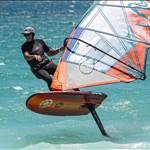
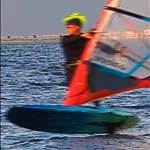
Early summer seabreeze at Cottesloe - nice windswells considering it wasn't super windy.
Mr. Smooth on a 4.7m Simmer Tricera in SSW 20-22 knots and me later on a 4m Simmer Blacktip in about 25 knots.
PFI 730 and PTM 835 wings.
The super-stiff 103W carbon masts are magic in the swells 

Nice to see Mr. Smooth and the little dinky freestyle board out there ripping 
Looks like the 103W mast is a hard carving machine!
Had our first North wind yesterday and although I would love to use the 103W mast I don't think it wont happen here, the waves don't start ramping up until the 2nd sand bar and then its a hair too shallow even for a 92cm mast.
The 730 is so easy to use, we had 30+ puffs and zero foil outs even when cranking hard through a trough.
Select to expand quoteCoreAS said..
The 730 is so easy to use, we had 30+ puffs and zero foil outs even when cranking hard through a trough.
Nice - stoked you got to try the 730 in a proper breeze 
We've found that wing has a massive wind range of 10 to 35 knots - the stiff carbon mast probably assists control when it's super windy.
That was a great video with a good perspective.
Question about swell riding. I've played around in small (maybe to waist high) waves in a manner similar to the video (lots of turning with various radiuses). So it's rare where I am but last summer there were a couple of sessions with chest to head high fast moving swell that travels straight downwind. It's not useful for fin windsurf or even kiting with a surfboard (it's generally round shaped). It's off shore and not breaking. Little opportunity doesn't help figure this out. I've dropped down but the burst of speed and straight downwind lead to crashes (skill). Getting in front may be better but the straight downwind direction challenges this. When I google wind foil swell riding, it's mostly wing foiling that comes up. As you likely know, they can fully flag out their wing. So next time my thinking is to flag the sail out by moving my back hand to front of the boom and hold with one hand. I foil with no footstraps so I should be able to adjust my weighting and position as needed. There's the odd video out there showing this but smaller swell. For example, Tyson Poor riding boat swell.
Any insights or experience?
Select to expand quoteLoonie said..
That was a great video with a good perspective.
Question about swell riding. I've played around in small (maybe to waist high) waves in a manner similar to the video (lots of turning with various radiuses). So it's rare where I am but last summer there were a couple of sessions with chest to head high fast moving swell that travels straight downwind. It's not useful for fin windsurf or even kiting with a surfboard (it's generally round shaped). It's off shore and not breaking. Little opportunity doesn't help figure this out. I've dropped down but the burst of speed and straight downwind lead to crashes (skill). Getting in front may be better but the straight downwind direction challenges this. When I google wind foil swell riding, it's mostly wing foiling that comes up. As you likely know, they can fully flag out their wing. So next time my thinking is to flag the sail out by moving my back hand to front of the boom and hold with one hand. I foil with no footstraps so I should be able to adjust my weighting and position as needed. There's the odd video out there showing this but smaller swell. For example, Tyson Poor riding boat swell.
Any insights or experience?
Cheers 
Downwinding bigger swells successfully requires practice, we all crashed a lot at first not reacting quickly enough transferring weight to the front foot to counter foil lift from acceleration - with enough practice it becomes kind of subconscious.
Works better and's more fun to S-turn down swells keeping the power in the sail by holding the boom in and going as fast as possible (might hit 20 knots). Fly across the swell face, bank off a steep section and accelerate down the swell dead downwind until you lose speed (as you lose wind pressure), then carve back cross-wind and repeat the cycle. The G's in the carves are superfun.
In 2 to 2.5m windswells you can hold dead downwind, clew-in runs for about 50m
A front footstrap is helpful in bigger swells.
What size foilwing are you riding? @75kg I have found riding windswells much easier with the 65 wing than the 76 and not being too powered up as you are learning. If you feel you have to flag the sail it is probably too big to start with. Later you will find being powered up helps. There is quite a bit of learning how to maintain speed by carving across the swell to increase sail pressure and speed before heading down the face, letting the speed wash out before heading up again.. More speed going in to the turn actually helps as the change in lift going down the face is less.
Biggest hurdle is the mind. As Azymuth shows in his videos just send it! You will soon gain the confidence to enjoy
Thanks for the comments. Yes, I'm using the 76 Infininity and maybe it was getting to it's speed limit for what I was doing. The "up and down" S-turns as in the video are super fun and I think what you (Azymuth) describe is where "it's at." It's probably more familiar and intuitive as a windsurfer. Is what I was striving for was another swell riding version. I'm seeing more wingers in my area and I was thinking to catch the swell and ride only with the infinity wing (complete sail depower/flagged >50M). It's not a matter of feeling I need to flag the sail, rather it's I want to. I probably should start experimenting this with smaller swell.
Right on Loonie! Small sails will help when flagging out. I love to ride that way, it feels like longboard surfing! Just cruzing and carving on ONE wave for ever! When your flagged out and dead down wind you don't need to do much in way of sail flip when turn through the wind. This opens up riding down the line in both directions on the same wave!
As you know, Tyson Poor has some great vids of this. So does Casey Triechler reefwarriors.wordpress.com/
Check out how much Casey shifts his weight with out moving his feet!
When the sail is flagged there is very little downforce from it SO you HAVE to shift your weight further forward to compensate. You will also notice that the mast base is very close to the front foot. This can be hard to ride at first but makes swell riding easier. When you go from sailing to surfing and back the mast base preasure changes a lot and you have to adjust your weight to deal. With the sail closer to the foil it has less effect on trim so you do not have to compensate as much.
Select to expand quoteutcminusfour said..
Right on Loonie! Small sails will help when flagging out. I love to ride that way, it feels like longboard surfing! Just cruzing and carving on ONE wave for ever! When your flagged out and dead down wind you don't need to do much in way of sail flip when turn through the wind. This opens up riding down the line in both directions on the same wave!
As you know, Tyson Poor has some great vids of this. So does Casey Triechler reefwarriors.wordpress.com/
Check out how much Casey shifts his weight with out moving his feet!
When the sail is flagged there is very little downforce from it SO you HAVE to shift your weight further forward to compensate. You will also notice that the mast base is very close to the front foot. This can be hard to ride at first but makes swell riding easier. When you go from sailing to surfing and back the mast base preasure changes a lot and you have to adjust your weight to deal. With the sail closer to the foil it has less effect on trim so you do not have to compensate as much.
Thanks much! I'm checking out the link you suggest. I think you get some of the challenges I was getting. Eg. Sail flip when downwind. You also mention the mast weight even when the sail is flagged. I think I heard that's why winging is better for this (doesn't mean the wind foil can't). I think my being a strapless wind foiler may help. you mention (and I see in the videos) the weight and feet forward. You also mention long rides on the same swell (vs linking them). This was why the big swell got me thinking this as they travel a long ways and are "long". Still probably better to start smaller. It would be nice to develop a couple of swell riding versions to have them available depending on the conditions. Can't wait now for the next good opportunity.
Yup you gotta keep going to learn all the versions! As others have said, it takes time. Every spot on the wave will provide different amounts of lift. For example on the back side trying to catch up and climb over a wave there is very little lift but 10 feet forward of this on the crest and just in front of the crest there is a sh!t ton of lift. Then when you drop in your speed climbs, even more lift. Not to mention the sail load is constantly changing so you have to track and adjust for that. It just takes time on the water. It's worth the effort! I "surf" (with a boom in my hands) more in South Carolina since foiling than I have when I prone surfed daily in southern California
I carve both flagged and with power. You definitely want that sail mast base as close to your front foot as possible and most of your weight on that front foot to allow fast compensation as you pick up swell energy, especially when flagged.
I also prefer my feet on centerline like a waveboard so I can ride toeside flagged.
Finding a board which offers this geometry can be a challenge.