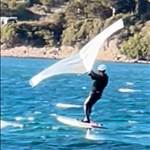
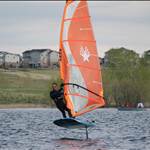
Went out on my RRD foil today and when back on land I found out the finscrews and screws to assemble the tuttlehead were very loose. Might have lost my foil along the way if I kept surfing for another hour. It was very cold here in Belgium, could that have something to do with it? Anyway, anyone got tips to prevent worse?
Use tefgel, and tighten them pretty hard! Tefgel grot sort of builds up overtime and reduces tendency to loosen. Also tighten evertime you come in.
Select to expand quoteNicoDC said..
Went out on my RRD foil today and when back on land I found out the finscrews and screws to assemble the tuttlehead were very loose. Might have lost my foil along the way if I kept surfing for another hour. It was very cold here in Belgium, could that have something to do with it? Anyway, anyone got tips to prevent worse?
if the foil and screws were warm when you assembled them, yes. otherwise a thread locking compound like loctite blue, or teflon tape will keep screws tight. since I do not shim my AFS foil front wing, I wrapped the screws in teflon tape, has been that way for two months and screws are still tight even after some relatively colder weather.
Select to expand quoteNicoDC said..
Went out on my RRD foil today and when back on land I found out the finscrews and screws to assemble the tuttlehead were very loose. Might have lost my foil along the way if I kept surfing for another hour. It was very cold here in Belgium, could that have something to do with it? Anyway, anyone got tips to prevent worse?
I lost twice screws with my infinity 99 on levitator board. This is despite I noted before the screws are becoming loose after some days and making sure I very tightly set-up on my daily run. Thankfully other 3 other screws were intact so that my foil was still safe.
Often after I attempt a very crazy jump on the foil my friends ask me if there's a screw loose...
Jk, It happens, especially if you do jumping and the sorts, check them regularly (multiple times a session), and if you can transport your foil mostly assembled, use locktite. On my foil, mostly the screws connecting the mast to the tuttlehead and the mast to the fuselage get loose with jumps. The screws connecting the tuttle to the board should NEVER both go loose, this can indicate you are stripping the inserts on the tuttlehead which might lead to a lost foil & destroyed finbox. The front screw being loose after the session happens if you dont screw in your foil thightly enough and there's some room to move in the box because of the lifting force.
Thank you all! The foil was indeed first in my heated care before being assembled outside.
Actually someone gave me tefgel to prevent the screws being 'frost welded'. Haven't used it ever sins but will give it a go.
I also might need stronger finscrews. Now I'm using regular ones from my slalom gear sins they are the onlt set that seem to match with both board and foil
Nothing stronger than marine grade stainless steel.
Some engineer researched and came up with the idea that 5 threads is plenty for strength and retension, so longer doesn't add any gain.
Select to expand quoteLeeD said..
Nothing stronger than marine grade stainless steel.
Some engineer researched and came up with the idea that 5 threads is plenty for strength and retension, so longer doesn't add any gain.
Longer thread does mean you have more time before the foil falls off. ;-)
Slingshot, mast to fuse attachment has 34mm of thread purchase on an 8mm thread (diam x 4) it would take a while for that baby to unwind.
Select to expand quoteTe Hau said..LeeD said..
Nothing stronger than marine grade stainless steel.
Some engineer researched and came up with the idea that 5 threads is plenty for strength and retension, so longer doesn't add any gain.
Longer thread does mean you have more time before the foil falls off. ;-)
Slingshot, mast to fuse attachment has 34mm of thread purchase on an 8mm thread (diam x 4) it would take a while for that baby to unwind.
good point
There is something stronger than marine grade stainless (A4) - its called A4-80, almost the same but stronger and used a lot offshore. Not available in all fittings though, but if you can get it for high load bolts, like fin bolts, then why not. Costs negligible amount more. I use it for fin bolts as I like hex head for them and A4-80 is available in hex.
Sand's tip about wrapping the screw threads in teflon tape works for me, too.
The other reason the screws might be getting loose is that the foil top fitting is not completely seated in the finbox in the first place. Then, when you go out and foil a couple hundred pounds of weight and cantilevering force on it, it seats further, thus loosening the screws.
Sailworks recommends Sailkote McLube on the top fitting and inside of the finbox. Get that puppy in there tight. Go foiling. After just a reach or two, check and tighten the screws again. After that they will stay put.
Select to expand quoteTe Hau said..
Slingshot, mast to fuse attachment has 34mm of thread purchase on an 8mm thread (diam x 4) it would take a while for that baby to unwind.
True - but long before the screws unwind completely, they may break, since you now have plenty of wiggle room in the system. Some heavier foilers have reported problems with screws getting loose and then breaking. I've had slightly loose screws in the mast-fuse connection on occasion, but fortunately never a complete break (at ~200 lb).
Select to expand quoteboardsurfr said..Te Hau said..
Slingshot, mast to fuse attachment has 34mm of thread purchase on an 8mm thread (diam x 4) it would take a while for that baby to unwind.
True - but long before the screws unwind completely, they may break, since you now have plenty of wiggle room in the system. Some heavier foilers have reported problems with screws getting loose and then breaking. I've had slightly loose screws in the mast-fuse connection on occasion, but fortunately never a complete break (at ~200 lb).
at some point I would hope to feel a loose mast or mast/fuse connection, have not had a loose mast head screw problem (and then only rear screw) since I made a shim for the DT box.
Select to expand quoteSmidgeuk said..
There is something stronger than marine grade stainless (A4) - its called A4-80, almost the same but stronger and used a lot offshore. Not available in all fittings though, but if you can get it for high load bolts, like fin bolts, then why not. Costs negligible amount more. I use it for fin bolts as I like hex head for them and A4-80 is available in hex.
Try Bumex, 50% stronger again 
If you are dismantling after each session just use Grade 8.8 bolts
The screws on a foil in a deep tuttle box aren't really holding much load. The head needs to be pulled in firmly so the taper is holding all the load. Then the screws are only experiencing a relatively small tension load. There should be no way the screw is flexing.
It's important to tighten each screw a couple of times when fitting the foil to make sure the head is properly seated. You can tighten, lift up on the stabiliser end, then re-tighten the front screw. Do the reverse action to tighten the rear screw.
Just go back and forth between the screws and nip them a little tighter. It only needs finger pressure. You're seating the tuttle head, not screwing the screws hard into the hole.
I use a Torx t-handle. It gets things nice and tight with only finger pressure. The t-handle acts as a flywheel to spin the screws quickly and there's little chance of crossthreading.
Even with all that tightening action, it's not unusual for the screws to be a touch loose after a session. You can often hear a small creak as the tuttle head beds a little deeper during a gybe or a bit of a bump. That's a good thing. The act of riding is bedding things in ore firmly. It's way better than bolt on plates where it's only the strength of the screws holding everything together.
First of all, I went from the philips head screws to hex. My foil is fully assembled when I put it on the board. To ensure I have a proper fit, here's what I do.
Board is already on my rack, with the foil hanging in free space. (This is for a foil box)
1. Snug up the screws to initially seat the foil
2. I gently press the rear of the fuse downward with one foot to counter-lever the mast screws. I can usually tighten the front screw down more because the mast is being tilted forward.
3. I gently push the rear of the fuse upward and tighten the rear mast bolt.
When Sailworks initially sold me the AFS-2 foil they advised as below. The AFS-2 is deep tuttle with no flange.
1. Use Sailkote McLube to spray the tuttle head and tuttle box. Do not ever sand unless you see obvious flash on the head.
2. Insert foil into box. Rock back and forth until nearly seated.
3. Screw in the bolts until hand tight.
4. Rock foil forward. Tighten forward bolt.
5. Rock foil backward. Tighten backward bolt.
6. Repeat 4 and 5 several times, wrenching harder and harder, until the bolts do not tighten any more.
7. Go foiling.
8. After a couple reaches, check bolts again, especially the forward bolt.
9. Things should be good from now on.
Tip: switch from philips screws to hex bolts. They won't wear out, and your tool will not puncture the board if you slip.
Tip 2: use only hand tools. Straight screw driver or straight nut driver. No wrenches or power tools.