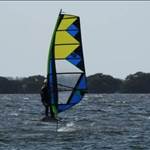
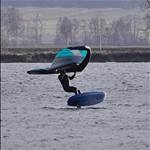
There are a few super huge front wings out there e.g. Moses W1100, Neilpryde glide XL, Starboard Supercruiser that have a surface area of more than 1500cm2. The Moses is even 2000+.
Question: how are these wings supposed to work best? What is their ideal use case?
Is it light winds and small sail? I guess they are not for speed but just easy cruising, a bit of carving, jibes, maybe 360?
I was today out on the water with my NP glide wind Medium wing, and 5.0 sail. The winds were light 8-10 kts. It was fun, but marginal. It made me to think whether an XL wing would have given me more fun and is worth to invest. I really enjoyed having a super light and easy to handle rig.
Keen to hear your experiences with huge wings!
Depends on how huge and how much power you apply.
Like Formula, drag vs lift needs awareness.
The Moses is in a different category than the others you mention. More like a huge race wing, significantly faster and more efficient.
Making the big wing/small sail combo work in light winds is about knowing how to pump the foil. If you don't master that then a larger wing doesn't buy you much.
The large wing helps you to fly at lower speed, so you can get away with a smaller sail. I used Naish 1400 and 1800AH with 5.7 and 6.6 in light wind, makes the session smoother. Did 19.5 knts with the 1400 wing in stronger winds, and 16.5 with the 1800, so they are not really slow.
My sessions with 1400:
martignoni.id.au/summary_fin.php?fin=NaishFoil2020-1400&sort=date
and my sessions with 1800:
martignoni.id.au/summary_fin.php?fin=NaishFoil2020-1800&sort=date
Only issue I found with this setup is that its hard to pump a small sail with no wind, once you get a bit of speed you pump the foil, but before then you need a bit of a gust to get going
Select to expand quotepowersloshin said..
The large wing helps you to fly at lower speed, so you can get away with a smaller sail. I used Naish 1400 and 1800AH with 5.7 and 6.6 in light wind, makes the session smoother. Did 19.5 knts with the 1400 wing in stronger winds, and 16.5 with the 1800, so they are not really slow.
My sessions with 1400:
martignoni.id.au/summary_fin.php?fin=NaishFoil2020-1400&sort=date
and my sessions with 1800:
martignoni.id.au/summary_fin.php?fin=NaishFoil2020-1800&sort=date
Only issue I found with this setup is that its hard to pump a small sail with no wind, once you get a bit of speed you pump the foil, but before then you need a bit of a gust to get going
could not open the 1800 link
Select to expand quotepowersloshin said..
The large wing helps you to fly at lower speed, so you can get away with a smaller sail. I used Naish 1400 and 1800AH with 5.7 and 6.6 in light wind, makes the session smoother. Did 19.5 knts with the 1400 wing in stronger winds, and 16.5 with the 1800, so they are not really slow.
My sessions with 1400:
martignoni.id.au/summary_fin.php?fin=NaishFoil2020-1400&sort=date
and my sessions with 1800:
martignoni.id.au/summary_fin.php?fin=NaishFoil2020-1800&sort=date
Only issue I found with this setup is that its hard to pump a small sail with no wind, once you get a bit of speed you pump the foil, but before then you need a bit of a gust to get going
could not open the 1800 link
You basically have 2 options for light wind foiling
1. 10.0 sail, barn door and race foil
2. if free foiling is more your taste try out the slingshot infinity 99 wing, I have done quite a few videos on this wing (nearly 2400) and the local crew here use it on ANY board with Tuttle or twin track.
I am using a Areotech Freespeed 9.0 (2016 model year) with a AFS Wind95 and F800 higher aspect wing (1120 cm2) on a Goya Bolt 135 Pro for light winds 9-11 mph, so opposite of what you are looking at, I stay hooked in almost the whole time, so rig weight (which is pretty lite) is not an issue. I weight 185 lbs. With minimal downhual (no crease) that sail really catches the wind with a little pumping of the sail. Note, that board will drag the tail especially with two shims in the stab so I step forward to level the board out until I get going.
Does anybody got the chance to compare the light wind (7-12 kts) power/foiling ability - speed - sails sqm of both SS i99 and Naish 1800 HA ? Is it correct to think that Naish wing needs tiny more sail sqm for given wind to start and keep going, being also a bit more quicker? Combining the big Naish wing with the Micro Hover 131, what should be the sail of choice to cover the lightest wind range? Being no longer used to "smallish" wave sails (or similar), what you think about the Lift RN or Sailworks Flyer or Loft Skyscape or SV FG?
p.s. unfortunately the SS deal i found din't work and i'm trying to figure more in relationship of what i currently found around here
Yep, you'll get lighter wind or smaller sail with the bigger wing. Im using a manta foil and have the scary 700cm, super fun 1200 and cruisy 1800 foils. The bigger one does have more lift and will stay flying at alot slower speed, as has been mentioned you need to get your pumping both board and rig to get takeoff sometimes but the big foil is super easy to keep going once up. For me its worth the expense to have the bigger wing just to ensure time on water when the chance allows.
Very interesting post.
I just bought a Moses 1100, I used it twice so far ; I am still working out how to use the wing at its full potential.
I used it with a Naish Lift 4.7 both times.
So far here are the observation / questions I have on this large wing / small sail concept :
- What is the optimal "large" small sail for such wing ? And how is it impacted by sail type (i.e standard wave sail vs pumpable sail like the Naish Lift)
- When you sail in 5-10 knots with a small sail, you really do not have much sail power in the lull... (let's say 6 knots or below).The wing does it's job to keep you flying at minimum speed with minimum drag, but still it needs some wind to fly you through the lull and reach the next gust. I am wondering if a cambered and more slippery sail like the Sailworks Flyer would help with that, keeping a more efficient profile in extreme low wind. Or maybe it would just provide a more steady pull, but without much more efficiency ?
- From my observations, this wings is really reactive by small chop / small swell. In one session, the lake chop was not perfectly perpendicular to the wind, and for one direction, it was perfectly aligned with my pumping / take off angle. Wow!!. it reduced the wind needed dramatically ,by maybe 3 knots. (less than 10 knots needed, I would guess 8). Question : If the chop is well aligned with the wind, Is it worth trying to pump and take off with an extreme downwind angle, to maximize the help from the chop ?
-When I look at the Balz Muller videos with this wing in light wind (for which is is wingfoiling) we can see that he pumps the foil a lot once in flight. It seems easy / intuitive with a wing, but it's not so much with a sail. In the lull, should I bother pumping the sail at all, or should I pump the foil only ? and if so, any tips to do it effeciently given the fact that I still have to hold a sail in the process ? Maybe the wings have a light wind advantage because of that ?
- Why is the Moses 1100 the only medium-high aspect large area wing on the market for the moment ? While Slingshot and Moses more or less came out with extremely similar wings for the 1500 cm2 surface range , their concept diverged significantly for the next step. Why is that ? Will both concepts survive, or one will prevail in the next years ?
Select to expand quotePoimax05 said..
Very interesting post.
I just bought a Moses 1100, I used it twice so far ; I am still working out how to use the wing at its full potential.
I used it with a Naish Lift 4.7 both times.
So far here are the observation / questions I have on this large wing / small sail concept :
- What is the optimal "large" small sail for such wing ? And how is it impacted by sail type (i.e standard wave sail vs pumpable sail like the Naish Lift)
- When you sail in 5-10 knots with a small sail, you really do not have much sail power in the lull... (let's say 6 knots or below).The wing does it's job to keep you flying at minimum speed with minimum drag, but still it needs some wind to fly you through the lull and reach the next gust. I am wondering if a cambered and more slippery sail like the Sailworks Flyer would help with that, keeping a more efficient profile in extreme low wind. Or maybe it would just provide a more steady pull, but without much more efficiency ?
- From my observations, this wings is really reactive by small chop / small swell. In one session, the lake chop was not perfectly perpendicular to the wind, and for one direction, it was perfectly aligned with my pumping / take off angle. Wow!!. it reduced the wind needed dramatically ,by maybe 3 knots. (less than 10 knots needed, I would guess 8). Question : If the chop is well aligned with the wind, Is it worth trying to pump and take off with an extreme downwind angle, to maximize the help from the chop ?
-When I look at the Balz Muller videos with this wing in light wind (for which is is wingfoiling) we can see that he pumps the foil a lot once in flight. It seems easy / intuitive with a wing, but it's not so much with a sail. In the lull, should I bother pumping the sail at all, or should I pump the foil only ? and if so, any tips to do it effeciently given the fact that I still have to hold a sail in the process ? Maybe the wings have a light wind advantage because of that ?
- Why is the Moses 1100 the only medium-high aspect large area wing on the market for the moment ? While Slingshot and Moses more or less came out with extremely similar wings for the 1500 cm2 surface range , their concept diverged significantly for the next step. Why is that ? Will both concepts survive, or one will prevail in the next years ?
Hey Polimax,
I will try and answer your questions,
Biggest sails for those applying this style seem to be around the 6 meter range. You need enough sail for traction when you pump. Yes you can use less sail if the sail design pumps well. Bigger sails than this need wider boards and you start spiraling towards the race equipment style.
It is well documented that cambered sails can be more efficient in light air and all wind speeds. That is why racers use cambered sails exclusively. I ride the Mosses 1100 wing in light air. I own a Flyer 6.0 and a Fringe 5.7 and have many hours on both. These days I choose the fringe because it rigs easy, pumps well and is easier to uphaul. I say it has more bounce for the ounce. Yeah the flyer holds its shape in the lulls but I pump the foil to traverse the lulls.
The 1100 wing is like having a wave amplifier! There is so much energy in waves and chop to tap into. In general, use the waves as much as you can to get flying. Going straight downwind to catch a wave can work some times but be aware that you are decreasing apparent wind so you are losing sail force.
It is totally possible to pump the foil in the air and it is a great way to traverse lulls. To learning start by sailing steady then gently and slowly go up and down repeatedly. Seriously no crazy movements just learn how to go up and down smoothly. The movement is much gentler and way slower than I expected. As you progress, increase your height change, i.e. get closer to the water and closer to breaching. Use your full throw. Then work on increasing the frequency of foil pumps, put technically increase your pump cadence.
You will find the sail even if held perfectly steady is pumping automatically when you push on the board to change height. Focus on when the sail load increases in your hands that is the moment you want to pump the sail. Now add sail pumping into that mix.
Getting out behind a boat or going to a wake/cable park is a great way to focus on just flying the board. Wake foiling has really helped every aspect of my windfoiling and it is something you can do when there is no wind. You do not need another set up to do this, use your windfoil set up with out straps. Combining good foil and sail pumping is where "THE MAGIC" happens and Balz is the guy to watch.
The windsurfing industry has nearly killed itself with all the poor decisions over the years, who know's why the 1100 is somewhat unique. My guess is that it takes a while to get tooled up and in production so we will see the other brands reply in the future. The surf foil and wing foil manufactures are now offering higher aspect wings as the sports are maturing. I am really grateful that there are windfoil wings designed to be fun and accessible not just win races!
As everyone alluded to.....use a bigger sail for sub 15 breeze. At least a 6 for heavy dudes.
Why work so hard pumping a 5?
A friend of mine is using the w1100 Moses with Goya Airbolt 105 and MB Pegasus boards and Fringe and Bounce sails.. 4.5 to 5.6 range. He looks very happy and comfy in 10-12 kts conditions. Jibing, 360s, and going reasonably fast too.
For me he's the living proof that the big wing and small sail concept works and is fun.
I am myself going down that route. Using a 5.0.fringe but still I need 12-14 kts winds, with a AFS f800 foil (1120cm2). However as my pumping technique improves I can foil in 10-12 kts. Best thing: the 5.0 rig is feather light and it's pure joy.
If the wind hits 10kts I am forced to use my 6.7 sail, bigger boom etc. The rig is so different, big, heavy. I am beginning to really hate it. (Once you've tasted that light rig feeling.. it's hard to go back and love big rigs)
In comparison then.. a bit of pumping is not so bad. Especially when things start to click and you start to master that technique.. then even pumping can be fun.
Possibly a phase you're going thru?
I've always rigged smaller than anyone my size, but lately with windfoil, and hopefully with wingfoil, maybe expand my horizons?
Windfoil, 8-13 knot breeze, I can foil with a 5.2 sail....or a 7.0 sail. There are good and bad points with both sizes.
Most of our "8-13" days, there are 2 knot lulls.
Some of the "8-13" days, there are 18 knot gusts.
Advantages favor both....on different days.
And some days favor long reaches.
Other days favor short runs and lots of transitions.
Maybe keep our options open.
I did a back to back test with my Moses 1100 wing, SS105 board on a 8-10knt day. With my big and small sails rigged and ready:
Test #1 Ezzy Hydra 5.5 - Uphaul (Easy) Time-to-Foil (~10 seconds) Pump-ability (Great) Lulls (Fair) Gust (Great)
Test #2 Ezzy Hydra 7.0 - Uphaul (Hard) Time-to-Foil (~ 5 seconds) Pump-ability (Fair) Lulls (Good) Gusts (Not so fun)
I come to the realization big wing + small sail TRUMPS Big Wing + Big Sail , when using a small board.
Could be time to sell the 7.0 Hydra.
Small gear rocks
I see advantages of big wings, sails and boards in sub 17 breeze.
Pick your poison. Small sails for turning and tricks.
Big gear for windrange and course slalom...with hi aspect medium wings.
I also see board size snobbery, just like in windsurfing and surfing.
If you don't ride a 6' shortboard, you're a kook.
If you don't windsurf a semi sinker, you're just an intermediate.
If you don't windfoil a tiny board, you're just learning.
If you don't wingfoil 90 liters, you're a kook.
I definitely find there are sessions that work with the i99 and 7.5 gator that would not have worked with a 5.7 Blade or 6.5 Gator. But then my pumping, especially foil pumping, is work in progress.
I guess you may think I am lazy, but with my 9.0 Aerotech Freespeed sail, AFS W95 foil with F800 wing (1120 cm) and Goya Bolt 135 I can get up in 8-10 knots without having to pump anything, and I like that. Keep the rig ballanced on my hook all the time and the weight is not an issue. But if I needed 10 seconds of pumping yesterday to get up in the 8-10 gusts they would have passed me by without getting up. Do not get me wrong, I like my smaller sails for sure with the lighter boom and mast, just not into having to pump a lot or at all. I pump mostly when there are 1-2' waves or 2-3' swell and need to get up quickly to beat the next wave/swell from slowing me down.
Select to expand quoteLeeD said..
I also see board size snobbery, just like in windsurfing and surfing.
If you don't ride a 6' shortboard, you're a kook.
If you don't windsurf a semi sinker, you're just an intermediate.
If you don't windfoil a tiny board, you're just learning.
If you don't wingfoil 90 liters, you're a kook.
Big can is beautiful too!
Shorter boards pump the foil easier so actually have better low end for winging once you e got the skills to employ them. That's the advice coming from all the local wingers.
Likewise there isn't much disadvantage to a shorter windfoil board unless you really enjoy tacking. Especially with a large surface area foil.
Going out and getting home is the big disadvantage of small boards, for those who sail from wind shadows.
Not everyone can enjoy shore to shore wind.
Select to expand quoteLeeD said..
Going out and getting home is the big disadvantage of small boards, for those who sail from wind shadows.
Not everyone can enjoy shore to shore wind.
Completely agree. With a big enough board you can start and come back at lowest winds the you get much more flexible regarding the spots you can start.
For me a small sail works on a bigger wing (Sail 5,4 or earlier 6,9) on an Infinity 84 with Witzard 125.
Gues I need round 10 knots to start but I'm not sure if this is correct.