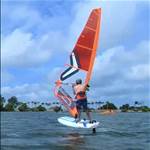
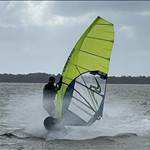
Elsewhere, aeroegnr posted this video of Blanca Alabau ripping and it started a convo about how much closing the gap matters (or doesn't) on a foil. For those of you who are performance oriented - is it noticeable? Does it show up on the GPS? Is there a min speed, wind strength, sail size or board size/width where it begins to become effective?
My understanding about closing the gap was for stability rather than extra performance. The Americas Cup boats run deck sweepers over thier booms to stop there being a gap which prevents the air from swirling around the main sail. I believe thats what closing the gap is about. I could be wrong but thats my understanding of it.
Select to expand quoteMaddlad said..
My understanding about closing the gap was for stability rather than extra performance. The Americas Cup boats run deck sweepers over thier booms to stop there being a gap which prevents the air from swirling around the main sail. I believe thats what closing the gap is about. I could be wrong but thats my understanding of it.
That swirling air is the vortex at the end of the "wing" though, isn't it? So, reducing that should reduce induced (lots of 'duced, here  ) drag? Should have remembered the AC75s and the deck designs. Thanks for bringing that up.
@4:41
We used to talk a lot about this in formula racing. Race sails were all designed with a low bottom to make it easy to "close the gap."
Personally I never noticed much difference. (But then I didn't win many races, either.)
In foiling we generally have an upright stance. This makes closing the gap difficult. If you foil really hiked out, maybe then you can close the gap.
Aerodynamically, it's proven to be faster. The Cup boats are perfect examples.
Functionally, closing the gap is not much fun.
If your goal is to win races, you gotta do it.
If your goal is anything else, the gains might not be worth the hassle of a low deck sweeping foot. I may feel differently about that if I sailed a venue like your inland lake. The sail area below the boom is a great way to get low end grunt and if it helps lowers induced drag all the better. I'm sure there is a bunch of technique to it but it really is up to the designers to get the gap small in the first place so the riders can do it in a comfortable stance with the rig standing tall. Comparing the cup boats to the windfoilers in the pics above, it looks like there is still room for improvement.
I love ducking the sail too much to even consider sails that could make it happen!