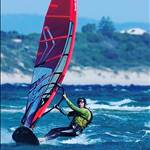
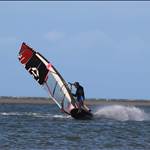
As a traditional funboard windsurfer, i am intrigued (and envious  ) when seeing the windfoil videos, as it appears many of you are able to hold up a very tight angle towards the wind, and still even be able to keep your windfoil board fully flying.
i joined here two years ago and just having bought a full new of gear from slingshot but due to severe bout with Covid i never came out. Now back on my feet and regained my near normal bodymass, i am ready again now to look to go on the water next few days when wind gets to it.
But what are then a "normal and easy" angle to hold up against the wind when on a windfoil board please?
i have a Levitator 150 with a 90cm Infinity mast and 99cm slingshot foil. Even if not up and foiling/flying, i cam only image that huge 90cm mast in itself is able to hold me well up against the wind.
and will getting up and flying then even make it easier? Just wondering, as on a traditional windsurfer, the board rail is also part of helping to hold the angle up against the wind when windsurfing.
On the funboard, it was typically just like 15 to max 20 degrees or so one could gain up against the wind, if one was up in planning speed.
So what is your experience with this when on the windfoil board please?
And what is the difference please compared to when up flying or when down in the water just tugging along with the mast working as a "traditional fin"?
For a really high performance foil, it looks like it's close to 45deg from true wind. The 99 does better to Windward when flying, but I never got as close to the wind as other foils. BUT yes, it is a good foil to learn and practice maneuvers slowly. I think there is at least a few people here that have done well getting that foil to go hard upwind.
I can feel the difference between floating vs flying and try to eyeball a landmark for where I'm pointing. The older gopros have a way to do a gps overlay that seemed to verify it. You can slog upwind well with the big foil mast but yes, the speed of a foil gives you more upwind power. Race foils especially with big sails and thin high aspect wings let you angle the board so that the foil lift also pushes you into the wind, counteracting the sail like a big fin.
A 90 cm mast allows you to slog upwind at angles similar to a longboard with a daggerboard - 45 degrees to the wind is relatively easy. Once on the foil, you can also get much better upwind angles than on a funboard. However, skill and how well powered you are still matters. Beginners sometimes have a hard time getting good upwind angles, and a large foil like yours typically does not get the same angles as a smaller foil. Once your past the beginner stage, getting angles around 30 degrees against the wind should be quite doable with your gear. Until then, you can always drop off the foil and shlog upwind.
Two things you notice about the racers foiling fast upwind at high angles:
1. They heel the board to windward. This tilt gets the front wing into the upwind lifting as the sine of the tilt angle. This way both mast and wing lift to windward.
2. They have the back foot way out on the rail. Massive back foot leverage against the foil keeps the foil pointed upwind.
I have the levitator 160 lt and used with 99 Slingshot then switched to Armstrong foil of various sizes. However, I never achieved the upwind ride like the race foil boards. Several months ago I got SB IQ foil using 800 front wing 115 fuselage/255 and FMX foil slalom board. 91 cm wide. There was immediate difference in terms of upwind ride and speed. 99 levitator excellent to learn but I could not tilt the board like I could tilt on my race foil set up.
You certainly should point a lot higher foiling on that combo than any planing windsurfer.
Select to expand quotethedoor said..
You certainly should point a lot higher foiling on that combo than any planing windsurfer.
Not with the Levitator/99 combo. A formula board will certainly point higher, as will a longboard. A properly powered slalom board will reach similar angles.
On the IQ Foil when fully powered i can point extremely high into the wind. As Segler mentioned, we are very much heeled over to windward to drive the foil and board up towards the wind angle, and we also run the mast track at the back of the mast track to close the distance between the foil and sail, which also helps drive the angle up towards where the wind is coming from. I'm not sure how high you will be able to point on your slingshot set up, as its more of a free ride style foil.
Select to expand quoteboardsurfr said..thedoor said..
You certainly should point a lot higher foiling on that combo than any planing windsurfer.
Not with the Levitator/99 combo. A formula board will certainly point higher, as will a longboard. A properly powered slalom board will reach similar angles.
I haven't seen a formula board on the water in a very long time
That i99 will prefer to be ridden relatively flat, even upwind. However, you can expect angles similar to what you'd get powered up on a good slalom board, or even slightly better, and the heavier you are the higher you'll be able to point. It'll be plenty high enough to allow you to not worry about losing ground when you jibe, so you'll go close reach/jibe/close reach jibe without much effort. This is handy, because the i99 can be a handful off the wind or even on a powered beam reach, so a close reach is less scary. if you get seriously overpowered you can pinch even harder which reduces the lift even more.
It's the higher aspect foils which allow the ridiculous angles you'll sometimes see the IQ and formula foil guys hit.
For comparison,
My fin board is a tabou rocket 125.
It takes about 3 jibes on my fin board to equal 1 jibe on the foil to gain the same ground upwind.
The I76, points a little higher than my PFI730, but it's also slower, and overpowers quickly. These is a narrow sweet spot on board tilt angle for going upwind on a low aspect freeride foil, but once you nail it, it's a blast. I travel way farther upwind/downwind on my foil than I ever did on a fin.
Select to expand quoteWsurfAustin said..
I travel way farther upwind/downwind on my foil than I ever did on a fin.
Yes, regardless of foil, I can go and travel and explore with a foil a lot more than with a fin with a lot more speed. It extends to some areas because, why not? There's more on tap. Once you get that comfort level of going more downwind on a foil (this was the challenge for me, as it got scarier with the speed and the angle of the sail), it opens up a playground.
Kind of my typical fin tracks. Very reachy with wind coming from the north east (upper right). 
Chill infinity 76 ride, not going hard all the time but notice that track hard north was pushing really hard upwind to sail up and beside that island while dealing with gusts. I would have never gotten up there on a fin in one tack like that. Wind was West/Northwest (left/top left corner).
IQFoil track. My skill is nowhere near the pros, but you can see the pretty big angular changes on a single tack. Most of that is just going off downwind to harder upwind to keep from straying too far from the launch area. If I went that far downwind on my fin in the same spot, I would have worked for half an hour to recover that ground. (Wind from the left/West)
I ride the Infinity 84 wing and when well powered I can hit super high upwind angles I could never touch with a finned board. That said the guys on the race foils can point way higher than I can. When schlogging my upwind angles don't come close to when I'm on foil.
You guys keep talking about finned boards. I think you are omitting formula boards with 70 cm fins. Those babies could go upwind at high angles and high speed like nothing before.
So far, with my still limited experience, I have yet to get upwind on a foil at the same angle and speed that I could on a formula board. People who know what they are doing are achieving this, I believe. Not me (yet, but working on it).
Again, all I need to do to get good upwind angles and speeds is (1) heel the board to windward and (2) get the back foot out on the rail to leverage the foil. Of course, race foils climb upwind very well, but freeride foils do, too.
Select to expand quotesegler said..
You guys keep talking about finned boards. I think you are omitting formula boards with 70 cm fins. Those babies could go upwind at high angles and high speed like nothing before.
So far, with my still limited experience, I have yet to get upwind on a foil at the same angle and speed that I could on a formula board. People who know what they are doing are achieving this, I believe. Not me (yet, but working on it).
Again, all I need to do to get good upwind angles and speeds is (1) heel the board to windward and (2) get the back foot out on the rail to leverage the foil. Of course, race foils climb upwind very well, but freeride foils do, too.
VMG on Formula boards was amazing but I think a good race foil would blow them away, require less wind, less skill and do it with a smaller sail. After all, the IQ has a formula-like finned setup available and nobody is using it at all - they all foil all the time.
My best VMG on a formula board was at around 60? off the wind, so a close reach. Super exciting, super demanding physically especially in any kind of chop. I could pinch higher but that was slower overall. The i99 wouldn't keep up with those setups - it will point that high but not at those speeds. On the other hand, it'll require much less effort - you can get decently high angles and sail for hours at 13-15kt without even hooking in.
I loved big raceboards and just about my favorite thing on the water is still gunning a big slab-sided Raceboard upwind all railed up and locked in. But they were beasts to transport and store and they weren't as fast as Formula boards, much less racing foils. They'd probably beat an i99 but it would be close.
No surprise formula boards can go upwind similar to foils - the large fins basically works as a J foil, pushing the board up. But the stability is insufficient to keep the board above the water at all times, so the board drag requires larger sails. The only guy who can still be seen on a formula board around here recently did a little upwind-downwind challenge. He was going upwind at 45 degree angles doing close to 20 knots, so his VMG must have been around 14 knots. The only guy I've seen go faster with similar upwind angles was a race foil kiter who had top speeds in the low 30s. But the other foilers here are either near the beginner stage, or just playing with waves, and most of them are winging it.
Race boards are similar - sightings are very rare, they are basically foiling on the daggerboard when railing upwind, using large sails, and are faster in medium wind than non-racing foilers (both top speed and VMG). But then, the one guy who routinely goes out on a race board here also competes at the world level, so it's not really a fair comparison. I never did formula, but all my longboards are up for sale. They are fun, but foiling is more fun.
Select to expand quoteAwalkspoiled said..
VMG on Formula boards was amazing but I think a good race foil would blow them away, require less wind, less skill and do it with a smaller sail. After all, the IQ has a formula-like finned setup available and nobody is using it at all - they all foil all the time.
BTW I did try that 68cm fin a while ago with my 9.5. I thought it would be enough but apparently it wasn't. I'll have to give it another go some day to see how that 95cm board planes.
Select to expand quotesegler said..
You guys keep talking about finned boards. I think you are omitting formula boards with 70 cm fins. Those babies could go upwind at high angles and high speed like nothing before.
So far, with my still limited experience, I have yet to get upwind on a foil at the same angle and speed that I could on a formula board. People who know what they are doing are achieving this, I believe. Not me (yet, but working on it).
Again, all I need to do to get good upwind angles and speeds is (1) heel the board to windward and (2) get the back foot out on the rail to leverage the foil. Of course, race foils climb upwind very well, but freeride foils do, too.
This is because you setup your foil back footed. Even a freeride foil when setup correctly can do Formula angles.
Select to expand quoteboardsurfr said..
No surprise formula boards can go upwind similar to foils - the large fins basically works as a J foil, pushing the board up. But the stability is insufficient to keep the board above the water at all times, so the board drag requires larger sails. The only guy who can still be seen on a formula board around here recently did a little upwind-downwind challenge. He was going upwind at 45 degree angles doing close to 20 knots, so his VMG must have been around 14 knots. The only guy I've seen go faster with similar upwind angles was a race foil kiter who had top speeds in the low 30s. But the other foilers here are either near the beginner stage, or just playing with waves, and most of them are winging it.
Race boards are similar - sightings are very rare, they are basically foiling on the daggerboard when railing upwind, using large sails, and are faster in medium wind than non-racing foilers (both top speed and VMG). But then, the one guy who routinely goes out on a race board here also competes at the world level, so it's not really a fair comparison. I never did formula, but all my longboards are up for sale. They are fun, but foiling is more fun.
We had a guy on a formula board race against us in a championship at the end of last year (2021) and he couldnt get anywhere near the guys on race foils. this guy was a very good sailor and won races in that same championship on slalom gear. In my experience, good foilers will go a lot better than formula gear in upwind downwind racing.
 While foil race gear will get better upwind angles than free ride gear, good angles can still be achieved.
These tracks are Slingshot Wizard 114/ Phantasm 730 combo
Based on my experience, the "latest" FW gear will go upwind quite well, though race foils will have an advantage, especially round the course. Reaches depend on water conditions, technique, and cojones. Going downwind is where FW gets obliterated in terms of VMG. The angles on the foil are just on another level, plain and simple.
We've tested this with one of the best national FW guys on a similar gear (11 m2 FW sail, 70 cm top of the line fin, etc. vs. 10 m2 foil sail, 900/255 SB foil), his FW skill level way above mine on foil, and still going downwind there was no chance for the fin. Also going round the marks, the foil simply carries so much speed...
The issue was settled a long time ago. Matteo Iachino from Aug 2017 at Silvaplana. Pertinent part at 11:40 on. Interesting blast from the past.
Select to expand quoteFormuIa said..
Going downwind is where FW gets obliterated in terms of VMG. The angles on the foil are just on another level, plain and simple.
That makes perfect sense. The formula gear needs significant pressure from the side to bend the fin into a J-shape, which then pushed the board out of the water just like a foil. "Easy" at upwind angles, but at deep downwind angles, the pressure from the side disappears, and the boards revert to using the board surface to plane. That's a lot less efficient than a foil.Select to expand quote2keen said..
While foil race gear will get better upwind angles than free ride gear, good angles can still be achieved.
These tracks are Slingshot Wizard 114/ Phantasm 730 combo
Nice upwind angles! Take quite a bit of skill to get these. On the legs going towards the shore, does the swell help getting better angles?
Grant, give it up. I'm not gonna change my back-footed foiling geometry, and neither will Bruce. If you want to stay with front-footed geometry, then fine. You will have bigger quads than I have, and you will jibe circles around me. I don't care. I like the control and speed.
I was first one in national race scene who switched from FW to foil. A very first time they allowed me to attend race with foil 2019 was in pretty strong wind and swell. I went out with 7.0 and freeride/free race foil and it was super easy win. I have not seen anyone on FW boards for two years, but one guy still has about 15 formula fins in his van.
He wrote: "The formula gear needs significant pressure from the side to bend the fin into a J-shape, which then pushed the board out of the water just like a foil. "Easy" at upwind angles, but at deep downwind angles, the pressure from the side disappears, and the boards revert to using the board surface to plane. That's a lot less efficient than a foil."
Exactly right. Upwind on a FW board you simply point toes to get the fin to bend under you, and you get some vertical lift to help lift the board out of the water. With less wetted area, you get good speed and angle.
Downwind is another matter. Yes, the fin does not help lift the board, and the board plows the waves downwind. This is pretty scary since each plow wants to slow the board down, and the rider is always in danger of getting pitched. Board design helped a lot, and by the time Mike's Lab came out with the L10, that issue was mitigated a lot. For me the L10 was stupid easy to blast downwind in the outside straps compared to earlier designs.
Well, with a foil you don't have this wave-plowing-pitching challenge at all. You just ride above the waves. The downwind is child's play. When it's that easy, you can really push it and go crazy fast.
Select to expand quote2keen said..
While foil race gear will get better upwind angles than free ride gear, good angles can still be achieved.
These tracks are Slingshot Wizard 114/ Phantasm 730 combo
Those upwind angles are amazing for free ride gear. I don't get anywhere near these angles on my Alien 125 / Redwing1400 combo
Select to expand quoteboardsurfr said..FormuIa said..
Going downwind is where FW gets obliterated in terms of VMG. The angles on the foil are just on another level, plain and simple.
That makes perfect sense. The formula gear needs significant pressure from the side to bend the fin into a J-shape, which then pushed the board out of the water just like a foil. "Easy" at upwind angles, but at deep downwind angles, the pressure from the side disappears, and the boards revert to using the board surface to plane. That's a lot less efficient than a foil.2keen said..
While foil race gear will get better upwind angles than free ride gear, good angles can still be achieved.
These tracks are Slingshot Wizard 114/ Phantasm 730 combo
Nice upwind angles! Take quite a bit of skill to get these. On the legs going towards the shore, does the swell help getting better angles?
For sure when bearing off the wind, it's possible to ride much deeper down wind if you have a swell under you