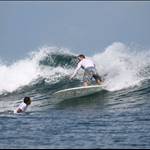
So for the last few day's here on the GC I have struggled to get out thru 3/4/5ft waves...today I had to return defeated to the beach as I could not make it out. I surf a Naish Hokua x32 9.1ft. This is the biggest surf I have tried to get out thru and was wondering if there are tips people have or is it just keep on trying or give up? or do I need to start dropping down in board size?
Any tips or advice?
Select to expand quoteburleighlocal said..
So for the last few day's here on the GC I have struggled to get out thru 3/4/5ft waves...today I had to return defeated to the beach as I could not make it out. I surf a Naish Hokua x32 9.1ft. This is the biggest surf I have tried to get out thru and was wondering if there are tips people have or is it just keep on trying or give up? or do I need to start dropping down in board size?
Any tips or advice?
many articles on this & your board size is fine.
you can prone paddle out, with your paddle under your tummy.
perserverance & reading the water
www.seabreeze.com.au/Articles/Stand%20Up%20Paddle/Getting-out-through-the-surf-on-your-SUP_2513512.aspx
Select to expand quoteMaxeeboy said..burleighlocal said..
So for the last few day's here on the GC I have struggled to get out thru 3/4/5ft waves...today I had to return defeated to the beach as I could not make it out. I surf a Naish Hokua x32 9.1ft. This is the biggest surf I have tried to get out thru and was wondering if there are tips people have or is it just keep on trying or give up? or do I need to start dropping down in board size?
Any tips or advice?
many articles on this & your board size is fine.
you can prone paddle out, with your paddle under your tummy.
perserverance & reading the water
www.seabreeze.com.au/Articles/Stand%20Up%20Paddle/Getting-out-through-the-surf-on-your-SUP_2513512.aspx
was looking for something a wee bit more advanced than this...prone on a 32 wide thru 4/5 ft surf won't work. It could just be a case of "just paddle like crazy and hope for a break"
First question should be do you come from a surfing background and know how to read the surf
You should read and look at tips, and experiment a lot.
Some of the techniques are not intuitive and need practicing.
Reading the water (rips and places on the wave where the foam is weaker) is better than brute force.
Commitment and confidence is key.
Being careful is paramount, injury can happen fast in big surf.
Wait for a lull in the waves and then paddle like hell!!
If you get washed down then just walk around and try again, paddle hard and never look back!!
Grit your teeth, put on your best angry face and keep going. There will always be a lull, no matter the conditions. There has been days my bro and I have turned up to the beach, and he has just chuckled and said "good luck" (he is a prone surfer, big lad on a small volume board). i have impressed him many times just by perservering. DJ's advice of aim for the point has definitely helped on those ridiculous days. Even if I don't surf it, it's a good spot to get out the back. I had a 9'1" x32 and found it the hardest board I have owned to get out over a breaking wave due to the nose rocker, hazardous at times. I found standing as far forward as possible helped shove it through an oncoming wave.
Look for a better place to get out , remember your on a sup so if you have to paddle a k or more to get to the break its no big deal with a sup.Ive been washed down the beach plenty of times just trying to get out and then once out the back the long paddle to the break. It reallu sucks when you nearly make it and that last wave comes and bang your Fked.
Use your paddle like an anchor when you're getting carted underwater, it will save you a yard or three each hiding you get which adds up to being a few critical yards further out when the lull comes. That board has a fair bit of foam, too, so if you don't want to drop in board size you better get fitter. Don't be afraid to paddle prone or on your knees to get out of the impact zone. Some will say you look like a kook doing it, but I'd rather be a happy kook out the back than a hero copping them on the head....
When paddling prone through the impact zone you can lean on the tail of your board when the wave approaches and pop over the white water instead of bailing and getting thrashed. Takes a bit of practice but can help to get you through and out into clean water as you are not trying to get back on your board.
Also take time to look for the best spot to paddle out. A rip is always the quickest way out and when it is big sometimes they are harder to spot.
In the same surf session I have got out without a hitch, then taken over 10 mins to get back out. Timing is everything
its all about luck. Many times i have gone out in decent surf and it has just gone flat when i hit the water. My friend is the most unlucky surfer so i tend to paddle out before or after him.
Select to expand quoteMacaha said..
First question should be do you come from a surfing background and know how to read the surf
yes..15 years
thanks for all the tips..Will try the paddle as anchor next time we get a bit of size. I guess the main thing is paddle like hell, hope like anything I catch a break..and if the bomb sets are coming in just as it looks like I made it..know I'm fked and just need to get fitter :)
I surfed Lennox Head beach break a couple of days ago . Surf was a solid 5 ft short period low tide and no gutters just sandbars I tried for 45 minutes but couldn't get out. Been surfing Lennox on stand ups for about 5 years and surfed bigger waves in the past. This is the first time I have not been able to make it out. Still enjoyed getting hammered, sinuses cleaned and absolutely worked.
watch the surf for at least fifteen minutes before getting in. count the waves in the sets and maybe even time the lull between sets then you have a rough idea when to take it on. Counting the waves in the sets will help in getting back out when you catch one by always catching the last or second last wave in the set then it will limit the possibility of getting court inside. Observation is everything and always have a plan.