So I was thinking, that with the current methods we are never going to truly know which is the fastest flat water board design, because too many valuables become evident due to the paddler.
So, why doesn't someone utilise a small electric motor that can be strapped under/onto each SUP with a static 75kg weight. Then on a flat lake, set up a dozen boards one after the other, doing 6 runs each. Now the only anomally affecting the acceleration and speed results will be hull design. In addition a separate test could be done to ascertain the optimal placing of the weight (paddler) to achieve the highest speeds.
You can't take the paddler out of the equation because speed is an interaction between board and paddler.
In other words, you could get a design that works well with a static motor powering it, but is dog awful once a paddler gets on it.
There are also a huge number of performance factors that can't be measured with a motor (eg. turns, drafting, surfability, downwind ability, beach starts etc).
But it would be an interesting exercise nevertheless. So why not do it yourself?
I beg to differ.
Surely you must take the paddler out of the equation to quantify the the fastest hull given exactly the same thrust.
Also I didn't plan on testing all the other performance factors such as turns, drafting, down wind etc. As most every other test currently undertaken is unable to test these with any non bias accuracy anyway.
All I want to know is which hull 'IS' the fastest in a straight line test.
I mean if I knew "X" brand hull accelerated faster and maintained the highest speed over the tested distance. As a flat water paddler, this is the board I would buy. Because I then know unequivocally that its the hull design, not the paddler.
We already know which hull shape is fastest under test conditions like you suggest. The basic physics has been established for a long time. The point is that these shapes are NOT fastest to paddle. Only a small percentage of the performance of a board comes from differences in drag etc. Differences in eg. stability and handling can have a larger effect in "real world" racing conditions. Very often, design features that enhance these aspects cause a decrement in stability and handling, so a design has to be a balance between these factors.
Take a look at the Coreban Turbo (RIP). That is what you end up with by applying principles of hydrodynamics to SUP design without taking into account sufficiently the way a board is used by the paddler. It is perhaps the most interesting ever SUP from a design point of view - and was ahead of it's time in it's use of deep concaves (like the 2016-2017 All Stars) and chines (eg. the 2017 Naish Maliko). But it was unloved by owners, and failed to make any impact on the SUP racing world.
Another example was the M&M board, also designed by yacht designers. It was also ahead of it's time perhaps, but failed to make significant impact largely because it was too tippy and hard to use, and too expensive.
I think that for most brands this is where they decided that SUP is it's own discipline, with it's own specific demands (especially, a moving load), and that you can't beat real-world testing if you want to end up with a lasting and successful design. Applying theory only works well if you really understand what is going on, and mostly we don't for SUP, and partly this is because the sport is changing so fast.
But give your idea a go. You will probably find that shapes that are narrow, pointy at each end, and that have a round hull, will generally have less drag. Good luck paddling one in the chop and mayhem of a race, though.
Area10 points are quite valid (plus I think the up/down movement induced by the paddler also come into the picture: a board should not lose too much speed from these movements compared to a theoretical flow).
But KNXSUP idea could be interesting to test real world board to have some info, although it cannot be the sole way to judge a board.
Maybe also just drag a board with a rider sitting on it behind a boat, and measure the traction on the cord with a hook scale?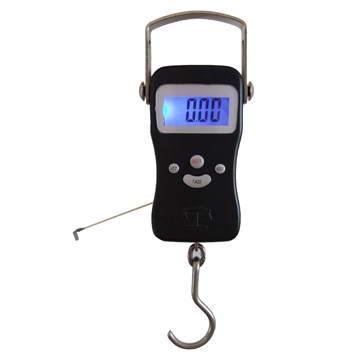
there are alot of variables when trying to determine which board would be fastest, the biggest being the paddler, most brands etc will use people like Kai Lenny etc to paddle boards and then say they are the "fastest", to be honest he could probably paddle a door faster than most people could paddle a race board,
a fair way that i can think of would be to get people a few people, the more the better as you would have a larger sample size, ideally people of different weights, heights and abilities(as most people don't really care what an elite level paddler can paddle the fastest as it is unrealistic to most of us), get each person to paddle each kind of board that you are testing over the same distances, whether it be 200m or 10km, in the same conditions, ie tide, wind, heat, while giving everyone the same break before they paddle the next kind of board,
you wont get an exact time but given a big enough sample size you should start to put together some statistics
Jarryd
it sort of comes to it if you wanna go super fast you will paddle something with a similar design, but there comes a point where you go too narrow and then narrow becomes slow as you cant paddle hard and balance
Jarryd