Hi all
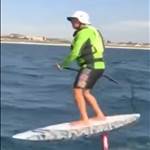
anyone have some tips or a video on how to ride with a twisted stance? (Ie after jibing without moving your feet.)
If you look through the Wing Foiling Videos thread Im sure I saw some there? Even just watch the videos there and you see guys riding you can pick up a few hints.
Then just practice as much as you can, hope you got a good wetsuit for next 6 months!
I move my rear foot further to the toeside rail and sometimes a bit forward to help open up my stance and gain leverage on the board. The back of my shoulder would cramp up a bunch when I first started (the one holding the rear handles). I guess I built up strength as it doesn't bother me much anymore.
I plan on learning to switch stances, but riding twisted just doesn't bother me much. I can also hook in my super loose waist leash/harness to help fight fatigue on long tacks (added a spreader bar to my Armstrong waist leash).
Another tip: engage your glutes. I ended up with some lower back/sacral joint pain after riding fully powered a few days in a row. I realized I was relying on my quads and lower back too much, leaving out the biggest muscles I've got! Keeping this thought in mind has seemed to have abated the low back pain.
This was awkward for me at first but now it is no problem. I turn my hips more downwind(towards nose of board) and my feet go a bit closer to a sup paddling stance. I point my feet more towards nose of board sort of parallel. This opens up my hips to face the nose of board more than the side. With my hips pointing forward, this eases the twisting on my spine and shoulders. Think about watching Laird's hips when he foils. They are pointing evenly towards where he is going. I can beat up wind almost as good as heelside but I usually don't. Riding toeside is where most of the fun happens for me. This is when it becomes surfing and hacking the faces of the windswell. I would never want to be relegated to my "weakside" for this. I do the same thing kitefoiling. Remember that the wing is about sooo much more than just mowing the lawn back and forth. Sure, you need to be able to efficiently stay upwind but the real magic comes with bearing off and depowering the wing and setting your foil free to carve up and down the wind swell. You can't do this with the other wind powered toys. Even knee high swells carry an amazing amount of energy when riding a large foils. The other thing to keep in mid is that you don't have to be hauling ass all the time. Slow down. Its hard for some to shed habits that have been formed from years of windsurfing or kiting. Winging is a completely different animal. And Yuppy, for God's sake, loosen your grip on the handles! You don't have to death grip your wing. Those blisters will go away. I had alot of breakthrough days over the winter and destroyed some nice 5 mil gloves. Now I just hold it with my fingers. Winging gets less tiring with each session for me. So much finesse involved.
Hehe, the normal term for this is riding "Toeside" , but Twisted is good too. 
My progression is surf, sup, kite, kite foil, sup foil, surf foil, wing foil. In kiting, you pretty much have to learn to ride both feet forward, for long tacks upwind, riding toeside is only about 75% efficient and it's harder on your body. But most surf inspired kiters only ride the waves with their dominant foot forward, frontside or backside, like surfing. Not many are equally proficient both way wave-riding (ambi-footrous). Windsurfers have to be by design, as can't really ride a windsurfer toeside.
For kite foiling, toeside riding came easy for me and I never invested the time to learn to foil right foot forward. I got made fun of for years by the kite foilers, as that's considered poor form. I eventually put in the time to get at least marginally competent at it, and it's been a help in winging. Though my right foot forward riding is about half the efficiency, can't really pump properly yet, so I need solid wind to get up. I switch feet after the heelside to toeside turn, and before turning back. Standard kite surfing gybes.
Anyways, I am amused to read this is more of a thing in wing-dinging -- I believe from wind sports newbies coming from a surfing background. A related sidenote, windsurfers who take up winging don't have this problem as they are equally good both feet forward. But they might struggle with toeside riding ... and as such, have difficulties in surfing waves. Carving in swell requires effortless heelside to toeside transitions. Yay surfers!
I suggest it is worthwhile investing a few sessions to get basic proficiency in wrong-foot forward ... you'll go upwind faster and it gives your muscles and joints a rest to change position. 
Select to expand quotejuandesooka said..I suggest it is worthwhile investing a few sessions to get basic proficiency in wrong-foot forward ... you'll go upwind faster and it gives your muscles and joints a rest to change position.
Totally agree. Sometimes it is the only way to get back to where you started or avoid rocks downwind.
I don't think its an old windsurfer thing to swap your feet. I prefer to go toe side on the ding and stay in my surf stance and I am def. in the old windsurfer category but I think I been foiling that much the last 2 year i guess you could also say I am "rehabilitated".
Select to expand quoteScotty Mac said..
I don't think its an old windsurfer thing to swap your feet. I prefer to go toe side on the ding and stay in my surf stance and I am def. in the old windsurfer category but I think I been foiling that much the last 2 year i guess you could also say I am "rehabilitated".
Totally with you on that Scotty. As a long time windsurfer I found it weird to switch feet. I can do it but prefer to go toe side as there a just more control for carving around for me. Economy of movement makes sense to me. www.facebook.com/WSSBoards.com.au/videos/550071652345255/?
Sam.
It helps to be well powered to ride toeside. I make sure front foot is dead center and I find a wider stance helps.
Definitely cannot go upwind as well so I also spend a lot of time riding weak foot forward.
Hi folks,
Did a search on riding toeside as I've been really struggling with it and this thread is super useful. Yuppy its been a while since you posted it, have you gotten better at it? what helped?
Thanks,
Ray
Hi guys
i am loving my new KT wing drifter pro 80l. Im 75kg and this board is perfect for me.
I can now jibe both ways, tack on foil and ride waves. I like the foot straps and have perused with twisty foot stance.
my favourite is jibing onto the wave face. Feels great.
I just got the axis 910 and 400 combo on a short fuselage. I can bank harder turns tHan the 1010/460 combo. And it still glides forever.
Dont care what anyone says you won't be able to point as hard going toeside. On a Kite as well, SB, foil, with a rope slider whatever giving all other variables equal. So I stay toeside for waves when carving , but always switch feet when trying to crank upwind and also to balance the leg and arm strain. It's a skill worth learning.
If I do extra toeside the next day I feel it but being 50 dosn't help and upwind is what Eppo said can't point as high I spose if ya young and still made of rubber it's probably not a problem !
Here's a couple of clips from yesterday riding super under-powered on Narrabeen lakes.
First one, riding toe-side (twisted) into a jibe then quick blast out.
I hate going switch (because I'm not good at it).
Here's a bit of footage of me riding twisted, and one bit riding switch (badly).
Select to expand quoteWindgenuity said..
Here's a couple of clips from yesterday riding super under-powered on Narrabeen lakes.
First one, riding toe-side (twisted) into a jibe then quick blast out.
Then Riding from heel side into a jibe, swapping from toe-side to heels then back before jibing again.
And riding from Heels (switch) to Toes then jibe.
The trickiest part of riding toe-side (twisted) is being able to stay sheeted in and go up wind high enough. In general on a lake or short small runs like Narrabeen Lakes I sometimes don't change my feet, as you can blast a little faster and you're turning frequently. But you will definitely go upwind faster if you switch (once you can stay on foil). It's a little tricky at times, but worth it for long tacks on your switch side. Obviously you wouldn't usually opt to go toe-side on your switch stance. I always choose to do my turn in my surf stance (goofy).
Not the greatest vids as it was light and sketchy at best, but thought it may help a little.
Ride safe,
JB
Nice one JB, those transitions are exactly what I am trying to work towards. I can ride switch no issue, just struggling with feet transitions while on the foil and riding out of gybes toe-side. Am only a handful of sessions in so time on the water will solve it and/or getting out on a skatie with the wing - something I must try and do. Those vids are super helpful, thank you.
I just can't see why you wouldn't learn to ride switch stance, I can ride toeside but it just feels wrong to me to be all twisted up.
I suppose I am lucky that I often used to ride switch when surfing as a teenager however I have always been a natural footer first and foremost and eventually that is all I would ever surf.
I must admit wave riding or downwinding is still a little bit harder switch so I do favour natural and toeside (or twisted if you like) a bit but that is only when the majority of the power is coming from the ocean.
When just cruising out and back using the wind (mowing the lawn) I switch every time, the foot changes just get easier every time.
Whilst riding switch may feel wierd at first and it may not be for everyone, for most I'm sure its well and truly worth the effort
Select to expand quotetightlines said..
I just can't see why you wouldn't learn to ride
I ride waves in every tack. Much better natural stance opening up with the wing flagged out. Plus I try to ride the swell upwind. If I was dogging up wind to downwind I would switch.
Select to expand quotehilly said..tightlines said..
I just can't see why you wouldn't learn to ride
I ride waves in every tack. Much better natural stance opening up with the wing flagged out. Plus I try to ride the swell upwind. If I was dogging up wind to downwind I would switch.
Yep thats what I mean.
When you can flag out yep natural wins.
On flat water back and forward (hey I live in Perth ) I switch.
2 things: 1) really twist your torso so your wind wing presents correctly to the wind... and 2) don't try to go too upwind at first. Let the board go more downwind, and get a feel for riding that way. Staying tighter to the wind comes later.